Aperture, Magnification & First Light
Telescope Accessories Worth Buying, In Order
The accessory that changes the most costs about the same as a takeaway. The one people buy first usually changes nothing. Here is the order that actually works.
By Scooter M. · Published · How we pick
Accessory advice usually arrives as a list of things you could own. This is a list in the order they change your evenings, which is a different list, and the first entry costs less than almost anything else on it.
How these are judged
Three questions decide the order, and none of them is price.
- Does it change what you can see, or only what you own? A filter that raises contrast changes the view. A carry case does not.
- Does it duplicate something already in the box? Almost every beginner telescope ships with two eyepieces, and a lot of accessory money gets spent buying a third that sits between them.
- Does your telescope have the headroom to use it? A short eyepiece or a Barlow only helps if the aperture supports the magnification it produces. Below about 100mm, most of them do not. The magnification ceiling is the check that takes five seconds.
First: a moon filter
The full Moon through a 130mm telescope is genuinely uncomfortable, and the discomfort costs you detail, because a dazzled eye resolves less. A neutral-density moon filter threads into the eyepiece and cuts the light without shifting the color.
It is the cheapest item in this entire list and it changes the single target beginners look at most. That combination is why it is first. Which filters are worth it covers the colored ones, which are a far weaker case.
Second: a red flashlight
Dark adaptation takes twenty to thirty minutes to build and one glance at a phone screen to destroy. A dim red light lets you read a chart, find an eyepiece and check a focuser without starting that clock again.
It does not improve the telescope. It improves you, which on a faint target is worth more. This is the accessory experienced observers are most surprised beginners do not own.
Third: eyepieces, and the honest warning about kits
Your telescope came with two eyepieces, usually around 25mm and 10mm. The gap worth filling is not between them — it is below them, at the low-power end, where a longer eyepiece gives a wider, brighter field that makes finding things far easier.
How this is funded: the buy buttons below are Amazon Associates links, and a qualifying purchase earns us a commission at no extra cost to you. It cannot move the ranking, because the order here is set by aperture per dollar, and no commission rate changes how much light a mirror collects. Full disclosure.
| # | Telescope | Best for | Aperture | Price |
|---|---|---|---|---|
| 1 | 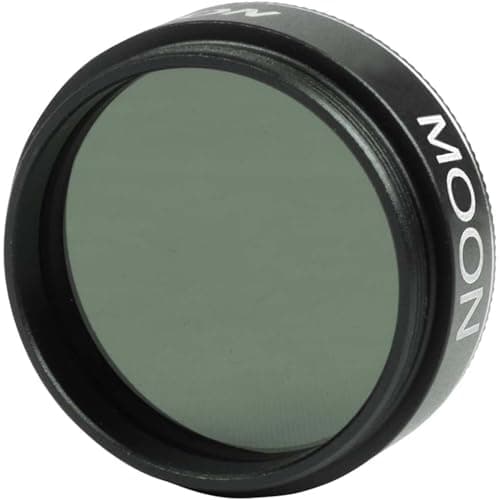 Celestron Moon Filter (1.25")Top pickA neutral-density filter that screws into an eyepiece and makes the full Moon comfortable to look at. | The cheapest real upgrade | 1.25" thread64x useful | |
| 2 | 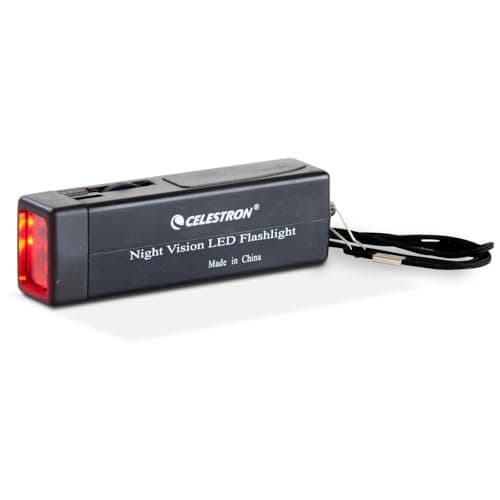 Celestron Night Vision Red LED FlashlightA variable-brightness red flashlight, which is the accessory that stops you undoing twenty minutes of dark adaptation every time you check a star chart. | Keeping your dark adaptation | Not applicable0x useful | |
| 3 | 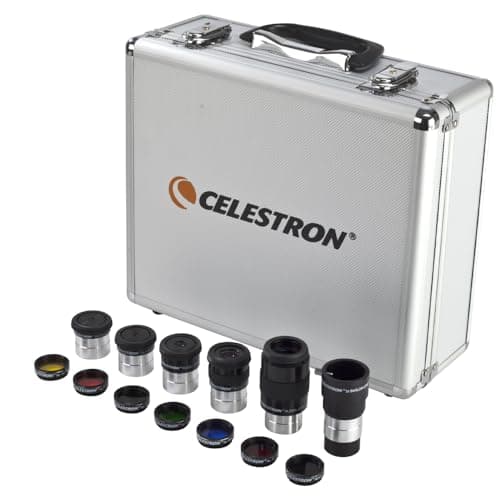 Celestron Eyepiece, Barlow and Filter Kit (1.25")Five Plossl eyepieces from 32mm down to 6mm plus a 2x Barlow. This is the accessory that actually changes what you see. | The upgrade that changes the most | 1.25" barrel64x useful | |
| 4 | 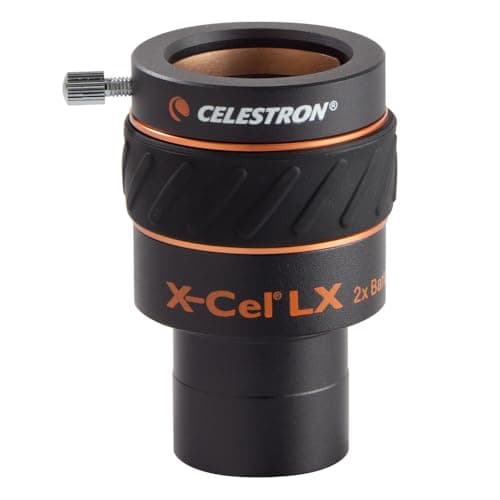 Celestron X-Cel LX 2x Barlow Lens (1.25")A three-element apochromatic Barlow that turns every eyepiece you own into two. Useful in the middle of a range, pointless at the short end. | Doubling an eyepiece set | 1.25" barrel (31.75mm)64x useful | |
| 5 | 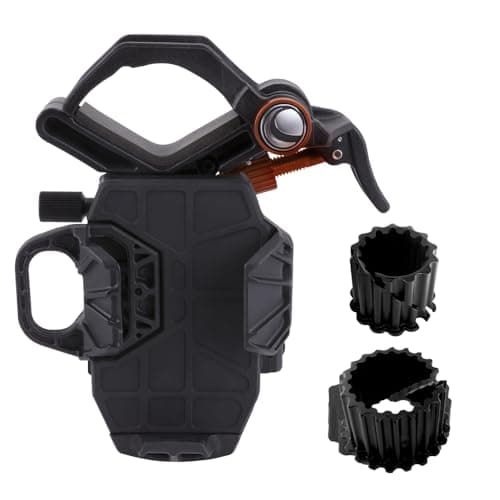 Celestron NexYZ 3-Axis Smartphone AdapterThree knob-driven axes that hold a phone camera over an eyepiece and let you align it precisely. The part that makes phone lunar photography work rather than frustrate. | Getting a phone photo of the Moon | Eyepiece clamp 35mm to 60mm70x useful | |
| 6 | 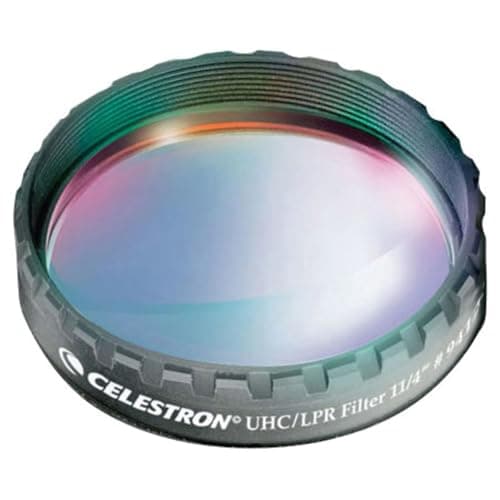 Celestron UHC/LPR Light Pollution Reduction Filter (1.25")A filter that selectively cuts the wavelengths streetlights emit. It helps on emission nebulae and does nothing for stars, galaxies or planets. | A suburban sky, on nebulae only | 1.25" thread64x useful |
Top pick · The cheapest real upgrade
Celestron Moon Filter (1.25")
A neutral-density filter that screws into an eyepiece and makes the full Moon comfortable to look at.
What the aperture allows
- Maximum useful magnification
- 64x
- 2 × 31.75mm of aperture
- Resolving limit (Dawes)
- 3.65 arcseconds
- 116 ÷ 31.75mm
- Cassini division (0.7″)
- Out of reach
- this aperture cannot resolve it
The full Moon through a 130mm telescope is genuinely too bright to look at comfortably, and the discomfort costs you detail: a dazzled eye resolves less.
The filter is neutral density, meaning it cuts the light without shifting the color. Contrast goes up, the glare goes away, and the terminator, the line between lunar day and night where the shadows are longest, becomes the best thing in the sky.
It is the single cheapest item that changes an observing session, and it is the one accessory almost every beginner buys second rather than first.
What it does well
- Turns the full Moon from uncomfortable into detailed
- Threads into any standard 1.25-inch eyepiece
- Costs less than almost anything else that improves a view
What it costs you
- Only useful on the Moon and on Venus
- Redundant if you buy an accessory kit, which usually includes one
Skip this one if: Skip it if you are already buying an eyepiece and filter kit. There is one in the case.
| Optical design | Neutral-density filter that threads into a 1.25-inch eyepiece barrelSource: Celestron Moon Filter — the brand's own listing on Amazon.com (retrieved September 1, 2026) |
|---|---|
| Aperture | 1.25" threadThe fitting size. It threads into the eyepiece, not into the telescope.Source: Celestron Moon Filter — the brand's own listing on Amazon.com (retrieved September 1, 2026) |
| Effect | Reduces lunar glare, improves contrast and reveals surface detailCelestron's own description of what the filter does.Source: Celestron Moon Filter — the brand's own listing on Amazon.com (retrieved September 1, 2026) |
$12.95 · 12% off
#ad · how this is funded · price as of September 13, 2026
Pick 2 · Keeping your dark adaptation
Celestron Night Vision Red LED Flashlight
A variable-brightness red flashlight, which is the accessory that stops you undoing twenty minutes of dark adaptation every time you check a star chart.
What the aperture allows
- Maximum useful magnification
- 0x
- 2 × 0mm of aperture
- Resolving limit (Dawes)
- Infinity arcseconds
- 116 ÷ 0mm
- Cassini division (0.7″)
- Out of reach
- this aperture cannot resolve it
Dark adaptation takes twenty to thirty minutes and one glance at a phone screen destroys it. That is the whole reason this exists.
Red light at low intensity leaves the rod cells in your retina largely unbleached, so you keep the sensitivity you spent the first half hour building. A white phone torch does not.
Variable brightness matters more than the color. Most cheap red lights are far too bright, which defeats the point almost as thoroughly as white light would.
What it does well
- Keeps the dark adaptation that everything faint depends on
- Variable brightness, which most cheap red lights lack
- Cheap enough to buy alongside the telescope without thinking about it
What it costs you
- A phone in red-screen night mode does most of this for free
- One more thing to keep batteries in
Skip this one if: Skip it if you only ever observe the Moon and the bright planets. Dark adaptation barely matters for either.
| Optical design | Red LED flashlight with variable brightness, for astronomy and campingSource: Celestron Night Vision Red LED Flashlight — the brand's own listing on Amazon.com (retrieved September 1, 2026) |
|---|---|
| Aperture | Not applicableA flashlight has no aperture. This row exists because the spec model requires one.Source: Celestron Night Vision Red LED Flashlight — the brand's own listing on Amazon.com (retrieved September 1, 2026) |
| Why red | Preserves night visionCelestron's own stated purpose for the product.Source: Celestron Night Vision Red LED Flashlight — the brand's own listing on Amazon.com (retrieved September 1, 2026) |
$20.95 · 19% off
#ad · how this is funded · price as of September 13, 2026
Pick 3 · The upgrade that changes the most
Celestron Eyepiece, Barlow and Filter Kit (1.25")
Five Plossl eyepieces from 32mm down to 6mm plus a 2x Barlow. This is the accessory that actually changes what you see.
What the aperture allows
- Maximum useful magnification
- 64x
- 2 × 31.75mm of aperture
- Resolving limit (Dawes)
- 3.65 arcseconds
- 116 ÷ 31.75mm
- Cassini division (0.7″)
- Out of reach
- this aperture cannot resolve it
Magnification is telescope focal length divided by eyepiece focal length, so this kit is the variable in that equation. On a 650mm f/5 telescope the 32mm gives 20x, the 13mm gives 50x and the 6mm gives 108x. On a 1200mm Dobsonian the same three give 38x, 92x and 200x.
The 2x Barlow halves every eyepiece's effective focal length, which is where the ten-eyepieces-in-one claim comes from. It is true arithmetic, but a Barlow on a 6mm eyepiece produces 3mm, and on most beginner telescopes 3mm is beyond the useful magnification the aperture supports.
The useful lesson is that the two eyepieces in the telescope's box are usually the two least considered items in it. A 32mm Plossl in a fast Dobsonian gives a genuinely wide, bright field that no bundled eyepiece will match.
A moon filter is not optional at full Moon in anything over about 100mm. The Moon at 130mm is uncomfortably bright, and that is not a figure of speech.
What it does well
- Covers the whole useful magnification range in one purchase rather than five
- Plossl is a well-corrected classic design at a price where the alternatives are not
- The moon filter alone earns its place in anything over 100mm
What it costs you
- The shortest eyepieces exceed the useful magnification of a small telescope
- Plossl eye relief at 6mm is tight, which is awkward for spectacle wearers
- Several of the colored planetary filters see very little use
Skip this one if: Skip it if your telescope has a 2-inch focuser and you would rather put the money toward one good wide-field 2-inch eyepiece.
| Optical design | Five 1.25-inch four-element Plossl eyepieces, a 2x Barlow and seven filtersSource: Celestron Eyepiece, Barlow and Filter Kit — the brand's own listing on Amazon.com (retrieved September 1, 2026) |
|---|---|
| Aperture | 1.25" barrelThe fitting size, not a light-collecting aperture. Check your focuser takes 1.25-inch eyepieces.Source: Celestron Eyepiece, Barlow and Filter Kit — the brand's own listing on Amazon.com (retrieved September 1, 2026) |
| Eyepieces supplied | 32mm, 17mm, 13mm, 8mm and 6mm Plossl, each with a 52-degree apparent fieldSource: Celestron Eyepiece, Barlow and Filter Kit — the brand's own listing on Amazon.com (retrieved September 1, 2026) |
| Barlow | 2x, which doubles the magnification of every eyepiece in the caseSource: Celestron Eyepiece, Barlow and Filter Kit — the brand's own listing on Amazon.com (retrieved September 1, 2026) |
| Filters | A moon filter plus the common colored planetary filtersSource: Celestron Eyepiece, Barlow and Filter Kit — the brand's own listing on Amazon.com (retrieved September 1, 2026) |
$239.95 · 17% off
#ad · how this is funded · price as of September 13, 2026
Pick 4 · Doubling an eyepiece set
Celestron X-Cel LX 2x Barlow Lens (1.25")
A three-element apochromatic Barlow that turns every eyepiece you own into two. Useful in the middle of a range, pointless at the short end.
What the aperture allows
- Maximum useful magnification
- 64x
- 2 × 31.75mm of aperture
- Resolving limit (Dawes)
- 3.65 arcseconds
- 116 ÷ 31.75mm
- Cassini division (0.7″)
- Out of reach
- this aperture cannot resolve it
A Barlow multiplies the magnification of whatever eyepiece sits in it. At 2x, a 25mm eyepiece behaves like a 12.5mm one and a 10mm behaves like a 5mm, so a three-eyepiece case becomes a six-magnification case for the price of one accessory.
That arithmetic is real, and it has a hard edge. On a 700mm f/10 refractor with a 70mm objective, a 10mm eyepiece Barlowed to an effective 5mm gives 140x, which is exactly the 2x-aperture ceiling for 70mm. Anything shorter than that behind the Barlow is empty magnification, and the Barlow will happily produce it.
Three elements in two groups is a better construction than the two-element Barlows bundled in budget kits. The optical cost of a cheap Barlow is real: it is extra glass in the light path, and poor glass shows as softness and false color exactly where you were trying to gain detail.
The filter thread is the quietly useful feature. A moon filter on the Barlow stays put while you swap eyepieces above it, rather than being unscrewed and rescrewed in the dark.
What it does well
- Doubles the useful range of an eyepiece set for one purchase
- Three-element apochromatic construction rather than the two-element budget design
- Threaded for 1.25-inch filters, so a filter can live on the Barlow instead of the eyepiece
- Light at 5.3 oz, so it does not upset the balance of a small telescope
What it costs you
- Adds glass to the light path, which always costs a little contrast
- Pairs badly with the shortest eyepiece you own — that combination is usually past the aperture ceiling
- Redundant if you would rather buy one more dedicated eyepiece
- Needs enough focuser travel; some telescopes cannot reach focus with a Barlow fitted
Skip this one if: Skip it if your telescope is under about 100mm and you already own a short eyepiece. The Barlow will only take you past what the aperture supports.
$124.95 · 20% off
#ad · how this is funded · price as of September 13, 2026
Pick 5 · Getting a phone photo of the Moon
Celestron NexYZ 3-Axis Smartphone Adapter
Three knob-driven axes that hold a phone camera over an eyepiece and let you align it precisely. The part that makes phone lunar photography work rather than frustrate.
What the aperture allows
- Maximum useful magnification
- 70x
- 2 × 35mm of aperture
- Resolving limit (Dawes)
- 3.31 arcseconds
- 116 ÷ 35mm
- Cassini division (0.7″)
- Out of reach
- this aperture cannot resolve it
The problem this solves is smaller than it sounds and more annoying than it looks. A phone camera has to sit centered over the eyepiece and at the right distance, within about a millimeter, or the image vignettes to a dark circle or vanishes. Holding a phone there by hand works for about four seconds.
Three axes with knobs is the difference between that and a repeatable setup. You clamp once, then dial the phone into position while watching the screen, and it stays there while you take a dozen frames.
The 10 oz weight is worth thinking about on a small telescope. On a light alt-azimuth mount, hanging 283 grams off the eyepiece shifts the balance and adds vibration, and on a tabletop Dobsonian it can be enough to make the tube drift.
What it does not do is turn a telescope into an astrophotography rig. The Moon works because it is bright enough for a short exposure. Anything fainter needs tracking and long exposures, which is a different hobby with a different budget.
What it does well
- Three knob-driven axes make phone alignment repeatable instead of a wrestling match
- Wide clamp range fits most eyepieces and most phones, with adapters down to 25mm
- Works on binoculars and spotting scopes as well as telescopes
- Cast metal rather than all plastic at the load-bearing points
What it costs you
- 283 grams hanging off the eyepiece unbalances a light mount and adds vibration
- Only really useful on the Moon and the brightest planets
- Fiddly the first few times, whatever the mechanism
- A phone in a case usually has to come out of the case
Skip this one if: Skip it if you want photographs of nebulae or galaxies. This is a lunar and bright-planet accessory, and no bracket changes what a short handheld exposure can capture.
$66.95 · 7% off
#ad · how this is funded · price as of September 13, 2026
Pick 6 · A suburban sky, on nebulae only
Celestron UHC/LPR Light Pollution Reduction Filter (1.25")
A filter that selectively cuts the wavelengths streetlights emit. It helps on emission nebulae and does nothing for stars, galaxies or planets.
What the aperture allows
- Maximum useful magnification
- 64x
- 2 × 31.75mm of aperture
- Resolving limit (Dawes)
- 3.65 arcseconds
- 116 ÷ 31.75mm
- Cassini division (0.7″)
- Out of reach
- this aperture cannot resolve it
A light-pollution filter is not a contrast knob for the whole sky. It works by blocking the narrow bands that streetlights emit while passing the narrow bands that glowing gas emits, so it only helps on targets that are themselves glowing gas.
That means emission nebulae, and essentially nothing else. Stars, galaxies and planets shine across the whole spectrum, so a filter that removes part of the spectrum removes part of them too and the view gets dimmer rather than better.
It also cannot give you back a dark sky. A filter improves contrast on a specific class of target under a specific kind of light pollution; it does not turn a city garden into a rural one, and any product that claims otherwise is overselling.
Worth buying second or third, after a decent eyepiece, and only if emission nebulae are something you actually want to chase from where you live.
What it does well
- Genuinely raises contrast on emission nebulae under artificial skylight
- Threads into any standard 1.25-inch eyepiece, so it moves between telescopes
- Celestron states plainly what it targets rather than promising a darker sky
What it costs you
- Does nothing useful on stars, galaxies or planets, which is most of what a beginner looks at
- Dims the view, so it wants aperture behind it — below about 130mm the trade is rarely worth it
- Celestron publishes no transmission curve on the listing, so you cannot check the passband before buying
- Costs several times what a moon filter costs and helps on far fewer targets
Skip this one if: Skip it if you are still on your first eyepiece, or if your sky is genuinely dark. A dark site beats any filter, and a better eyepiece changes more nights than this will.
| Optical design | Threaded filter for 1.25-inch eyepiecesSource: Celestron UHC/LPR Light Pollution Reduction Filter — the brand's own listing on Amazon.com (retrieved September 13, 2026) |
|---|---|
| Aperture | 1.25" threadThe fitting size. It threads into the eyepiece, not into the telescope.Source: Celestron UHC/LPR Light Pollution Reduction Filter — the brand's own listing on Amazon.com (retrieved September 13, 2026) |
| What Celestron says it does | Designed to selectively reduce the transmission of certain wavelengths of light, specifically those produced by artificial lightQuoted from the brand's own published description. Celestron does not publish a transmission curve or a named passband on that listing, so this page does not state one.Source: Celestron UHC/LPR Light Pollution Reduction Filter — the brand's own listing on Amazon.com (retrieved September 13, 2026) |
$94.95 · 25% off
#ad · how this is funded · price as of September 13, 2026
Fourth: a Barlow, if your aperture has room
A 2x Barlow doubles the magnification of every eyepiece you own, so three eyepieces become six magnifications for the price of one accessory. The arithmetic is real and it has a hard edge: it will take you past what your aperture supports without complaining.
effective focal length = eyepiece focal length / Barlow factor
A 10mm eyepiece in a 2x Barlow behaves as 5mm. In a 130mm f/5 telescope that is 650 / 5 = 130x.
130x sits comfortably under the 260x that 130mm supports, so there is real headroom. On a 70mm telescope the same combination gives 140x against a 140x ceiling, which is the useful end of the range rather than a step toward somewhere better.
Avoid 3x Barlows. Even a 2x pushes most beginner telescopes to their ceiling, and a 3x guarantees a bigger, dimmer image with no extra detail. When a Barlow helps has the arithmetic for every telescope on this site.
Fifth: a phone adapter, if you want photographs
The Moon is the one astronomical target a phone genuinely photographs well through an eyepiece, and holding a phone there by hand works for about four seconds. A three-axis bracket makes the alignment repeatable.
It is a want rather than a need, and it has a cost worth knowing: a bracket hangs several hundred grams off the eyepiece end, which shifts the balance of a light mount and adds vibration. Telescopes and phones covers what a phone can and cannot capture.
Last, and conditional: a light-pollution filter
This one comes last because it helps on the narrowest range of targets. It blocks the wavelengths streetlights emit and passes the wavelengths glowing gas emits, so it raises contrast on emission nebulae and does nothing at all for stars, galaxies or planets.
If you observe from a city and emission nebulae are specifically what you want, it earns its place. Otherwise the same money on an eyepiece changes more nights. Telescopes for a city sky sets out what light pollution actually removes.
What to skip
- A 3x Barlow. Empty magnification on almost every beginner telescope.
- Cheap zoom eyepieces. The zoom mechanism costs sharpness and field width across the whole range.
- A second moon filter, which you will already own if you bought a kit.
- Colored planetary filters, as a first purchase. Most people find two of them useful and leave the rest in the case.
- A solar filter that screws into the eyepiece. Never use one. A solar filter belongs over the FRONT of the telescope, and an eyepiece-mounted one can crack under concentrated heat. The daylight rules have no exceptions.
Questions people actually ask
What telescope accessory should I buy first?
A moon filter. It is the cheapest thing you can buy that changes a view, and it changes the target beginners look at most. After that a red flashlight, which protects the dark adaptation that faint objects depend on.
Are telescope accessory kits worth it?
They are good value if you want the whole range at once, and they duplicate things you already own. Most kits include a moon filter, so do not buy both, and several colored filters in a typical kit get used twice. Individual eyepieces are better value if you know which focal lengths your telescope needs.
Do I need a Barlow lens?
Only if your aperture has headroom above the magnifications you already have. Work out the effective focal length, divide your telescope's focal length by it, and compare against two times your aperture in millimeters. Inside the ceiling it is useful; past it, it is empty magnification.
What eyepiece should I buy first?
Usually a longer one rather than a shorter one. Most telescopes ship with roughly a 25mm and a 10mm, and the gap worth filling is at the low-power end, where a wider, brighter field makes finding things much easier.
Is a light pollution filter worth it?
Only for emission nebulae, and only if you observe under artificial skylight. It does nothing for stars, galaxies or planets because those shine across the whole spectrum. Buy it after eyepieces, not before.
Read next
Best accessory upgrade
Telescope Eyepieces: Which Ones You Actually Need
Which eyepiece focal lengths suit your telescope, what exit pupil means, and the cheapest real upgrade available.
Top pick: Celestron Eyepiece, Barlow and Filter Kit (1.25")
$239.95 · 17% off
#ad · how this is funded · price as of September 13, 2026
Best Barlow
Barlow Lenses: When They Double Your Eyepieces and When They Waste Them
A Barlow doubles every eyepiece you own. The arithmetic that decides whether that helps your telescope or wastes it.
Top pick: Celestron X-Cel LX 2x Barlow Lens (1.25")
$124.95 · 20% off
#ad · how this is funded · price as of September 13, 2026
Best filter buy
Telescope Filters: Which Ones Earn Their Place
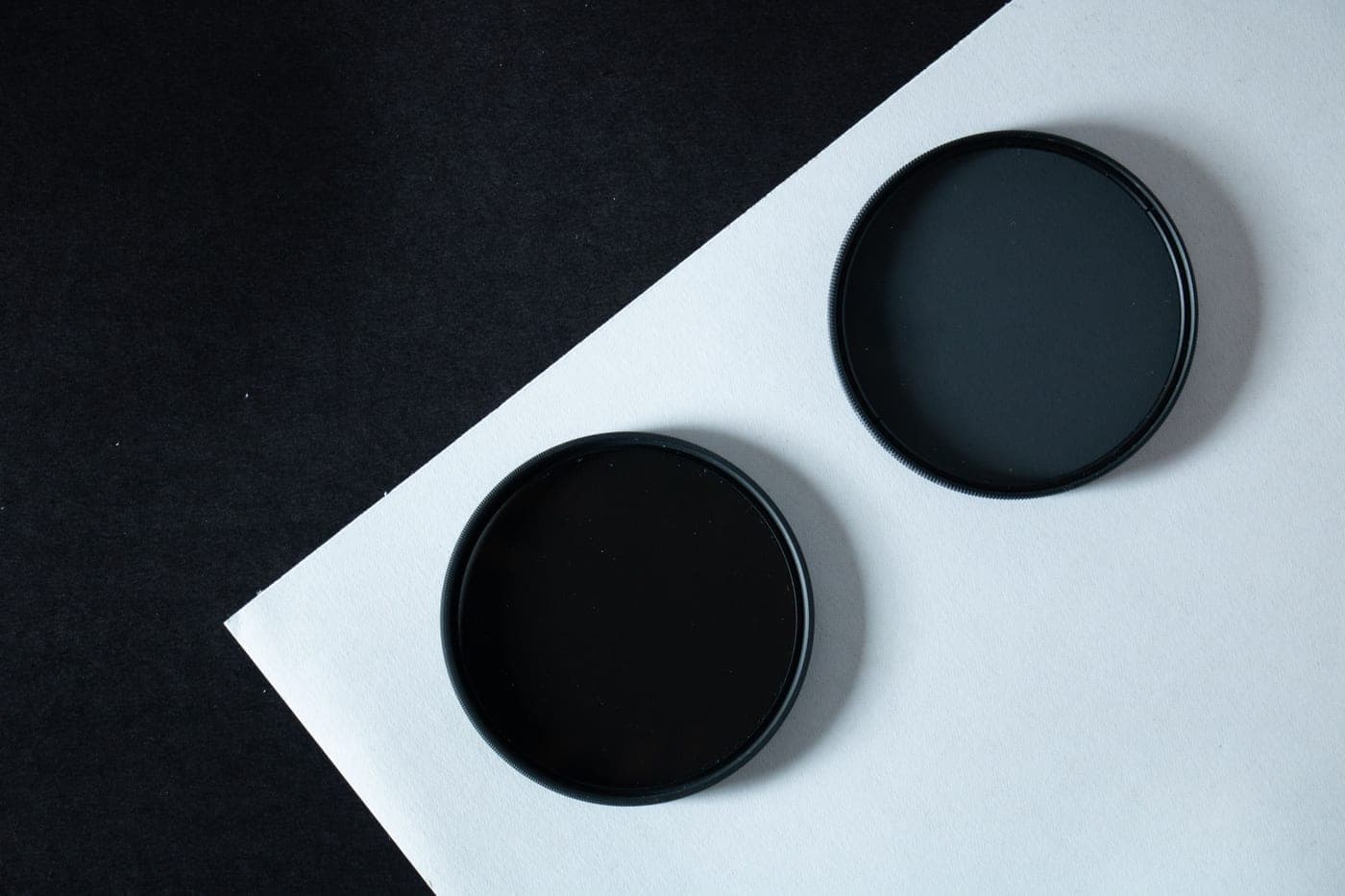
A moon filter is the one that changes a session. What the colored planetary filters do, and why most of them stay in the case.
Top pick: Celestron Moon Filter (1.25")
$12.95 · 12% off
#ad · how this is funded · price as of September 13, 2026
Found something wrong here? Tell us and we will correct it and date the correction, per our editorial policy.