Aperture, Magnification & First Light
Telescope Solar Filters: What Is Safe and What Fits
This is the one accessory where getting it wrong costs you your eyesight rather than your evening. The rules are short, absolute, and easy to follow once somebody states them plainly.
By Scooter M. · Published · How we pick
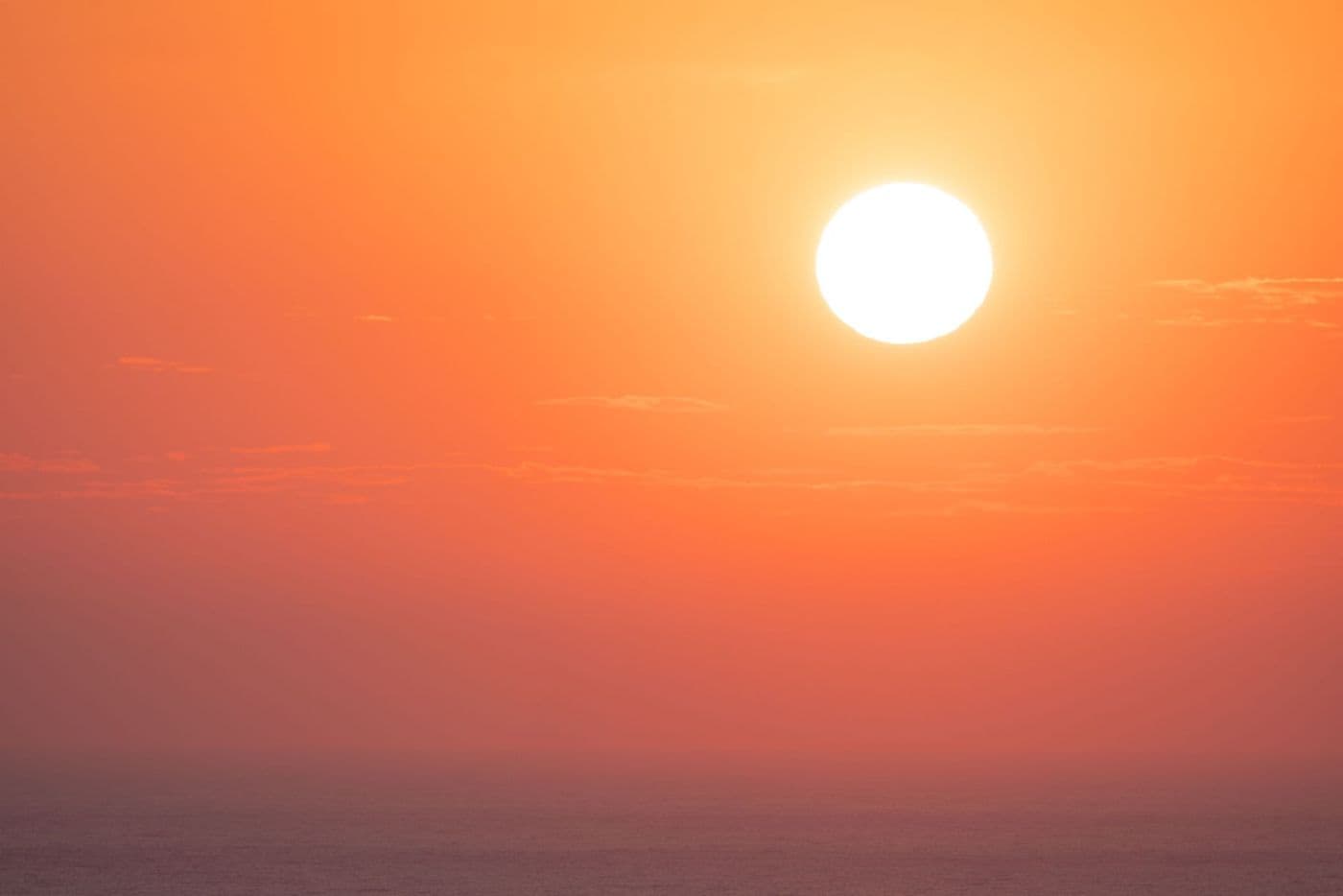
With that established, and it is not negotiable: the Sun is a genuinely rewarding target. It is the only object in the sky that changes visibly from week to week, it is available in the afternoon rather than at midnight, and a correctly filtered telescope shows it safely. The equipment that makes that true is cheap, and choosing it is mostly a matter of getting one measurement right.
How these are judged
Four criteria, and the first one is not negotiable in the way the others are matters of degree.
- Does the maker publish conformance to ISO 12312-2? This is the international standard for filters used to look directly at the Sun. A product that does not name a standard is a product making no claim, and on this accessory that is disqualifying rather than a minor gap.
- Does it mount on the front? The filter has to reject the light before it enters the telescope. Anything that sits behind the objective is receiving concentrated, focused sunlight and can fail in use.
- How positively does it attach? Screws beat straps, straps beat an elastic band. A filter that can be knocked loose while you are looking through it is the single failure mode that matters here.
- Does it actually fit your telescope? A filter that nearly fits is not a compromise worth making. This is where most of the buying mistakes happen, and it is the next section.
The measurement almost everybody gets wrong
A solar filter is sized to the outside diameter of your telescope tube, not to its aperture. Those are different numbers, and the difference is not small: the aperture is the width of the glass or mirror inside, and the tube around it is always wider.
So a 70mm refractor does not take a 70mm filter, and a 130mm reflector does not take a 130mm one. Celestron publishes its Universal filter's fit as 75mm to 100mm of outside diameter, which is the correct way to state it and the reason that filter suits small refractors rather than the aperture you might guess from the number.
What the standard actually means
ISO 12312-2 is the international safety standard for filters intended for direct observation of the Sun. It is the same standard named on legitimate eclipse glasses, and it is what the American Astronomical Society tells people to look for.
Celestron publishes conformance to ISO 12312-2:2015(E) across the EclipSmart range, and states that its Solar Safe film is made in the USA by American Paper Optics, which it describes as one of the suppliers recommended by NASA and the American Astronomical Society, and independently tested by a third-party lab. Those are the maker's own published claims, quoted here as such, and they are the kind of claim worth requiring before you buy anything for this job.
What never to buy, and why
- A solar filter that threads into an eyepiece. These exist and have been sold with beginner telescopes for decades. The whole aperture of the telescope is concentrated onto that tiny piece of glass, and it can crack in use with your eye directly behind it. The accessory guide lists this among the things to skip entirely.
- Anything home-made. Smoked glass, exposed photographic film, welding glass of unknown grade, stacked sunglasses, a CD. None of these block the infrared and ultraviolet that does the damage, and the eye has no pain receptors to warn you while it happens.
- Eclipse glasses held up to an eyepiece. The American Astronomical Society is explicit about this: the concentrated rays could damage the filter and enter your eyes. Eclipse glasses are for naked-eye viewing only.
- A filter with any pinhole, crease, scratch or separation in the film. Not reduced, not used carefully — discarded. A pinhole passes an unfiltered beam.
- An unbranded filter that names no standard. If the listing does not say ISO 12312-2, you are being offered a piece of film and a promise.
And one that is not a filter question at all: cap or remove your finderscope before the telescope goes anywhere near the Sun. A finderscope is a small unfiltered telescope, and it will do the same damage as the main tube. The daylight rules cover the whole procedure.
How this is funded: the buy buttons below are Amazon Associates links, and a qualifying purchase earns us a commission at no extra cost to you. It cannot move the ranking, because the order here is set by aperture per dollar, and no commission rate changes how much light a mirror collects. Full disclosure.
| # | Telescope | Best for | Aperture | Price |
|---|---|---|---|---|
| 1 | 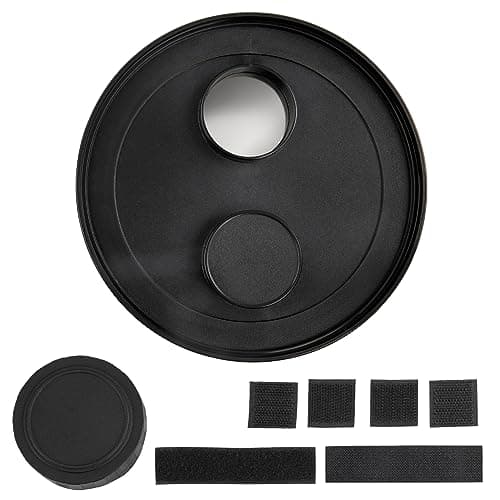 Celestron EclipSmart Solar Filter for 127mm and 130mm ReflectorsTop pickA model-specific front-mounted solar filter for Celestron's 127mm and 130mm reflectors, held on by two hook-and-loop straps. | The 130mm telescopes this site ranks | Named fit: Celestron 127mm and 130mm reflectors260x useful | |
| 2 | 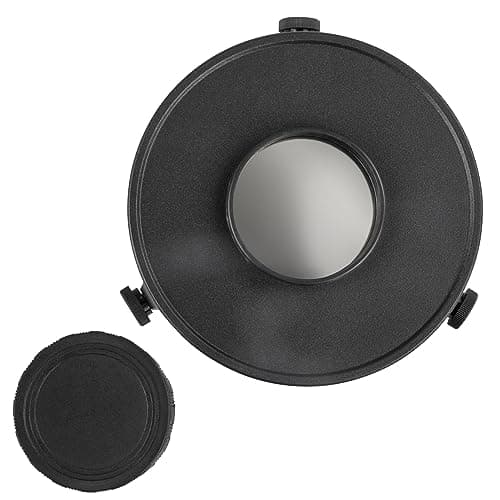 Celestron EclipSmart Solar Filter for AstroMaster 70 RefractorsA model-specific front-mounted solar filter for Celestron's AstroMaster 70 refractors, held on by three safety screws. | AstroMaster 70 owners | Named fit: Celestron AstroMaster 70AZ, 70EQ and LT 70AZ140x useful | |
| 3 | 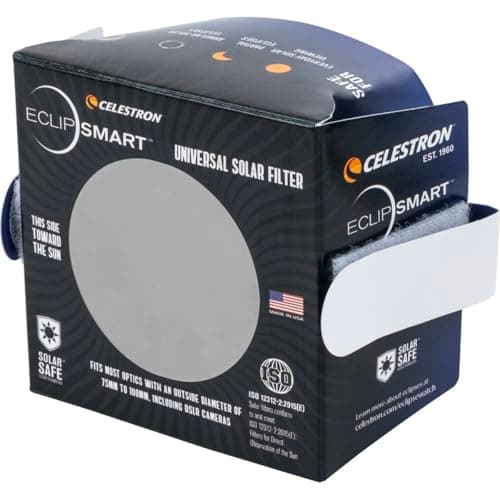 Celestron EclipSmart Universal Solar FilterAn adjustable front-mounted solar filter for objective tubes between 75mm and 100mm outside diameter, conforming to ISO 12312-2:2015(E). | Fitting a tube the named filters miss | Fits objective tubes 75mm to 100mm outside diameter200x useful |
Top pick · The 130mm telescopes this site ranks
Celestron EclipSmart Solar Filter for 127mm and 130mm Reflectors
A model-specific front-mounted solar filter for Celestron's 127mm and 130mm reflectors, held on by two hook-and-loop straps.
What the aperture allows
- Maximum useful magnification
- 260x
- 2 × 130mm of aperture
- Resolving limit (Dawes)
- 0.89 arcseconds
- 116 ÷ 130mm
- Cassini division (0.7″)
- Out of reach
- this aperture cannot resolve it
Two of the telescopes on Celestron's published compatibility list are reviewed on this site: the StarSense Explorer DX 130AZ and the PowerSeeker 127EQ. If you own either, this is the filter that fits without measuring anything.
Two hook-and-loop straps is a more positive fit than an elastic band, and a safety cap protects the film between sessions. Creased or pinholed film is the thing that makes a solar filter unsafe, so storage matters more here than on any other accessory.
Celestron's list is a list of Celestron telescopes. It does not say this fits a Sky-Watcher Heritage 130, and neither does this site: same aperture does not mean same tube diameter.
What it does well
- A named fit for specific telescopes, so there is nothing to measure or guess
- Two hook-and-loop straps hold it more positively than an elastic band
- Includes a safety cap, which is what keeps the film from being creased in a drawer
- Celestron publishes conformance to ISO 12312-2:2015(E)
What it costs you
- The published compatibility list is Celestron models only — a Sky-Watcher of the same aperture is not on it
- Useless if you later change telescope, unlike the universal version
- Like every white-light filter it shows sunspots and nothing else — prominences need a different and far more expensive instrument
Skip this one if: Skip it if your telescope is not on Celestron's published list. Buying a filter that nearly fits is not a compromise worth making on the one accessory where fit is a safety question.
| Optical design | Front-mounted solar filter with two hook-and-loop straps and a safety capIt fits over the FRONT of the telescope, which is the only safe position for a solar filter.Source: Celestron EclipSmart Telescope Solar Filter for 127mm and 130mm Reflectors — the brand's own listing on Amazon.com (retrieved September 14, 2026) |
|---|---|
| Aperture | Named fit: Celestron 127mm and 130mm reflectorsCelestron lists PowerSeeker 127EQ, Astro Fi 130, NexStar 130SLT, Omni XLT AZ 130, SkyProdigy 130, StarSense Explorer LT 127AZ and StarSense Explorer DX 130AZ.Source: Celestron EclipSmart Telescope Solar Filter for 127mm and 130mm Reflectors — the brand's own listing on Amazon.com (retrieved September 14, 2026) |
| Safety standard | Conforms to ISO 12312-2:2015(E)Celestron's own published claim.Source: Celestron EclipSmart Telescope Solar Filter for 127mm and 130mm Reflectors — the brand's own listing on Amazon.com (retrieved September 14, 2026) |
| Film | Solar Safe film made in the USA by American Paper Optics, independently tested by a third-party labSource: Celestron EclipSmart Telescope Solar Filter for 127mm and 130mm Reflectors — the brand's own listing on Amazon.com (retrieved September 14, 2026) |
$31.95 · 28% off
#ad · how this is funded · price as of September 14, 2026
Pick 2 · AstroMaster 70 owners
Celestron EclipSmart Solar Filter for AstroMaster 70 Refractors
A model-specific front-mounted solar filter for Celestron's AstroMaster 70 refractors, held on by three safety screws.
What the aperture allows
- Maximum useful magnification
- 140x
- 2 × 70mm of aperture
- Resolving limit (Dawes)
- 1.66 arcseconds
- 116 ÷ 70mm
- Cassini division (0.7″)
- Out of reach
- this aperture cannot resolve it
Three safety screws is the most positive attachment in the EclipSmart range, and on the one accessory where coming loose is a serious matter, that is worth more than it sounds.
The named fit covers the AstroMaster LT 70AZ, which this site reviews. Solar observing is also one of the few jobs where a small refractor is not at a disadvantage: the Sun is bright enough that aperture buys nothing, and a 70mm tube shows the same sunspot groups a 200mm one does.
That last point is worth holding onto if you are choosing a telescope with solar in mind. Aperture is what this site normally tells you to buy, and the Sun is the one target where it barely matters.
What it does well
- Three safety screws are the most positive fit of any filter in this range
- Includes a safety cap for storage, which protects the film between sessions
- Celestron publishes conformance to ISO 12312-2:2015(E)
- A small refractor loses nothing on the Sun, so this is a genuinely capable solar setup
What it costs you
- Fits three named telescopes and nothing else
- The AstroMaster LT 70AZ it is built for is itself out of stock at the time of writing, so check you can still buy the telescope before buying the filter
- White light only: sunspots and eclipse phases, no prominences
Skip this one if: Skip it if you do not own an AstroMaster 70. There is nothing adjustable about it and a filter that does not fit properly is not a filter you should use.
| Optical design | Front-mounted solar filter with three safety screws and a safety capIt fits over the FRONT of the telescope, which is the only safe position for a solar filter.Source: Celestron EclipSmart Solar Filter for AstroMaster 70 Refractors — the brand's own listing on Amazon.com (retrieved September 14, 2026) |
|---|---|
| Aperture | Named fit: Celestron AstroMaster 70AZ, 70EQ and LT 70AZCelestron publishes this exact compatibility list.Source: Celestron EclipSmart Solar Filter for AstroMaster 70 Refractors — the brand's own listing on Amazon.com (retrieved September 14, 2026) |
| Safety standard | Conforms to ISO 12312-2:2015(E)Celestron's own published claim.Source: Celestron EclipSmart Solar Filter for AstroMaster 70 Refractors — the brand's own listing on Amazon.com (retrieved September 14, 2026) |
| Film | Solar Safe film made in the USA by American Paper Optics, independently tested by a third-party labSource: Celestron EclipSmart Solar Filter for AstroMaster 70 Refractors — the brand's own listing on Amazon.com (retrieved September 14, 2026) |
#ad · how this is funded · price as of September 14, 2026
Pick 3 · Fitting a tube the named filters miss
Celestron EclipSmart Universal Solar Filter
An adjustable front-mounted solar filter for objective tubes between 75mm and 100mm outside diameter, conforming to ISO 12312-2:2015(E).
What the aperture allows
- Maximum useful magnification
- 200x
- 2 × 100mm of aperture
- Resolving limit (Dawes)
- 1.16 arcseconds
- 116 ÷ 100mm
- Cassini division (0.7″)
- Out of reach
- this aperture cannot resolve it
This is the filter to buy when no model-specific one exists for your telescope. The published fit range is 75mm to 100mm of OUTSIDE tube diameter, and that distinction does most of the work: a 70mm refractor has a tube considerably wider than 70mm, so the number to measure is the outside of the tube rather than the aperture on the box.
It attaches with adjustable side panels and an elastic band rather than screws, which is what makes it universal and also what makes fit worth checking carefully. A solar filter that can be knocked loose is the one failure mode that matters.
The film is the same Solar Safe material Celestron uses across the EclipSmart range, made by American Paper Optics and, per Celestron, independently third-party tested.
What it does well
- Fits a range of tubes rather than one named telescope, so it survives a telescope upgrade
- Celestron publishes conformance to ISO 12312-2:2015(E), the standard the American Astronomical Society names
- Folds flat and stores in its own bag, which keeps the film from creasing
- Works on a spotting scope or a camera lens in the same diameter range
What it costs you
- An elastic band is less positive than screws or hook-and-loop straps, so the fit needs checking before every single use
- The 75mm to 100mm range covers small refractors and nothing larger, so most Dobsonian owners are not served by it
- No safety cap is listed, unlike the model-specific filters in the range
Skip this one if: Skip it if Celestron publishes a model-specific filter for your exact telescope. A filter that straps or screws to a named tube is a more positive fit than an adjustable one.
| Optical design | Front-mounted solar filter with adjustable side panels and a securing elastic bandIt fits over the FRONT of the telescope, which is the only safe position for a solar filter. It folds flat for storage.Source: Celestron EclipSmart Universal Solar Filter — the brand's own listing on Amazon.com (retrieved September 14, 2026) |
|---|---|
| Aperture | Fits objective tubes 75mm to 100mm outside diameterCelestron publishes the fit as an OUTSIDE diameter, not an aperture. Measure the outside of your tube, which is always larger than the aperture.Source: Celestron EclipSmart Universal Solar Filter — the brand's own listing on Amazon.com (retrieved September 14, 2026) |
| Safety standard | Conforms to ISO 12312-2:2015(E)Celestron's own published claim: the international safety standard for filters used to view the Sun directly.Source: Celestron EclipSmart Universal Solar Filter — the brand's own listing on Amazon.com (retrieved September 14, 2026) |
| Film | Solar Safe film made in the USA by American Paper Optics, independently tested by a third-party labCelestron states American Paper Optics is one of the suppliers recommended by NASA and the American Astronomical Society.Source: Celestron EclipSmart Universal Solar Filter — the brand's own listing on Amazon.com (retrieved September 14, 2026) |
| Image tint | OrangeSource: Celestron EclipSmart Universal Solar Filter — the brand's own listing on Amazon.com (retrieved September 14, 2026) |
#ad · how this is funded · price as of September 14, 2026
What you will actually see
A white-light solar filter shows the Sun's visible surface. That means sunspots, which come and go over days and weeks and are genuinely interesting to follow, and it means the sharp edge of the solar disc. During a partial eclipse it means the Moon's silhouette moving across that disc.
| Target | With a white-light filter | Note |
|---|---|---|
| Sunspots | Yes, clearly | They change week to week, which is the appeal |
| The solar disc edge | Yes, sharp | Limb darkening is visible on a steady day |
| Partial eclipse phases | Yes | The reason most people buy one |
| A transit of Mercury or Venus | Yes, when one happens | Rare, and unforgettable |
| Prominences | No | Needs a hydrogen-alpha telescope, a different and far dearer instrument |
| The corona | No | Visible only during totality, with no filter at all |
The last two rows are where expectations usually need managing. Every dramatic photograph of loops of fire at the Sun's edge was taken through a hydrogen-alpha instrument, not through a white-light filter on an ordinary telescope. A white-light filter is not a lesser version of that; it is a different thing that shows a different feature.
Aperture barely matters here, for once
This site tells you to buy aperture on almost every other page, because light-gathering is what decides whether a faint object is visible at all. The Sun is the exception. There is no shortage of light, so a 70mm refractor and a 200mm Dobsonian both show the same sunspot groups.
Aperture still buys resolution in principle. In practice daytime air is turbulent — the ground is heating, and the same rising air that blurs a planet at midnight is far worse at two in the afternoon — so the atmosphere usually decides how much detail you get rather than the telescope. Why the atmosphere sets the ceiling applies here more strongly than anywhere else.
The practical consequence is cheerful: a small refractor is a perfectly good solar telescope, and if it is the one you already own you do not need a bigger one for this.
The gap worth stating: large Dobsonians
Celestron publishes 6-inch and 8-inch EclipSmart filters, which would suit the 150mm and 200mm Dobsonians this site ranks. Neither is currently purchasable — both come back from the retailer as available on a future date rather than in stock — so neither is featured here, because this site does not point buyers at listings they cannot buy from.
If you own a 150mm or 200mm Dobsonian and want to observe the Sun, the honest options are to wait for those to return, or to buy from a specialist astronomy dealer rather than a general retailer. What you should not do is buy an undersized filter and improvise a mounting.
The check before every session
- Inspect the film against a bright indoor light before it goes near the telescope. Any pinhole, crease, scratch or lifting at the edges means the filter is finished.
- Fit the filter first, in the shade, before the telescope is pointed anywhere near the Sun. Then check it is properly seated and cannot be knocked off.
- Cap or remove the finderscope. Every time. This is the step people forget once and remember forever.
- Aim by the telescope's shadow, not by looking along the tube: move the telescope until its shadow on the ground is smallest and roundest.
- Supervise children throughout. A curious child removing a filter to see what happens is a foreseeable accident, not a remote one.
None of this is difficult and all of it becomes automatic after two sessions. It is written out at this length because the cost of skipping a step is not a wasted evening, and every other page on this site is about wasted evenings.
Questions people actually ask
Can you look at the Sun through a telescope?
Only with a purpose-made solar filter fitted securely over the FRONT of the telescope, so the light is rejected before it enters. The filter should conform to ISO 12312-2, the standard the American Astronomical Society names. Without one, permanent eye damage is instant and painless.
What size solar filter do I need?
Measure the OUTSIDE diameter of your telescope tube, not its aperture. They are different numbers and the tube is always wider. Celestron publishes its Universal filter as fitting 75mm to 100mm of outside diameter, which is the correct way to state it. If a filter is named for your exact telescope, buy that and skip the measuring.
Can I make my own solar filter?
No. Smoked glass, exposed film, unknown-grade welding glass and stacked sunglasses all fail to block the infrared and ultraviolet that causes the damage, and your eye has no pain receptors to warn you while it happens. This is the one accessory where improvising is not a budget decision.
Can I use eclipse glasses with a telescope?
No. The American Astronomical Society is explicit that holding eclipse glasses to a telescope, binoculars or a camera is dangerous, because the concentrated rays can damage the filter and reach your eyes. Eclipse glasses are for naked-eye viewing only.
Will a solar filter show solar prominences?
No. A white-light filter shows the visible surface: sunspots, the sharp solar limb, and eclipse phases. Prominences need a hydrogen-alpha telescope, which is a different instrument at several times the price of a beginner telescope.
Do I need a bigger telescope for the Sun?
No, and this is the one target where that is true. There is no shortage of light, so a 70mm refractor shows the same sunspot groups as a 200mm Dobsonian. Daytime air is turbulent enough that the atmosphere usually limits detail before the telescope does.
Does the finderscope need a filter too?
The finderscope needs a filter or a cap, and a cap is simpler. It is a small unfiltered telescope and it will cause the same injury as the main tube. Capping it is part of the setup every single time.
Read next
Using a Telescope in Daylight
Daytime use, the accessory that makes it work, and the one absolute safety rule that has no exceptions.
Top pick: Celestron Ultima 20-60x80 Angled Spotting Scope
#ad · how this is funded · price as of September 14, 2026
Best filter buy
Telescope Filters: Which Ones Earn Their Place
A moon filter is the one that changes a session. What the colored planetary filters do, and why most of them stay in the case.
Top pick: Celestron Moon Filter (1.25")
$12.95 · 12% off
#ad · how this is funded · price as of September 14, 2026
Buy this first
Telescope Accessories Worth Buying, In Order
Which telescope accessories change a session and which duplicate what came in the box, ranked by what they actually do.
Top pick: Celestron Moon Filter (1.25")
$12.95 · 12% off
#ad · how this is funded · price as of September 14, 2026
Found something wrong here? Tell us and we will correct it and date the correction, per our editorial policy.