Reviews
Celestron Moon Filter
The cheapest accessory on this site, and the one whose necessity depends entirely on your aperture. There is also a way to get most of its benefit for nothing.
By Scooter M. · Published · How we pick
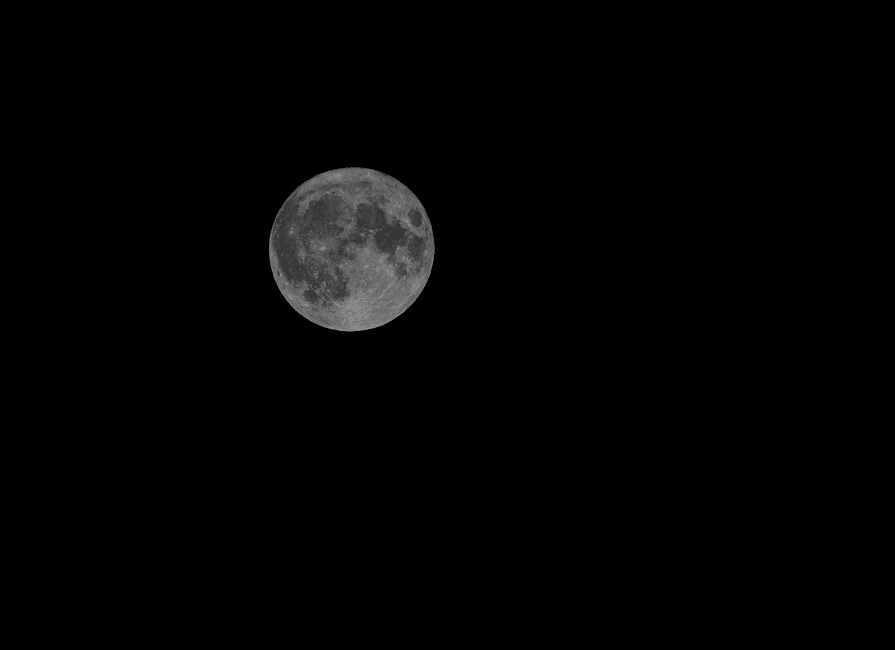
The first time somebody points a reasonably large telescope at a full Moon they flinch. It is genuinely uncomfortable, it wrecks night vision for the next ten minutes, and the surface looks washed out and flat. A moon filter is the standard answer, it costs very little, and whether you need one is a question with an arithmetic answer rather than a matter of taste.
What the filter is
Celestron's own listing publishes it as a neutral-density filter that threads into the barrel of a 1.25-inch eyepiece, stated to reduce lunar glare, improve contrast and reveal surface detail. Neutral density means it dims across the visible spectrum roughly evenly, so it darkens the image without tinting it — unlike a colored planetary filter, which deliberately passes some wavelengths and blocks others.
It has no moving parts and no optical power. It threads on, it makes the Moon dimmer, and that is the entire product.
Why the Moon gets uncomfortable, and at what aperture
The Moon's surface brightness does not change with your telescope. What changes is how much light reaches your retina, and that is governed by the exit pupil.
exit pupil = aperture / magnification
203 / 48 = 4.2mm. 203 / 200 = 1.0mm. (4.2 / 1.0)squared = 18.
An 8-inch telescope at its supplied 48x delivers a 4.2mm exit pupil. The same telescope at 200x delivers 1.0mm, and the image is about eighteen times dimmer. Nothing was filtered; the light was simply spread over a larger magnified image.
That single calculation explains both the problem and the free solution. Discomfort happens at low magnification on a large aperture, because that is the combination that puts a wide, bright cone into your eye. It is why a 70mm telescope never needs a moon filter and a 200mm one at low power always feels like it does.
So when is the filter genuinely the right answer?
- When you want the whole Moon in one view. At the low power needed to frame the full disc on a large telescope, the brightness cannot be tuned away with magnification. This is the filter's strongest case.
- Near full Moon specifically. At first or last quarter the illuminated area is halved and the glare problem largely solves itself. The filter matters most across the few nights either side of full.
- When you are sharing the eyepiece. Handing a 200mm telescope at 50x to somebody who has not dark-adapted is unkind without one, and children in particular will simply pull away.
- When you want to preserve dark adaptation. Ten minutes of the unfiltered full Moon costs you the faint end of the rest of the session.
- On Venus. Venus is small and startlingly bright, and neutral density helps there too, which is a use the packaging tends not to mention.
And when it is a waste of money
- Below about 100mm of aperture. A 70mm or 76mm telescope does not gather enough light for the Moon to be painful, and the filter will simply make a modest image dimmer than it should be.
- If you observe the Moon mostly at high magnification anyway. The exit pupil arithmetic has already done the filter's job for you.
- If you mainly observe near the terminator. The dramatic, shadow-filled lunar views are along the day-night line, which is far less bright than the fully-lit surface and is where the interesting detail lives regardless. The Moon covers what to look at and when.
- If you want adjustability. A variable polarizing filter lets you dial the density up and down; a fixed neutral-density filter gives you one setting, which is sometimes too dark at high power.
How this is funded: the buy buttons below are Amazon Associates links, and a qualifying purchase earns us a commission at no extra cost to you. It cannot move the ranking, because the order here is set by aperture per dollar, and no commission rate changes how much light a mirror collects. Full disclosure.
| # | Telescope | Best for | Aperture | Price |
|---|---|---|---|---|
| 1 | 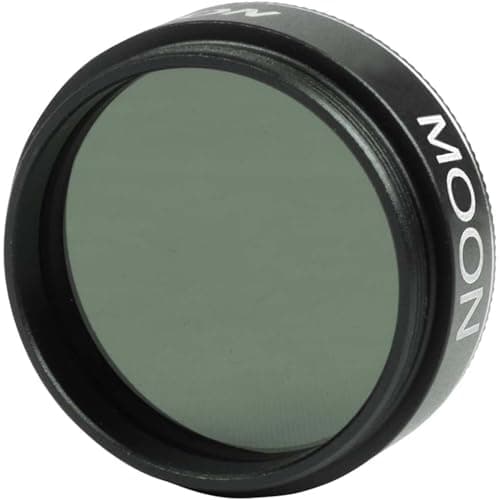 Celestron Moon Filter (1.25")Top pickA neutral-density filter that screws into an eyepiece and makes the full Moon comfortable to look at. | The cheapest real upgrade | 1.25" thread64x useful |
Top pick · The cheapest real upgrade
Celestron Moon Filter (1.25")
A neutral-density filter that screws into an eyepiece and makes the full Moon comfortable to look at.
What the aperture allows
- Maximum useful magnification
- 64x
- 2 × 31.75mm of aperture
- Resolving limit (Dawes)
- 3.65 arcseconds
- 116 ÷ 31.75mm
- Cassini division (0.7″)
- Out of reach
- this aperture cannot resolve it
The full Moon through a 130mm telescope is genuinely too bright to look at comfortably, and the discomfort costs you detail: a dazzled eye resolves less.
The filter is neutral density, meaning it cuts the light without shifting the color. Contrast goes up, the glare goes away, and the terminator, the line between lunar day and night where the shadows are longest, becomes the best thing in the sky.
It is the single cheapest item that changes an observing session, and it is the one accessory almost every beginner buys second rather than first.
What it does well
- Turns the full Moon from uncomfortable into detailed
- Threads into any standard 1.25-inch eyepiece
- Costs less than almost anything else that improves a view
What it costs you
- Only useful on the Moon and on Venus
- Redundant if you buy an accessory kit, which usually includes one
Skip this one if: Skip it if you are already buying an eyepiece and filter kit. There is one in the case.
| Optical design | Neutral-density filter that threads into a 1.25-inch eyepiece barrelSource: Celestron Moon Filter — the brand's own listing on Amazon.com (retrieved September 1, 2026) |
|---|---|
| Aperture | 1.25" threadThe fitting size. It threads into the eyepiece, not into the telescope.Source: Celestron Moon Filter — the brand's own listing on Amazon.com (retrieved September 1, 2026) |
| Effect | Reduces lunar glare, improves contrast and reveals surface detailCelestron's own description of what the filter does.Source: Celestron Moon Filter — the brand's own listing on Amazon.com (retrieved September 1, 2026) |
$12.95 · 12% off
#ad · how this is funded · price as of September 27, 2026
What it does not do
Three things are worth ruling out, because all three are things buyers hope for.
- It is not a solar filter and must never be used as one. A moon filter threads into the eyepiece, behind the telescope's full aperture, and pointing any telescope at the Sun without a certified filter over the front of the tube will cause permanent eye injury in a fraction of a second. This is not a matter of degree. Solar filters explains what a safe filter looks like and where it has to sit.
- It does not reduce light pollution. Neutral density dims everything equally, including the object you are trying to see, so it cannot improve contrast against skyglow. That needs a filter that blocks specific wavelengths. Filters explained sets out the difference.
- It does not sharpen anything. Celestron's claim that it improves contrast and reveals detail is fair in the sense that a comfortable eye sees more than a dazzled one, but the filter adds no resolution. Resolving power comes from aperture: 116 divided by the aperture in millimeters, and no accessory changes it.
How it fits, and what it stacks with
It threads into the front of a 1.25-inch eyepiece barrel, so it sits between the telescope and the eyepiece rather than clipping over anything. That means one filter serves every 1.25-inch eyepiece you own, moved across as needed, and it also means it will not fit a 2-inch eyepiece without an adapter.
Filters of this type are threaded on both faces, so they stack. Combining this with a colored planetary filter is possible and rarely useful, since each one you add costs light and adds two more glass surfaces. The one combination worth knowing about is a neutral-density filter with a single polarizing filter, which gives a limited amount of adjustment by rotating one against the other.
One practical note: thread it on gently. These are thin aluminum cells and cross-threading one into an eyepiece in the dark is the usual way they get damaged.
Who should buy it, and who should not
Buy it if you own a telescope of roughly 100mm or more and you enjoy looking at the full Moon at low power, or if you share the eyepiece with other people. At this price it is the least consequential purchase on the whole site and it solves a real, specific irritation. It also weighs nothing and lives in a pocket of the eyepiece case forever.
Do not buy it for a small telescope, where there is no problem to solve. Do not buy it expecting help with city skies or any use involving the Sun. And if you think you might want to fine-tune the brightness rather than accept one fixed level, consider a variable polarizing filter instead — it costs more and does the job with a dial. Accessories worth buying, in order puts this against everything else competing for the same money.
Questions people actually ask
Do I need a moon filter for my telescope?
Probably yes above about 100mm of aperture if you view the full Moon at low magnification, and probably no below it. Retinal brightness scales with the square of the exit pupil, so a large aperture at low power is what makes the Moon uncomfortable. A 70mm telescope never reaches that point.
Does a moon filter improve detail?
Indirectly. It adds no resolution — that comes only from aperture, at 116 divided by the aperture in millimeters — but a comfortable, undazzled eye perceives more contrast than a dazzled one. If the Moon currently looks like a featureless white glare, a filter will let you see the surface.
Can I use a moon filter to look at the Sun?
No, never. A moon filter threads into the eyepiece behind the telescope's full aperture and offers no protection whatsoever. Solar observing requires a certified filter fitted over the front of the tube, and using an eyepiece filter instead will cause permanent eye injury almost instantly.
Is there a free alternative to a moon filter?
Yes, for most situations: raise the magnification. Exit pupil is aperture divided by magnification and brightness scales with its square, so going from 50x to 150x makes the Moon about nine times dimmer and larger at the same time. Observing near the terminator rather than at full Moon also largely avoids the problem.
Moon filter or variable polarizing filter?
A fixed neutral-density filter like this one is cheaper and gives you one level of dimming. A variable polarizing filter costs more and lets you adjust the density, which is useful because the right amount of dimming changes with magnification and with the Moon's phase.
Read next
Best filter buy
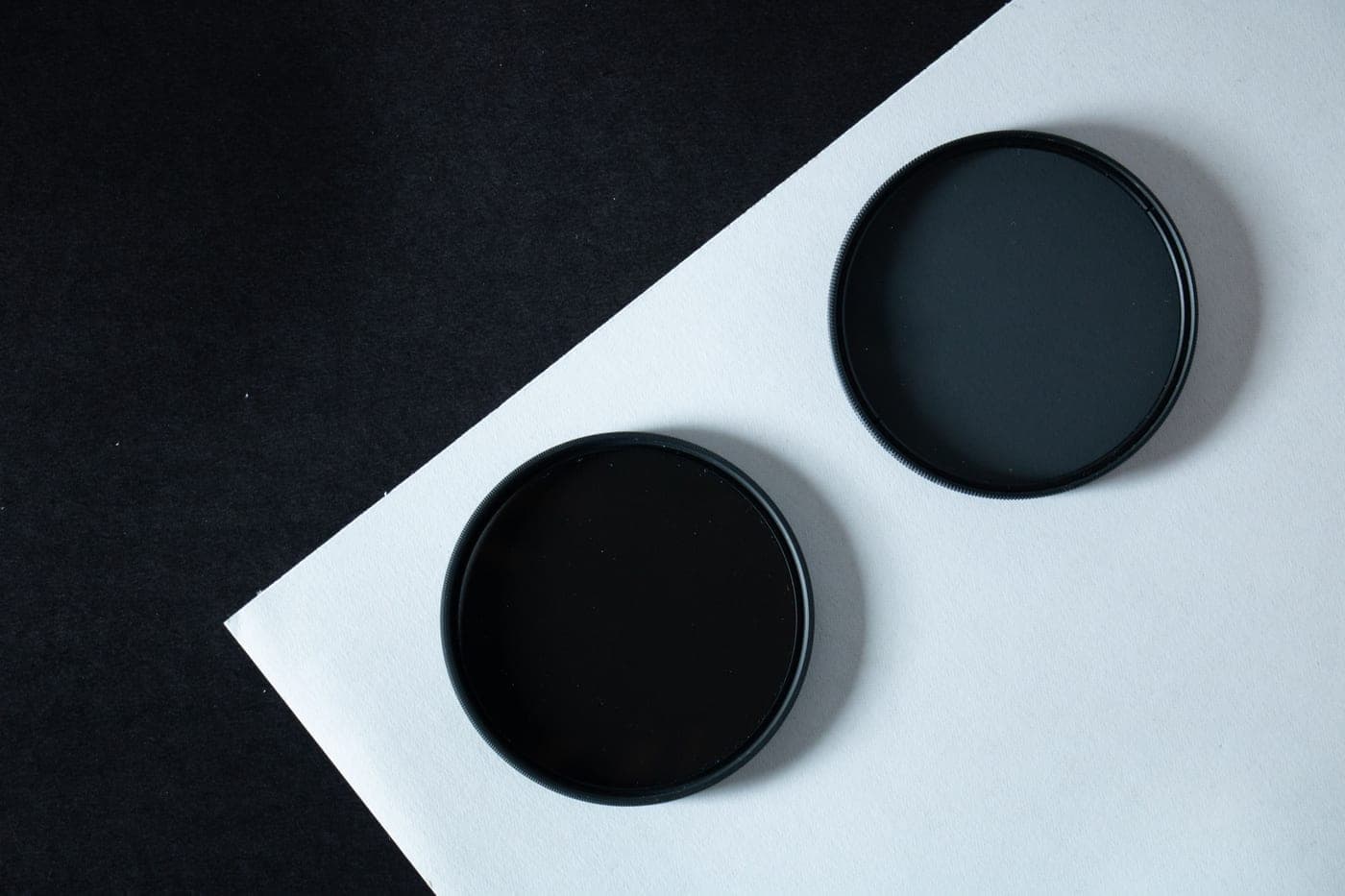
Telescope Filters: Which Ones Earn Their Place
A moon filter is the one that changes a session. What the colored planetary filters do, and why most of them stay in the case.
Top pick: Celestron Moon Filter (1.25")
$12.95 · 12% off
#ad · how this is funded · price as of September 27, 2026
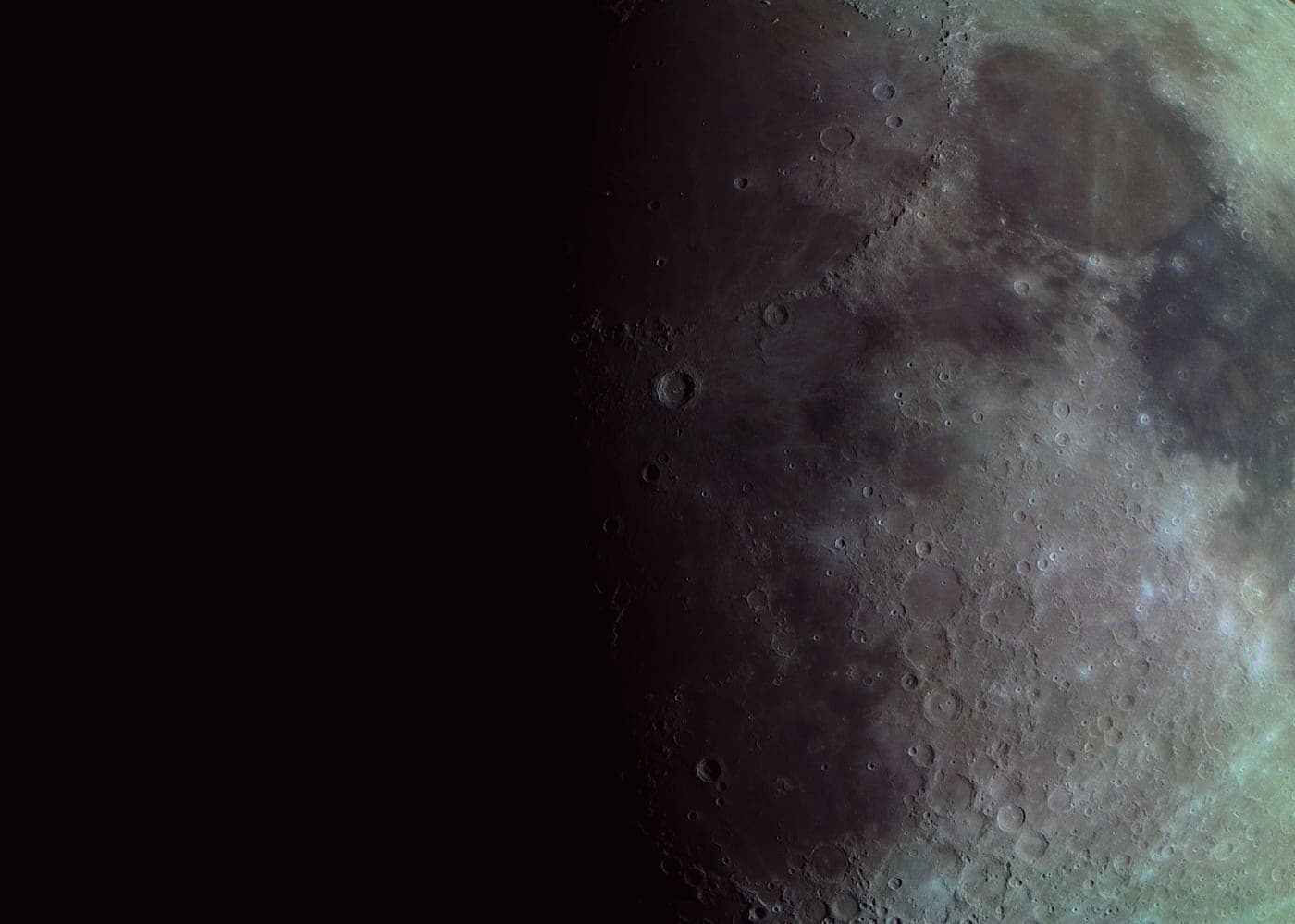
The Moon Through a Telescope, and the Magnification to Use
The magnification that suits the Moon, why full Moon is the worst night to look, and what a moon filter actually fixes.
Top pick: Celestron Moon Filter (1.25")
$12.95 · 12% off
#ad · how this is funded · price as of September 27, 2026
Buy this first
Telescope Accessories Worth Buying, In Order
Which telescope accessories change a session and which duplicate what came in the box, ranked by what they actually do.
Top pick: Celestron Moon Filter (1.25")
$12.95 · 12% off
#ad · how this is funded · price as of September 27, 2026
Found something wrong here? Tell us and we will correct it and date the correction, per our editorial policy.