What You Can Actually See
The Moon Through a Telescope, and the Magnification to Use
The Moon is the one object where every telescope on this site performs superbly, and the one where beginners most often look on the wrong night.
By Scooter M. · Published · How we pick
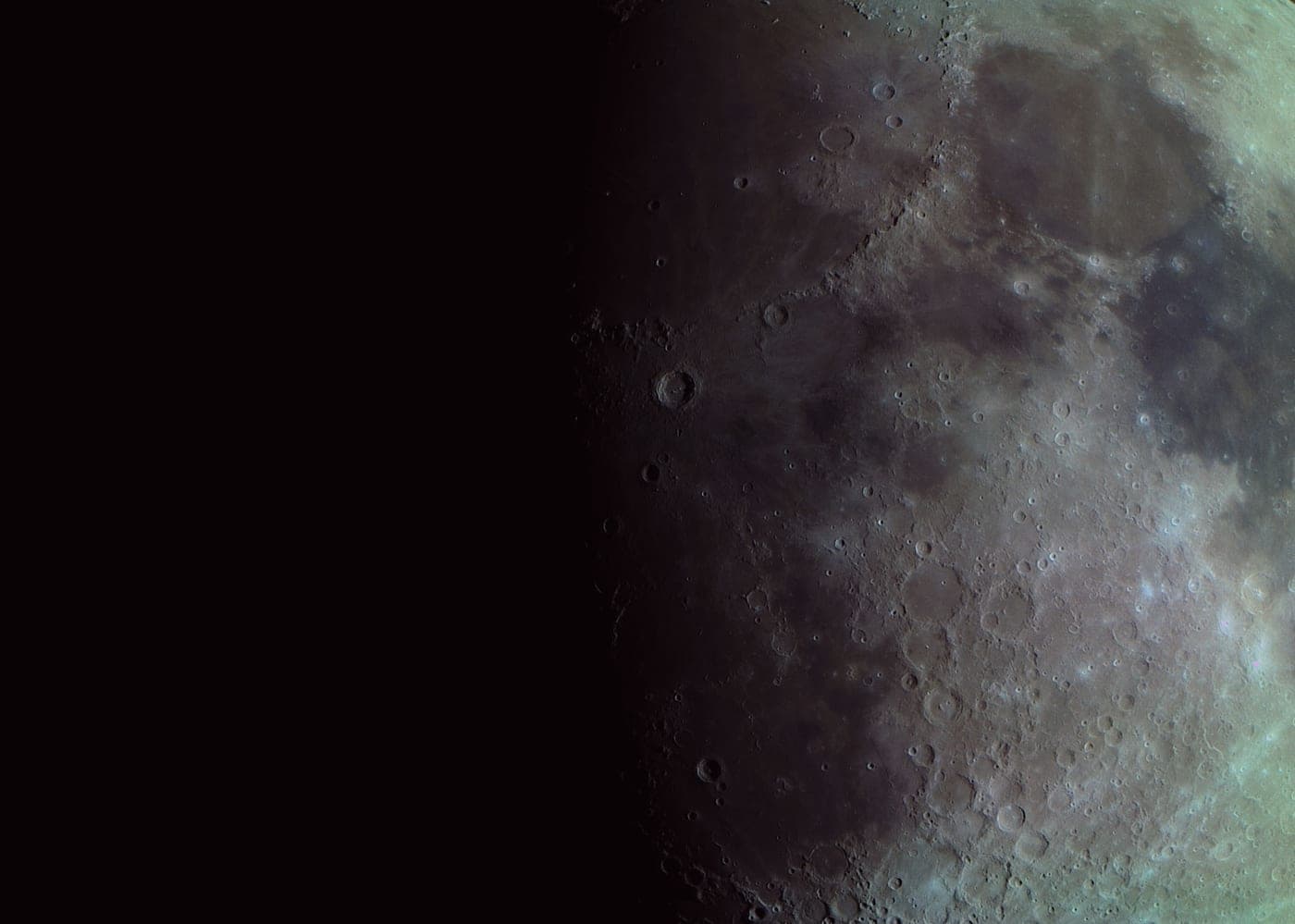
For the Moon, use between 50x and 150x, and look when it is a crescent or half rather than full. Almost every disappointing first look at the Moon is a full Moon at high magnification, which is the worst combination available.
Why the full Moon is the wrong night
At full Moon the Sun is directly behind you as far as the lunar surface is concerned, so nothing casts a shadow. The craters are still there and you cannot see them, because what you are seeing is a flat, dazzling, uniformly lit disc.
The good nights are the ones either side of first and last quarter. Along the terminator, the line dividing lunar day from lunar night, the Sun is low on the lunar horizon and every crater rim throws a long black shadow. That is where the Moon becomes three-dimensional, and it is genuinely startling the first time.
The magnification that works
| Magnification | What it suits |
|---|---|
| 30x to 50x | The whole disc in one view; best at crescent phase |
| 50x to 100x | The general survey; craters, seas and the terminator |
| 100x to 150x | Individual craters, central peaks, rille detail |
| Above 150x | Only on a still night, and only worthwhile with 130mm and up |
The reason not to push higher is the same as everywhere else: the ceiling is two times the aperture in millimeters, and the atmosphere usually settles the matter below that. Work up in steps and stop when the image softens.
The moon filter is not optional
The full Moon through a 130mm telescope is genuinely uncomfortable to look at, and the discomfort has a cost: a dazzled eye resolves less, and it takes twenty minutes to recover the dark adaptation you just destroyed.
A neutral-density moon filter threads into the eyepiece and cuts the light without shifting the color. It is the cheapest accessory that changes a session, and above about 100mm of aperture it stops being optional. Which filters earn their place covers the colored ones, which are a far weaker case.
What to look at, in order
- The terminator, wherever it is tonight. Every good lunar view is somewhere along that line.
- Copernicus, a large crater with terraced walls and a central peak, spectacular when the terminator is near it.
- The Apennine mountains, the curved range along the edge of Mare Imbrium, which throw dramatic shadows at the right phase.
- Plato, a dark flat-floored crater near the northern limb, easy to identify and a good test of a night's seeing.
- Tycho and its ray system, best at full Moon, which is the one thing full Moon is good for.
Any free lunar map app will name what you are looking at as you go. That turns a session from looking at craters into recognizing places, which is a lot more durable as a habit. The Moon is also the one target a phone genuinely photographs well through an eyepiece: what a phone can and cannot capture.
How this is funded: the buy buttons below are Amazon Associates links, and a qualifying purchase earns us a commission at no extra cost to you. It cannot move the ranking, because the order here is set by aperture per dollar, and no commission rate changes how much light a mirror collects. Full disclosure.
| # | Telescope | Best for | Aperture | Price |
|---|---|---|---|---|
| 1 | 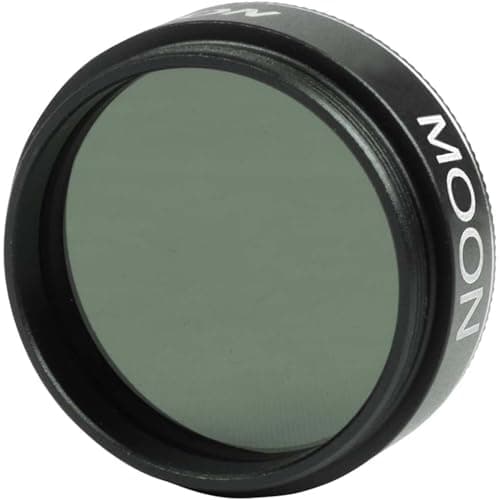 Celestron Moon Filter (1.25")Top pickA neutral-density filter that screws into an eyepiece and makes the full Moon comfortable to look at. | The cheapest real upgrade | 1.25" thread64x useful | |
| 2 | 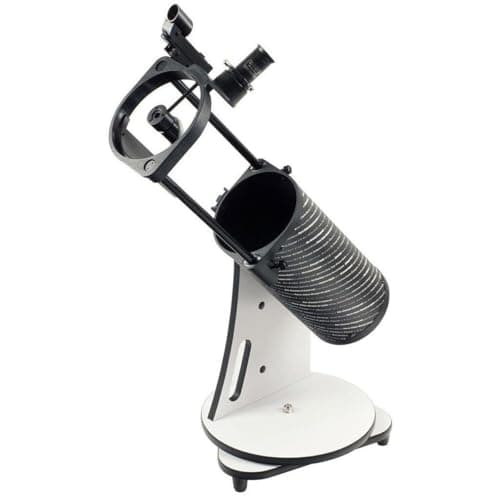 Sky-Watcher Heritage 130 Tabletop DobsonianThe same 130mm parabolic mirror as scopes costing far more, on a base with no tripod to wobble and nothing to set up. | Most aperture per dollar | 130mm260x useful | |
| 3 | 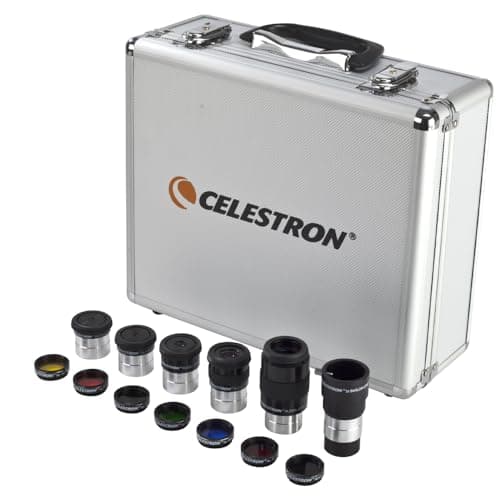 Celestron Eyepiece, Barlow and Filter Kit (1.25")Five Plossl eyepieces from 32mm down to 6mm plus a 2x Barlow. This is the accessory that actually changes what you see. | The upgrade that changes the most | 1.25" barrel64x useful |
Top pick · The cheapest real upgrade
Celestron Moon Filter (1.25")
A neutral-density filter that screws into an eyepiece and makes the full Moon comfortable to look at.
What the aperture allows
- Maximum useful magnification
- 64x
- 2 × 31.75mm of aperture
- Resolving limit (Dawes)
- 3.65 arcseconds
- 116 ÷ 31.75mm
- Cassini division (0.7″)
- Out of reach
- this aperture cannot resolve it
The full Moon through a 130mm telescope is genuinely too bright to look at comfortably, and the discomfort costs you detail: a dazzled eye resolves less.
The filter is neutral density, meaning it cuts the light without shifting the color. Contrast goes up, the glare goes away, and the terminator, the line between lunar day and night where the shadows are longest, becomes the best thing in the sky.
It is the single cheapest item that changes an observing session, and it is the one accessory almost every beginner buys second rather than first.
What it does well
- Turns the full Moon from uncomfortable into detailed
- Threads into any standard 1.25-inch eyepiece
- Costs less than almost anything else that improves a view
What it costs you
- Only useful on the Moon and on Venus
- Redundant if you buy an accessory kit, which usually includes one
Skip this one if: Skip it if you are already buying an eyepiece and filter kit. There is one in the case.
| Optical design | Neutral-density filter that threads into a 1.25-inch eyepiece barrelSource: Celestron Moon Filter — the brand's own listing on Amazon.com (retrieved September 1, 2026) |
|---|---|
| Aperture | 1.25" threadThe fitting size. It threads into the eyepiece, not into the telescope.Source: Celestron Moon Filter — the brand's own listing on Amazon.com (retrieved September 1, 2026) |
| Effect | Reduces lunar glare, improves contrast and reveals surface detailCelestron's own description of what the filter does.Source: Celestron Moon Filter — the brand's own listing on Amazon.com (retrieved September 1, 2026) |
$12.95 · 12% off
#ad · how this is funded · price as of October 18, 2026
Pick 2 · Most aperture per dollar
Sky-Watcher Heritage 130 Tabletop Dobsonian
The same 130mm parabolic mirror as scopes costing far more, on a base with no tripod to wobble and nothing to set up.
What the aperture allows
- Maximum useful magnification
- 260x
- 2 × 130mm of aperture
- Resolving limit (Dawes)
- 0.89 arcseconds
- 116 ÷ 130mm
- Cassini division (0.7″)
- Out of reach
- this aperture cannot resolve it
Worked example: a 25mm eyepiece in this telescope gives 650mm ÷ 25mm = 26x.
This is the aperture-per-dollar champion of the beginner shelf and it is not close. You get the same 130mm parabolic mirror found in telescopes at twice the price, and you get it without paying for a tripod, a slow-motion assembly or a hand controller.
Two times 130mm is 260x of useful magnification. Dawes' limit at 130mm works out to 116 divided by 130, which is 0.89 arcseconds. The Cassini division in Saturn's rings spans roughly 0.7 arcseconds at its widest, so this telescope sits right at the edge of showing it on a still night and will show the rings themselves easily.
The catch is the word tabletop. It needs a surface at roughly chest height when you are seated. A garden table works, a plastic patio chair does not, and buying one without thinking about where it will stand is the single most common regret with this design.
The tube collapses, which is what makes it live in a cupboard rather than a garage. That matters more than it sounds: the telescope you can carry outside in one trip is the telescope you use.
What it does well
- The most aperture you can buy at this price, by a clear margin
- Nothing to assemble, no tripod to wobble, ready in the time it takes to carry it outside
- Collapsible tube stores in a cupboard and keeps its collimation
- The Dobsonian motion is intuitive: you push the tube where you want to look
What it costs you
- Needs a solid table or stool at the right height, which is a real constraint
- The helical focuser is coarser than a rack-and-pinion or a Crayford
- Open tube design collects dust and needs the odd mirror clean
Skip this one if: Skip it if you have nowhere to stand it. On the ground it points at treetops, and on a wobbly plastic table every view shakes.
$305.00 · 12% off
#ad · how this is funded · price as of October 18, 2026
Pick 3 · The upgrade that changes the most
Celestron Eyepiece, Barlow and Filter Kit (1.25")
Five Plossl eyepieces from 32mm down to 6mm plus a 2x Barlow. This is the accessory that actually changes what you see.
What the aperture allows
- Maximum useful magnification
- 64x
- 2 × 31.75mm of aperture
- Resolving limit (Dawes)
- 3.65 arcseconds
- 116 ÷ 31.75mm
- Cassini division (0.7″)
- Out of reach
- this aperture cannot resolve it
Magnification is telescope focal length divided by eyepiece focal length, so this kit is the variable in that equation. On a 650mm f/5 telescope the 32mm gives 20x, the 13mm gives 50x and the 6mm gives 108x. On a 1200mm Dobsonian the same three give 38x, 92x and 200x.
The 2x Barlow halves every eyepiece's effective focal length, which is where the ten-eyepieces-in-one claim comes from. It is true arithmetic, but a Barlow on a 6mm eyepiece produces 3mm, and on most beginner telescopes 3mm is beyond the useful magnification the aperture supports.
The useful lesson is that the two eyepieces in the telescope's box are usually the two least considered items in it. A 32mm Plossl in a fast Dobsonian gives a genuinely wide, bright field that no bundled eyepiece will match.
A moon filter is not optional at full Moon in anything over about 100mm. The Moon at 130mm is uncomfortably bright, and that is not a figure of speech.
What it does well
- Covers the whole useful magnification range in one purchase rather than five
- Plossl is a well-corrected classic design at a price where the alternatives are not
- The moon filter alone earns its place in anything over 100mm
What it costs you
- The shortest eyepieces exceed the useful magnification of a small telescope
- Plossl eye relief at 6mm is tight, which is awkward for spectacle wearers
- Several of the colored planetary filters see very little use
Skip this one if: Skip it if your telescope has a 2-inch focuser and you would rather put the money toward one good wide-field 2-inch eyepiece.
| Optical design | Five 1.25-inch four-element Plossl eyepieces, a 2x Barlow and seven filtersSource: Celestron Eyepiece, Barlow and Filter Kit — the brand's own listing on Amazon.com (retrieved September 1, 2026) |
|---|---|
| Aperture | 1.25" barrelThe fitting size, not a light-collecting aperture. Check your focuser takes 1.25-inch eyepieces.Source: Celestron Eyepiece, Barlow and Filter Kit — the brand's own listing on Amazon.com (retrieved September 1, 2026) |
| Eyepieces supplied | 32mm, 17mm, 13mm, 8mm and 6mm Plossl, each with a 52-degree apparent fieldSource: Celestron Eyepiece, Barlow and Filter Kit — the brand's own listing on Amazon.com (retrieved September 1, 2026) |
| Barlow | 2x, which doubles the magnification of every eyepiece in the caseSource: Celestron Eyepiece, Barlow and Filter Kit — the brand's own listing on Amazon.com (retrieved September 1, 2026) |
| Filters | A moon filter plus the common colored planetary filtersSource: Celestron Eyepiece, Barlow and Filter Kit — the brand's own listing on Amazon.com (retrieved September 1, 2026) |
$239.95 · 8% off
#ad · how this is funded · price as of October 18, 2026
Two accessories change lunar observing more than any other. A moon filter deals with the glare a large aperture produces at low power, and a phone bracket turns this view into a photograph worth keeping.
Questions people actually ask
What magnification is best for viewing the Moon?
Between 50x and 150x for most telescopes. Below 50x you see the whole disc, and above 150x you need both a still night and 130mm or more of aperture for the extra magnification to show anything new.
Why does the Moon look flat through my telescope?
You are probably looking at a full Moon. With the Sun directly behind the observer nothing casts a shadow, so the surface has no relief. Look a few days either side of first or last quarter and the craters along the terminator become three-dimensional.
Do I need a moon filter?
Above about 100mm of aperture at full Moon, effectively yes. The view is uncomfortably bright without one, a dazzled eye resolves less detail, and recovering dark adaptation takes twenty minutes.
Can I photograph the Moon with my phone?
Yes, and it is the one astronomical target where a phone held to the eyepiece genuinely works. A cheap phone adapter makes it much easier by holding the alignment for you.
Read next
Best accessory upgrade
Telescope Eyepieces: Which Ones You Actually Need
Which eyepiece focal lengths suit your telescope, what exit pupil means, and the cheapest real upgrade available.
Top pick: Celestron Eyepiece, Barlow and Filter Kit (1.25")
$239.95 · 8% off
#ad · how this is funded · price as of October 18, 2026
Best for the planets
The Best Telescopes for Seeing the Planets
Telescopes ranked for planetary detail, where resolving limit and mount steadiness matter more than raw light-gathering.
Top pick: Celestron NexStar 6SE
#ad · how this is funded · price as of October 18, 2026
How to Use a Telescope: Your First Night, Step by Step
The first evening with a telescope, in the order things actually happen, with the daylight steps that decide it.
Top pick: Celestron Night Vision Red LED Flashlight
$20.95 · 19% off
#ad · how this is funded · price as of October 18, 2026
Found something wrong here? Tell us and we will correct it and date the correction, per our editorial policy.