Reviews
Celestron NexYZ 3-Axis Phone Adapter
The problem this solves is not holding a phone. It is getting the phone's lens exactly over the eyepiece, which by hand is close to impossible.
By Scooter M. · Published · How we pick
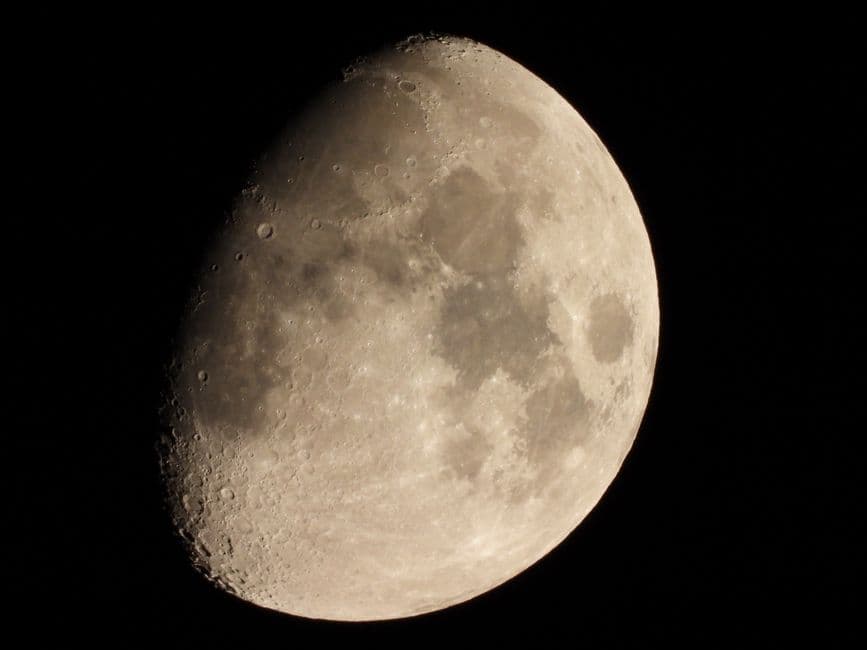
Everybody tries holding a phone up to the eyepiece first, and almost everybody gets the same result: a black frame with a bright crescent in one corner, or a few seconds of a wobbling Moon. The natural conclusion is that phone astrophotography does not work. The actual problem is narrower and more mechanical than that, and it is worth understanding before deciding whether this bracket is worth buying.
Why holding the phone fails
A telescope's eyepiece projects a cone of light with an exit pupil that is typically a few millimeters across. Your eye finds that cone easily because you move your head around without thinking about it. A phone camera has a fixed lens a few millimeters wide, and it has to sit inside that cone, square to it, at roughly the right distance. Miss by two or three millimeters in any direction and the frame goes dark at the edges or black altogether.
So the requirement is not a clamp. It is a clamp that can be adjusted precisely in three directions independently, and then holds still. That is exactly what Celestron publishes here: three-axis adjustment, hence the name.
- X and Y move the phone across the eyepiece to center its lens on the optical axis.
- Z moves the phone toward and away from the eye lens to set the eye relief distance, which controls how much of the frame the image fills.
- All three are independent, so correcting one does not disturb the others. Brackets without independent axes turn every adjustment into a negotiation, which is the difference between a two-minute setup and a ruined session.
The published fit numbers, which decide compatibility
Two figures determine whether this bracket works with your equipment, and both are worth checking before ordering rather than after.
- Phone clamp: 65mm to 90mm wide. Most current phones are roughly 70mm to 78mm wide, so the range is generous. A large phone in a thick protective case can exceed 90mm, and the answer is to take the case off rather than to return the bracket.
- Eyepiece clamp: 35mm to 60mm. This grips the outside of the eyepiece housing, not the barrel. Most 1.25-inch eyepieces sit comfortably inside that range. Some large 2-inch eyepieces with wide rubber eyecups exceed 60mm and will not fit.
- 10 oz of added weight. On a solid mount this is nothing. On a light tabletop telescope or a photo-tripod refractor it is enough to shift the balance, and you may have to re-tighten the altitude axis.
- Cast metal and fiber-reinforced plastic, which is the construction Celestron publishes. It feels substantial, and the adjustment knobs are the parts to treat carefully.
What a phone can honestly photograph
This is where most coverage of phone astrophotography becomes dishonest, so here is the plain version, in descending order of how well it works.
- The Moon: excellent, and genuinely impressive. It is bright enough for a normal short exposure, large enough to fill a frame at moderate magnification, and full of contrast along the terminator. A phone through a modest telescope will produce a Moon photograph better than anything taken from Earth before about 1900.
- The Sun, ONLY with a proper filter fitted. Never point any optic at the Sun without a certified solar filter over the front. Solar filters covers the safety requirement properly.
- Jupiter and Saturn: possible, and small. You will get a disc with belts on Jupiter and an oval with rings on Saturn if the seeing is steady and the telescope is tracking. They will be small in the frame and noisy. This is where phone photography stops being easy.
- Bright star clusters: marginal. A few of the brighter stars will register. The faint members that make a cluster beautiful to the eye will not.
- Galaxies and nebulae: no. These need exposures of minutes with accurate tracking, which a phone held at an eyepiece cannot do. Anybody claiming otherwise is showing you a photograph taken with different equipment.
How this is funded: the buy buttons below are Amazon Associates links, and a qualifying purchase earns us a commission at no extra cost to you. It cannot move the ranking, because the order here is set by aperture per dollar, and no commission rate changes how much light a mirror collects. Full disclosure.
| # | Telescope | Best for | Aperture | Price |
|---|---|---|---|---|
| 1 | 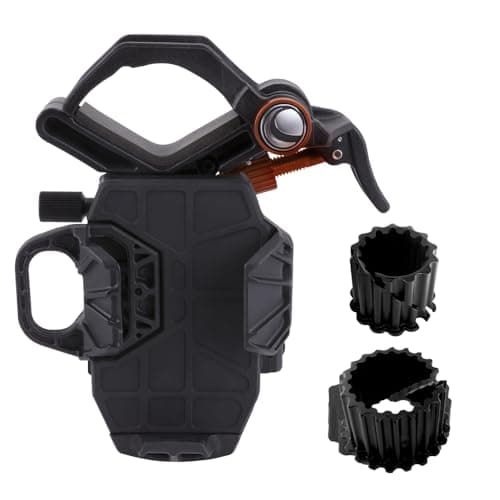 Celestron NexYZ 3-Axis Smartphone AdapterTop pickThree knob-driven axes that hold a phone camera over an eyepiece and let you align it precisely. The part that makes phone lunar photography work rather than frustrate. | Getting a phone photo of the Moon | Eyepiece clamp 35mm to 60mm70x useful |
Top pick · Getting a phone photo of the Moon
Celestron NexYZ 3-Axis Smartphone Adapter
Three knob-driven axes that hold a phone camera over an eyepiece and let you align it precisely. The part that makes phone lunar photography work rather than frustrate.
What the aperture allows
- Maximum useful magnification
- 70x
- 2 × 35mm of aperture
- Resolving limit (Dawes)
- 3.31 arcseconds
- 116 ÷ 35mm
- Cassini division (0.7″)
- Out of reach
- this aperture cannot resolve it
The problem this solves is smaller than it sounds and more annoying than it looks. A phone camera has to sit centered over the eyepiece and at the right distance, within about a millimeter, or the image vignettes to a dark circle or vanishes. Holding a phone there by hand works for about four seconds.
Three axes with knobs is the difference between that and a repeatable setup. You clamp once, then dial the phone into position while watching the screen, and it stays there while you take a dozen frames.
The 10 oz weight is worth thinking about on a small telescope. On a light alt-azimuth mount, hanging 283 grams off the eyepiece shifts the balance and adds vibration, and on a tabletop Dobsonian it can be enough to make the tube drift.
What it does not do is turn a telescope into an astrophotography rig. The Moon works because it is bright enough for a short exposure. Anything fainter needs tracking and long exposures, which is a different hobby with a different budget.
What it does well
- Three knob-driven axes make phone alignment repeatable instead of a wrestling match
- Wide clamp range fits most eyepieces and most phones, with adapters down to 25mm
- Works on binoculars and spotting scopes as well as telescopes
- Cast metal rather than all plastic at the load-bearing points
What it costs you
- 283 grams hanging off the eyepiece unbalances a light mount and adds vibration
- Only really useful on the Moon and the brightest planets
- Fiddly the first few times, whatever the mechanism
- A phone in a case usually has to come out of the case
Skip this one if: Skip it if you want photographs of nebulae or galaxies. This is a lunar and bright-planet accessory, and no bracket changes what a short handheld exposure can capture.
$66.95 · 7% off
#ad · how this is funded · price as of September 27, 2026
Tracking is the other half of the problem
Without motors an object drifts across the eyepiece as the Earth turns, and at the magnifications worth photographing that takes well under a minute. For the Moon it hardly matters, because the exposure is a fraction of a second. For a planet, where you want to shoot a burst of frames and stack the best of them, it matters a great deal.
That is the argument for pairing this bracket with a telescope that tracks. The best GoTo telescopes covers the options, and telescopes and phones sets out which telescopes suit which of the two phone jobs — finding and photographing.
The honest drawbacks
- It cannot make a phone a camera it is not. Deep-sky imaging is off the table, and no bracket changes that.
- Setup is fiddly the first few times. Three independent axes are the right design and they still mean three things to adjust in the dark.
- 10 oz on the eyepiece can unbalance a light telescope and can make a diagonal slip if it is not firmly clamped.
- Large 2-inch eyepieces may exceed the 60mm jaw, so check before ordering.
- It costs a meaningful fraction of a budget telescope. If the choice is between this bracket and more aperture, aperture shows you more.
- Vignetting is normal, not a fault. Getting the full frame filled takes patience with the Z axis and usually a moderate-power eyepiece rather than a very short one.
Who should buy it, and who should not
Buy it if you want photographs of the Moon, or if you want to show somebody else what you are looking at on a screen rather than queueing at the eyepiece. Both are genuinely good reasons and this bracket does them well. It is also the right purchase if you already own a telescope that tracks and want to try planetary imaging without buying a dedicated camera.
Buy it also if you own binoculars or a spotting scope, since Celestron publishes compatibility with those as well as with telescopes, monoculars and microscopes — one bracket covers all of your optics.
Do not buy it expecting galaxy photographs. Do not buy it before you own a mount that holds still. And do not buy it if you have not yet spent much time actually looking through the telescope, because photography is a different hobby from observing and it is worth finding out which one you enjoy first.
Questions people actually ask
Is the Celestron NexYZ worth it?
It is worth it if you want Moon photographs or want to share the view on a screen. Its three independent axes solve the real difficulty, which is getting a phone's small fixed lens centered inside the eyepiece's exit cone — something that is close to impossible by hand. It cannot enable deep-sky imaging.
What can you photograph with a phone through a telescope?
The Moon very well, the Sun only with a certified solar filter fitted, and Jupiter and Saturn as small noisy discs if the telescope tracks and the air is steady. Bright star clusters register partially. Galaxies and nebulae need minutes-long tracked exposures and are not achievable with a phone at an eyepiece.
Will the NexYZ fit my phone?
Celestron publishes a phone clamp range of 65mm to 90mm wide. Most current phones are around 70mm to 78mm, so the range is generous, but a large phone in a thick case can exceed 90mm. Take the case off rather than assuming it will not fit.
Does the NexYZ work with binoculars and spotting scopes?
Yes. Celestron publishes compatibility with telescopes, binoculars, spotting scopes, monoculars and microscopes, using an eyepiece clamp that opens from 35mm to 60mm. Some large 2-inch eyepieces with wide eyecups exceed that 60mm limit.
Why are my phone photos through the telescope dark or blurry?
Dark usually means the phone's lens is not centered in the eyepiece's exit cone, which is what the three-axis adjustment is for. Blurry usually means the mount is vibrating or the object is drifting because the telescope does not track. Neither is a fault in the bracket.
Read next
Best with a phone
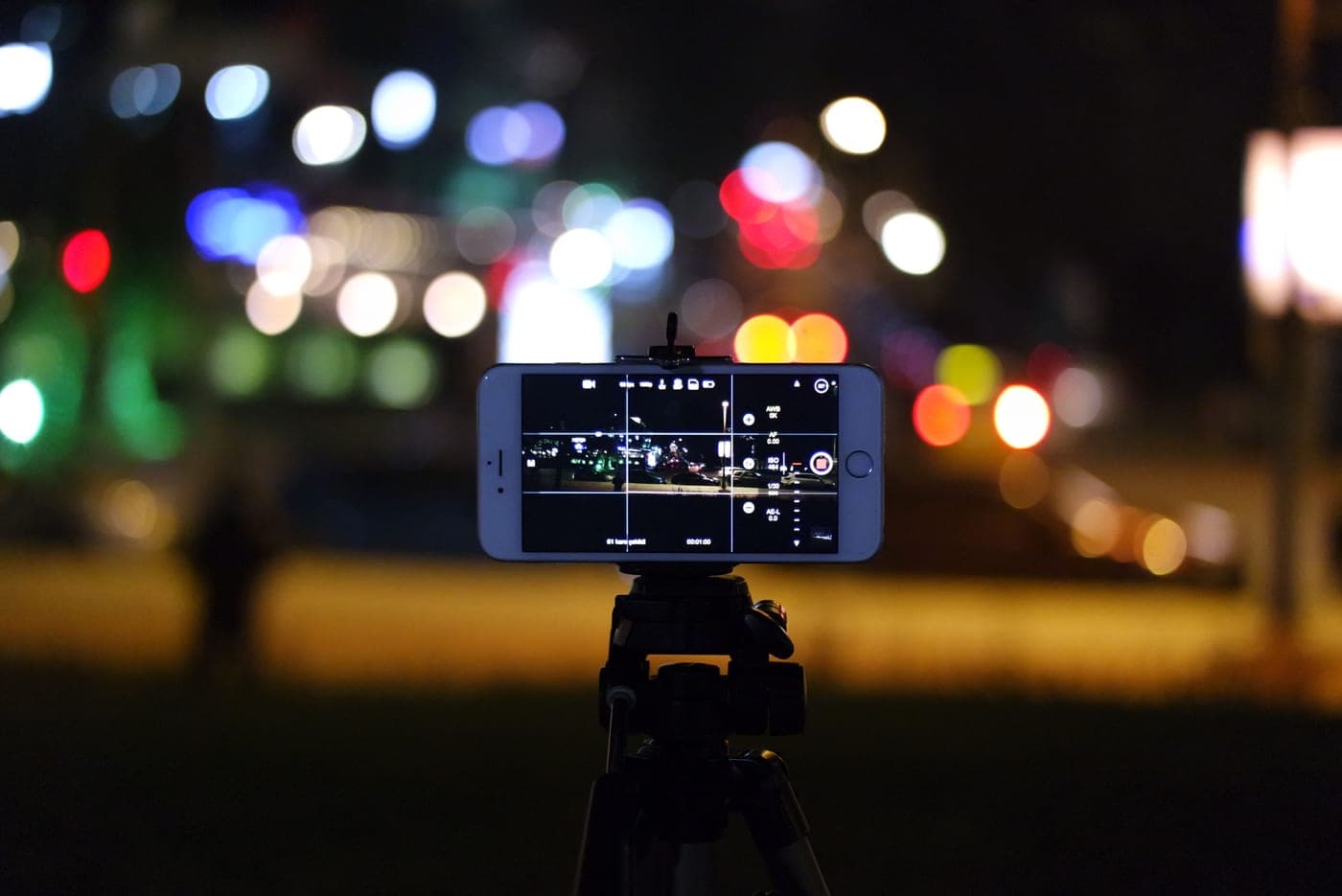
Telescopes and Phones: Finding, Photographing, and Which You Actually Want
Phone finding and phone photography are different jobs needing different hardware. Which telescopes do which, and what a phone can honestly capture.
Top pick: Celestron StarSense Explorer DX 130AZ
#ad · how this is funded · price as of September 27, 2026
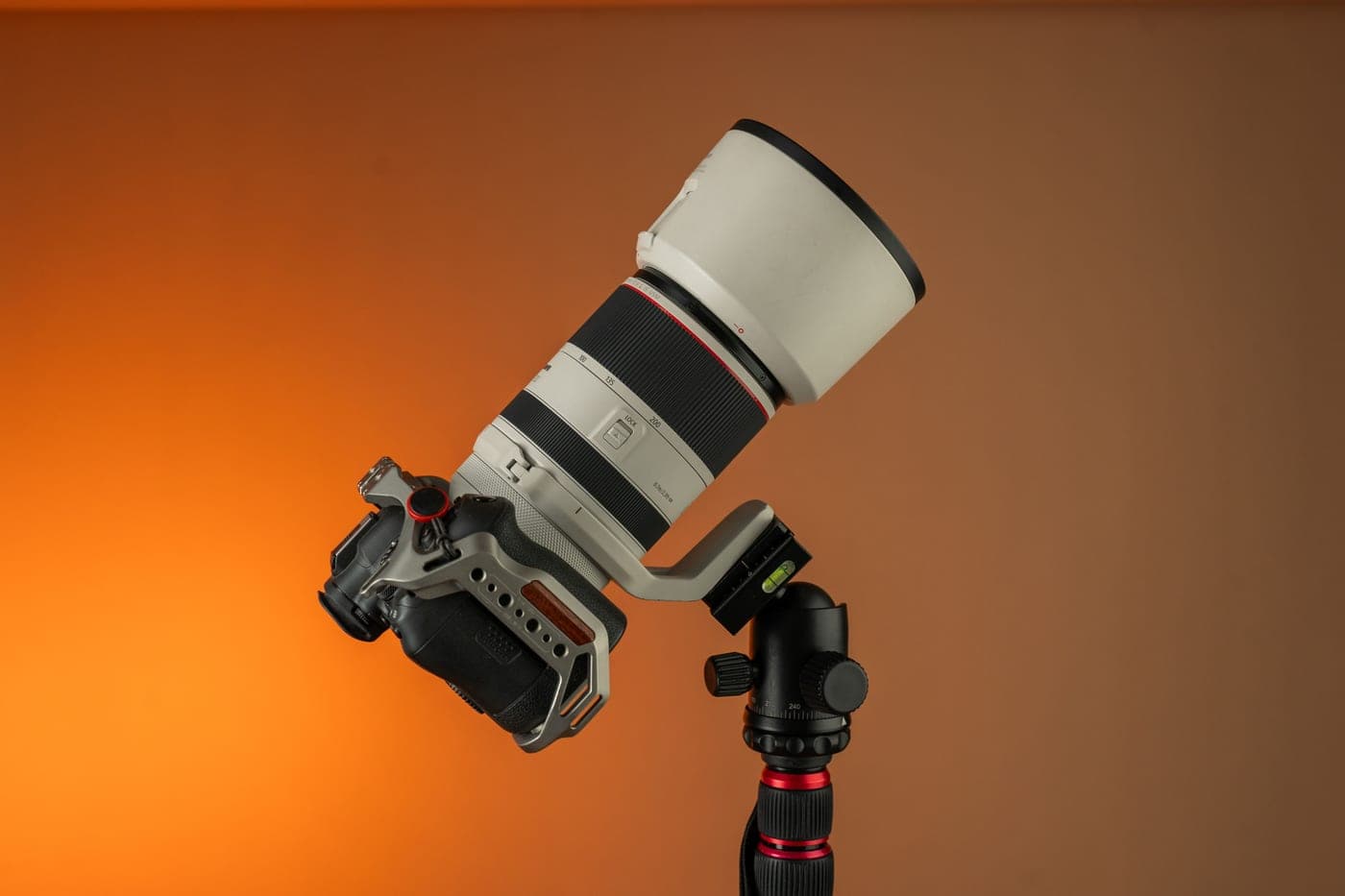
Telescope Mounts, and Why They Decide Everything
The four mount types compared, why the mount matters as much as the optics, and whether they are interchangeable.
Top pick: Sky-Watcher Classic 200P Dobsonian (8-inch)
#ad · how this is funded · price as of September 27, 2026
Best GoTo
The Best GoTo Telescopes
Computerized telescopes ranked on what the motors cost in aperture, whether they track as well as find, and what they need to run.
Top pick: Sky-Watcher Virtuoso GTi 130P
#ad · how this is funded · price as of September 27, 2026
Found something wrong here? Tell us and we will correct it and date the correction, per our editorial policy.