Telescope Gifts
Gifts for Someone Who Already Has a Telescope
Every other gift guide on this site is for buying somebody their first telescope. This one is for the harder case: they own one, you do not know what it is, and you still want to get it right.
By Scooter M. · Published · How we pick
Buy them a 32mm eyepiece. It is the single accessory most telescope owners do not have and most would benefit from, because almost every telescope ships with eyepieces in the 10mm-to-25mm range and nothing longer. A 32mm gives the widest, brightest view a standard focuser can deliver, it fits essentially any telescope sold in the last thirty years, and it transforms exactly the targets that beginners find disappointing.
If that sounds too specific to buy blind, it is not, and that is the useful thing to know about this category: most astronomy accessories fit almost everything, because the hobby standardized on a 1.25-inch eyepiece barrel decades ago.
The compatibility question, answered first
The reason people buy telescope owners books and novelty items instead of equipment is a fear of buying something that does not fit. Here is the honest state of it: eyepieces, filters and Barlow lenses are sold in a 1.25-inch fitting that is effectively universal across beginner and intermediate telescopes, including every telescope this site ranks.
| Category | What you must know | Risk of it not fitting |
|---|---|---|
| Eyepiece, 1.25-inch | Nothing | Very low |
| Filter, 1.25-inch | Nothing | Very low |
| Barlow lens | Nothing | Very low |
| Phone adapter, clamp type | Nothing | Very low |
| Red flashlight | Nothing | None |
| Binoculars | Nothing | None |
| Solar filter | The exact tube diameter | High if you guess |
| A second telescope | Everything they own and want | Do not |
Why a long eyepiece is the best gift in this category
Magnification is focal length divided by eyepiece focal length, so a longer eyepiece means lower magnification — and for faint, large objects, lower magnification means a brighter image and a wider field. The targets that look worst through a bundled eyepiece set are exactly the ones a 32mm improves.
exit pupil in millimeters = aperture / magnification
A 150mm f/5 telescope (750mm focal length): with a 10mm eyepiece: 75x, exit pupil 2.0mm with a 32mm eyepiece: 23x, exit pupil 6.4mm
A dark-adapted pupil opens to about 7mm when young and shrinks with age, so a 6.4mm exit pupil delivers nearly all the light the eye can accept. That is why a 32mm eyepiece on a nebula or a galaxy looks dramatically brighter than a 10mm does, and it is the clearest single improvement a gift can make.
The complementary gift is a short eyepiece for the opposite job. A 9mm is in the range where planetary detail appears on a 130mm or 150mm telescope, and the bundled short eyepieces are usually the weakest items in the box. Between a 32mm and a 9mm you have covered both ends of what their telescope can do.
One caution on the short end, and it is the reason the 32mm is ranked first rather than the 9mm. A short eyepiece's useful magnification depends on the telescope's aperture, so a 9mm that is ideal on a 150mm is past the useful limit on a 70mm. A long eyepiece has no such ceiling: a 32mm improves the view on every telescope it fits, which is exactly the property you want when buying without knowing what they own.
How these picks were ranked
- How much it changes a session, per dollar. Not how impressive it looks wrapped. A $50 eyepiece that makes every deep-sky object brighter outranks a $250 item used twice a year.
- Fits without asking questions. Anything needing the recipient's exact tube diameter is ranked down or excluded, because a gift you have to interrogate them about stops being a gift.
- Useful to a beginner and still useful later. Nothing here becomes redundant as they improve; a good eyepiece outlives several telescopes.
- Not already in the box. The whole point is to add what a telescope does not ship with, which is why no 25mm eyepiece and no basic moon filter appears on its own.
- Honest about overlap. Several of these duplicate each other, and the notes below say which combinations are redundant rather than letting you buy the same thing twice.
Which of these to buy
| Gift | Best for | The catch |
|---|---|---|
| Celestron Omni 32mm Eyepiece | Best gift here: the widest, brightest view their telescope can produce, and almost nobody owns one | Does nothing for planets, where you want the opposite end of the range |
| Celestron X-Cel LX 9mm Eyepiece | Best for a planetary observer: the short eyepiece most bundled sets get wrong | Too much magnification for a 70mm, and useless on faint deep-sky objects |
| Celestron Lunar and Planetary Filter Set | Best for someone who observes the planets regularly and has never tried color filters | A set of experiments rather than guaranteed wins; a lone moon filter covers most of the benefit for far less |
| Celestron SkyMaster 15x70 | Best non-telescope gift: wide-field sweeping their telescope cannot do, and useful in daylight too | Heavy to hold steady, so a tripod becomes a second purchase |
| Celestron Night Vision Red Flashlight | Best small gift and best stocking filler: cheap, universally useful, and they probably use a phone instead | A genuinely minor item on its own; pair it with something from higher up the list |
| Celestron NexYZ 3-Axis Phone Adapter | Best for someone who keeps trying to photograph the Moon by holding a phone to the eyepiece | Only works for bright targets, so it will not produce the deep-sky images they may be hoping for |
| Celestron UHC/LPR Filter | Best for a suburban observer frustrated by sky glow on nebulae | Helps on emission nebulae only, and does nothing for galaxies, clusters or planets |
How this is funded: the buy buttons below are Amazon Associates links, and a qualifying purchase earns us a commission at no extra cost to you. It cannot move the ranking, because the order here is set by aperture per dollar, and no commission rate changes how much light a mirror collects. Full disclosure.
| # | Telescope | Best for | Aperture | Price |
|---|---|---|---|---|
| 1 | 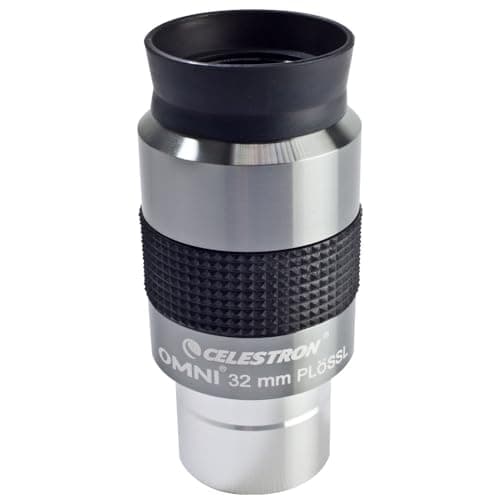 Celestron Omni 32mm Eyepiece (1.25")Top pickA 4-element Plossl at the longest focal length a 1.25-inch barrel can usefully carry. This is the eyepiece that makes a telescope feel wide. | The widest view a 1.25-inch focuser can give | 1.25" barrel64x useful | |
| 2 | 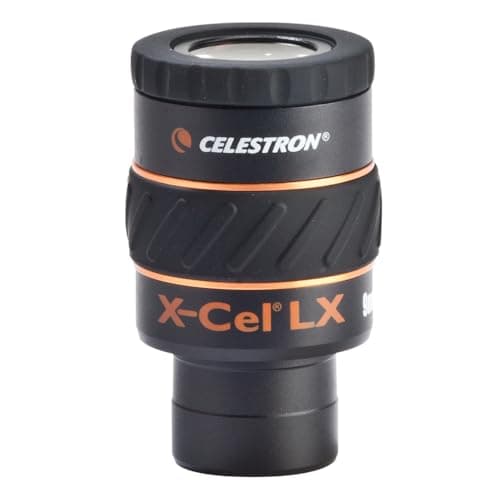 Celestron X-Cel LX 9mm Eyepiece (1.25")A 6-element design with 16mm of eye relief at 9mm of focal length. Short-focal-length eyepieces are usually uncomfortable; this one is not. | Planetary detail without squinting | 1.25" barrel64x useful | |
| 3 | 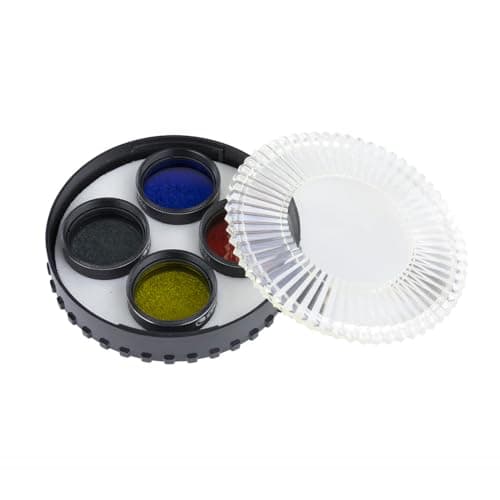 Celestron Lunar and Planetary Filter Set (1.25")Four stackable filters: deep yellow, orange, light blue and a 50 percent neutral density. Two of them earn their place and two will sit in the case. | Pulling detail out of a bright planet | 1.25" thread64x useful | |
| 4 | 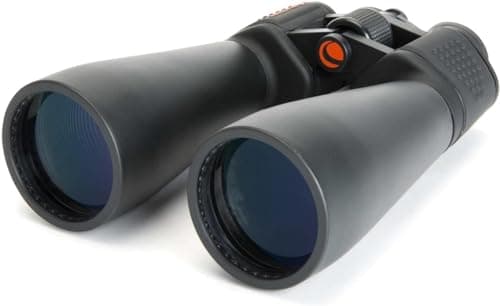 Celestron SkyMaster 15x70 Binoculars70mm of aperture in each barrel at a fixed 15x. For the money spent on a toy telescope, these show more and get used more. | The honest alternative to a cheap telescope | 70mm objective lenses (2.75 in)140x useful | |
| 5 | 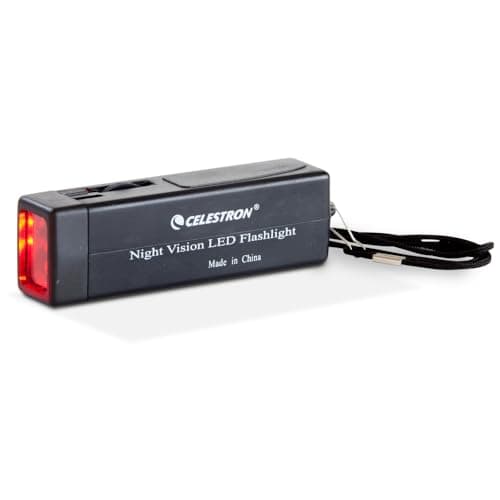 Celestron Night Vision Red LED FlashlightA variable-brightness red flashlight, which is the accessory that stops you undoing twenty minutes of dark adaptation every time you check a star chart. | Keeping your dark adaptation | Not applicable0x useful | |
| 6 | 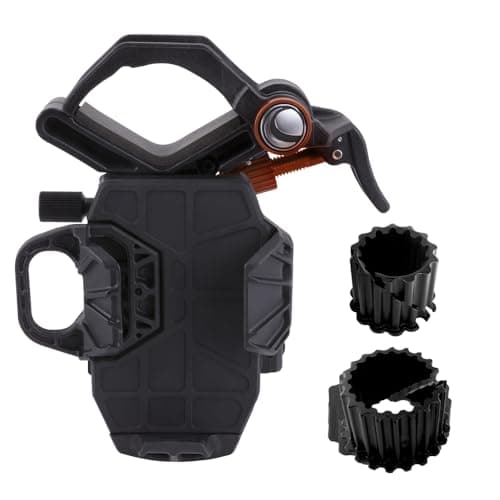 Celestron NexYZ 3-Axis Smartphone AdapterThree knob-driven axes that hold a phone camera over an eyepiece and let you align it precisely. The part that makes phone lunar photography work rather than frustrate. | Getting a phone photo of the Moon | Eyepiece clamp 35mm to 60mm70x useful | |
| 7 | 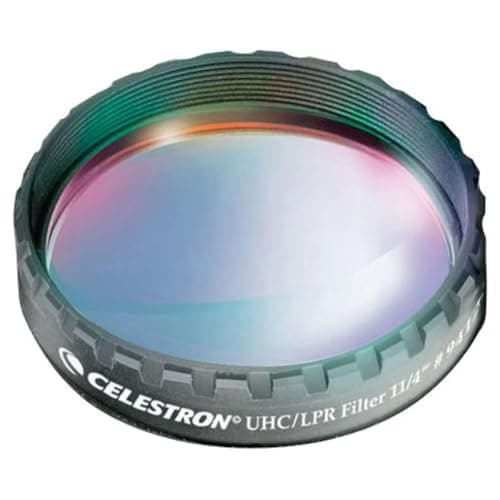 Celestron UHC/LPR Light Pollution Reduction Filter (1.25")A filter that selectively cuts the wavelengths streetlights emit. It helps on emission nebulae and does nothing for stars, galaxies or planets. | A suburban sky, on nebulae only | 1.25" thread64x useful |
Top pick · The widest view a 1.25-inch focuser can give
Celestron Omni 32mm Eyepiece (1.25")
A 4-element Plossl at the longest focal length a 1.25-inch barrel can usefully carry. This is the eyepiece that makes a telescope feel wide.
What the aperture allows
- Maximum useful magnification
- 64x
- 2 × 31.75mm of aperture
- Resolving limit (Dawes)
- 3.65 arcseconds
- 116 ÷ 31.75mm
- Cassini division (0.7″)
- Out of reach
- this aperture cannot resolve it
Magnification is the telescope's focal length divided by the eyepiece's. In a 1200mm Dobsonian this gives 1200 / 32 = 37.5x, and in a 650mm f/5 Newtonian it gives 650 / 32 = 20x. Both are lower than the eyepieces most telescopes ship with, which is the entire point.
Exit pupil is the aperture divided by the magnification. On a 203mm f/5.9 telescope at 37.5x that is 5.4mm, which a dark-adapted eye takes comfortably. On a faster f/4.7 telescope the same eyepiece gives 6.8mm, close enough to the eye's roughly 7mm limit that a little light spills past the pupil.
The 27.5mm field stop is the specification that matters most and the one nobody reads. True field is set by the field stop, not by the apparent field, and 27.5mm is the widest a 1.25-inch barrel physically allows. No other 1.25-inch eyepiece will show you more sky than this one.
48 degrees of apparent field is modest by modern standards. The view is a well-corrected circle rather than an immersive window, and on a fast telescope the outer part of that circle will not be as sharp as the middle.
What it does well
- The widest true field a 1.25-inch focuser can physically deliver
- 22mm of eye relief, which is comfortable with glasses on
- A simple 4-element design with little to go wrong optically
What it costs you
- 48 degrees of apparent field feels narrow beside a modern wide-angle design
- Plossl edge correction suffers on telescopes faster than about f/5
- At 20x in a short telescope the exit pupil can exceed what your eye can use
Skip this one if: Skip it if your telescope has a 2-inch focuser. The 1.25-inch field stop is the ceiling this eyepiece runs into, and a 2-inch eyepiece removes that ceiling entirely.
| Optical design | 4-element symmetrical Plossl, in 2 groupsSource: Omni 32mm Eyepiece — manufacturer specifications (retrieved September 21, 2026) |
|---|---|
| Aperture | 1.25" barrelThe fitting size, not a light-collecting aperture. An eyepiece collects nothing; the telescope does.Source: Omni 32mm Eyepiece — manufacturer specifications (retrieved September 21, 2026) |
| Focal length | 32mm (1.25")Source: Omni 32mm Eyepiece — manufacturer specifications (retrieved September 21, 2026) |
| Weight | 3.96 oz (112.5 g)Source: Omni 32mm Eyepiece — manufacturer specifications (retrieved September 21, 2026) |
| Apparent field of view | 48 degreesSource: Omni 32mm Eyepiece — manufacturer specifications (retrieved September 21, 2026) |
| Eye relief | 22mm (0.87")Generous. This is the comfortable end of the range for spectacle wearers.Source: Omni 32mm Eyepiece — manufacturer specifications (retrieved September 21, 2026) |
| Field stop diameter | 27.5mm (1.08")The physical limit on true field in a 1.25-inch barrel, which is why no 1.25-inch eyepiece shows more sky than this one.Source: Omni 32mm Eyepiece — manufacturer specifications (retrieved September 21, 2026) |
| Coatings | Multi-coatedSource: Omni 32mm Eyepiece — manufacturer specifications (retrieved September 21, 2026) |
$52.95 · 6% off
#ad · how this is funded · price as of October 19, 2026
Pick 2 · Planetary detail without squinting
Celestron X-Cel LX 9mm Eyepiece (1.25")
A 6-element design with 16mm of eye relief at 9mm of focal length. Short-focal-length eyepieces are usually uncomfortable; this one is not.
What the aperture allows
- Maximum useful magnification
- 64x
- 2 × 31.75mm of aperture
- Resolving limit (Dawes)
- 3.65 arcseconds
- 116 ÷ 31.75mm
- Cassini division (0.7″)
- Out of reach
- this aperture cannot resolve it
In a 1200mm Dobsonian this gives 1200 / 9 = 133x, and in a 650mm f/5 Newtonian 650 / 9 = 72x. On a 2032mm Schmidt-Cassegrain it gives 226x, which is at the edge of what most nights will support.
Check the result against two times your aperture before buying. On a 130mm telescope the ceiling is 260x and 133x sits comfortably below it; on a 76mm tabletop the ceiling is 152x and this eyepiece is already most of the way there.
Eye relief is the distance your eye sits from the glass, and 16mm is the whole argument for this eyepiece. A budget 9mm Plossl offers around 6mm, which means pressing your eye to the lens and seeing your own eyelashes. Spectacle wearers need roughly 15mm to see the full field at all.
60 degrees of apparent field is noticeably more open than a Plossl's 48 to 52, which matters at high power on a manual telescope: a wider field is a longer wait before the planet drifts out of it.
What it does well
- 16mm of eye relief at 9mm focal length, which is unusual and genuinely comfortable
- 60-degree field gives a planet longer in view on an untracked telescope
- Parfocal with the rest of the series, so swapping eyepieces barely disturbs focus
What it costs you
- Costs several times what a basic 9mm Plossl does
- 170 g is heavy enough to shift the balance of a light tabletop telescope
- 9mm is too much magnification for the smallest beginner apertures
Skip this one if: Skip it if your telescope is under about 100mm of aperture. Two times the aperture is the ceiling, and on a small telescope a 9mm eyepiece spends most nights above it showing a big, dim, soft image.
#ad · how this is funded · price as of October 19, 2026
Pick 3 · Pulling detail out of a bright planet
Celestron Lunar and Planetary Filter Set (1.25")
Four stackable filters: deep yellow, orange, light blue and a 50 percent neutral density. Two of them earn their place and two will sit in the case.
What the aperture allows
- Maximum useful magnification
- 64x
- 2 × 31.75mm of aperture
- Resolving limit (Dawes)
- 3.65 arcseconds
- 116 ÷ 31.75mm
- Cassini division (0.7″)
- Out of reach
- this aperture cannot resolve it
A colored filter works by subtraction. It blocks part of the spectrum so that whatever is left stands out against it, which raises contrast on a feature that differs in color from its surroundings. It cannot add detail the aperture never resolved.
The #21 orange is the one that earns the set. Celestron's own description is specific about why: cutting blue and green sharpens the boundaries of the Martian plains and lifts the belt structure on Jupiter and Saturn. That is a real, narrow claim rather than a vague one.
The ND-96-0.3 is the workhorse. At 50 percent transmission it cuts the Moon's glare by about a magnitude, which matters above roughly 100mm of aperture where the full Moon is genuinely uncomfortable.
The deep yellow and light blue see far less use. Blue on Mars can help the polar caps stand out and yellow can steady a low-contrast Jupiter belt, but neither is a filter most owners reach for twice a year. That is worth knowing before you buy the set rather than after.
What it does well
- The orange filter has a specific, stated effect on Mars and on the gas-giant belts
- The neutral density filter is the cheapest fix for an uncomfortably bright Moon
- Aluminum cells thread top and bottom, so filters stack
- Cheaper as a set than buying the two useful ones separately
What it costs you
- Two of the four will see very little use
- Every filter costs light, so on a small aperture the cure can be worse than the glare
- Colored filters cannot add detail the aperture did not resolve in the first place
- Redundant on the Moon if you already own a dedicated moon filter
Skip this one if: Skip it if your telescope is under about 100mm. At that aperture you cannot spare the light a colored filter takes, and a plain moon filter covers the one case that matters.
| Optical design | Four 1.25-inch filters in aluminum cells, threaded top and bottom so they stackSource: Celestron — Lunar and Planetary Filter Set - 1.25", published specifications (retrieved September 6, 2026) |
|---|---|
| Aperture | 1.25" threadThe fitting size. Filters thread into the eyepiece barrel, not into the telescope.Source: Celestron — Lunar and Planetary Filter Set - 1.25", published specifications (retrieved September 6, 2026) |
| Contents | Wratten #12 deep yellow, #21 orange, #80A light blue, and an ND-96-0.3 neutral densitySource: Celestron — Lunar and Planetary Filter Set - 1.25", published specifications (retrieved September 6, 2026) |
| Neutral density transmission | 50 percentHalf the light through, which is about one magnitude.Source: Celestron — Lunar and Planetary Filter Set - 1.25", published specifications (retrieved September 6, 2026) |
| What Celestron says the orange does | Sharpens the boundaries along the plains of Mars by reducing blue and green transmission, and enhances belt detail on Jupiter and SaturnSource: Celestron — Lunar and Planetary Filter Set - 1.25", published specifications (retrieved September 6, 2026) |
#ad · how this is funded · price as of October 19, 2026
Pick 4 · The honest alternative to a cheap telescope
Celestron SkyMaster 15x70 Binoculars
70mm of aperture in each barrel at a fixed 15x. For the money spent on a toy telescope, these show more and get used more.
What the aperture allows
- Maximum useful magnification
- 140x
- 2 × 70mm of aperture
- Resolving limit (Dawes)
- 1.66 arcseconds
- 116 ÷ 70mm
- Cassini division (0.7″)
- Out of reach
- this aperture cannot resolve it
Worked example: a 25mm eyepiece in this telescope gives 279.63mm ÷ 25mm = 11x.
Each barrel has the same 70mm aperture as the entry-level refractors on this site, and because you use both eyes the perceived brightness is higher than a single 70mm tube.
The fixed 15x is well below the 140x that 70mm could support, and that is deliberate. Binoculars are a wide-field instrument: the Pleiades, the Andromeda galaxy, the Milky Way star clouds and the whole Moon at once.
Celestron publishing three limiting magnitudes, 11.73 for ideal skies down to 9.73 for poor ones, is the single most useful number on this page. It says out loud what most listings hide: your sky matters as much as your optics.
At 15x these are heavy to hold steady. The included tripod adapter is not an accessory, it is a requirement for any sustained looking.
What it does well
- 70mm per barrel is real aperture, not a novelty
- Instantly usable: no assembly, no alignment, no learning curve
- Wide field shows large objects a telescope cannot fit in view
- Doubles as daytime and wildlife optics, so it gets used year-round
What it costs you
- Too heavy to hold steady at 15x for long; a tripod is effectively required
- Fixed magnification, so the planets stay small
- No detail on Saturn: at 15x the rings are a suggestion, not a shape
Skip this one if: Skip them if the goal is specifically to see Saturn's rings as rings. 15x will not do it; a 70mm telescope at 70x will.
$129.95 · 32% off
#ad · how this is funded · price as of October 19, 2026
Pick 5 · Keeping your dark adaptation
Celestron Night Vision Red LED Flashlight
A variable-brightness red flashlight, which is the accessory that stops you undoing twenty minutes of dark adaptation every time you check a star chart.
What the aperture allows
- Maximum useful magnification
- 0x
- 2 × 0mm of aperture
- Resolving limit (Dawes)
- Infinity arcseconds
- 116 ÷ 0mm
- Cassini division (0.7″)
- Out of reach
- this aperture cannot resolve it
Dark adaptation takes twenty to thirty minutes and one glance at a phone screen destroys it. That is the whole reason this exists.
Red light at low intensity leaves the rod cells in your retina largely unbleached, so you keep the sensitivity you spent the first half hour building. A white phone torch does not.
Variable brightness matters more than the color. Most cheap red lights are far too bright, which defeats the point almost as thoroughly as white light would.
What it does well
- Keeps the dark adaptation that everything faint depends on
- Variable brightness, which most cheap red lights lack
- Cheap enough to buy alongside the telescope without thinking about it
What it costs you
- A phone in red-screen night mode does most of this for free
- One more thing to keep batteries in
Skip this one if: Skip it if you only ever observe the Moon and the bright planets. Dark adaptation barely matters for either.
| Optical design | Red LED flashlight with variable brightness, for astronomy and campingSource: Celestron Night Vision Red LED Flashlight — the brand's own listing on Amazon.com (retrieved September 1, 2026) |
|---|---|
| Aperture | Not applicableA flashlight has no aperture. This row exists because the spec model requires one.Source: Celestron Night Vision Red LED Flashlight — the brand's own listing on Amazon.com (retrieved September 1, 2026) |
| Why red | Preserves night visionCelestron's own stated purpose for the product.Source: Celestron Night Vision Red LED Flashlight — the brand's own listing on Amazon.com (retrieved September 1, 2026) |
$20.95 · 19% off
#ad · how this is funded · price as of October 19, 2026
Pick 6 · Getting a phone photo of the Moon
Celestron NexYZ 3-Axis Smartphone Adapter
Three knob-driven axes that hold a phone camera over an eyepiece and let you align it precisely. The part that makes phone lunar photography work rather than frustrate.
What the aperture allows
- Maximum useful magnification
- 70x
- 2 × 35mm of aperture
- Resolving limit (Dawes)
- 3.31 arcseconds
- 116 ÷ 35mm
- Cassini division (0.7″)
- Out of reach
- this aperture cannot resolve it
The problem this solves is smaller than it sounds and more annoying than it looks. A phone camera has to sit centered over the eyepiece and at the right distance, within about a millimeter, or the image vignettes to a dark circle or vanishes. Holding a phone there by hand works for about four seconds.
Three axes with knobs is the difference between that and a repeatable setup. You clamp once, then dial the phone into position while watching the screen, and it stays there while you take a dozen frames.
The 10 oz weight is worth thinking about on a small telescope. On a light alt-azimuth mount, hanging 283 grams off the eyepiece shifts the balance and adds vibration, and on a tabletop Dobsonian it can be enough to make the tube drift.
What it does not do is turn a telescope into an astrophotography rig. The Moon works because it is bright enough for a short exposure. Anything fainter needs tracking and long exposures, which is a different hobby with a different budget.
What it does well
- Three knob-driven axes make phone alignment repeatable instead of a wrestling match
- Wide clamp range fits most eyepieces and most phones, with adapters down to 25mm
- Works on binoculars and spotting scopes as well as telescopes
- Cast metal rather than all plastic at the load-bearing points
What it costs you
- 283 grams hanging off the eyepiece unbalances a light mount and adds vibration
- Only really useful on the Moon and the brightest planets
- Fiddly the first few times, whatever the mechanism
- A phone in a case usually has to come out of the case
Skip this one if: Skip it if you want photographs of nebulae or galaxies. This is a lunar and bright-planet accessory, and no bracket changes what a short handheld exposure can capture.
$66.95 · 7% off
#ad · how this is funded · price as of October 19, 2026
Pick 7 · A suburban sky, on nebulae only
Celestron UHC/LPR Light Pollution Reduction Filter (1.25")
A filter that selectively cuts the wavelengths streetlights emit. It helps on emission nebulae and does nothing for stars, galaxies or planets.
What the aperture allows
- Maximum useful magnification
- 64x
- 2 × 31.75mm of aperture
- Resolving limit (Dawes)
- 3.65 arcseconds
- 116 ÷ 31.75mm
- Cassini division (0.7″)
- Out of reach
- this aperture cannot resolve it
A light-pollution filter is not a contrast knob for the whole sky. It works by blocking the narrow bands that streetlights emit while passing the narrow bands that glowing gas emits, so it only helps on targets that are themselves glowing gas.
That means emission nebulae, and essentially nothing else. Stars, galaxies and planets shine across the whole spectrum, so a filter that removes part of the spectrum removes part of them too and the view gets dimmer rather than better.
It also cannot give you back a dark sky. A filter improves contrast on a specific class of target under a specific kind of light pollution; it does not turn a city garden into a rural one, and any product that claims otherwise is overselling.
Worth buying second or third, after a decent eyepiece, and only if emission nebulae are something you actually want to chase from where you live.
What it does well
- Genuinely raises contrast on emission nebulae under artificial skylight
- Threads into any standard 1.25-inch eyepiece, so it moves between telescopes
- Celestron states plainly what it targets rather than promising a darker sky
What it costs you
- Does nothing useful on stars, galaxies or planets, which is most of what a beginner looks at
- Dims the view, so it wants aperture behind it — below about 130mm the trade is rarely worth it
- Celestron publishes no transmission curve on the listing, so you cannot check the passband before buying
- Costs several times what a moon filter costs and helps on far fewer targets
Skip this one if: Skip it if you are still on your first eyepiece, or if your sky is genuinely dark. A dark site beats any filter, and a better eyepiece changes more nights than this will.
| Optical design | Threaded filter for 1.25-inch eyepiecesSource: Celestron UHC/LPR Light Pollution Reduction Filter — the brand's own listing on Amazon.com (retrieved September 13, 2026) |
|---|---|
| Aperture | 1.25" threadThe fitting size. It threads into the eyepiece, not into the telescope.Source: Celestron UHC/LPR Light Pollution Reduction Filter — the brand's own listing on Amazon.com (retrieved September 13, 2026) |
| What Celestron says it does | Designed to selectively reduce the transmission of certain wavelengths of light, specifically those produced by artificial lightQuoted from the brand's own published description. Celestron does not publish a transmission curve or a named passband on that listing, so this page does not state one.Source: Celestron UHC/LPR Light Pollution Reduction Filter — the brand's own listing on Amazon.com (retrieved September 13, 2026) |
$94.95 · 25% off
#ad · how this is funded · price as of October 19, 2026
Matching the gift to what they actually observe
If you know one thing about their observing, it narrows this list immediately. The categories barely overlap, so a single question to a mutual friend is usually enough.
| If they mostly observe | Buy |
|---|---|
| The Moon and planets | The 9mm eyepiece, or the planetary filter set |
| Galaxies and nebulae | The 32mm eyepiece |
| From a city or suburb | The UHC/LPR filter |
| They photograph things | The phone adapter |
| You have no idea | The 32mm eyepiece |
| They observe with children | The red flashlight and the binoculars |
What they almost certainly already have
The other half of not duplicating a gift is knowing what came in the box. Telescopes ship with a fairly predictable set, and buying another one of these is the most common way an astronomy gift lands flat.
- Two eyepieces, usually a 25mm and a 10mm. This is why a 32mm is the gap and a third mid-range eyepiece is not.
- A finderscope or a red-dot finder, already fitted to the tube.
- A basic Barlow lens, on many beginner telescopes, and frequently a poor one. A better Barlow is a real upgrade but a harder gift to judge.
- A moon filter, if they ever bought an accessory kit, since almost every kit includes one.
- A star chart or a free app. Phone planetarium apps are free and nearly universal, so a printed atlas is a taste purchase rather than a need.
One more framing worth having: an accessory is not a consolation prize for not buying a telescope. The accessories order ranks what a telescope owner should add and in what sequence, and the top of that list beats a modest telescope upgrade for a fraction of the cost. A good eyepiece is the thing experienced observers recommend to each other.
If it turns out they do not own a telescope after all, this is the wrong page: telescope gifts is the hub for that, and telescopes to give an adult is where most of those decisions land.
Questions people actually ask
What do you buy someone who already has a telescope?
A 32mm eyepiece. Almost every telescope ships with eyepieces between 10mm and 25mm and nothing longer, so a 32mm adds the widest, brightest view the telescope can produce. It fits the 1.25-inch standard used by essentially every beginner and intermediate telescope, so you do not need to know which one they own.
Will an eyepiece or filter fit any telescope?
Almost certainly. The hobby standardized on a 1.25-inch eyepiece barrel decades ago, and eyepieces, filters and Barlow lenses in that fitting work across every telescope this site ranks. The exception is a solar filter, which has to match the telescope's outside tube diameter exactly.
What should you not buy an astronomy enthusiast?
A solar filter, unless you can measure their telescope's tube, because a near fit is a safety problem rather than a sizing one. And a second telescope, unless they have told you exactly which one they want, since an upgrade has to beat what they already own on aperture, mount or portability to be worth owning.
Are binoculars a good gift for someone who owns a telescope?
Yes, and a better one than most people expect. Binoculars do wide-field sweeping that a telescope cannot, they frame large objects like the Andromeda Galaxy that overflow a telescope's field, and they get used on nights when setting up a telescope feels like too much work.
How much should an astronomy gift cost to be useful?
A worthwhile eyepiece starts around $50 and a red flashlight is under $20, and both change an observing session. This is a category where spending more does not reliably buy more: a well-chosen $50 eyepiece beats a $250 item that gets used twice a year.
What is the best cheap gift for a stargazer?
A red flashlight. It preserves dark adaptation, costs very little, works with any telescope and no telescope, and most people make do with a phone screen that ruins their night vision instead. Pair it with something larger from the list above rather than giving it alone.
Read next

Buying a Telescope for Somebody Else
What to work out without asking, what to default to when you cannot, and how to keep the gift adjustable afterwards.
Top pick: Celestron StarSense Explorer DX 130AZ
#ad · how this is funded · price as of October 19, 2026
Buy this first
Telescope Accessories Worth Buying, In Order
Which telescope accessories change a session and which duplicate what came in the box, ranked by what they actually do.
Top pick: Celestron Moon Filter (1.25")
$12.95 · 12% off
#ad · how this is funded · price as of October 19, 2026
Best eyepiece
The Best Telescope Eyepieces
Eyepieces ranked on field, eye relief and what your telescope can actually use, with the magnification arithmetic worked for three common focal lengths.
Top pick: Celestron Omni 32mm Eyepiece (1.25")
$52.95 · 6% off
#ad · how this is funded · price as of October 19, 2026
Found something wrong here? Tell us and we will correct it and date the correction, per our editorial policy.