Beginner Telescopes
Your Second Telescope
The step up is the first purchase you make with real information. It is also the one where most of the money goes to the wrong thing.
By Scooter M. · Published · How we pick
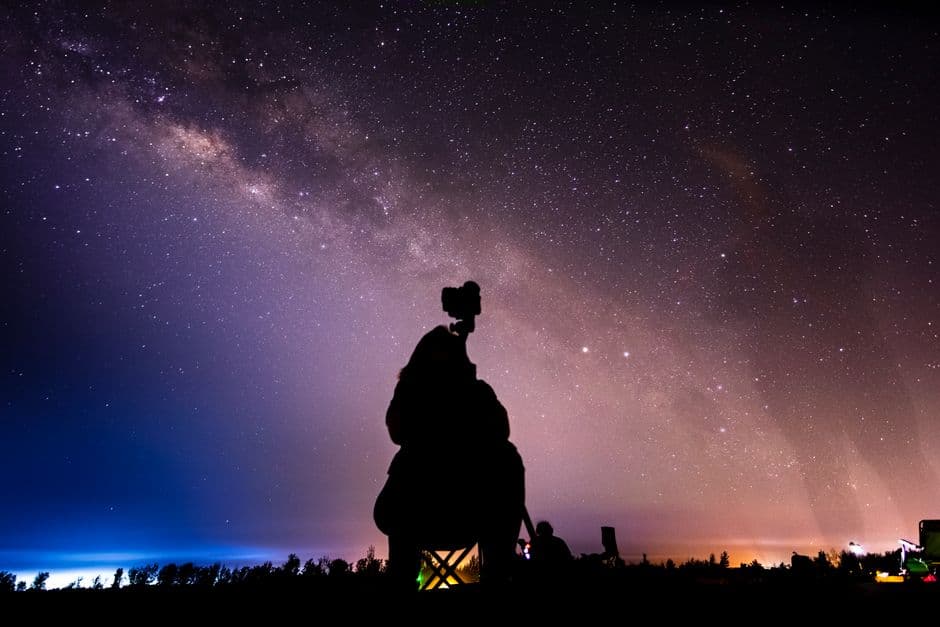
Almost every page on this site is written for somebody buying their first telescope. This one is not. It assumes you have owned one for a season or two, you know what a good night looks like, you have found things and failed to find things, and you now want to know what more money actually buys.
The answer is more specific than it was the first time, because you can now name what is limiting you. That is worth doing before spending anything.
First, work out what is actually limiting you
- You cannot see faint things. Galaxies are smudges, nebulae are hints. This is aperture, and only aperture fixes it. Read on.
- Objects are too small at the power you can use. This is also aperture, since the resolving limit sets the useful ceiling.
- The image will not hold still. This is the mount, not the telescope. A steadier mount under the same tube is the cheaper fix.
- You cannot find things. This is a finding problem and it does not need a bigger telescope at all.
- The view is narrow, or dim, or uncomfortable. This is the eyepiece, and it is by far the cheapest thing on this list to change.
What an upgrade in aperture actually buys
light ratio = (aperture 1 / aperture 2) squared
(203 / 130)squared = 2.44. (254 / 130)squared = 3.82.
An 8-inch collects nearly two and a half times the light of a typical 130mm first telescope; a 10-inch collects almost four times. In magnitudes that is roughly 1.0 and 1.5 respectively, which is a real and visible change rather than a marginal one.
There is a second and less obvious gain, and for planetary observers it is the bigger one.
Dawes limit = 116 / aperture in millimeters
116 / 130 = 0.89. 116 / 203 = 0.57. 116 / 254 = 0.46.
The Cassini division in Saturn's rings needs about 0.7 arcseconds. A 130mm telescope cannot resolve it at any magnification. An 8-inch can. That is not an improvement in degree, it is the appearance of something that was previously impossible.
Why the step is usually to 8 inches
Eight inches is where two things happen at once: the resolving limit crosses the Cassini threshold, and the light grasp roughly doubles against a typical first telescope. Below it you get one or neither, and above it the returns begin to flatten while the weight does not.
light ratio = (aperture 1 / aperture 2) squared
(203 / 150)squared = 1.83. (254 / 203)squared = 1.57.
Going from 150mm to 203mm gains 83 percent more light. Going from 203mm to 254mm gains 57 percent more, for 11 lb more to carry. Each further step costs more and gives less, which is why 8 inches is the size this site keeps arriving back at.
The four worth considering
| Aperture | Resolving limit | Light vs 130mm | Finds objects | Weight | |
|---|---|---|---|---|---|
| StarSense Explorer 8" Dob | 203mm | 0.57 arcsec | 2.44x | Phone | 43.4 lb |
| Sky-Watcher Classic 200P | 203mm | 0.57 arcsec | 2.44x | You do | Not published |
| NexStar 8SE | 203.2mm | 0.57 arcsec | 2.44x | GoTo, and tracks | 32 lb |
| StarSense Explorer 10" Dob | 254mm | 0.46 arcsec | 3.82x | Phone | 54.8 lb |
Three of the four have identical optical limits, which means the choice among them is entirely about how you want to point the telescope and how much you are willing to carry. Only the 10-inch changes what you can see, and it charges 11 lb for the privilege.
How this is funded: the buy buttons below are Amazon Associates links, and a qualifying purchase earns us a commission at no extra cost to you. It cannot move the ranking, because the order here is set by aperture per dollar, and no commission rate changes how much light a mirror collects. Full disclosure.
| # | Telescope | Best for | Aperture | Price |
|---|---|---|---|---|
| 1 | 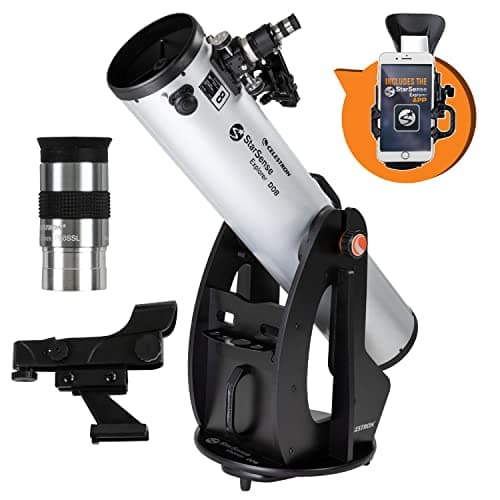 Celestron StarSense Explorer 8-inch DobsonianTop pick203mm of Dobsonian aperture with the phone finder bolted on. The largest telescope here that a beginner can genuinely operate on night one. | Big aperture, no star-hopping | 203mm (8 in)406x useful | |
| 2 | 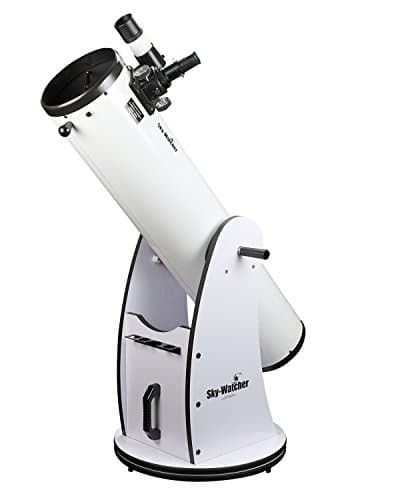 Sky-Watcher Classic 200P Dobsonian (8-inch)Eight inches of aperture on the simplest mount ever designed. This is the telescope experienced observers tell beginners to buy. | The one you will not outgrow | 200mm (8 in)400x useful | |
| 3 | 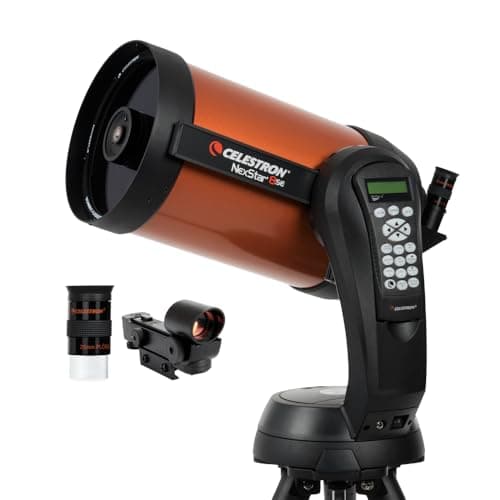 Celestron NexStar 8SE203mm of Schmidt-Cassegrain at f/10 on a computerized fork. The largest aperture on this site that still finds and follows objects by itself. | The most aperture that still tracks | 203.2mm (8")406x useful | |
| 4 | 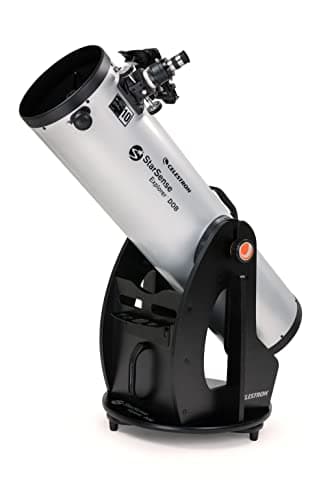 Celestron StarSense Explorer 10" Dobsonian254mm of Newtonian on a Dobsonian base, with phone plate solving to find things. More light than anything else here, and heavier than anything else here. | The most light on this site | 254mm (10")508x useful |
Top pick · Big aperture, no star-hopping
Celestron StarSense Explorer 8-inch Dobsonian
203mm of Dobsonian aperture with the phone finder bolted on. The largest telescope here that a beginner can genuinely operate on night one.
What the aperture allows
- Maximum useful magnification
- 406x
- 2 × 203mm of aperture
- Resolving limit (Dawes)
- 0.57 arcseconds
- 116 ÷ 203mm
- Cassini division (0.7″)
- Within reach
- on a steady night, at high magnification
Celestron publishes 480x as this telescope’s highest useful magnification. Our figure is 406x, from two times the aperture in millimeters. The gap of 74x comes from the slightly more generous per-inch constant makers use. Neither number describes a typical night: the atmosphere usually settles the question well below both.
Worked example: a 25mm eyepiece in this telescope gives 1200mm ÷ 25mm = 48x.
203mm gathers 841 times the light of the naked eye, which is Celestron's own published figure. Against the 130mm scopes further up this list it is 2.4 times the light, from the ratio 203 over 130, squared.
Two times 203mm gives 406x of useful magnification; Celestron publishes 480x. Dawes' limit is 0.57 arcseconds, so the Cassini division, the Great Red Spot and hundreds of Messier objects are all inside its reach.
The published limiting stellar magnitude of 14.2 is the number that explains what deep sky means. It is roughly 4,000 times fainter than the faintest star a good naked eye sees from a dark site.
The reason to choose this over a plain 8-inch Dobsonian is the phone finder. An 8-inch tube with a 0.57-arcsecond resolution limit is wasted on somebody who cannot locate anything to point it at.
What it does well
- The largest aperture here that a beginner can realistically use on the first night
- The phone finder removes the learning curve that stops most people using this much telescope
- A Dobsonian base is rock steady under a big tube
What it costs you
- Heavy and bulky; two trips outside and real storage space
- No tracking, so at 200x objects leave the field quickly
- Collimation and a long cool-down are part of owning it
Skip this one if: Skip it if storage or stairs are a problem. That is the single most common reason a large Dobsonian stops getting used.
#ad · how this is funded · price as of September 21, 2026
Pick 2 · The one you will not outgrow
Sky-Watcher Classic 200P Dobsonian (8-inch)
Eight inches of aperture on the simplest mount ever designed. This is the telescope experienced observers tell beginners to buy.
What the aperture allows
- Maximum useful magnification
- 400x
- 2 × 200mm of aperture
- Resolving limit (Dawes)
- 0.58 arcseconds
- 116 ÷ 200mm
- Cassini division (0.7″)
- Within reach
- on a steady night, at high magnification
200mm is a different category of instrument, not an incremental upgrade. Against the 70mm refractor at the other end of this list the light-gathering ratio is 200 divided by 70, squared: 8.2 times more light reaching your eye.
Two times 200mm gives 400x of useful magnification, which is more than the atmosphere delivers on all but a handful of nights a year. In practice this telescope is limited by the sky rather than by its optics, which is exactly the position you want to be in.
Dawes' limit at 200mm is 116 divided by 200, which is 0.58 arcseconds. The Cassini division, at roughly 0.7 arcseconds, is comfortably inside that. So is the Great Red Spot, and so are hundreds of Messier objects a 70mm scope simply cannot reach.
The honest cost is bulk. The tube is long and the base is wide, and this is a telescope you carry outside in two trips. Everyone who owns one tells the same story: they used it far more once they stopped storing it somewhere awkward.
What it does well
- The aperture-per-dollar figure that no other design at this price approaches
- A mount that cannot be wobbly, because there is almost nothing to it
- The 2-inch focuser takes wide-field eyepieces the cheaper models cannot
- Genuinely a lifetime telescope; nobody outgrows eight inches of aperture in a hurry
What it costs you
- Big and heavy: two trips outside, and it needs real storage space
- No tracking, so at 200x objects drift out of view in well under a minute
- Needs collimation checks, and the mirror takes 30 to 45 minutes to reach outside temperature
Skip this one if: Skip it if you live upstairs with no lift, or if the observing spot is a fire escape. The best telescope in this list is the wrong one if carrying it is a chore.
| Optical design | Newtonian reflector, borosilicate parabolic primary with 94 percent reflective coatingsSource: Classic 200P Dobsonian — manufacturer specifications (retrieved September 1, 2026) |
|---|---|
| Aperture | 200mm (8 in)Source: Classic 200P Dobsonian — manufacturer specifications (retrieved September 1, 2026) |
| Mount | Dobsonian rocker box with Teflon bearings and a patented tension control handleSource: Classic 200P Dobsonian — manufacturer specifications (retrieved September 1, 2026) |
| Light gathering vs the eye | 816xSky-Watcher's own published figure.Source: Classic 200P Dobsonian — manufacturer specifications (retrieved September 1, 2026) |
| Focuser | 2-inch Crayford with a 1.25-inch adapterSource: Classic 200P Dobsonian — manufacturer specifications (retrieved September 1, 2026) |
| Versus the 6-inch model | 78 percent brighter than the 150mm versionSky-Watcher's own published comparison.Source: Classic 200P Dobsonian — manufacturer specifications (retrieved September 1, 2026) |
#ad · how this is funded · price as of September 21, 2026
Pick 3 · The most aperture that still tracks
Celestron NexStar 8SE
203mm of Schmidt-Cassegrain at f/10 on a computerized fork. The largest aperture on this site that still finds and follows objects by itself.
What the aperture allows
- Maximum useful magnification
- 406x
- 2 × 203.2mm of aperture
- Resolving limit (Dawes)
- 0.57 arcseconds
- 116 ÷ 203.2mm
- Cassini division (0.7″)
- Within reach
- on a steady night, at high magnification
Celestron publishes 480x as this telescope’s highest useful magnification. Our figure is 406x, from two times the aperture in millimeters. The gap of 74x comes from the slightly more generous per-inch constant makers use. Neither number describes a typical night: the atmosphere usually settles the question well below both.
Worked example: a 25mm eyepiece in this telescope gives 2032mm ÷ 25mm = 81x.
Two times 203.2mm gives 406x of useful magnification, and Dawes' limit is 0.57 arcseconds. That is comfortably inside the 0.7 arcseconds the Cassini division needs, so the gap in Saturn's rings is genuinely available on a steady night rather than theoretically available.
Celestron publishes 843 times the light-gathering of the eye and a limiting stellar magnitude of 14. Against the 150mm NexStar 6SE the collecting area ratio is (203.2 / 150) squared = 1.83, so this telescope collects 83 percent more light than the 6SE.
At f/10 the focal length is 2032mm, so the supplied 25mm eyepiece gives 81x. That is a high lowest power: the widest true field this telescope offers is narrow, and large open clusters and the Andromeda galaxy will not fit in it.
The number that decides most purchases is not on the spec sheet. The optical tube and the fork are one 32 lb assembly with a separate tripod, and it is carried in two hands, not one. A telescope that lives in a closet because it is awkward to move sees less sky than a smaller one by the door.
What it does well
- 203mm of aperture that finds and tracks objects on its own
- Resolves the Cassini division at 0.57 arcseconds on a steady night
- The long 2032mm focal length suits planets and double stars exceptionally well
What it costs you
- 32 lb of kit weight, in two pieces, every session
- The narrowest widest-field of any telescope on this site: 81x with the supplied eyepiece
- Needs mains power or a battery pack, and a dew shield for the corrector plate
Skip this one if: Skip it if this is a first telescope. It is a lot of money and a lot of weight to gamble on a hobby that has not stuck yet, and an 8-inch Dobsonian shows the same sky without the motors, the batteries or the fork.
$1,699.00 · 12% off
#ad · how this is funded · price as of September 21, 2026
Pick 4 · The most light on this site
Celestron StarSense Explorer 10" Dobsonian
254mm of Newtonian on a Dobsonian base, with phone plate solving to find things. More light than anything else here, and heavier than anything else here.
What the aperture allows
- Maximum useful magnification
- 508x
- 2 × 254mm of aperture
- Resolving limit (Dawes)
- 0.46 arcseconds
- 116 ÷ 254mm
- Cassini division (0.7″)
- Within reach
- on a steady night, at high magnification
Celestron publishes 600x as this telescope’s highest useful magnification. Our figure is 508x, from two times the aperture in millimeters. The gap of 92x comes from the slightly more generous per-inch constant makers use. Neither number describes a typical night: the atmosphere usually settles the question well below both.
Worked example: a 25mm eyepiece in this telescope gives 1200mm ÷ 25mm = 48x.
Two times 254mm gives 508x of useful magnification and Dawes' limit is 0.46 arcseconds, the finest resolving limit of any telescope on this site. Celestron publishes 1317 times the light-gathering of the eye and a limiting stellar magnitude of 14.7.
Against the 8-inch version of the same telescope the ratio is (254 / 203) squared = 1.57, so this collects 57 percent more light. That is the difference between a faint smudge and a smudge with structure in it on the brighter galaxies.
At f/4.7 and 1200mm the supplied 25mm eyepiece gives 48x, the same as the 8-inch, because both share the 1200mm focal length. The 10-inch simply delivers that magnification with more light behind it.
54.8 lb is the honest headline. The tube and base separate, but neither half is light, and a fast f/4.7 mirror also has to be collimated more carefully than a slower one. This is a telescope for somebody who already knows they want it.
What it does well
- The finest resolving limit and the most light of anything on this site
- Phone plate solving finds targets without an alignment routine or batteries in the mount
- Shares the 1200mm focal length with the 8-inch, so eyepiece choices carry across
What it costs you
- 54.8 lb total, and awkward to move even in two pieces
- f/4.7 is demanding about collimation and about eyepiece quality at the edge
- Needs a supported smartphone that fits the dock, and a level surface for the base
Skip this one if: Skip it if you will have to carry it down stairs. Aperture you do not set up is worth nothing, and the 8-inch is 11 lb lighter for 64 percent of the light.
#ad · how this is funded · price as of September 21, 2026
The upgrade that is not a telescope
- A darker sky. Driving 40 minutes to a darker site does more for faint objects than doubling your aperture does, and costs the fuel. Light pollution has the numbers.
- One good eyepiece. A wide-field eyepiece changes every object you look at, in a telescope you already own. Which eyepieces.
- A better finder, or a phone app. If finding is the limit, this is a small fraction of the cost of a new telescope.
- A stable surface or a better tripod. A shaking image is a mount problem and buying more aperture inherits it. Mounts.
Which to buy
- The StarSense Explorer 8" Dobsonian if you want the most capable telescope that still helps you find things. The full review.
- The Sky-Watcher Classic 200P if you can already find your way around the sky. Identical optics with no app and no electronics at all. The full review.
- The NexStar 8SE if tracking is what you are missing, particularly for sharing the eyepiece or for phone photography. The full review.
- The StarSense Explorer 10" Dobsonian only if you are sure the weight is manageable. It is the most light on this site and the most telescope to move.
One last thing worth saying plainly: keep the first telescope. A small, light telescope that goes outside on a marginal night sees more sky than a large one that waits for a perfect one, and the two get used for different things. Nobody who keeps both regrets it.
Questions people actually ask
What should my second telescope be?
For most people stepping up from a 130mm first telescope, an 8-inch Dobsonian. It collects about two and a half times the light and its 0.57-arcsecond resolving limit crosses the roughly 0.7 arcseconds needed for the Cassini division, which a 130mm telescope cannot reach at any magnification.
Is it worth upgrading from a 130mm telescope to an 8 inch?
Yes, if faint objects or planetary detail are what limit you. (203 / 130) squared is 2.44, so an 8-inch collects nearly two and a half times the light, roughly one magnitude. It also resolves detail a 130mm physically cannot. If your limits are finding objects or eyepiece quality, fix those first for far less money.
Should I buy a 10-inch instead of an 8-inch Dobsonian?
Only if you are confident about the weight. A 10-inch collects 57 percent more light than an 8-inch, which is a real gain, but Celestron publishes 54.8 lb against 43.4 lb. Aperture that stays indoors because it is awkward to move is worth nothing.
Should I sell my first telescope when I upgrade?
Usually not. A small telescope gets carried outside on nights when a large one does not, and the two end up serving different purposes: quick looks and wide fields against faint objects and high power. Most people who keep both use both.
What is better than buying a bigger telescope?
Driving to a darker sky, in most cases. A darker site does more for faint objects than doubling aperture does. After that, one good wide-field eyepiece changes every object you look at in the telescope you already own, for a small fraction of the cost of a new one.
Read next
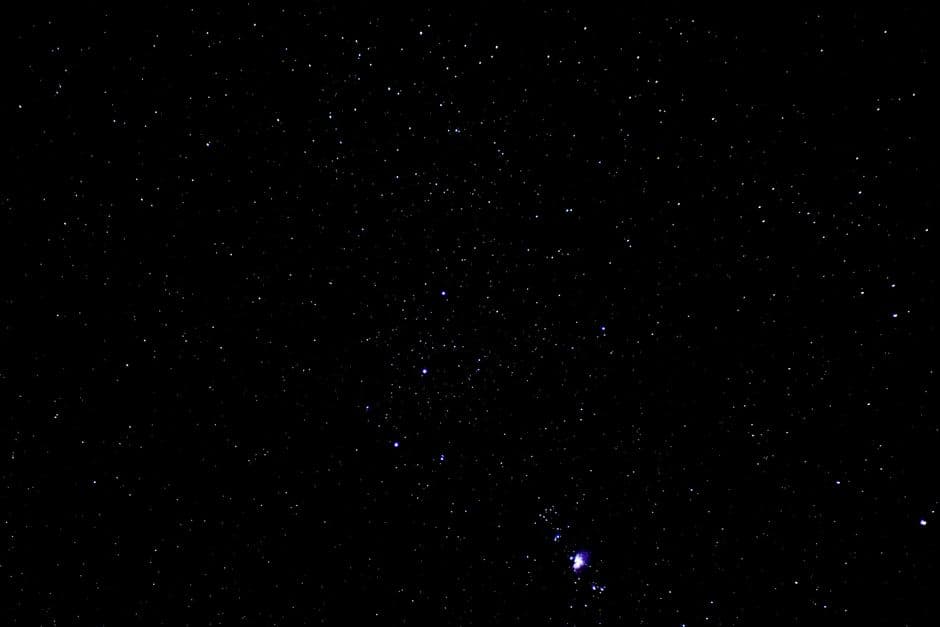
Celestron StarSense Explorer 8" Dobsonian
203mm on a Dobsonian base, with phone plate solving to find targets. The largest aperture on this site that a beginner can genuinely aim.
Top pick: Celestron StarSense Explorer 8-inch Dobsonian
#ad · how this is funded · price as of September 21, 2026
Best eyepiece
The Best Telescope Eyepieces
Eyepieces ranked on field, eye relief and what your telescope can actually use, with the magnification arithmetic worked for three common focal lengths.
Top pick: Celestron Omni 32mm Eyepiece (1.25")
$52.95 · 6% off
#ad · how this is funded · price as of September 21, 2026
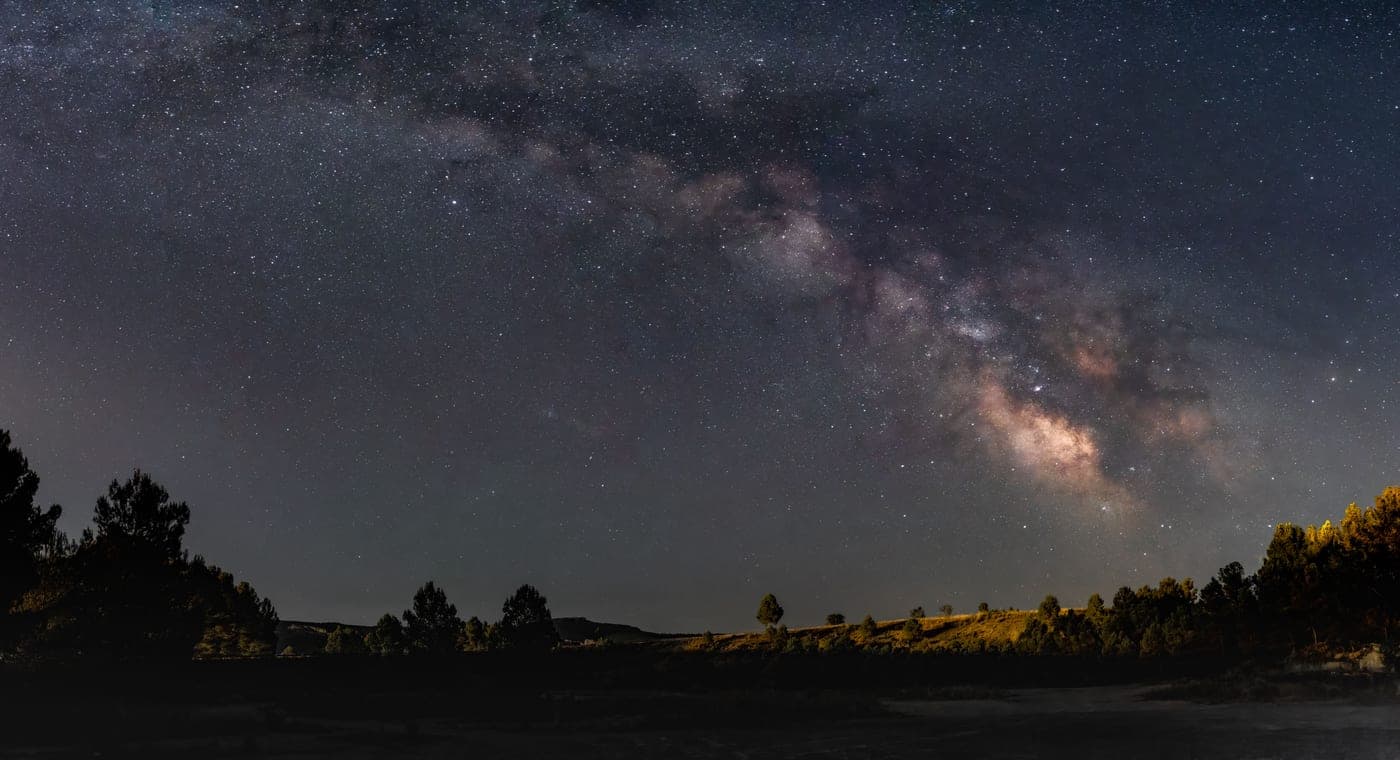
Best for deep sky
Telescopes for Deep Space, and What Deep Sky Really Looks Like
What galaxies and nebulae genuinely look like at each aperture, and why sky darkness matters as much as the telescope.
Top pick: Sky-Watcher Classic 200P Dobsonian (8-inch)
#ad · how this is funded · price as of September 21, 2026
Found something wrong here? Tell us and we will correct it and date the correction, per our editorial policy.