Telescope Gifts
The Best Telescopes to Give an Adult
An adult receiving a telescope has no height problem and no strength problem, which frees the decision to be about the two things that actually matter: aperture and whether they can find anything.
By Scooter M. · Published · How we pick
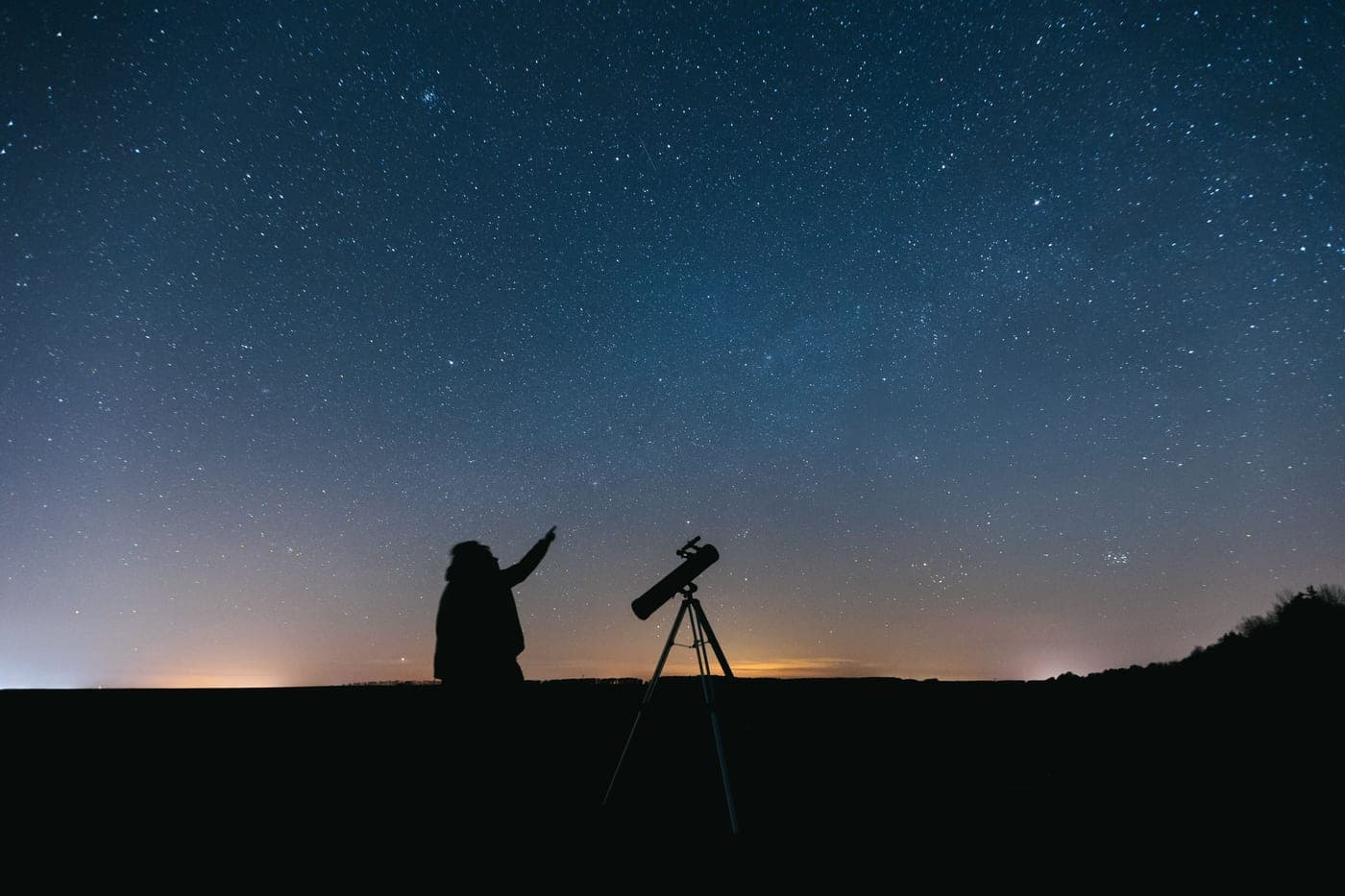
For an adult, buy phone-guided finding if you can stretch to it, and a 130mm tabletop Dobsonian if you cannot. Height and weight are not constraints here, so the decision comes down to aperture and to whether they will be able to find anything on the first evening.
What changes when the recipient is an adult
- Full-height tripods work. No kneeling and no step stool, so the whole tripod-mounted range opens up.
- An 8-inch Dobsonian is carryable. Two trips, but it is genuinely an option, and it unlocks 816 times the light-gathering of the naked eye.
- Reading the manual is likely. That makes a slightly more complex telescope viable in a way it is not for a child.
- Storage becomes the real limit. Not money, not strength. Whether it fits somewhere they will actually retrieve it from.
Finding things is still the failure mode
Adults abandon telescopes for the same reason children do: an evening that ends without locating anything. A misaligned finderscope, an unfamiliar sky and a cold night is a reliable combination, and it is nobody's fault.
light ratio = (aperture 1 / aperture 2) squared
A 130mm phone-guided telescope against a 150mm manual one: (150 / 130)squared = 1.33
33 percent more light for the manual telescope. Whether that beats a first evening that ends with Jupiter in the eyepiece is a judgment about the recipient, not about optics. The full comparison.
How this is funded: the buy buttons below are Amazon Associates links, and a qualifying purchase earns us a commission at no extra cost to you. It cannot move the ranking, because the order here is set by aperture per dollar, and no commission rate changes how much light a mirror collects. Full disclosure.
| # | Telescope | Best for | Aperture | Price |
|---|---|---|---|---|
| 1 | 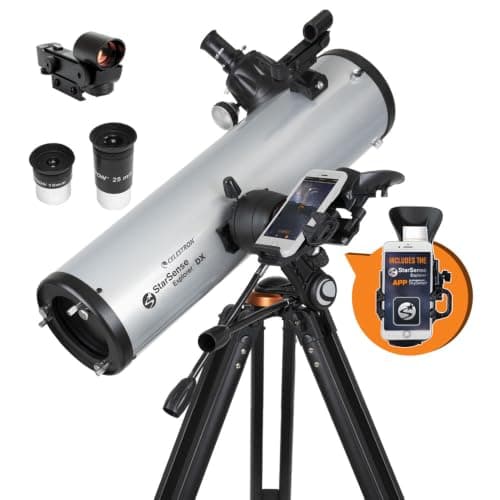 Celestron StarSense Explorer DX 130AZTop pick130mm of parabolic aperture on a mount that stays still, plus the one piece of software that genuinely solves the find-it problem. | Most first buyers | 130mm (5.11 in)260x useful | |
| 2 | 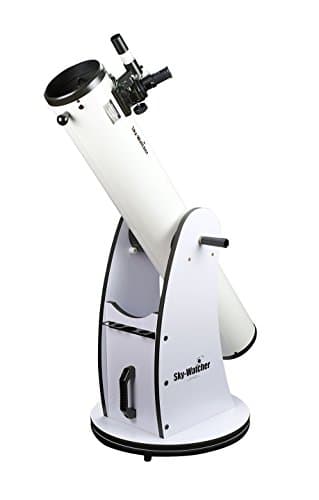 Sky-Watcher Classic 150P Dobsonian (6-inch)Six inches of parabolic mirror on a floor-standing Dobsonian base. The compromise between the 8-inch and a life with less lifting. | Serious aperture that still fits in a car | 150mm (6 in)300x useful | |
| 3 | 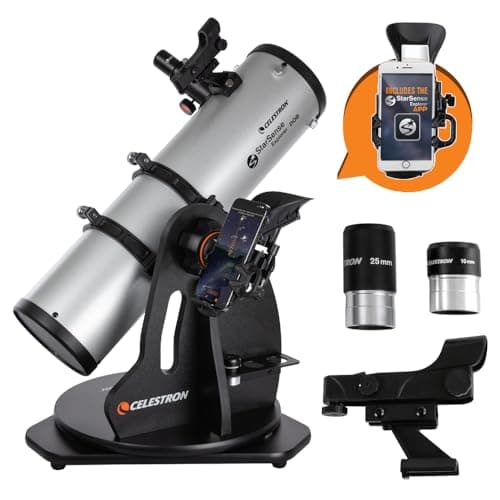 Celestron StarSense Explorer 130mm Tabletop Dobsonian130mm parabolic optics on a tabletop Dobsonian base with the StarSense phone dock. The two best beginner ideas in one box. | Phone finding plus tabletop simplicity | 130mm (5.12 in)260x useful | |
| 4 | 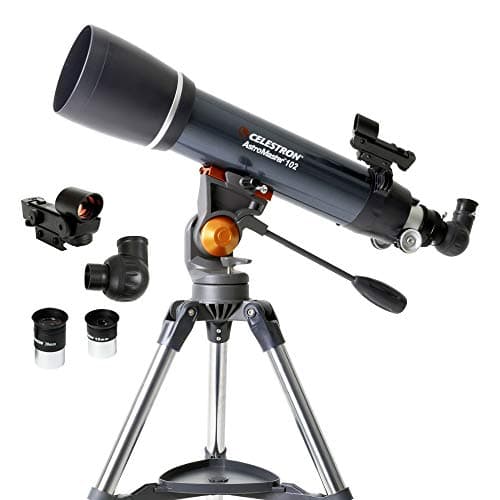 Celestron AstroMaster 102AZ102mm of refractor at f/6.5, which means a short tube and a wide field. A no-maintenance scope with real aperture behind it. | Wide-field refractor views | 102mm (4 in)204x useful | |
| 5 | 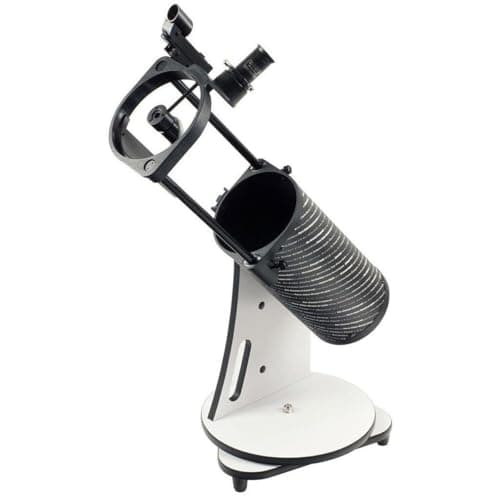 Sky-Watcher Heritage 130 Tabletop DobsonianThe same 130mm parabolic mirror as scopes costing far more, on a base with no tripod to wobble and nothing to set up. | Most aperture per dollar | 130mm260x useful |
Top pick · Most first buyers
Celestron StarSense Explorer DX 130AZ
130mm of parabolic aperture on a mount that stays still, plus the one piece of software that genuinely solves the find-it problem.
What the aperture allows
- Maximum useful magnification
- 260x
- 2 × 130mm of aperture
- Resolving limit (Dawes)
- 0.89 arcseconds
- 116 ÷ 130mm
- Cassini division (0.7″)
- Out of reach
- this aperture cannot resolve it
Celestron publishes 307x as this telescope’s highest useful magnification. Our figure is 260x, from two times the aperture in millimeters. The gap of 47x comes from the slightly more generous per-inch constant makers use. Neither number describes a typical night: the atmosphere usually settles the question well below both.
Worked example: a 25mm eyepiece in this telescope gives 650mm ÷ 25mm = 26x.
130mm is the aperture where the sky stops being a list of bright dots. Two times that aperture is 260x of useful magnification, which is more than the atmosphere will usually give you on any given night, so nothing in this telescope's optical budget is wasted on a number you cannot use.
Celestron's own published ceiling for it is 307x, which sits above the 2x-aperture rule of thumb. The gap is worth knowing about: manufacturers compute that figure per inch of aperture with a slightly more generous constant. Neither number describes a night you will actually have. Plan around 130x to 180x and treat anything higher as a rare-night bonus.
At f/5 the focal length is short, so the supplied 25mm eyepiece gives a wide, forgiving 26x that makes finding things possible in the first place. That is not a compromise; it is the eyepiece you will use most.
The StarSense part is the honest reason this sits at the top. It uses your phone's camera to plate-solve the actual sky and then walks you to a target with an on-screen arrow. It is not a motor and it does not track. It solves the problem that really kills first telescopes, which is not being able to find anything.
What it does well
- 130mm parabolic mirror rather than the cheaper spherical mirror used at this price by several competitors
- The phone-based finder works and needs no alignment stars, no power and no hand controller
- Full-height tripod, so an adult uses it standing up rather than kneeling on wet grass
- Manual mount means nothing to charge, nothing to fail and nothing to re-align next time
What it costs you
- The bundled 10mm eyepiece is the weakest part of the package
- A Newtonian needs collimation checks; not hard, but it is a task a refractor does not have
- No tracking, so at high magnification you are nudging the tube every 30 seconds
Skip this one if: Skip it if the person receiving it is under about ten and will be using it alone. The tripod is full height and the finding workflow assumes a phone.
#ad · how this is funded · price as of October 18, 2026
Pick 2 · Serious aperture that still fits in a car
Sky-Watcher Classic 150P Dobsonian (6-inch)
Six inches of parabolic mirror on a floor-standing Dobsonian base. The compromise between the 8-inch and a life with less lifting.
What the aperture allows
- Maximum useful magnification
- 300x
- 2 × 150mm of aperture
- Resolving limit (Dawes)
- 0.77 arcseconds
- 116 ÷ 150mm
- Cassini division (0.7″)
- Out of reach
- this aperture cannot resolve it
150mm sits in a genuinely useful place. Two times the aperture gives 300x of useful magnification and Dawes' limit works out to 0.77 arcseconds, so the Cassini division is within reach on a steady night.
Against the 8-inch it collects about 56 percent of the light. Sky-Watcher publishes the 8-inch as 78 percent brighter, which is the same comparison seen from the other side. Against a 100mm refractor it gains 232 percent, also their figure. Those two numbers together are the whole argument for buying by aperture.
The practical case for the 6-inch over the 8-inch is transport. It fits across a back seat, one person can move it in a single trip, and a telescope that gets used beats one that is technically better and stays in the garage.
This is a floor-standing Dobsonian, so unlike the tabletop models it needs no furniture. You sit on a low stool beside it, which is the most comfortable way to observe there is.
What it does well
- Real aperture without the 8-inch's transport problem
- Floor-standing, so no table required
- The 2-inch focuser is a genuine upgrade path rather than a dead end
- Simple enough that nothing about it can fail on a cold night
What it costs you
- Still a long tube; it is not a cupboard telescope
- No tracking or GoTo, so you find things yourself
- Collimation and cool-down apply to every Newtonian, this one included
Skip this one if: Skip it if you were choosing between this and the 8-inch and storage is not actually a problem. In that case the extra aperture is worth having.
| Optical design | Newtonian reflector, parabolic primary with Radiant Aluminum Quartz coatingsSource: Classic 150P Dobsonian — manufacturer specifications (retrieved September 1, 2026) |
|---|---|
| Aperture | 150mm (6 in)Source: Classic 150P Dobsonian — manufacturer specifications (retrieved September 1, 2026) |
| Mount | Dobsonian rocker box with Teflon bearings and a tension control handleSource: Classic 150P Dobsonian — manufacturer specifications (retrieved September 1, 2026) |
| Versus a 100mm refractor | 232 percent brighterSky-Watcher's own published comparison.Source: Classic 150P Dobsonian — manufacturer specifications (retrieved September 1, 2026) |
| Focuser | 2-inch rack-and-pinion with a 1.25-inch adapterSource: Classic 150P Dobsonian — manufacturer specifications (retrieved September 1, 2026) |
$515.00 · 13% off
#ad · how this is funded · price as of October 18, 2026
Pick 3 · Phone finding plus tabletop simplicity
Celestron StarSense Explorer 130mm Tabletop Dobsonian
130mm parabolic optics on a tabletop Dobsonian base with the StarSense phone dock. The two best beginner ideas in one box.
What the aperture allows
- Maximum useful magnification
- 260x
- 2 × 130mm of aperture
- Resolving limit (Dawes)
- 0.89 arcseconds
- 116 ÷ 130mm
- Cassini division (0.7″)
- Out of reach
- this aperture cannot resolve it
Celestron publishes 307x as this telescope’s highest useful magnification. Our figure is 260x, from two times the aperture in millimeters. The gap of 47x comes from the slightly more generous per-inch constant makers use. Neither number describes a typical night: the atmosphere usually settles the question well below both.
Worked example: a 25mm eyepiece in this telescope gives 650mm ÷ 25mm = 26x.
This combines the two things that actually keep a first telescope in use: a mount with nothing to wobble, and a finder that removes the where-is-it problem.
Optically it is the same 130mm f/5 parabolic mirror as the DX 130AZ, and Celestron publishes the same figures: 307x maximum useful magnification, 345 times the light of the eye. Two times the aperture gives 260x and Dawes' limit is 0.89 arcseconds.
Against the tripod-mounted DX version you trade standing height for stability and a smaller footprint. Against the Sky-Watcher Heritage 130 you pay more and get the phone dock.
The tabletop condition applies here as much as anywhere: a stable surface at seated chest height, checked before purchase.
What it does well
- Parabolic 130mm mirror, not a spherical compromise
- A Dobsonian base cannot wobble the way a light tripod does
- The StarSense app removes the biggest cause of first-telescope abandonment
What it costs you
- Needs a table, which not every buyer has thought about
- Costs more than the equivalent manual tabletop Dobsonian
- The app needs a phone the whole time it is in use
Skip this one if: Skip it if the recipient wants to learn the constellations. Being walked to a target teaches you less than finding it.
$479.95 · 10% off
#ad · how this is funded · price as of October 18, 2026
Pick 4 · Wide-field refractor views
Celestron AstroMaster 102AZ
102mm of refractor at f/6.5, which means a short tube and a wide field. A no-maintenance scope with real aperture behind it.
What the aperture allows
- Maximum useful magnification
- 204x
- 2 × 102mm of aperture
- Resolving limit (Dawes)
- 1.14 arcseconds
- 116 ÷ 102mm
- Cassini division (0.7″)
- Out of reach
- this aperture cannot resolve it
Celestron publishes 241x as this telescope’s highest useful magnification. Our figure is 204x, from two times the aperture in millimeters. The gap of 37x comes from the slightly more generous per-inch constant makers use. Neither number describes a typical night: the atmosphere usually settles the question well below both.
Worked example: a 25mm eyepiece in this telescope gives 660mm ÷ 25mm = 26x.
102mm collects 2.1 times the light of a 70mm refractor, which is the ratio 102 over 70, squared. That is the difference between the Orion Nebula as a smudge and the Orion Nebula as a shape.
Two times 102mm gives 204x of useful magnification; Celestron publishes 241x. Its published Dawes limit of 1.14 arcseconds is short of the Cassini division, so expect the rings as a clean separated ring rather than a ring with a gap in it.
The short f/6.5 tube is the interesting part. It gives a wide true field for a refractor, which makes large open clusters and Milky Way star fields genuinely rewarding, and it keeps the tube short enough to be easy to handle.
Refractor maintenance is the real selling point for a household that will not enjoy collimating anything. There is nothing to align and nothing to clean.
What it does well
- Real aperture with zero maintenance
- Wide field for a refractor: good on clusters as well as planets
- Short tube balances easily on a simple mount
What it costs you
- A fast achromat shows more color fringing on bright objects than an f/10 tube
- The AZ mount is basic; expect to nudge rather than glide
- Still 102mm, so faint galaxies remain out of reach
Skip this one if: Skip it if the planets are the whole point. A long f/10 refractor or a Dobsonian will show them with less false color.
$359.95 · 11% off
#ad · how this is funded · price as of October 18, 2026
Pick 5 · Most aperture per dollar
Sky-Watcher Heritage 130 Tabletop Dobsonian
The same 130mm parabolic mirror as scopes costing far more, on a base with no tripod to wobble and nothing to set up.
What the aperture allows
- Maximum useful magnification
- 260x
- 2 × 130mm of aperture
- Resolving limit (Dawes)
- 0.89 arcseconds
- 116 ÷ 130mm
- Cassini division (0.7″)
- Out of reach
- this aperture cannot resolve it
Worked example: a 25mm eyepiece in this telescope gives 650mm ÷ 25mm = 26x.
This is the aperture-per-dollar champion of the beginner shelf and it is not close. You get the same 130mm parabolic mirror found in telescopes at twice the price, and you get it without paying for a tripod, a slow-motion assembly or a hand controller.
Two times 130mm is 260x of useful magnification. Dawes' limit at 130mm works out to 116 divided by 130, which is 0.89 arcseconds. The Cassini division in Saturn's rings spans roughly 0.7 arcseconds at its widest, so this telescope sits right at the edge of showing it on a still night and will show the rings themselves easily.
The catch is the word tabletop. It needs a surface at roughly chest height when you are seated. A garden table works, a plastic patio chair does not, and buying one without thinking about where it will stand is the single most common regret with this design.
The tube collapses, which is what makes it live in a cupboard rather than a garage. That matters more than it sounds: the telescope you can carry outside in one trip is the telescope you use.
What it does well
- The most aperture you can buy at this price, by a clear margin
- Nothing to assemble, no tripod to wobble, ready in the time it takes to carry it outside
- Collapsible tube stores in a cupboard and keeps its collimation
- The Dobsonian motion is intuitive: you push the tube where you want to look
What it costs you
- Needs a solid table or stool at the right height, which is a real constraint
- The helical focuser is coarser than a rack-and-pinion or a Crayford
- Open tube design collects dust and needs the odd mirror clean
Skip this one if: Skip it if you have nowhere to stand it. On the ground it points at treetops, and on a wobbly plastic table every view shakes.
$305.00 · 12% off
#ad · how this is funded · price as of October 18, 2026
Matching the telescope to the person
| The recipient | What to buy | Why |
|---|---|---|
| Has mentioned wanting one | The largest Dobsonian their storage allows | Motivated recipients get past the learning curve |
| Has never mentioned it | Phone-guided finding | The first evening decides whether there is a second |
| Likes gadgets and apps | Phone-guided or GoTo | They will enjoy the technology as much as the sky |
| Dislikes anything fiddly | A refractor on a simple mount | No collimation, no cool-down, nothing to adjust |
| Lives in a flat or a city | A portable 130mm | Portability beats aperture when the sky is bright |
Buying for someone else covers what to do when you genuinely cannot find any of this out in advance.
Questions people actually ask
What is the best telescope to give an adult?
One with phone-based finding if the budget allows, because the first evening is what decides whether the telescope keeps being used. Otherwise a 130mm tabletop Dobsonian, which gives the most aperture per dollar of anything at that price.
Should I buy a big telescope as a gift?
Only if you know where it will be stored. A large Dobsonian is a superb instrument and a poor gift for somebody with nowhere to keep it, because the storage problem is what stops it being used rather than any optical shortcoming.
Is a telescope a good gift for someone who has not asked for one?
It can be excellent, provided you buy for the situation rather than the specification. Somebody with no prior interest needs a telescope that works within five minutes far more than they need the largest mirror your budget allows.
What if they already own a telescope?
Then a good eyepiece is the better gift and it is much harder to get wrong. A quality low-power wide-field eyepiece improves any telescope, and almost nobody buys one for themselves early on.
Read next

Buying a Telescope for Somebody Else
What to work out without asking, what to default to when you cannot, and how to keep the gift adjustable afterwards.
Top pick: Celestron StarSense Explorer DX 130AZ
#ad · how this is funded · price as of October 18, 2026
Best for adults
The Best Telescopes for Adult Beginners
Six telescopes sized and mounted for an adult, ranked by aperture per dollar with the arithmetic shown.
Top pick: Celestron StarSense Explorer DX 130AZ
#ad · how this is funded · price as of October 18, 2026
StarSense Phone Finding vs Finding Things Yourself
Phone-guided finding against learning to star-hop: what each costs in aperture, and which suits which buyer.
Top pick: Celestron StarSense Explorer DX 130AZ
#ad · how this is funded · price as of October 18, 2026
Found something wrong here? Tell us and we will correct it and date the correction, per our editorial policy.