Beginner Telescopes
The Best Telescopes for Adult Beginners
An adult buying a first telescope has different constraints from a parent buying a gift: standing height matters, storage matters, and there is no reason to compromise on aperture.
By Scooter M. · Published · How we pick

For an adult buying their first telescope, the answer is the Celestron StarSense Explorer DX 130AZ if you want the fewest ways to fail, and the 8-inch Sky-Watcher Classic 200P if you already suspect you are going to take this seriously. If following an object at high magnification matters more than either, the NexStar 130SLT is the tracking option, and its review is honest about what the motors cost.
The reason adults get their own page is not marketing. Three practical constraints change the answer, and none of them are about optics.
Three things that change the answer for an adult
- Eyepiece height. A tabletop Dobsonian needs a surface at seated chest height. An adult without a suitable table ends up kneeling, and a telescope that is uncomfortable to use gets used less. Full-height tripods and floor-standing Dobsonians remove the problem entirely.
- You can carry more. An 8-inch Dobsonian weighs enough to rule it out as a child's telescope and not enough to rule it out for an adult, and that single fact unlocks 816 times the light-gathering of the naked eye at a price a 4-inch refractor cannot approach.
- Storage is the real ceiling. The honest constraint on aperture is almost never money. It is whether the telescope fits somewhere you will actually retrieve it from. Measure the cupboard before you read another review.
The aperture-per-dollar case, restated for adults
Light gathering scales with collecting area, so it goes as the square of the aperture ratio. That is why the jump from a 102mm refractor to a 200mm Dobsonian is far larger than the ratio of the two numbers suggests.
ratio = (aperture 1 / aperture 2) squared
(200 / 102)squared = 3.8 times more light
And against a 70mm: (200 / 70)squared = 8.2 times. Run it on your own pair of apertures with the aperture calculator.
How this is funded: the buy buttons below are Amazon Associates links, and a qualifying purchase earns us a commission at no extra cost to you. It cannot move the ranking, because the order here is set by aperture per dollar, and no commission rate changes how much light a mirror collects. Full disclosure.
| # | Telescope | Best for | Aperture | Price |
|---|---|---|---|---|
| 1 | 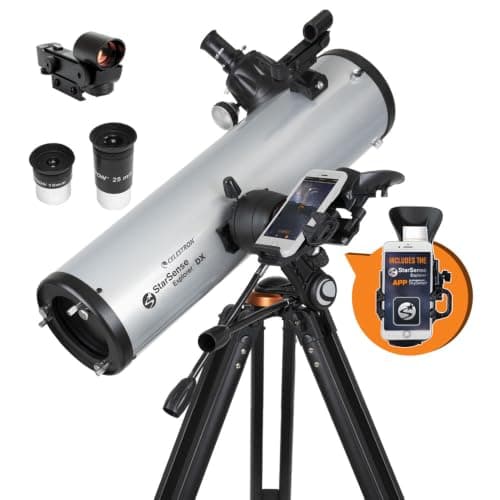 Celestron StarSense Explorer DX 130AZTop pick130mm of parabolic aperture on a mount that stays still, plus the one piece of software that genuinely solves the find-it problem. | Most first buyers | 130mm (5.11 in)260x useful | |
| 2 | 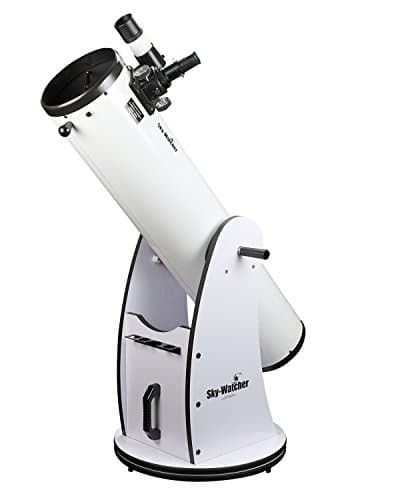 Sky-Watcher Classic 200P Dobsonian (8-inch)Eight inches of aperture on the simplest mount ever designed. This is the telescope experienced observers tell beginners to buy. | The one you will not outgrow | 200mm (8 in)400x useful | Unavailable |
| 3 | 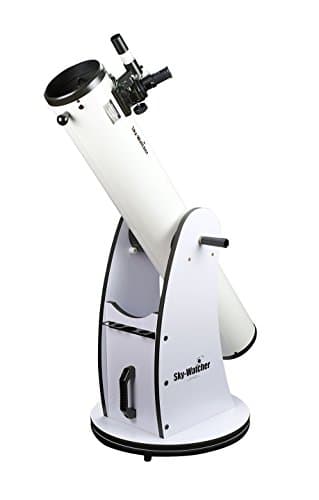 Sky-Watcher Classic 150P Dobsonian (6-inch)Six inches of parabolic mirror on a floor-standing Dobsonian base. The compromise between the 8-inch and a life with less lifting. | Serious aperture that still fits in a car | 150mm (6 in)300x useful | |
| 4 | 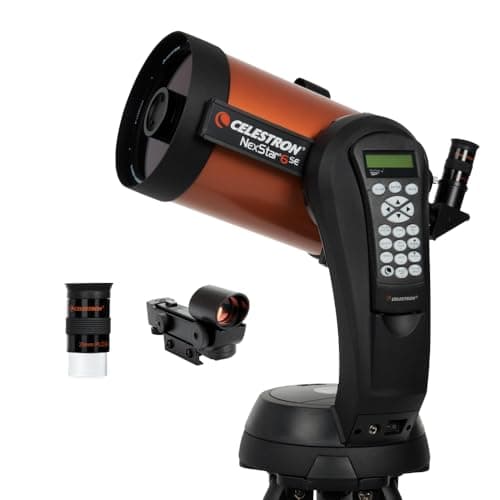 Celestron NexStar 6SE150mm of Schmidt-Cassegrain at f/10 on a computerized fork. Long focal length in a short tube, and the planetary views to match. | The serious step up | 150mm (5.91 in)300x useful | |
| 5 | 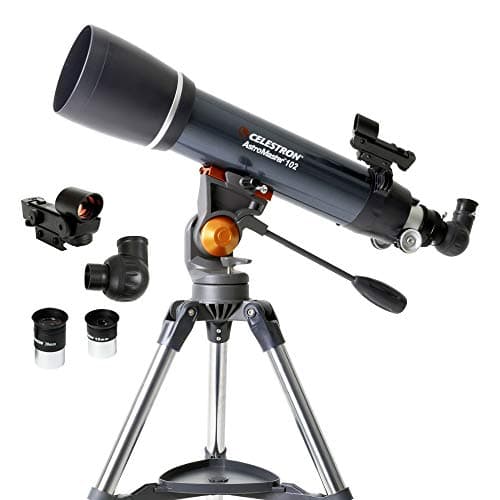 Celestron AstroMaster 102AZ102mm of refractor at f/6.5, which means a short tube and a wide field. A no-maintenance scope with real aperture behind it. | Wide-field refractor views | 102mm (4 in)204x useful | |
| 6 | 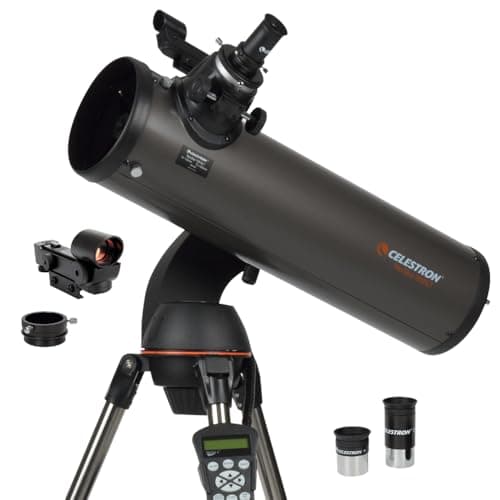 Celestron NexStar 130SLT130mm parabolic optics on a computerized fork mount and a full-height tripod, with a hand controller instead of a phone. | Tripod-mounted GoTo | 130mm (5.12 in)260x useful |
Top pick · Most first buyers
Celestron StarSense Explorer DX 130AZ
130mm of parabolic aperture on a mount that stays still, plus the one piece of software that genuinely solves the find-it problem.
What the aperture allows
- Maximum useful magnification
- 260x
- 2 × 130mm of aperture
- Resolving limit (Dawes)
- 0.89 arcseconds
- 116 ÷ 130mm
- Cassini division (0.7″)
- Out of reach
- this aperture cannot resolve it
Celestron publishes 307x as this telescope’s highest useful magnification. Our figure is 260x, from two times the aperture in millimeters. The gap of 47x comes from the slightly more generous per-inch constant makers use. Neither number describes a typical night: the atmosphere usually settles the question well below both.
Worked example: a 25mm eyepiece in this telescope gives 650mm ÷ 25mm = 26x.
130mm is the aperture where the sky stops being a list of bright dots. Two times that aperture is 260x of useful magnification, which is more than the atmosphere will usually give you on any given night, so nothing in this telescope's optical budget is wasted on a number you cannot use.
Celestron's own published ceiling for it is 307x, which sits above the 2x-aperture rule of thumb. The gap is worth knowing about: manufacturers compute that figure per inch of aperture with a slightly more generous constant. Neither number describes a night you will actually have. Plan around 130x to 180x and treat anything higher as a rare-night bonus.
At f/5 the focal length is short, so the supplied 25mm eyepiece gives a wide, forgiving 26x that makes finding things possible in the first place. That is not a compromise; it is the eyepiece you will use most.
The StarSense part is the honest reason this sits at the top. It uses your phone's camera to plate-solve the actual sky and then walks you to a target with an on-screen arrow. It is not a motor and it does not track. It solves the problem that really kills first telescopes, which is not being able to find anything.
What it does well
- 130mm parabolic mirror rather than the cheaper spherical mirror used at this price by several competitors
- The phone-based finder works and needs no alignment stars, no power and no hand controller
- Full-height tripod, so an adult uses it standing up rather than kneeling on wet grass
- Manual mount means nothing to charge, nothing to fail and nothing to re-align next time
What it costs you
- The bundled 10mm eyepiece is the weakest part of the package
- A Newtonian needs collimation checks; not hard, but it is a task a refractor does not have
- No tracking, so at high magnification you are nudging the tube every 30 seconds
Skip this one if: Skip it if the person receiving it is under about ten and will be using it alone. The tripod is full height and the finding workflow assumes a phone.
#ad · how this is funded · price as of October 18, 2026
Pick 2 · The one you will not outgrow
Sky-Watcher Classic 200P Dobsonian (8-inch)
Eight inches of aperture on the simplest mount ever designed. This is the telescope experienced observers tell beginners to buy.
What the aperture allows
- Maximum useful magnification
- 400x
- 2 × 200mm of aperture
- Resolving limit (Dawes)
- 0.58 arcseconds
- 116 ÷ 200mm
- Cassini division (0.7″)
- Within reach
- on a steady night, at high magnification
200mm is a different category of instrument, not an incremental upgrade. Against the 70mm refractor at the other end of this list the light-gathering ratio is 200 divided by 70, squared: 8.2 times more light reaching your eye.
Two times 200mm gives 400x of useful magnification, which is more than the atmosphere delivers on all but a handful of nights a year. In practice this telescope is limited by the sky rather than by its optics, which is exactly the position you want to be in.
Dawes' limit at 200mm is 116 divided by 200, which is 0.58 arcseconds. The Cassini division, at roughly 0.7 arcseconds, is comfortably inside that. So is the Great Red Spot, and so are hundreds of Messier objects a 70mm scope simply cannot reach.
The honest cost is bulk. The tube is long and the base is wide, and this is a telescope you carry outside in two trips. Everyone who owns one tells the same story: they used it far more once they stopped storing it somewhere awkward.
What it does well
- The aperture-per-dollar figure that no other design at this price approaches
- A mount that cannot be wobbly, because there is almost nothing to it
- The 2-inch focuser takes wide-field eyepieces the cheaper models cannot
- Genuinely a lifetime telescope; nobody outgrows eight inches of aperture in a hurry
What it costs you
- Big and heavy: two trips outside, and it needs real storage space
- No tracking, so at 200x objects drift out of view in well under a minute
- Needs collimation checks, and the mirror takes 30 to 45 minutes to reach outside temperature
Skip this one if: Skip it if you live upstairs with no lift, or if the observing spot is a fire escape. The best telescope in this list is the wrong one if carrying it is a chore.
| Optical design | Newtonian reflector, borosilicate parabolic primary with 94 percent reflective coatingsSource: Classic 200P Dobsonian — manufacturer specifications (retrieved September 1, 2026) |
|---|---|
| Aperture | 200mm (8 in)Source: Classic 200P Dobsonian — manufacturer specifications (retrieved September 1, 2026) |
| Mount | Dobsonian rocker box with Teflon bearings and a patented tension control handleSource: Classic 200P Dobsonian — manufacturer specifications (retrieved September 1, 2026) |
| Light gathering vs the eye | 816xSky-Watcher's own published figure.Source: Classic 200P Dobsonian — manufacturer specifications (retrieved September 1, 2026) |
| Focuser | 2-inch Crayford with a 1.25-inch adapterSource: Classic 200P Dobsonian — manufacturer specifications (retrieved September 1, 2026) |
| Versus the 6-inch model | 78 percent brighter than the 150mm versionSky-Watcher's own published comparison.Source: Classic 200P Dobsonian — manufacturer specifications (retrieved September 1, 2026) |
Currently unavailable at Amazon
Checked October 18, 2026. We are not linking to it while there is nothing to buy.
Pick 3 · Serious aperture that still fits in a car
Sky-Watcher Classic 150P Dobsonian (6-inch)
Six inches of parabolic mirror on a floor-standing Dobsonian base. The compromise between the 8-inch and a life with less lifting.
What the aperture allows
- Maximum useful magnification
- 300x
- 2 × 150mm of aperture
- Resolving limit (Dawes)
- 0.77 arcseconds
- 116 ÷ 150mm
- Cassini division (0.7″)
- Out of reach
- this aperture cannot resolve it
150mm sits in a genuinely useful place. Two times the aperture gives 300x of useful magnification and Dawes' limit works out to 0.77 arcseconds, so the Cassini division is within reach on a steady night.
Against the 8-inch it collects about 56 percent of the light. Sky-Watcher publishes the 8-inch as 78 percent brighter, which is the same comparison seen from the other side. Against a 100mm refractor it gains 232 percent, also their figure. Those two numbers together are the whole argument for buying by aperture.
The practical case for the 6-inch over the 8-inch is transport. It fits across a back seat, one person can move it in a single trip, and a telescope that gets used beats one that is technically better and stays in the garage.
This is a floor-standing Dobsonian, so unlike the tabletop models it needs no furniture. You sit on a low stool beside it, which is the most comfortable way to observe there is.
What it does well
- Real aperture without the 8-inch's transport problem
- Floor-standing, so no table required
- The 2-inch focuser is a genuine upgrade path rather than a dead end
- Simple enough that nothing about it can fail on a cold night
What it costs you
- Still a long tube; it is not a cupboard telescope
- No tracking or GoTo, so you find things yourself
- Collimation and cool-down apply to every Newtonian, this one included
Skip this one if: Skip it if you were choosing between this and the 8-inch and storage is not actually a problem. In that case the extra aperture is worth having.
| Optical design | Newtonian reflector, parabolic primary with Radiant Aluminum Quartz coatingsSource: Classic 150P Dobsonian — manufacturer specifications (retrieved September 1, 2026) |
|---|---|
| Aperture | 150mm (6 in)Source: Classic 150P Dobsonian — manufacturer specifications (retrieved September 1, 2026) |
| Mount | Dobsonian rocker box with Teflon bearings and a tension control handleSource: Classic 150P Dobsonian — manufacturer specifications (retrieved September 1, 2026) |
| Versus a 100mm refractor | 232 percent brighterSky-Watcher's own published comparison.Source: Classic 150P Dobsonian — manufacturer specifications (retrieved September 1, 2026) |
| Focuser | 2-inch rack-and-pinion with a 1.25-inch adapterSource: Classic 150P Dobsonian — manufacturer specifications (retrieved September 1, 2026) |
$515.00 · 13% off
#ad · how this is funded · price as of October 18, 2026
Pick 4 · The serious step up
Celestron NexStar 6SE
150mm of Schmidt-Cassegrain at f/10 on a computerized fork. Long focal length in a short tube, and the planetary views to match.
What the aperture allows
- Maximum useful magnification
- 300x
- 2 × 150mm of aperture
- Resolving limit (Dawes)
- 0.77 arcseconds
- 116 ÷ 150mm
- Cassini division (0.7″)
- Out of reach
- this aperture cannot resolve it
Celestron publishes 354x as this telescope’s highest useful magnification. Our figure is 300x, from two times the aperture in millimeters. The gap of 54x comes from the slightly more generous per-inch constant makers use. Neither number describes a typical night: the atmosphere usually settles the question well below both.
Worked example: a 25mm eyepiece in this telescope gives 1500mm ÷ 25mm = 60x.
The Schmidt-Cassegrain folds a 1500mm light path into a tube about a foot long. That is what you are paying for: 150mm of aperture and a long focal length in something you can pick up with one hand.
Two times 150mm gives 300x of useful magnification. Celestron publishes 354x. Dawes' limit is 0.77 arcseconds, so the Cassini division and the Great Red Spot are both genuinely within reach.
At f/10 a 25mm eyepiece gives 60x rather than the 26x it would give on an f/5 Newtonian, so the widest view this telescope offers is narrower than a Dobsonian's. It is a planetary and double-star instrument first and a deep-sky one second.
This is the point on the list where the price stops being a beginner price. It earns that if the buyer already knows they are staying with the hobby; it is a lot of telescope to gamble on somebody who has never looked through one.
What it does well
- 150mm of aperture in a genuinely portable tube
- Long focal length suits the Moon, the planets and double stars extremely well
- Full GoTo and tracking on a mount that is properly steady for the tube
What it costs you
- Narrow widest field: large open clusters do not fit
- The corrector plate dews up and needs a dew shield or a heater
- Long cool-down before the optics settle
Skip this one if: Skip it if this would be the first telescope in the house. Buy a Dobsonian, find out whether the hobby sticks, and spend this money in a year with much better information.
#ad · how this is funded · price as of October 18, 2026
Pick 5 · Wide-field refractor views
Celestron AstroMaster 102AZ
102mm of refractor at f/6.5, which means a short tube and a wide field. A no-maintenance scope with real aperture behind it.
What the aperture allows
- Maximum useful magnification
- 204x
- 2 × 102mm of aperture
- Resolving limit (Dawes)
- 1.14 arcseconds
- 116 ÷ 102mm
- Cassini division (0.7″)
- Out of reach
- this aperture cannot resolve it
Celestron publishes 241x as this telescope’s highest useful magnification. Our figure is 204x, from two times the aperture in millimeters. The gap of 37x comes from the slightly more generous per-inch constant makers use. Neither number describes a typical night: the atmosphere usually settles the question well below both.
Worked example: a 25mm eyepiece in this telescope gives 660mm ÷ 25mm = 26x.
102mm collects 2.1 times the light of a 70mm refractor, which is the ratio 102 over 70, squared. That is the difference between the Orion Nebula as a smudge and the Orion Nebula as a shape.
Two times 102mm gives 204x of useful magnification; Celestron publishes 241x. Its published Dawes limit of 1.14 arcseconds is short of the Cassini division, so expect the rings as a clean separated ring rather than a ring with a gap in it.
The short f/6.5 tube is the interesting part. It gives a wide true field for a refractor, which makes large open clusters and Milky Way star fields genuinely rewarding, and it keeps the tube short enough to be easy to handle.
Refractor maintenance is the real selling point for a household that will not enjoy collimating anything. There is nothing to align and nothing to clean.
What it does well
- Real aperture with zero maintenance
- Wide field for a refractor: good on clusters as well as planets
- Short tube balances easily on a simple mount
What it costs you
- A fast achromat shows more color fringing on bright objects than an f/10 tube
- The AZ mount is basic; expect to nudge rather than glide
- Still 102mm, so faint galaxies remain out of reach
Skip this one if: Skip it if the planets are the whole point. A long f/10 refractor or a Dobsonian will show them with less false color.
$359.95 · 11% off
#ad · how this is funded · price as of October 18, 2026
Pick 6 · Tripod-mounted GoTo
Celestron NexStar 130SLT
130mm parabolic optics on a computerized fork mount and a full-height tripod, with a hand controller instead of a phone.
What the aperture allows
- Maximum useful magnification
- 260x
- 2 × 130mm of aperture
- Resolving limit (Dawes)
- 0.89 arcseconds
- 116 ÷ 130mm
- Cassini division (0.7″)
- Out of reach
- this aperture cannot resolve it
Celestron publishes 307x as this telescope’s highest useful magnification. Our figure is 260x, from two times the aperture in millimeters. The gap of 47x comes from the slightly more generous per-inch constant makers use. Neither number describes a typical night: the atmosphere usually settles the question well below both.
Worked example: a 25mm eyepiece in this telescope gives 650mm ÷ 25mm = 26x.
Optically this is the same 130mm f/5 parabolic mirror as the StarSense DX 130AZ. Celestron publishes identical figures for both: 307x maximum useful magnification, 0.89 arcseconds of resolution, 345 times the light of the eye. The difference you are paying for is entirely in the mount.
What the motors buy is tracking. Once a planet is centered at 150x it stays centered, which changes the experience of looking at Jupiter from a series of nudges into an actual observation.
What they cost is alignment. Every session starts by pointing the telescope at two or three named stars, which means you need to recognize a few stars before the computer will find things for you. That is a real barrier for a complete beginner and it is the reason the phone-based StarSense approach usually suits a first buyer better.
The tripod is full height, so this is a stand-up telescope for an adult. That is a genuine advantage over every tabletop model here.
What it does well
- Tracking, which is the single biggest quality-of-life upgrade at high magnification
- Full-height tripod: no table, no kneeling
- A large object database in the hand controller, no phone required
What it costs you
- Star alignment every session, and it assumes you can identify alignment stars
- The single fork arm is the least steady part of the package at high power
- Needs power; batteries in the cold are a false economy
Skip this one if: Skip it if nobody in the house can point at two named stars yet. Start with a manual scope or the phone-guided StarSense and come back to GoTo later.
#ad · how this is funded · price as of October 18, 2026
When a smaller telescope is genuinely the right call
There are three situations where the aperture argument loses, and they are worth stating plainly on a page that otherwise argues for buying big.
- You will travel with it. A 3.3 lb refractor that goes in hand luggage gets used on holiday; an 8-inch Dobsonian does not.
- You have a balcony, not a garden. A large Dobsonian on a balcony sees a narrow strip of sky through a lot of warm rising air. A smaller, longer-focus telescope on the same balcony is genuinely better.
- You will not maintain anything. A refractor has no collimation and no mirror to clean. If the honest answer is that a maintenance task will never get done, buy the sealed tube.
Outside those three, the aperture argument holds. What your money buys works through the aperture available in each price bracket.
Questions people actually ask
What size telescope should an adult beginner buy?
130mm is the sweet spot for a first telescope and 200mm is the size people stop upgrading from. Below 100mm the sky stays mostly a list of bright dots, and above 200mm the storage and transport problem starts deciding how often the telescope gets used.
Is a Dobsonian too basic for an adult?
The opposite. A Dobsonian spends none of its budget on a mount head, a tripod, motors or electronics, so all of it goes into the mirror. That is precisely why experienced observers recommend them to beginners.
Should I buy secondhand?
For a Dobsonian, often yes: there is very little to go wrong and the optics do not wear out. For a GoTo mount, be more careful, because the electronics and the drive gears are the parts that fail and they are the expensive parts.
Do I need a red-dot finder or a proper finderscope?
Either works. What matters far more is that it is aligned with the main tube in daylight before you go out. An unaligned finder is the most common reason a first session ends in frustration, and the first night guide covers the alignment step in order.
Read next
Best overall
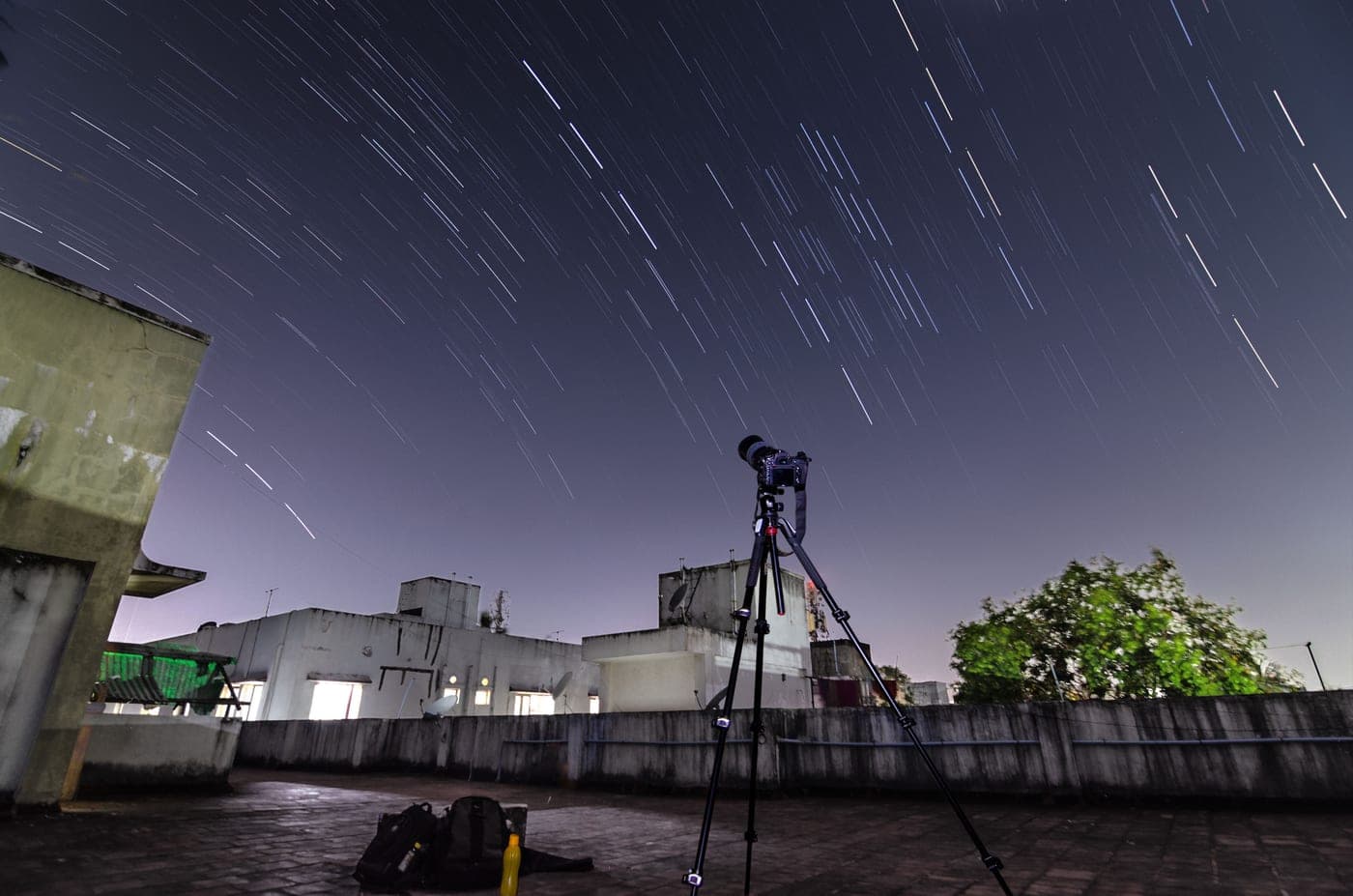
The Best Beginner Telescopes, Ranked by Aperture
The flagship ranking. Nine beginner telescopes ordered by aperture per dollar, with the magnification arithmetic shown for each one.
Top pick: Celestron StarSense Explorer DX 130AZ
#ad · how this is funded · price as of October 18, 2026

What Your Telescope Budget Actually Buys
Telescope budgets translated into aperture per dollar, and the point where the curve flattens.
Top pick: Sky-Watcher Heritage 130 Tabletop Dobsonian
$305.00 · 12% off
#ad · how this is funded · price as of October 18, 2026
Best aperture per dollar
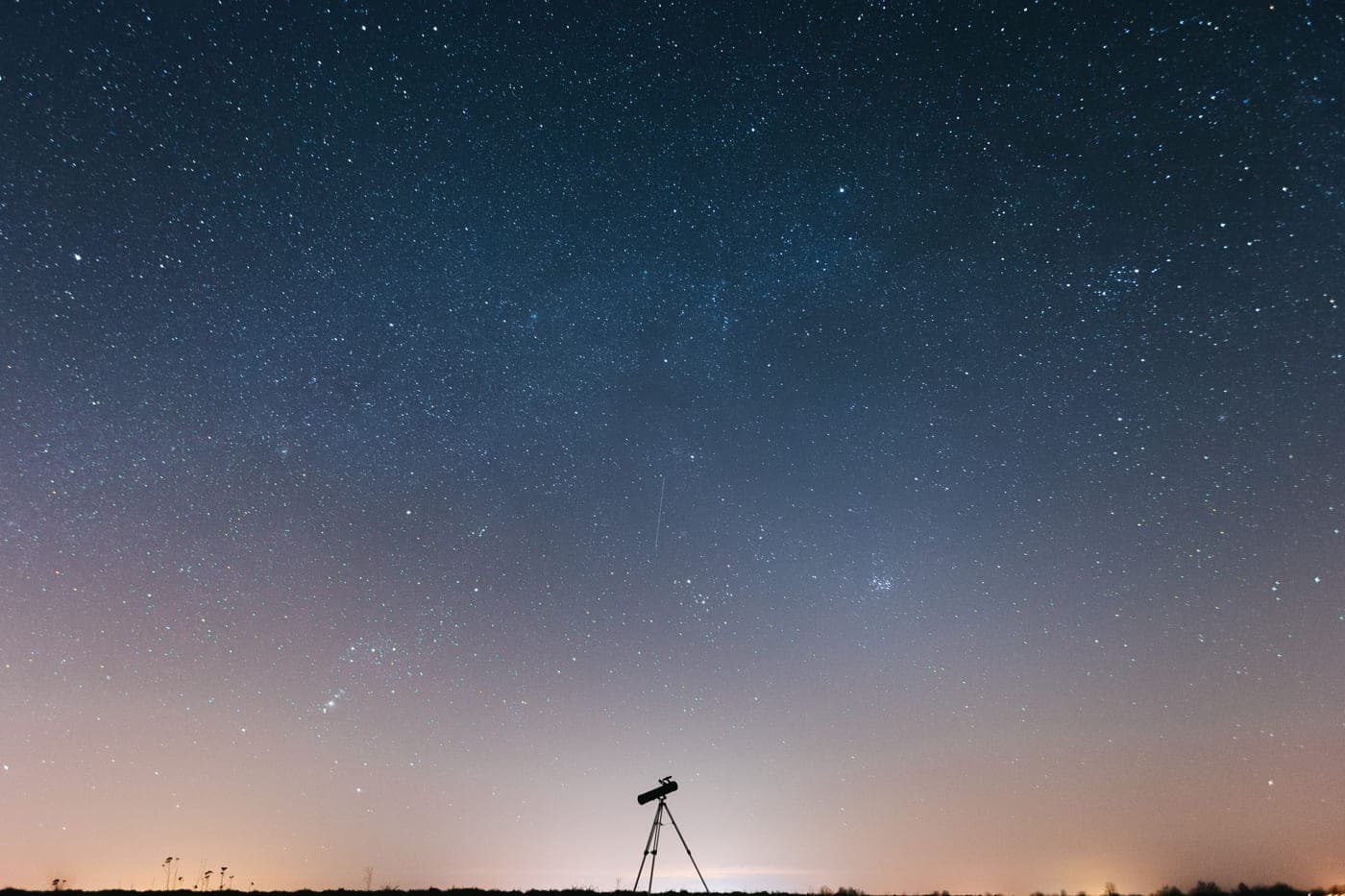
Dobsonian Telescopes, and Why Experienced Observers Recommend Them
Why a Dobsonian gives the most aperture per dollar, what the design costs you, and which size to buy.
Top pick: Sky-Watcher Heritage 130 Tabletop Dobsonian
$305.00 · 12% off
#ad · how this is funded · price as of October 18, 2026
Found something wrong here? Tell us and we will correct it and date the correction, per our editorial policy.