Beginner Telescopes
The Best Celestron Telescopes
One brand, a very wide range, and a genuine quality spread inside it. This page sorts the Celestron catalog on Celestron's own published numbers.
By Scooter M. · Published · How we pick
Celestron sells at every price from a toy to an instrument a lifelong observer would keep. That range is the reason this page exists: the badge on the tube tells you almost nothing, because the same company makes one of the best beginner telescopes available and several that this site would steer you away from.
Everything below is ranked on figures Celestron itself publishes, with the optical limits computed rather than quoted. Where the company's claim and the arithmetic disagree, both numbers appear.
How these are judged
- Aperture per dollar, because aperture is the only specification that decides what you can see.
- Mirror figure. Celestron publishes whether a primary is spherical or parabolic, and it is the clearest quality signal in the catalog.
- Whether the mount matches the buyer. An equatorial mount sold to somebody who does not know what it is has failed, however good the optics above it are.
- Whether the finding system is real. StarSense Explorer plate solving genuinely works; a red dot finder and a star chart also work; a 3x Barlow in the box is not a feature.
- What the box claim implies. A published maximum magnification far above two times the aperture is a marketing figure, and this site says so.
What Celestron does better than anyone
One thing on this list is genuinely not available from any other brand, and it is the reason a Celestron heads the ranking: StarSense Explorer. A phone clips to the tube, photographs the sky, works out where the telescope is pointing by matching star patterns, and then draws arrows telling you which way to push.
It solves the actual reason first telescopes get abandoned, which is not optics and not magnification but the simple inability to find anything. It does it without motors, without an alignment routine and without a single battery in the telescope, which means none of the budget leaves the mirror. StarSense against manual finding covers how well it works.
The range, on the published figures
| Aperture | Mirror or lens | Max useful (computed) | Resolving limit | |
|---|---|---|---|---|
| StarSense Explorer DX 130AZ | 130mm | Parabolic | 260x | 0.89 arcsec |
| StarSense Explorer 8" Dobsonian | 203mm | Newtonian | 406x | 0.57 arcsec |
| AstroMaster 102AZ | 102mm | Achromatic refractor | 204x | 1.14 arcsec |
| StarSense Explorer 130mm Tabletop | 130mm | Newtonian | 260x | 0.89 arcsec |
| NexStar 8SE | 203.2mm | Schmidt-Cassegrain | 406x | 0.57 arcsec |
| Travel Scope 70 | 70mm | Achromatic refractor | 140x | 1.66 arcsec |
| AstroMaster 130EQ | 130mm | Spherical | 260x | 0.89 arcsec |
| PowerSeeker 127EQ | 127mm | Spherical | 254x | 0.91 arcsec |
The bottom two rows are in the table but not in the picks, and the mirror column is why.
The Celestrons this site does not recommend
Celestron publishes a spherical primary mirror for both the AstroMaster 130EQ and the PowerSeeker 127EQ. A spherical mirror does not bring all of the incoming light to one point, so the image softens at exactly the magnifications you bought the aperture for. Both also arrive on German equatorial mounts with no explanation of what that is.
Neither telescope is a scam and both have satisfied owners. They are simply outperformed, at their own price, by telescopes with parabolic mirrors on mounts that point where you push them. The 130EQ against the 127EQ works through that pair specifically, and what to avoid covers the general traps.
How this is funded: the buy buttons below are Amazon Associates links, and a qualifying purchase earns us a commission at no extra cost to you. It cannot move the ranking, because the order here is set by aperture per dollar, and no commission rate changes how much light a mirror collects. Full disclosure.
| # | Telescope | Best for | Aperture | Price |
|---|---|---|---|---|
| 1 | 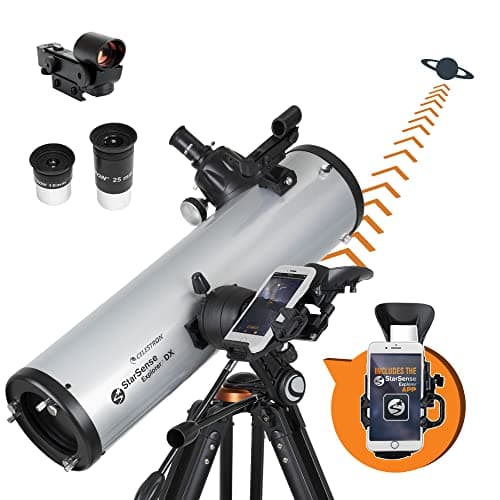 Celestron StarSense Explorer DX 130AZTop pick130mm of parabolic aperture on a mount that stays still, plus the one piece of software that genuinely solves the find-it problem. | Most first buyers | 130mm (5.11 in)260x useful | |
| 2 | 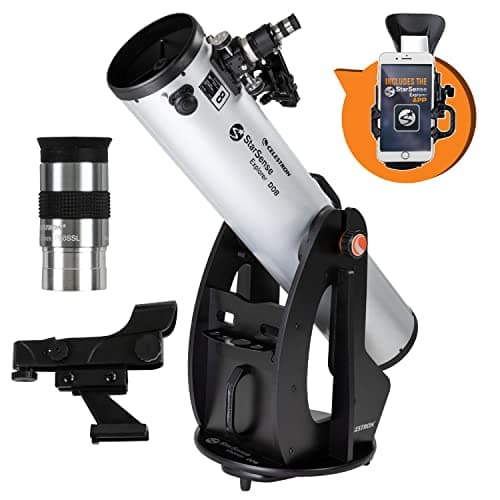 Celestron StarSense Explorer 8-inch Dobsonian203mm of Dobsonian aperture with the phone finder bolted on. The largest telescope here that a beginner can genuinely operate on night one. | Big aperture, no star-hopping | 203mm (8 in)406x useful | |
| 3 | 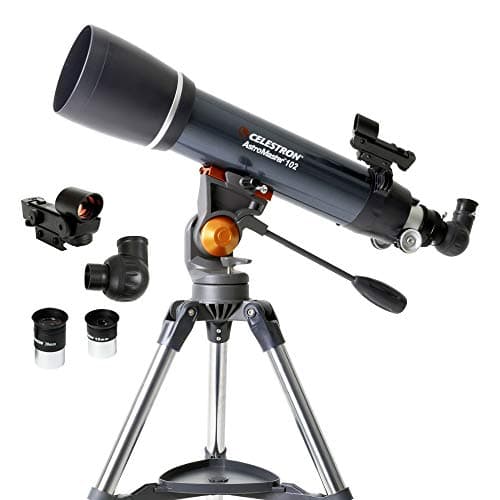 Celestron AstroMaster 102AZ102mm of refractor at f/6.5, which means a short tube and a wide field. A no-maintenance scope with real aperture behind it. | Wide-field refractor views | 102mm (4 in)204x useful | |
| 4 | 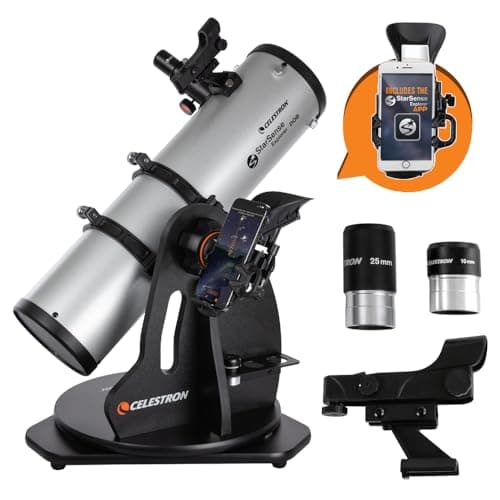 Celestron StarSense Explorer 130mm Tabletop Dobsonian130mm parabolic optics on a tabletop Dobsonian base with the StarSense phone dock. The two best beginner ideas in one box. | Phone finding plus tabletop simplicity | 130mm (5.12 in)260x useful | |
| 5 | 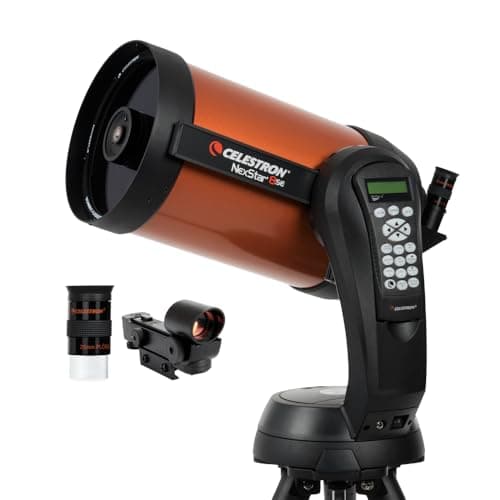 Celestron NexStar 8SE203mm of Schmidt-Cassegrain at f/10 on a computerized fork. The largest aperture on this site that still finds and follows objects by itself. | The most aperture that still tracks | 203.2mm (8")406x useful | |
| 6 | 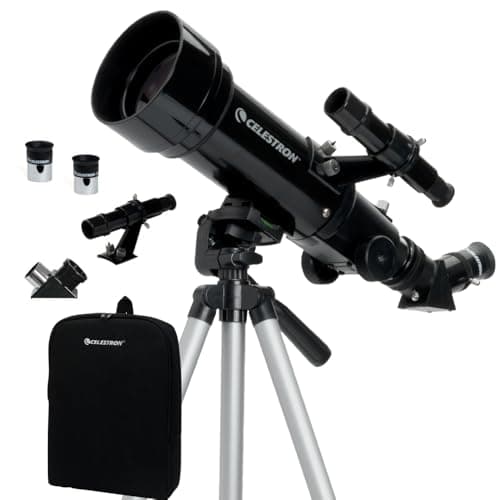 Celestron Travel Scope 7070mm at f/5.7 with a backpack. A daytime spotting scope that moonlights at night, rather than the other way round. | Packing light | 70mm (2.8 in)140x useful |
Top pick · Most first buyers
Celestron StarSense Explorer DX 130AZ
130mm of parabolic aperture on a mount that stays still, plus the one piece of software that genuinely solves the find-it problem.
What the aperture allows
- Maximum useful magnification
- 260x
- 2 × 130mm of aperture
- Resolving limit (Dawes)
- 0.89 arcseconds
- 116 ÷ 130mm
- Cassini division (0.7″)
- Out of reach
- this aperture cannot resolve it
Celestron publishes 307x as this telescope’s highest useful magnification. Our figure is 260x, from two times the aperture in millimeters. The gap of 47x comes from the slightly more generous per-inch constant makers use. Neither number describes a typical night: the atmosphere usually settles the question well below both.
Worked example: a 25mm eyepiece in this telescope gives 650mm ÷ 25mm = 26x.
130mm is the aperture where the sky stops being a list of bright dots. Two times that aperture is 260x of useful magnification, which is more than the atmosphere will usually give you on any given night, so nothing in this telescope's optical budget is wasted on a number you cannot use.
Celestron's own published ceiling for it is 307x, which sits above the 2x-aperture rule of thumb. The gap is worth knowing about: manufacturers compute that figure per inch of aperture with a slightly more generous constant. Neither number describes a night you will actually have. Plan around 130x to 180x and treat anything higher as a rare-night bonus.
At f/5 the focal length is short, so the supplied 25mm eyepiece gives a wide, forgiving 26x that makes finding things possible in the first place. That is not a compromise; it is the eyepiece you will use most.
The StarSense part is the honest reason this sits at the top. It uses your phone's camera to plate-solve the actual sky and then walks you to a target with an on-screen arrow. It is not a motor and it does not track. It solves the problem that really kills first telescopes, which is not being able to find anything.
What it does well
- 130mm parabolic mirror rather than the cheaper spherical mirror used at this price by several competitors
- The phone-based finder works and needs no alignment stars, no power and no hand controller
- Full-height tripod, so an adult uses it standing up rather than kneeling on wet grass
- Manual mount means nothing to charge, nothing to fail and nothing to re-align next time
What it costs you
- The bundled 10mm eyepiece is the weakest part of the package
- A Newtonian needs collimation checks; not hard, but it is a task a refractor does not have
- No tracking, so at high magnification you are nudging the tube every 30 seconds
Skip this one if: Skip it if the person receiving it is under about ten and will be using it alone. The tripod is full height and the finding workflow assumes a phone.
#ad · how this is funded · price as of September 21, 2026
Pick 2 · Big aperture, no star-hopping
Celestron StarSense Explorer 8-inch Dobsonian
203mm of Dobsonian aperture with the phone finder bolted on. The largest telescope here that a beginner can genuinely operate on night one.
What the aperture allows
- Maximum useful magnification
- 406x
- 2 × 203mm of aperture
- Resolving limit (Dawes)
- 0.57 arcseconds
- 116 ÷ 203mm
- Cassini division (0.7″)
- Within reach
- on a steady night, at high magnification
Celestron publishes 480x as this telescope’s highest useful magnification. Our figure is 406x, from two times the aperture in millimeters. The gap of 74x comes from the slightly more generous per-inch constant makers use. Neither number describes a typical night: the atmosphere usually settles the question well below both.
Worked example: a 25mm eyepiece in this telescope gives 1200mm ÷ 25mm = 48x.
203mm gathers 841 times the light of the naked eye, which is Celestron's own published figure. Against the 130mm scopes further up this list it is 2.4 times the light, from the ratio 203 over 130, squared.
Two times 203mm gives 406x of useful magnification; Celestron publishes 480x. Dawes' limit is 0.57 arcseconds, so the Cassini division, the Great Red Spot and hundreds of Messier objects are all inside its reach.
The published limiting stellar magnitude of 14.2 is the number that explains what deep sky means. It is roughly 4,000 times fainter than the faintest star a good naked eye sees from a dark site.
The reason to choose this over a plain 8-inch Dobsonian is the phone finder. An 8-inch tube with a 0.57-arcsecond resolution limit is wasted on somebody who cannot locate anything to point it at.
What it does well
- The largest aperture here that a beginner can realistically use on the first night
- The phone finder removes the learning curve that stops most people using this much telescope
- A Dobsonian base is rock steady under a big tube
What it costs you
- Heavy and bulky; two trips outside and real storage space
- No tracking, so at 200x objects leave the field quickly
- Collimation and a long cool-down are part of owning it
Skip this one if: Skip it if storage or stairs are a problem. That is the single most common reason a large Dobsonian stops getting used.
#ad · how this is funded · price as of September 21, 2026
Pick 3 · Wide-field refractor views
Celestron AstroMaster 102AZ
102mm of refractor at f/6.5, which means a short tube and a wide field. A no-maintenance scope with real aperture behind it.
What the aperture allows
- Maximum useful magnification
- 204x
- 2 × 102mm of aperture
- Resolving limit (Dawes)
- 1.14 arcseconds
- 116 ÷ 102mm
- Cassini division (0.7″)
- Out of reach
- this aperture cannot resolve it
Celestron publishes 241x as this telescope’s highest useful magnification. Our figure is 204x, from two times the aperture in millimeters. The gap of 37x comes from the slightly more generous per-inch constant makers use. Neither number describes a typical night: the atmosphere usually settles the question well below both.
Worked example: a 25mm eyepiece in this telescope gives 660mm ÷ 25mm = 26x.
102mm collects 2.1 times the light of a 70mm refractor, which is the ratio 102 over 70, squared. That is the difference between the Orion Nebula as a smudge and the Orion Nebula as a shape.
Two times 102mm gives 204x of useful magnification; Celestron publishes 241x. Its published Dawes limit of 1.14 arcseconds is short of the Cassini division, so expect the rings as a clean separated ring rather than a ring with a gap in it.
The short f/6.5 tube is the interesting part. It gives a wide true field for a refractor, which makes large open clusters and Milky Way star fields genuinely rewarding, and it keeps the tube short enough to be easy to handle.
Refractor maintenance is the real selling point for a household that will not enjoy collimating anything. There is nothing to align and nothing to clean.
What it does well
- Real aperture with zero maintenance
- Wide field for a refractor: good on clusters as well as planets
- Short tube balances easily on a simple mount
What it costs you
- A fast achromat shows more color fringing on bright objects than an f/10 tube
- The AZ mount is basic; expect to nudge rather than glide
- Still 102mm, so faint galaxies remain out of reach
Skip this one if: Skip it if the planets are the whole point. A long f/10 refractor or a Dobsonian will show them with less false color.
$359.95 · 11% off
#ad · how this is funded · price as of September 21, 2026
Pick 4 · Phone finding plus tabletop simplicity
Celestron StarSense Explorer 130mm Tabletop Dobsonian
130mm parabolic optics on a tabletop Dobsonian base with the StarSense phone dock. The two best beginner ideas in one box.
What the aperture allows
- Maximum useful magnification
- 260x
- 2 × 130mm of aperture
- Resolving limit (Dawes)
- 0.89 arcseconds
- 116 ÷ 130mm
- Cassini division (0.7″)
- Out of reach
- this aperture cannot resolve it
Celestron publishes 307x as this telescope’s highest useful magnification. Our figure is 260x, from two times the aperture in millimeters. The gap of 47x comes from the slightly more generous per-inch constant makers use. Neither number describes a typical night: the atmosphere usually settles the question well below both.
Worked example: a 25mm eyepiece in this telescope gives 650mm ÷ 25mm = 26x.
This combines the two things that actually keep a first telescope in use: a mount with nothing to wobble, and a finder that removes the where-is-it problem.
Optically it is the same 130mm f/5 parabolic mirror as the DX 130AZ, and Celestron publishes the same figures: 307x maximum useful magnification, 345 times the light of the eye. Two times the aperture gives 260x and Dawes' limit is 0.89 arcseconds.
Against the tripod-mounted DX version you trade standing height for stability and a smaller footprint. Against the Sky-Watcher Heritage 130 you pay more and get the phone dock.
The tabletop condition applies here as much as anywhere: a stable surface at seated chest height, checked before purchase.
What it does well
- Parabolic 130mm mirror, not a spherical compromise
- A Dobsonian base cannot wobble the way a light tripod does
- The StarSense app removes the biggest cause of first-telescope abandonment
What it costs you
- Needs a table, which not every buyer has thought about
- Costs more than the equivalent manual tabletop Dobsonian
- The app needs a phone the whole time it is in use
Skip this one if: Skip it if the recipient wants to learn the constellations. Being walked to a target teaches you less than finding it.
$479.95 · 10% off
#ad · how this is funded · price as of September 21, 2026
Pick 5 · The most aperture that still tracks
Celestron NexStar 8SE
203mm of Schmidt-Cassegrain at f/10 on a computerized fork. The largest aperture on this site that still finds and follows objects by itself.
What the aperture allows
- Maximum useful magnification
- 406x
- 2 × 203.2mm of aperture
- Resolving limit (Dawes)
- 0.57 arcseconds
- 116 ÷ 203.2mm
- Cassini division (0.7″)
- Within reach
- on a steady night, at high magnification
Celestron publishes 480x as this telescope’s highest useful magnification. Our figure is 406x, from two times the aperture in millimeters. The gap of 74x comes from the slightly more generous per-inch constant makers use. Neither number describes a typical night: the atmosphere usually settles the question well below both.
Worked example: a 25mm eyepiece in this telescope gives 2032mm ÷ 25mm = 81x.
Two times 203.2mm gives 406x of useful magnification, and Dawes' limit is 0.57 arcseconds. That is comfortably inside the 0.7 arcseconds the Cassini division needs, so the gap in Saturn's rings is genuinely available on a steady night rather than theoretically available.
Celestron publishes 843 times the light-gathering of the eye and a limiting stellar magnitude of 14. Against the 150mm NexStar 6SE the collecting area ratio is (203.2 / 150) squared = 1.83, so this telescope collects 83 percent more light than the 6SE.
At f/10 the focal length is 2032mm, so the supplied 25mm eyepiece gives 81x. That is a high lowest power: the widest true field this telescope offers is narrow, and large open clusters and the Andromeda galaxy will not fit in it.
The number that decides most purchases is not on the spec sheet. The optical tube and the fork are one 32 lb assembly with a separate tripod, and it is carried in two hands, not one. A telescope that lives in a closet because it is awkward to move sees less sky than a smaller one by the door.
What it does well
- 203mm of aperture that finds and tracks objects on its own
- Resolves the Cassini division at 0.57 arcseconds on a steady night
- The long 2032mm focal length suits planets and double stars exceptionally well
What it costs you
- 32 lb of kit weight, in two pieces, every session
- The narrowest widest-field of any telescope on this site: 81x with the supplied eyepiece
- Needs mains power or a battery pack, and a dew shield for the corrector plate
Skip this one if: Skip it if this is a first telescope. It is a lot of money and a lot of weight to gamble on a hobby that has not stuck yet, and an 8-inch Dobsonian shows the same sky without the motors, the batteries or the fork.
$1,699.00 · 12% off
#ad · how this is funded · price as of September 21, 2026
Pick 6 · Packing light
Celestron Travel Scope 70
70mm at f/5.7 with a backpack. A daytime spotting scope that moonlights at night, rather than the other way round.
What the aperture allows
- Maximum useful magnification
- 140x
- 2 × 70mm of aperture
- Resolving limit (Dawes)
- 1.66 arcseconds
- 116 ÷ 70mm
- Cassini division (0.7″)
- Out of reach
- this aperture cannot resolve it
Celestron publishes 168x as this telescope’s highest useful magnification. Our figure is 140x, from two times the aperture in millimeters. The gap of 28x comes from the slightly more generous per-inch constant makers use. Neither number describes a typical night: the atmosphere usually settles the question well below both.
Worked example: a 25mm eyepiece in this telescope gives 400mm ÷ 25mm = 16x.
3.3 pounds for the whole kit including the tripod is the entire pitch. Nothing else here goes in hand luggage.
The optics are the same 70mm as the AstroMaster LT but at f/5.7 rather than f/10, so the tube is much shorter and the widest field is much wider. That is good for landscapes and star fields and less good for the planets, where the shorter focal length shows more false color.
Two times 70mm gives 140x of useful magnification and Celestron publishes 168x. The published Dawes limit of 1.66 arcseconds means no Cassini division and no tight doubles.
The tripod is the weak link and everybody who owns one says so. It is a photo tripod carrying a telescope, and above about 60x it shakes. If you already own a decent tripod, use that instead.
What it does well
- Genuinely packable: 3.3 lb with the tripod, in a supplied backpack
- Doubles as a daytime spotting scope, which is where a lot of its use will come from
- A wide field at f/5.7 makes finding things easy
What it costs you
- The included tripod is not steady enough above modest magnification
- A short-focus achromat shows visible color fringing on the Moon and Jupiter
- 70mm is the aperture floor, and this one is optimized for portability over performance
Skip this one if: Skip it if it never actually leaves the house. At home, the same money buys a tabletop Dobsonian with twice the aperture and a mount that does not shake.
$119.95 · 25% off
#ad · how this is funded · price as of September 21, 2026
Is Celestron a good brand?
Yes, with the qualification this whole page is about. Celestron publishes full specifications including resolving power, limiting magnitude and light grasp for most of its range, which is more than several competitors do and is what makes a site like this one able to check its claims. The optics at the top of the range are excellent and the StarSense system is a genuine advance.
What the brand does not do is protect a beginner from its own entry-level range. The name on a spherical-mirror equatorial telescope is the same name as on an 8-inch Dobsonian, and the buyer is expected to know the difference. That is what the table above is for.
Which to buy
- StarSense Explorer DX 130AZ for most first-time buyers. 130mm of parabolic mirror, phone-guided finding, and nothing to align. The full review.
- StarSense Explorer 8" Dobsonian if the budget stretches and you can carry 43.4 lb. It is the only Celestron here that resolves the Cassini division while still finding objects for you. The full review.
- AstroMaster 102AZ if you want a refractor with nothing to maintain. The full review.
- StarSense Explorer 130mm Tabletop if space is tight. Same aperture as the DX, on a base that sits on a table. The full review.
- NexStar 8SE if you want tracking as well as finding and you are already committed to the hobby. The full review.
- Travel Scope 70 if it has to fit in a bag. The full review.
If you are weighing Celestron against the other brand this site covers in depth, Celestron against Sky-Watcher compares them model by model rather than in general.
Questions people actually ask
What is the best Celestron telescope for beginners?
The StarSense Explorer DX 130AZ. It has 130mm of parabolic aperture, which computes to 260x of useful magnification and a 0.89-arcsecond resolving limit, and its phone-based plate solving removes the reason most first telescopes stop being used, without spending any of the budget on motors.
Is Celestron a good telescope brand?
Yes, but the range is wide and the quality varies inside it. Celestron publishes detailed specifications including mirror figure, resolving power and limiting magnitude, and its upper range is excellent. Its entry-level equatorial telescopes use spherical mirrors and are outperformed at the same price by simpler designs.
Which Celestron telescopes should I avoid?
Approach the AstroMaster 130EQ and the PowerSeeker 127EQ carefully. Celestron publishes a spherical primary mirror for both, which softens the image at high magnification, and both sit on German equatorial mounts that beginners routinely find baffling. Better telescopes exist at the same price with parabolic mirrors.
What is the best Celestron telescope for the money?
Measured on aperture per dollar, the StarSense Explorer 8" Dobsonian. It gives 203mm and a computed 0.57-arcsecond resolving limit, which crosses the threshold needed to see the Cassini division in Saturn's rings, and it still finds objects with a phone.
What does StarSense Explorer actually do?
It uses your phone's camera to photograph the sky through a mirror on the tube, matches the star pattern against a catalog to work out where the telescope is pointing, and then shows arrows telling you which way to push. It finds objects; it does not track them, because there are no motors involved.
Read next
Celestron vs Sky-Watcher: Which Brand for a First Telescope
The two dominant beginner brands compared on aperture per dollar, mirror quality and published specifications.
Top pick: Sky-Watcher Heritage 130 Tabletop Dobsonian
#ad · how this is funded · price as of September 21, 2026

Celestron StarSense Explorer DX 130AZ
130mm parabolic mirror plus phone-based plate solving. The specs compiled and the 307x claim checked against the arithmetic.
Top pick: Celestron StarSense Explorer DX 130AZ
#ad · how this is funded · price as of September 21, 2026
Celestron AstroMaster 130EQ vs PowerSeeker 127EQ
The two best-selling Celestron beginner reflectors compared on published specs: near-identical light grasp, very different optical paths.
Top pick: Celestron AstroMaster 130EQ
$359.95 · 19% off
#ad · how this is funded · price as of September 21, 2026
Found something wrong here? Tell us and we will correct it and date the correction, per our editorial policy.