Reviews
Celestron AstroMaster 102AZ
Four inches of refractor with nothing to collimate, nothing to cool and nothing to learn. The compromise is a specific one, and it appears on the brightest things you will point it at.
By Scooter M. · Published · How we pick
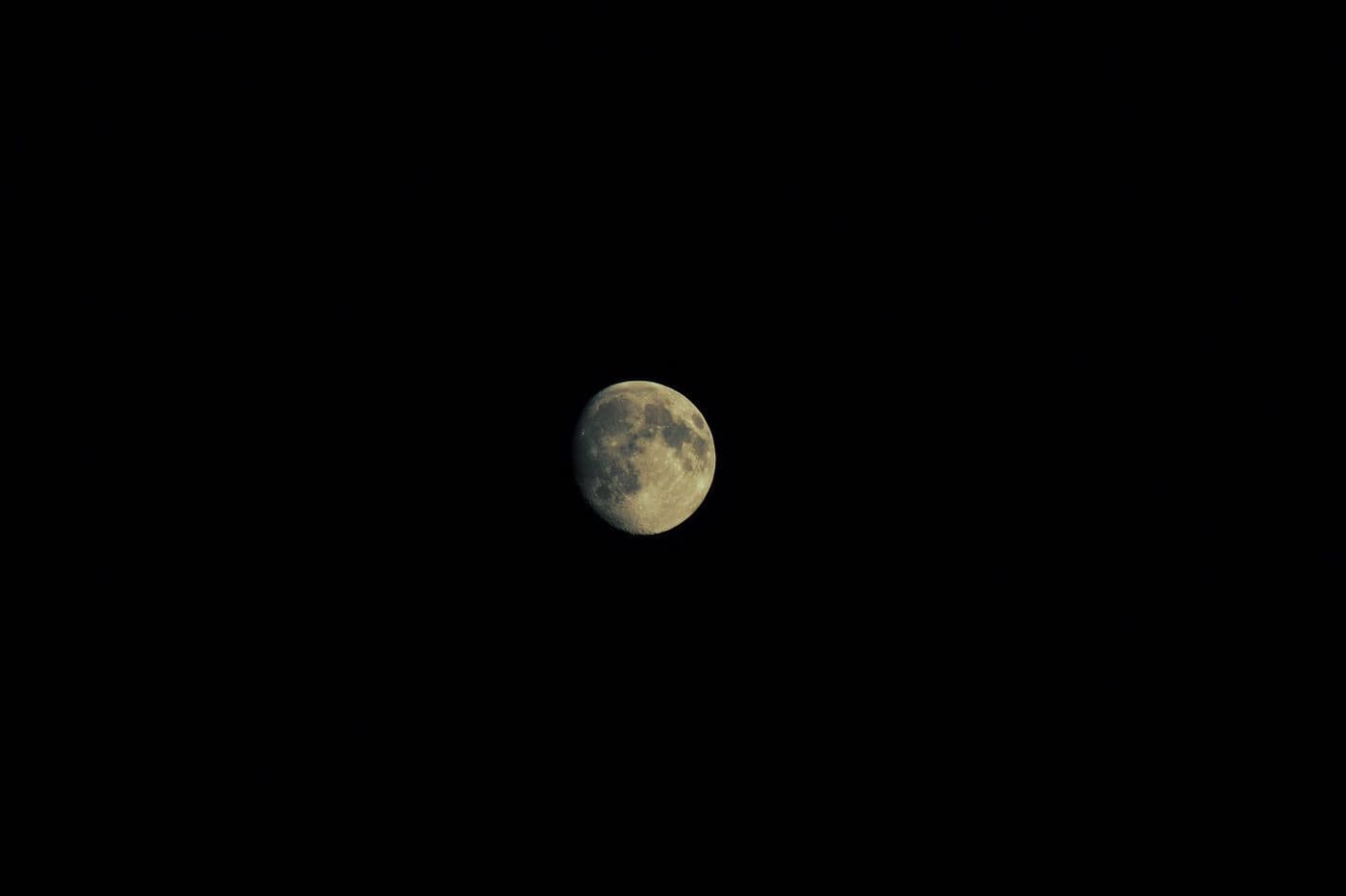
Most of this site pushes beginners toward mirrors, because mirrors buy more aperture per dollar. The AstroMaster 102AZ is the case for the other side: a four-inch refractor that never needs aligning, never needs cooling, and works the moment you carry it outside. That is worth something real, and this page is about what it costs.
The arithmetic first
max useful magnification = 2 x aperture. Dawes limit = 116 / aperture.
102 x 2 = 204x. 116 / 102 = 1.14 arcseconds.
Celestron publishes 241x and 1.14 arcseconds. The resolution figures agree exactly; the magnification figures differ because makers compute per inch with a more generous constant.
A 1.14-arcsecond resolving limit is the number that sets expectations. The Cassini division spans roughly 0.7 arcseconds, so it is out of reach here: Saturn shows as a planet with its rings cleanly separated from the disc, not as a ring with a gap in it. Jupiter's two main belts are comfortable. What size telescope shows the rings sets that threshold out in full.
Celestron publishes 212 times the light-gathering of the human eye for this telescope. Against the 70mm refractor one bracket down that is a real step: the ratio 102 over 70, squared, is 2.1, so it collects more than twice the light of the smaller tube.
What f/6.5 buys, and what it costs
The published focal length is 660mm, which at 102mm of aperture gives f/6.5. That is short for an achromatic refractor, and it cuts both ways.
What it buys is field. A short focal length gives a wide true field at any given eyepiece, which makes large open clusters, the Pleiades, the Beehive and sweeping Milky Way star fields genuinely rewarding in a way a long planetary refractor is not. It also keeps the tube short enough to balance on a light mount without a fight.
What it costs is chromatic aberration. An achromatic lens brings two wavelengths to a common focus and lets the rest land slightly short or long, and the faster the lens, the further apart they land. On the Moon's limb and on Jupiter you will see a violet fringe. It is a property of the design, not a fault in the sample, and refractor against reflector explains why mirrors do not have it at all.
The real selling point is that there is nothing to maintain
A refractor has a sealed lens at the front and nothing inside to move. There is no collimation to check, no mirror to cool, and no open tube to collect dust. Collimation is the single most common reason a reflector stops performing and its owner cannot work out why, and this telescope simply does not have the problem.
That matters more for some households than others. If the honest assessment is that nobody in the house is going to check an alignment or wait half an hour for a mirror to reach air temperature, a refractor at slightly less aperture will out-perform a reflector that never gets collimated.
How this is funded: the buy buttons below are Amazon Associates links, and a qualifying purchase earns us a commission at no extra cost to you. It cannot move the ranking, because the order here is set by aperture per dollar, and no commission rate changes how much light a mirror collects. Full disclosure.
| # | Telescope | Best for | Aperture | Price |
|---|---|---|---|---|
| 1 | 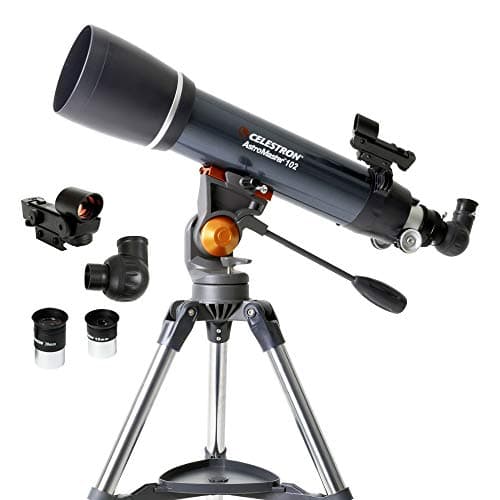 Celestron AstroMaster 102AZTop pick102mm of refractor at f/6.5, which means a short tube and a wide field. A no-maintenance scope with real aperture behind it. | Wide-field refractor views | 102mm (4 in)204x useful |
Top pick · Wide-field refractor views
Celestron AstroMaster 102AZ
102mm of refractor at f/6.5, which means a short tube and a wide field. A no-maintenance scope with real aperture behind it.
What the aperture allows
- Maximum useful magnification
- 204x
- 2 × 102mm of aperture
- Resolving limit (Dawes)
- 1.14 arcseconds
- 116 ÷ 102mm
- Cassini division (0.7″)
- Out of reach
- this aperture cannot resolve it
Celestron publishes 241x as this telescope’s highest useful magnification. Our figure is 204x, from two times the aperture in millimeters. The gap of 37x comes from the slightly more generous per-inch constant makers use. Neither number describes a typical night: the atmosphere usually settles the question well below both.
Worked example: a 25mm eyepiece in this telescope gives 660mm ÷ 25mm = 26x.
102mm collects 2.1 times the light of a 70mm refractor, which is the ratio 102 over 70, squared. That is the difference between the Orion Nebula as a smudge and the Orion Nebula as a shape.
Two times 102mm gives 204x of useful magnification; Celestron publishes 241x. Its published Dawes limit of 1.14 arcseconds is short of the Cassini division, so expect the rings as a clean separated ring rather than a ring with a gap in it.
The short f/6.5 tube is the interesting part. It gives a wide true field for a refractor, which makes large open clusters and Milky Way star fields genuinely rewarding, and it keeps the tube short enough to be easy to handle.
Refractor maintenance is the real selling point for a household that will not enjoy collimating anything. There is nothing to align and nothing to clean.
What it does well
- Real aperture with zero maintenance
- Wide field for a refractor: good on clusters as well as planets
- Short tube balances easily on a simple mount
What it costs you
- A fast achromat shows more color fringing on bright objects than an f/10 tube
- The AZ mount is basic; expect to nudge rather than glide
- Still 102mm, so faint galaxies remain out of reach
Skip this one if: Skip it if the planets are the whole point. A long f/10 refractor or a Dobsonian will show them with less false color.
$359.95 · 11% off
#ad · how this is funded · price as of September 13, 2026
The mount is basic, and that is the other compromise
Celestron publishes a manual alt-azimuth mount for this model. Alt-azimuth is the right choice for a beginner — it moves the way the world looks, up, down, left and right, with no polar alignment to learn — but a basic one moves in nudges rather than glides.
In practice that means high magnification is fiddlier than the optics deserve. At 150x a small push overshoots, and you settle the tube rather than track smoothly. The mounts guide explains what the next step up actually buys.
Against the alternatives at a similar price
| AstroMaster 102AZ | Sky-Watcher Heritage 130 | Heritage 150 | |
|---|---|---|---|
| Aperture | 102mm | 130mm | 150mm |
| Design | Achromatic refractor | Newtonian, parabolic | Newtonian, parabolic |
| Max useful magnification | 204x | 260x | 300x |
| Resolving limit | 1.14 arcsec | 0.89 arcsec | 0.77 arcsec |
| Relative light gathering | Baseline | 1.62x | 2.16x |
| False color on bright targets | Yes | None | None |
| Collimation | Never | Occasional check | Occasional check |
| Needs a table | No | Yes | Yes |
Read honestly, the mirrors win on light and lose on upkeep and furniture. A 130mm tabletop collects 62 percent more light than this refractor, from the ratio 130 over 102 squared, and it needs a surface at seated chest height that not every buyer has. The tabletop condition is the thing to check before you let aperture decide.
Who should buy it, and who should not
Buy it if you want a telescope on a full-height tripod that works every time with no upkeep, if wide star fields appeal to you more than chasing the Cassini division, and if there is no suitable table in the house for a tabletop Dobsonian.
Do not buy it if planets are the whole point — a longer refractor or a Dobsonian shows them with less false color and more detail — or if aperture per dollar is what you are optimizing, because it is not what this telescope is for. The beginner ranking puts the alternatives in order.
Questions people actually ask
Is the Celestron AstroMaster 102AZ a good telescope?
It is a sound four-inch refractor with two honest compromises: an achromatic lens at f/6.5 shows false color on bright objects, and the mount is basic at high magnification. In exchange there is nothing to collimate and nothing to cool, which for some households is worth more than the aperture it gives up.
What can you see with a 102mm refractor?
Lunar detail down to its 1.14-arcsecond limit, Saturn with its rings clearly separated from the disc, Jupiter's two main belts and its four bright moons, the phases of Venus, bright open clusters in wide field, and the brighter nebulae as gray shapes from a reasonable sky.
Can the AstroMaster 102AZ see Saturn's rings?
Yes, easily. The rings span far more than its resolving limit. The Cassini division inside them, at roughly 0.7 arcseconds, is beyond a 102mm aperture and needs about 150mm.
Why does it show purple around the Moon?
Chromatic aberration. An achromatic lens focuses two wavelengths together and lets the rest land slightly short or long, and a fast f/6.5 lens separates them further than a slow one. It appears only on bright targets and it is a property of the design rather than a defect.
AstroMaster 102AZ or a 130mm tabletop Dobsonian?
The Dobsonian collects 62 percent more light and has no false color, so optically it wins. The refractor needs no table, no collimation and no cool-down. Decide on whether you have a stable surface at seated chest height and whether anyone will maintain a mirror.
Read next
Refractor vs Reflector: Which Should You Buy?
Aperture against maintenance, with the light-gathering arithmetic worked out and a stated verdict.
Top pick: Sky-Watcher Heritage 130 Tabletop Dobsonian
#ad · how this is funded · price as of September 13, 2026
Telescope Mounts, and Why They Decide Everything
The four mount types compared, why the mount matters as much as the optics, and whether they are interchangeable.
Top pick: Sky-Watcher Classic 200P Dobsonian (8-inch)
#ad · how this is funded · price as of September 13, 2026
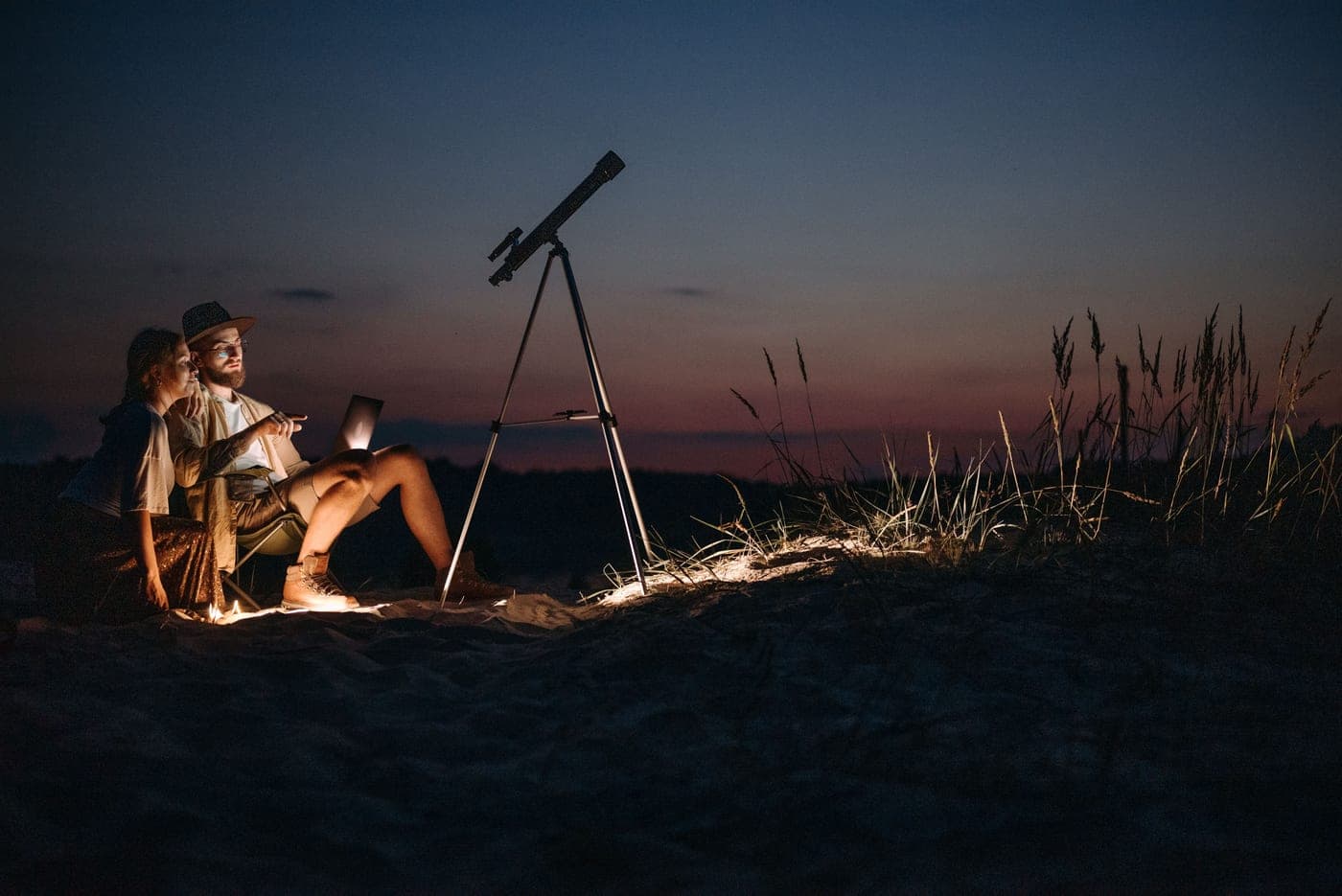
Sky-Watcher Heritage 130 Tabletop Dobsonian
The aperture-per-dollar champion: 130mm parabolic in a collapsible tube, with one condition to check first.
Top pick: Sky-Watcher Heritage 130 Tabletop Dobsonian
#ad · how this is funded · price as of September 13, 2026
Found something wrong here? Tell us and we will correct it and date the correction, per our editorial policy.