Aperture, Magnification & First Light
Collimation: Aligning a Reflector's Mirrors
Collimation is the one maintenance task a Newtonian reflector has, and it is the most over-feared aspect of owning one. It takes a few minutes and needs doing occasionally.
By Scooter M. · Published · How we pick
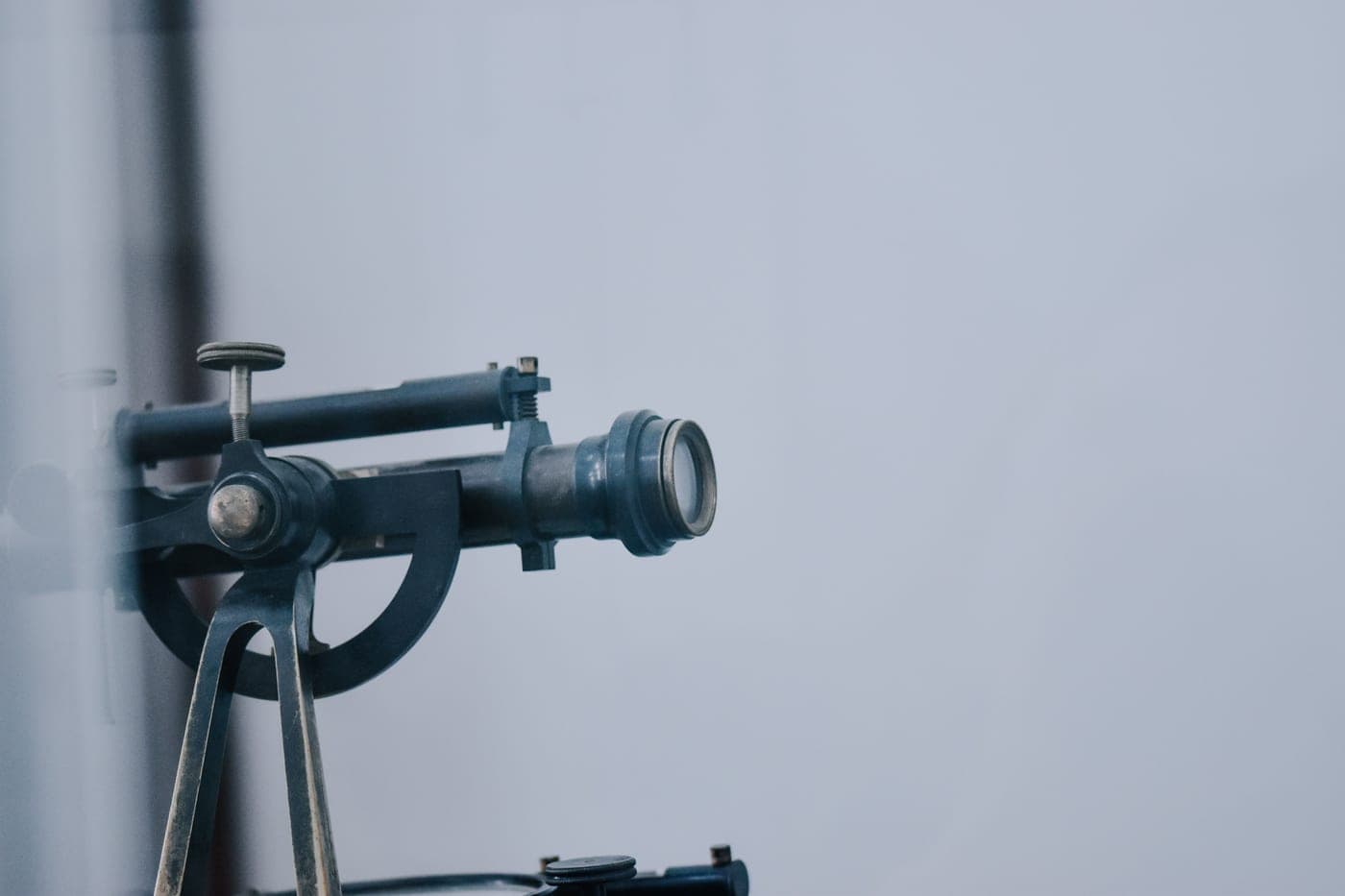
Collimation means aligning a reflector's two mirrors so they point at each other correctly. It is the only routine maintenance a Newtonian has, it takes a few minutes, and it is the single most over-feared aspect of owning one.
Why a reflector needs it and a refractor does not
A Newtonian has two separate mirrors in a tube, each held in an adjustable cell. The large primary at the back gathers the light and the small secondary near the front turns it out to the eyepiece. Both are adjustable because both need to be aimed precisely, and anything adjustable can drift.
A refractor's lens is fixed permanently in its cell at the factory and there is nothing to adjust. That is the maintenance advantage refractors are sold on, and it is genuine.
How to tell whether yours needs it
The star test is the standard diagnostic and it needs no tools at all.
- Point at a moderately bright star at medium to high magnification, on a night when the air is reasonably steady.
- Defocus slightly, until the star becomes a small disc rather than a point.
- Look at the disc. In a well-collimated Newtonian it is a round disc with the secondary mirror's shadow centered inside it, like a doughnut.
- If the shadow is off to one side, the telescope needs collimating.
- If the disc boils and churns rather than sitting still, that is atmospheric seeing or a mirror still cooling, not collimation. Try again later.
What the procedure involves
There are two adjustments and they are done in this order.
- The secondary mirror, near the front of the tube. It is adjusted so that looking down the empty focuser you see the whole primary mirror centered in it. This one rarely needs touching once set.
- The primary mirror, at the back, adjusted by three screws on the rear cell. This tilts the main mirror so its reflection is centered. This is the adjustment that drifts and the one you will actually make.
The usual tool is a collimation cap or a laser collimator. A collimation cap is an inexpensive plastic disc with a small central hole that makes it obvious when the reflections are concentric. A laser is faster and needs to be collimated itself to be trusted.
Why it matters for image quality
Dawes limit in arcseconds = 116 / aperture in millimeters
A 200mm telescope: 116 / 200 = 0.58 arcseconds
A telescope only delivers its resolving limit when the light from the whole mirror converges on the same point. Miscollimation spreads that convergence out, so a 200mm telescope out of alignment resolves like a much smaller one. The aperture you paid for is the aperture collimation protects.
What collimation is not
- It is not a repair. It is an adjustment, and it is expected.
- It is not the cause of most blurry images. Focus, magnification, cool-down and the atmosphere are all more likely. Focus troubleshooting.
- It is not needed on a refractor, a smart telescope, or most Schmidt-Cassegrains in normal use.
- It is not a reason to avoid buying a Dobsonian. Most owners find it takes less time than setting up a tripod.
If a Newtonian is soft in every eyepiece at every magnification, on a steady night, after cooling, then collimation is the answer. If it is soft only at high power, that is a different problem.
No products on this page. This is a maintenance page for a telescope somebody already owns. A collimation tool is mentioned below because the task genuinely uses one, but this page's job is to explain a procedure rather than to sell an accessory.
Questions people actually ask
What is telescope collimation?
Aligning the two mirrors of a Newtonian reflector so the light from the whole primary converges correctly at the eyepiece. It is the only routine maintenance a reflector needs, and it takes a few minutes with a cheap tool.
How often should I collimate my telescope?
Occasionally rather than on a schedule. A Dobsonian kept indoors and carried gently can go months. One transported by car regularly needs checking more often. Star-test it before a session you care about.
How do I know if my telescope needs collimating?
Do a star test. Defocus a bright star slightly at medium magnification. A well-collimated Newtonian shows a round disc with the secondary shadow centered inside it. If that shadow sits off to one side, the telescope needs collimating.
Do refractors need collimation?
No. A refractor's lens is fixed in its cell at the factory and there is nothing user-adjustable. That is the maintenance advantage refractors are sold on, and it is genuine.
Is collimation difficult?
No, and it is the most over-feared part of owning a reflector. Two adjustments, the second of which is the one you will actually make, and most owners find it quicker than assembling a tripod.
Read next
Your Telescope Won't Focus
Six reasons a telescope will not come to focus, in order of likelihood, and what to do about each.

Best aperture per dollar
Dobsonian Telescopes, and Why Experienced Observers Recommend Them
Why a Dobsonian gives the most aperture per dollar, what the design costs you, and which size to buy.
Top pick: Sky-Watcher Heritage 130 Tabletop Dobsonian
$305.00 · 12% off
#ad · how this is funded · price as of October 18, 2026
Refractor vs Reflector: Which Should You Buy?
Aperture against maintenance, with the light-gathering arithmetic worked out and a stated verdict.
Top pick: Sky-Watcher Heritage 130 Tabletop Dobsonian
$305.00 · 12% off
#ad · how this is funded · price as of October 18, 2026
Found something wrong here? Tell us and we will correct it and date the correction, per our editorial policy.