Aperture, Magnification & First Light
Telescope Troubleshooting: It Is Probably Not Broken
Almost every telescope that seems faulty is working exactly as designed. Four problems account for nearly all of it, and none of them needs a repair.
By Scooter M. · Published · How we pick

If your telescope seems broken, it very probably is not. Four problems account for nearly every new-telescope complaint, and all four are configuration or expectation rather than fault.
The four
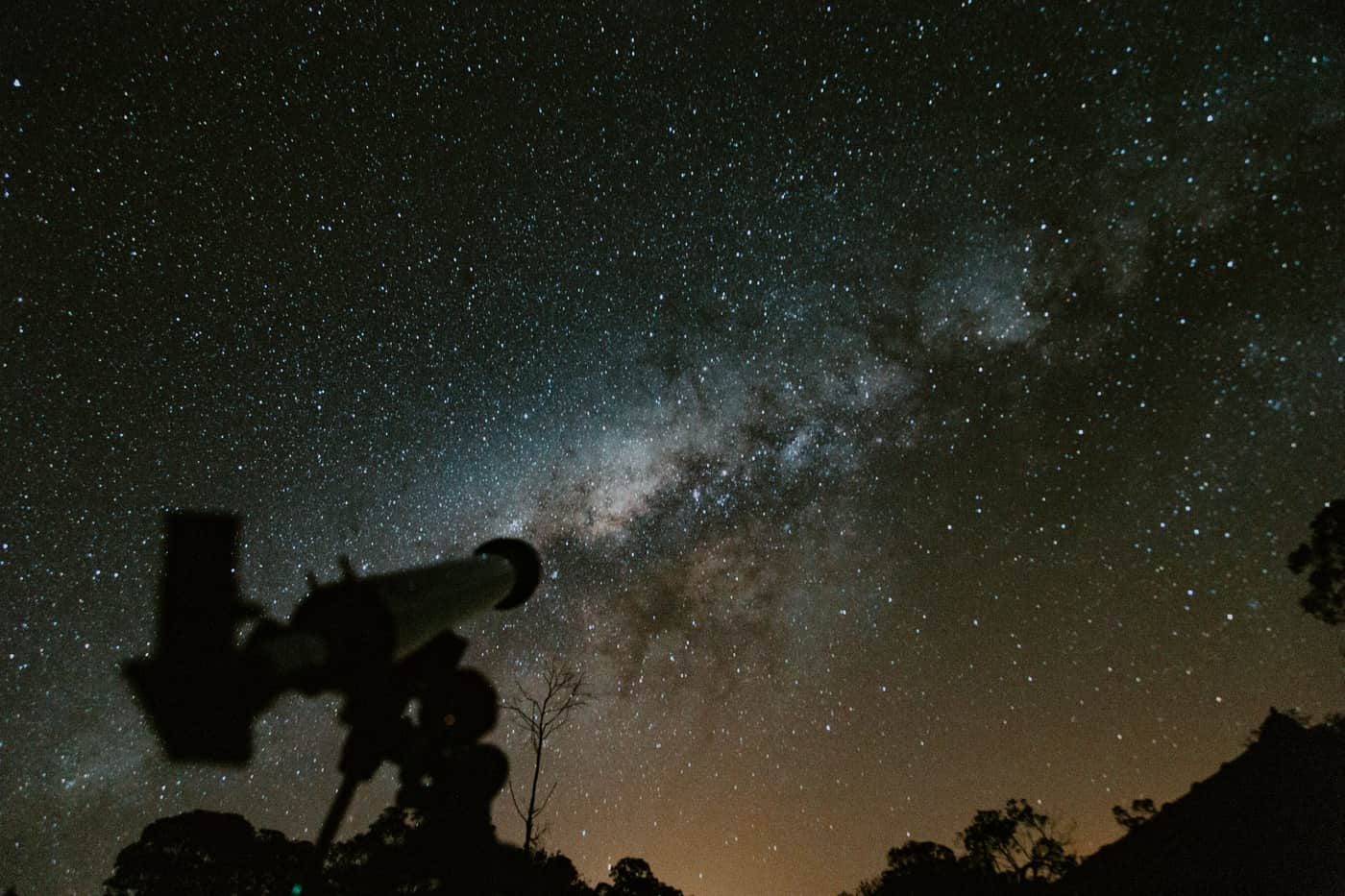
You Can't See Anything Through Your Telescope
The five causes of seeing nothing at all through a telescope, in order of likelihood, each with a fix.
Your Telescope Won't Focus
Six reasons a telescope will not come to focus, in order of likelihood, and what to do about each.
Why Is Your Telescope Image Upside Down?
Astronomical telescopes invert the image deliberately. Why that is the right design, and when to correct it.
Collimation: Aligning a Reflector's Mirrors
What collimation is, how to tell when a reflector needs it, and why it matters far less than beginners fear.
The thirty-second checklist
Before reading anything else, run through these. In the great majority of cases one of them is the answer.
- Is the dust cap off? Both of them. Many telescopes have a large front cap with a smaller removable cap inside it, and it is startling how often only the small one has been taken out.
- Is the finderscope aligned with the main telescope? If not, everything you carefully center in the finder is somewhere else entirely in the eyepiece. Fix this in daylight. How.
- Are you using the longest eyepiece? The lowest magnification gives the widest field, which is the only sensible way to find anything.
- Have you turned the focuser through its full travel? Correct focus is a narrow position. Go slowly and pass through it in both directions.
- Is anything actually where you are pointing? A telescope aimed at empty sky shows empty sky. Start with the Moon.
Things that are normal and look like faults
| What you see | Why | What to do |
|---|---|---|
| The image is upside down | Astronomical telescopes are built this way on purpose | Nothing. Why |
| Objects drift out of view | The Earth is turning | Nudge the tube, or use a tracking mount |
| A dark shadow in the middle when out of focus | The secondary mirror of a reflector | Focus properly; it disappears |
| Stars are fuzzy blobs at high power | Too much magnification, or unsteady air | Use a longer eyepiece |
| Everything shimmers | Atmospheric turbulence, or a mirror that has not cooled | Wait; put the telescope out earlier next time |
| A faint violet fringe on the Moon | Chromatic aberration in a refractor | Normal for an achromat; a filter reduces it |
When it genuinely is a fault
Real faults exist and they look different from the list above. A cracked or visibly chipped mirror or lens, a focuser that will not move at all, a mount that will not lock in position, or a mirror that has come loose in its cell are all genuine problems and all are warranty matters.
A Newtonian whose image is soft in every eyepiece at every magnification may need collimation rather than repair. That is the one item on this list that is a user task rather than a return, and the collimation guide covers it.
No products on this page. These pages exist to tell somebody their telescope is fine. Attaching a product to that would undermine the only thing the page is trying to do, so this section of the site deliberately sells nothing.
Questions people actually ask
Why can't I see anything through my telescope?
In order of likelihood: a dust cap still fitted, a finderscope that does not agree with the main telescope, too much magnification, focus not yet found, or nothing being where the telescope is pointing. The full checklist.
Is my telescope broken?
Almost certainly not. Genuine faults look like a cracked lens, a focuser that will not move at all, or a mount that will not lock. A blurry image, an upside-down view or objects drifting out of the field are all normal behavior.
Why is everything blurry through my telescope?
Usually focus, and correct focus is a narrower position than people expect. Otherwise: too much magnification for the aperture, a mirror that has not cooled to air temperature, or turbulent air. More.
Why does everything move so quickly out of view?
The Earth is turning. At 200x an object crosses the whole field in well under a minute, and at 26x it takes several. Nudging the telescope is normal; a tracking mount is the only thing that removes it.
Read next
How to Use a Telescope: Your First Night, Step by Step
The first evening with a telescope, in the order things actually happen, with the daylight steps that decide it.
Top pick: Celestron Night Vision Red LED Flashlight
$20.95 · 19% off
#ad · how this is funded · price as of October 19, 2026
You Can't See Anything Through Your Telescope
The five causes of seeing nothing at all through a telescope, in order of likelihood, each with a fix.
Telescope Aperture: What It Is and What It Buys
What aperture is, what each size can resolve, and a calculator that runs the numbers on your own telescope.
Top pick: Sky-Watcher Heritage 130 Tabletop Dobsonian
$305.00 · 12% off
#ad · how this is funded · price as of October 19, 2026
Found something wrong here? Tell us and we will correct it and date the correction, per our editorial policy.