Reviews
Sky-Watcher Heritage 130 Tabletop Dobsonian
The best aperture-per-dollar purchase in beginner astronomy, with a single condition attached that decides whether it is right for you.
By Scooter M. · Published · How we pick
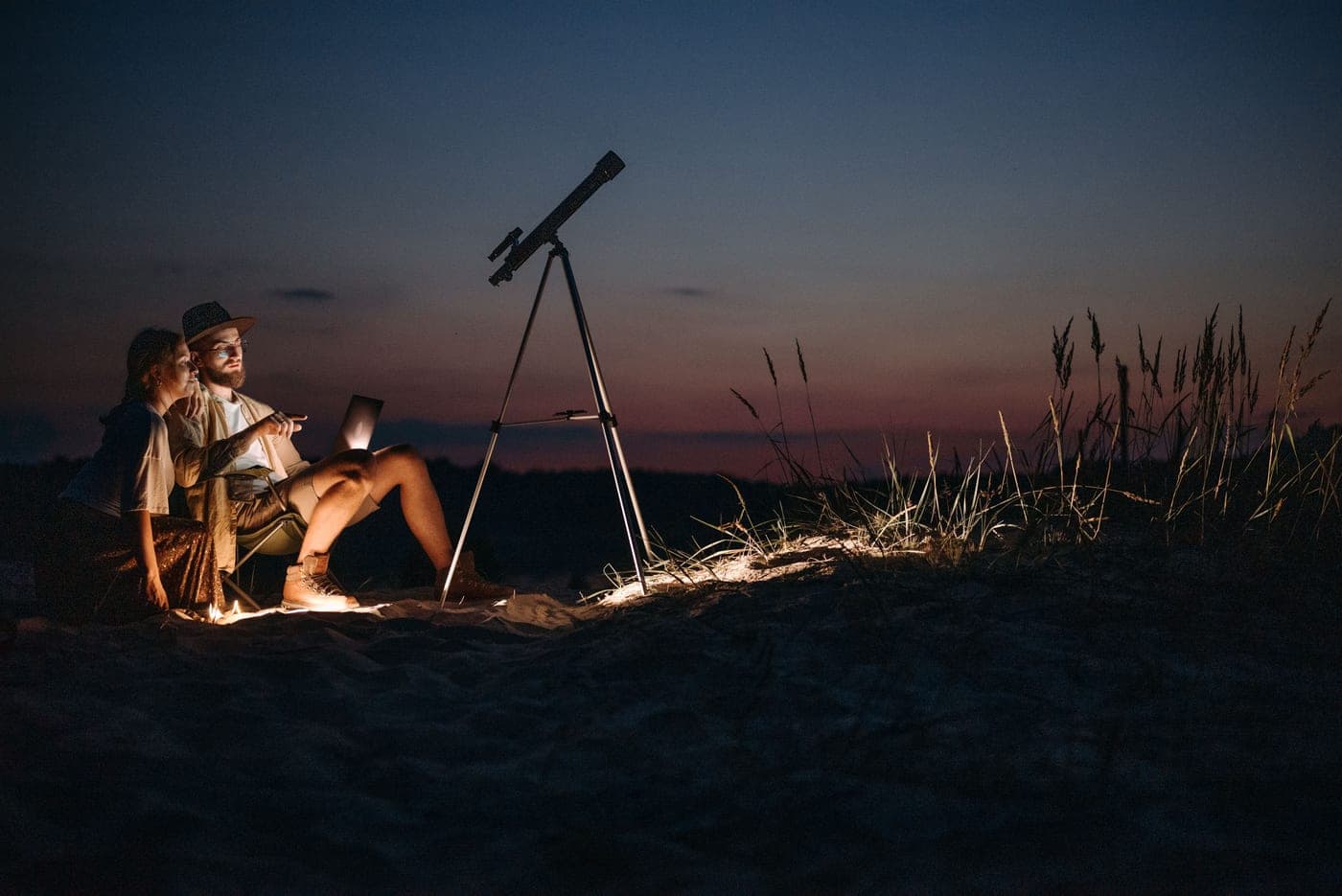
Check this first: a tabletop Dobsonian needs a stable surface at roughly chest height when you are seated. With that condition met, the Heritage 130 is the best value in beginner astronomy and it is not a close call. If the budget stretches, the 130 against the 150 is the only other question worth asking.
Why it costs so much less for the same mirror
It does not include a tripod. On a tripod-mounted telescope a substantial share of the price goes into legs, a mount head and an accessory tray, none of which collects any light. A Dobsonian base is a box the tube pivots in, and everything else goes into the mirror.
The result is a 130mm parabolic primary at a price where tripod telescopes are offering 90mm or 100mm.
light ratio = (aperture 1 / aperture 2) squared
130mm against 90mm: (130 / 90)squared = 2.09
Twice the light, at a similar price. Sky-Watcher's own published figure for this telescope is 319 percent more light than the human eye.
The computed limits
max useful magnification = 2 x aperture. Dawes limit = 116 / aperture.
130 x 2 = 260x. 116 / 130 = 0.89 arcseconds.
The Cassini division in Saturn's rings spans roughly 0.7 arcseconds at its widest, so this telescope sits right at the edge of resolving it on a still night. More on Saturn.
Sky-Watcher does not publish a maximum useful magnification for this telescope, which is why there is no maker's figure to set beside ours here. It does publish the aperture, the focal length and the focal ratio, and those are the inputs the computation needs.
The collapsible tube
The tube shortens for storage using a truss section, and Sky-Watcher's own description notes that it retains collimation through the process. That is what makes a 130mm telescope live in a cupboard rather than in a garage, and it matters more than it sounds: the telescope you can carry outside in one trip is the telescope you actually use.
The open truss does mean the light path is exposed, so dust reaches the mirror more readily than in a closed tube and stray light can reduce contrast. A simple fabric shroud, or observing away from direct streetlight glare, deals with both.
The tabletop condition, in detail
- Height: the base should sit so the eyepiece falls at roughly chest height while you are seated. A table of about 70cm with an ordinary chair works well.
- Stability: a wooden garden table or a sturdy plastic one is fine. A folding camping table with flexing legs transmits every touch straight into the view.
- Not the ground: at ground level the telescope points at rooflines and treetops.
- Not a chair: the base is wider than a chair seat, and a telescope that tips over usually needs recollimating afterwards.
How this is funded: the buy buttons below are Amazon Associates links, and a qualifying purchase earns us a commission at no extra cost to you. It cannot move the ranking, because the order here is set by aperture per dollar, and no commission rate changes how much light a mirror collects. Full disclosure.
| # | Telescope | Best for | Aperture | Price |
|---|---|---|---|---|
| 1 | 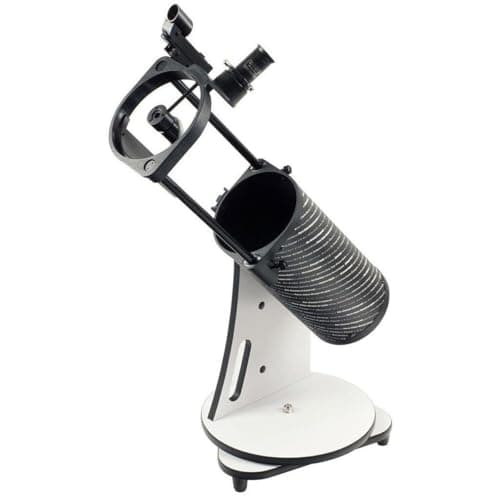 Sky-Watcher Heritage 130 Tabletop DobsonianTop pickThe same 130mm parabolic mirror as scopes costing far more, on a base with no tripod to wobble and nothing to set up. | Most aperture per dollar | 130mm260x useful |
Top pick · Most aperture per dollar
Sky-Watcher Heritage 130 Tabletop Dobsonian
The same 130mm parabolic mirror as scopes costing far more, on a base with no tripod to wobble and nothing to set up.
What the aperture allows
- Maximum useful magnification
- 260x
- 2 × 130mm of aperture
- Resolving limit (Dawes)
- 0.89 arcseconds
- 116 ÷ 130mm
- Cassini division (0.7″)
- Out of reach
- this aperture cannot resolve it
Worked example: a 25mm eyepiece in this telescope gives 650mm ÷ 25mm = 26x.
This is the aperture-per-dollar champion of the beginner shelf and it is not close. You get the same 130mm parabolic mirror found in telescopes at twice the price, and you get it without paying for a tripod, a slow-motion assembly or a hand controller.
Two times 130mm is 260x of useful magnification. Dawes' limit at 130mm works out to 116 divided by 130, which is 0.89 arcseconds. The Cassini division in Saturn's rings spans roughly 0.7 arcseconds at its widest, so this telescope sits right at the edge of showing it on a still night and will show the rings themselves easily.
The catch is the word tabletop. It needs a surface at roughly chest height when you are seated. A garden table works, a plastic patio chair does not, and buying one without thinking about where it will stand is the single most common regret with this design.
The tube collapses, which is what makes it live in a cupboard rather than a garage. That matters more than it sounds: the telescope you can carry outside in one trip is the telescope you use.
What it does well
- The most aperture you can buy at this price, by a clear margin
- Nothing to assemble, no tripod to wobble, ready in the time it takes to carry it outside
- Collapsible tube stores in a cupboard and keeps its collimation
- The Dobsonian motion is intuitive: you push the tube where you want to look
What it costs you
- Needs a solid table or stool at the right height, which is a real constraint
- The helical focuser is coarser than a rack-and-pinion or a Crayford
- Open tube design collects dust and needs the odd mirror clean
Skip this one if: Skip it if you have nowhere to stand it. On the ground it points at treetops, and on a wobbly plastic table every view shakes.
$305.00 · 12% off
#ad · how this is funded · price as of October 18, 2026
Where it sits against the alternatives
| Heritage 130 | StarSense DX 130AZ | StarSense LT 114AZ | |
|---|---|---|---|
| Aperture | 130mm | 130mm | 114mm |
| Primary mirror | Parabolic | Parabolic | Spherical |
| Max useful magnification | 260x | 260x | 228x |
| Resolving limit | 0.89 arcsec | 0.89 arcsec | 1.02 arcsec |
| Mount | Tabletop Dobsonian | Alt-az tripod | Alt-az tripod |
| Phone finding | No | Yes | Yes |
| Relative price | Lowest | Highest | Middle |
Questions people actually ask
Is the Sky-Watcher Heritage 130 worth it?
It is the best aperture-per-dollar purchase in beginner astronomy, provided you have a stable surface at seated chest height to stand it on. It gives 130mm of parabolic mirror at a price where tripod telescopes offer 90mm or 100mm.
Does the Heritage 130 need a table?
Yes, and it is a real requirement rather than a footnote. The base needs a stable surface at roughly chest height while you are seated. On the ground the telescope points at treetops.
What can you see with the Heritage 130?
Lunar craters in detail, Saturn's rings clearly separated, Jupiter's belts and moons, the Orion Nebula with structure rather than as a smudge, and the brighter globular clusters as granular balls. Its 0.89-arcsecond resolving limit puts the Cassini division right at the edge of reach.
Does the collapsible tube lose collimation?
Sky-Watcher's own description states that the design retains collimation through collapse. Like any Newtonian it is worth a star test before a session you care about. The collimation guide.
Heritage 130 or Heritage 150?
The 150 collects 33 percent more light and drops the resolving limit from 0.89 to 0.77 arcseconds, which brings the Cassini division properly into reach. It is bigger and costs more. Both have the same tabletop requirement.
Read next
Best tabletop
Tabletop Telescopes, and the One Thing to Check First
The best value design in beginner astronomy, and the surface requirement that decides whether it works for you.
Top pick: Sky-Watcher Heritage 130 Tabletop Dobsonian
$305.00 · 12% off
#ad · how this is funded · price as of October 18, 2026
Best under $200
The Best Telescopes Under $200
The bracket where aperture can jump from 70mm to 127mm, more than three times the light, and where a real tabletop Dobsonian first appears.
Top pick: Celestron PowerSeeker 127EQ
$229.95 · 13% off
#ad · how this is funded · price as of October 18, 2026
Sky-Watcher Classic 200P Dobsonian (8-inch)
Eight inches of aperture, 0.58 arcseconds of resolution, and the honest cost: it is a two-trip telescope.
Top pick: Sky-Watcher Classic 200P Dobsonian (8-inch)
Currently unavailable at Amazon
Checked October 18, 2026. We are not linking to it while there is nothing to buy.
Found something wrong here? Tell us and we will correct it and date the correction, per our editorial policy.