Telescope Types & Comparisons
The Best Binoculars for Astronomy
Two numbers are printed on every pair, and buyers routinely optimize the wrong one. The maker's own figures show exactly which one decides what you will see.
By Scooter M. · Published · How we pick
This site recommends binoculars to more first-time buyers than it recommends telescopes to, and the reason is not that binoculars are a consolation prize. Two objectives, both eyes, no assembly and a wide field make them the instrument most likely to actually come out of the cupboard. The question this page answers is which pair.
Every pair is described by two numbers — 10x50, 15x70, 25x70 — and the whole buying decision is understanding what each one does. The first is magnification. The second is the diameter of each objective lens in millimeters. The second number is the one that decides how faint you can see, and the maker's own published figures prove it.
How these are judged
- Aperture first. The objective diameter sets how much light each barrel collects, and light is what separates a faint star field from an empty one.
- Can you hold them steady? Magnification multiplies the shake in your hands as well as the image. Around 10x is the practical handheld ceiling for most people; above it, a tripod stops being an accessory.
- Exit pupil. Aperture divided by magnification gives the width of the beam leaving the eyepiece. It should roughly match how wide your own pupil opens in the dark, or light is wasted.
- Weight and eye relief. Weight decides whether a pair gets carried outside. Eye relief decides whether you can see the whole field while wearing glasses.
- Prism glass. BaK-4 is the better prism glass and BK7 the cheaper. It matters, and it matters less than any of the four points above.
Every pick on this page is from one maker, and that is a deliberate consequence of the first criterion rather than a preference. Celestron publishes a limiting stellar magnitude for each pair under three sky qualities, which is what makes it possible to compare light grasp on evidence rather than on the number printed on the box. We would rather rank five pairs we can check than ten we cannot.
The maker's own figures show aperture decides it
| Pair | Magnification | Objective | Exit pupil | Field | Weight | Limiting magnitude |
|---|---|---|---|---|---|---|
| Cometron 7x50 | 7x | 50mm | 7.1mm | 6.6 degrees | 27.3 oz | 10.99 |
| UpClose G2 10x50 | 10x | 50mm | 5mm | 6.8 degrees | 27 oz | 10.99 |
| SkyMaster 15x70 | 15x | 70mm | 4.7mm | 4.4 degrees | 48 oz | 11.73 |
| SkyMaster 25x70 | 25x | 70mm | 2.8mm | 2.7 degrees | 52 oz | 11.73 |
| SkyMaster 20x80 | 20x | 80mm | 4mm | 3.7 degrees | 75 oz | 12.02 |
Read the last column against the second. The 7x50 and the 10x50 have identical limiting magnitudes. So do the 15x70 and the 25x70. Raising the magnification changed nothing about how faint each pair can see, because it collected no extra light. The only thing that moves the limiting magnitude is the objective diameter.
light ratio = (aperture 1 / aperture 2) squared. brightness ratio = 10 ^ (0.4 x magnitude difference)
80mm against 50mm: (80 / 50)squared = 2.56. 12.02 - 10.99 = 1.03 magnitudes = 2.58 times fainter.
Celestron's published limiting magnitudes agree with the aperture ratio to within about one percent. The same holds for 70mm against 50mm: (70 / 50) squared is 1.96, and 11.73 - 10.99 is 0.74 magnitudes, or 1.98 times fainter. These are not marketing numbers.
The handheld line, and why it moves the ranking
If aperture were the whole story, the 20x80 would top this list outright. It does not, because of the second criterion. At 20x every tremor in your arms is magnified twenty times, and Celestron publishes 75 oz for that pair — nearly three times the weight of a 10x50. Handheld, it shows less than a smaller pair you can actually keep still.
A tripod for binoculars means a photo tripod and an L-shaped adapter that threads into the socket between the barrels. All five pairs here are published as tripod adaptable. Binoculars against a telescope covers why this changes the comparison with a small telescope so sharply.
Exit pupil, and the age question nobody mentions
A dark-adapted pupil averages about 7mm in a young adult and shrinks steadily with age, to under 5mm on average by around eighty. That matters here because an exit pupil wider than your own pupil sends light past the edge of your eye.
It is the reason the 7x50 is not automatically the brightest view for everyone. Its 7.1mm exit pupil is ideal for a young observer and partly wasted on an older one, for whom a 10x50's 5mm or a 15x70's 4.7mm uses every photon the objective collected. Neither is wrong. It is a fit, like shoe size.
How this is funded: the buy buttons below are Amazon Associates links, and a qualifying purchase earns us a commission at no extra cost to you. It cannot move the ranking, because the order here is set by aperture per dollar, and no commission rate changes how much light a mirror collects. Full disclosure.
| # | Telescope | Best for | Aperture | Price |
|---|---|---|---|---|
| 1 | 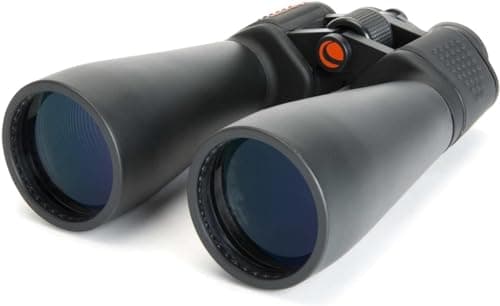 Celestron SkyMaster 15x70 BinocularsTop pick70mm of aperture in each barrel at a fixed 15x. For the money spent on a toy telescope, these show more and get used more. | The honest alternative to a cheap telescope | 70mm objective lenses (2.75 in)140x useful | |
| 2 | 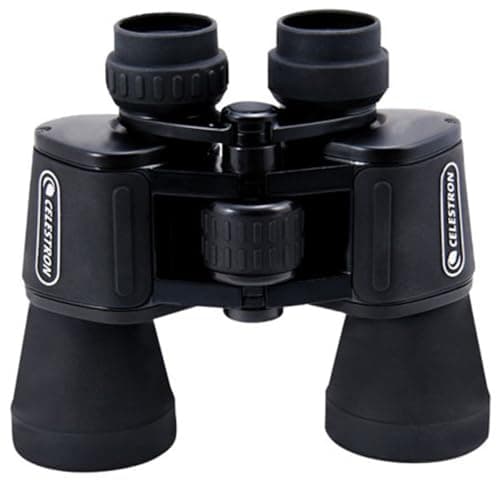 Celestron UpClose G2 10x50 BinocularsThe classic 10x50 format: about the most magnification most people can hand-hold, in a pair that is just as useful for birds as for stars. | One pair for the sky and for daylight | 50mm objective lenses (1.96 in)100x useful | |
| 3 | 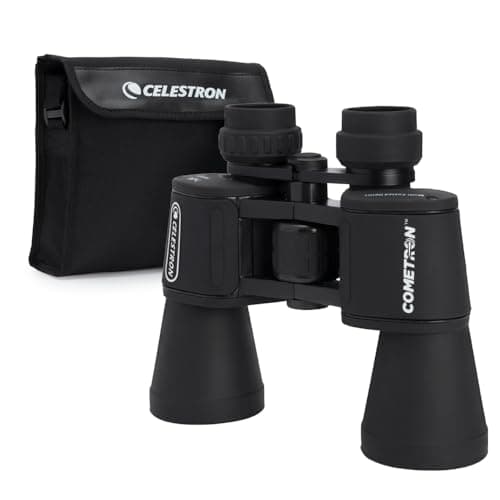 Celestron Cometron 7x50 Binoculars7x on 50mm objectives gives the widest field and the steadiest handheld view of anything here, at the price of the least light. | Handheld sweeping, on the smallest budget | 50mm objective lenses (1.97 in)100x useful | |
| 4 | 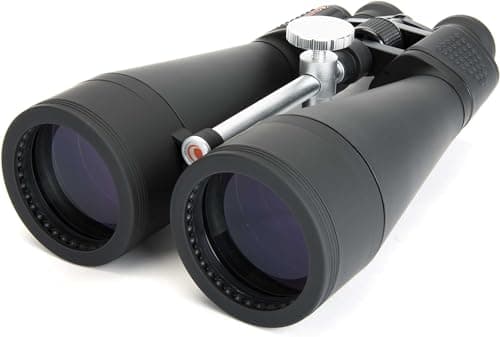 Celestron SkyMaster 20x80 Binoculars80mm objectives and BaK-4 prisms reach the faintest stars of anything here, and at 75 oz and 20x they are a tripod instrument, not a handheld one. | The most light, if you will mount them | 80mm objective lenses (3.15 in)160x useful | |
| 5 | 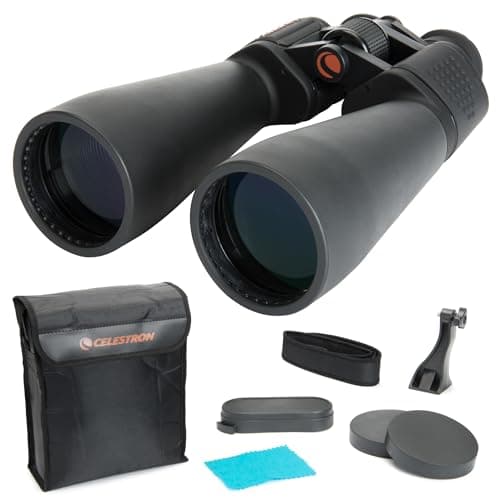 Celestron SkyMaster 25x70 BinocularsThe same 70mm objectives as the 15x70 pushed to 25x. More magnification, a dimmer view and a narrower field, with no gain in faint objects at all. | More magnification on a 70mm budget, mounted | 70mm objective lenses (2.75 in)140x useful |
Top pick · The honest alternative to a cheap telescope
Celestron SkyMaster 15x70 Binoculars
70mm of aperture in each barrel at a fixed 15x. For the money spent on a toy telescope, these show more and get used more.
What the aperture allows
- Maximum useful magnification
- 140x
- 2 × 70mm of aperture
- Resolving limit (Dawes)
- 1.66 arcseconds
- 116 ÷ 70mm
- Cassini division (0.7″)
- Out of reach
- this aperture cannot resolve it
Worked example: a 25mm eyepiece in this telescope gives 279.63mm ÷ 25mm = 11x.
Each barrel has the same 70mm aperture as the entry-level refractors on this site, and because you use both eyes the perceived brightness is higher than a single 70mm tube.
The fixed 15x is well below the 140x that 70mm could support, and that is deliberate. Binoculars are a wide-field instrument: the Pleiades, the Andromeda galaxy, the Milky Way star clouds and the whole Moon at once.
Celestron publishing three limiting magnitudes, 11.73 for ideal skies down to 9.73 for poor ones, is the single most useful number on this page. It says out loud what most listings hide: your sky matters as much as your optics.
At 15x these are heavy to hold steady. The included tripod adapter is not an accessory, it is a requirement for any sustained looking.
What it does well
- 70mm per barrel is real aperture, not a novelty
- Instantly usable: no assembly, no alignment, no learning curve
- Wide field shows large objects a telescope cannot fit in view
- Doubles as daytime and wildlife optics, so it gets used year-round
What it costs you
- Too heavy to hold steady at 15x for long; a tripod is effectively required
- Fixed magnification, so the planets stay small
- No detail on Saturn: at 15x the rings are a suggestion, not a shape
Skip this one if: Skip them if the goal is specifically to see Saturn's rings as rings. 15x will not do it; a 70mm telescope at 70x will.
#ad · how this is funded · price as of September 17, 2026
Pick 2 · One pair for the sky and for daylight
Celestron UpClose G2 10x50 Binoculars
The classic 10x50 format: about the most magnification most people can hand-hold, in a pair that is just as useful for birds as for stars.
What the aperture allows
- Maximum useful magnification
- 100x
- 2 × 50mm of aperture
- Resolving limit (Dawes)
- 2.32 arcseconds
- 116 ÷ 50mm
- Cassini division (0.7″)
- Out of reach
- this aperture cannot resolve it
10x50 is the format astronomy guides have recommended for decades, and the reason is arithmetic rather than tradition. 10x is close to the most magnification most people can hold steady for any length of time, and 50mm objectives give a 5mm exit pupil that suits most adult eyes without wasting light.
Celestron publishes the same limiting magnitudes for this pair as for the 7x50, 10.99 under ideal skies. The extra magnification does not collect more light; it spreads the same light over a larger image, which makes small clusters and double stars easier while making the widest targets harder to frame.
It is also the most genuinely dual-use instrument here. At 27 oz it is light enough to carry on a walk, which is the difference between binoculars that live by the back door and binoculars that live in a drawer.
What it does well
- 10x is close to the limit most people can hand-hold for sustained looking
- A 5mm exit pupil suits most adult eyes without wasting light
- Equally useful in daylight, so it gets used far more often
- A published 27 oz, among the lightest here
What it costs you
- The same 50mm light grasp as the cheaper 7x50, so no gain in faint objects
- BK7 prisms rather than BaK-4
- Celestron's own store listed this pair as out of stock when checked; the live price layer on this page tracks the retailer it links to
- A published 12mm eye relief is short for glasses wearers
Skip this one if: Skip them if you wear glasses while observing. A published 12mm of eye relief is short, and you will not see the whole field.
#ad · how this is funded · price as of September 17, 2026
Pick 3 · Handheld sweeping, on the smallest budget
Celestron Cometron 7x50 Binoculars
7x on 50mm objectives gives the widest field and the steadiest handheld view of anything here, at the price of the least light.
What the aperture allows
- Maximum useful magnification
- 100x
- 2 × 50mm of aperture
- Resolving limit (Dawes)
- 2.32 arcseconds
- 116 ÷ 50mm
- Cassini division (0.7″)
- Out of reach
- this aperture cannot resolve it
At 7x the image moves seven times as much as your hands do, which is slow enough to hold steady for as long as you like. That is the entire case for this magnification, and for a first astronomy instrument it is a strong one.
Celestron publishes a 6.6-degree field, wide enough to take in the whole of the Pleiades with room around it, and a 7.1mm exit pupil. That exit pupil is larger than most adult eyes open to, so some of the collected light is simply not used — the trade-off of a wide, bright, forgiving view.
The prisms are BK7 rather than BaK-4, which Celestron states plainly. BK7 is the cheaper glass and tends to vignette the edge of the exit pupil slightly; for a sweeping instrument at this price it is a reasonable compromise rather than a flaw.
What it does well
- The steadiest handheld magnification in this roundup
- A 6.6-degree field frames large clusters and the Milky Way whole
- The lightest pair here at a published 27.3 oz
- Tripod adaptable if you later want to mount them
What it costs you
- The smallest objectives here, so the faintest limiting magnitude Celestron publishes: 10.99 under ideal skies
- BK7 prisms rather than the better BaK-4
- A 7.1mm exit pupil wastes light on eyes that no longer dilate that far, which becomes more common with age
- Water resistant but not nitrogen filled, so they can fog internally
Skip this one if: Skip them if you will always use a tripod. Once they are mounted, more magnification and more aperture both become usable, and the reasons to choose 7x disappear.
$47.95 · 17% off
#ad · how this is funded · price as of September 17, 2026
Pick 4 · The most light, if you will mount them
Celestron SkyMaster 20x80 Binoculars
80mm objectives and BaK-4 prisms reach the faintest stars of anything here, and at 75 oz and 20x they are a tripod instrument, not a handheld one.
What the aperture allows
- Maximum useful magnification
- 160x
- 2 × 80mm of aperture
- Resolving limit (Dawes)
- 1.45 arcseconds
- 116 ÷ 80mm
- Cassini division (0.7″)
- Out of reach
- this aperture cannot resolve it
80mm per barrel is more aperture than most beginner refractors carry, and Celestron publishes the deepest limiting magnitude in this roundup for it: 12.02 under ideal skies. That is the practical meaning of the extra 10mm over a 70mm pair.
The cost is weight and magnification together. Celestron publishes 75 oz, which is nearly three times the weight of a 10x50, and at 20x every tremor is magnified twenty times. These are not binoculars you hold up to the sky; they are binoculars you mount and then look through.
Two quieter strengths: BaK-4 prisms, the better glass, and a published 18mm of eye relief, the most here and genuinely comfortable for glasses wearers.
What it does well
- The deepest published limiting magnitude here, 12.02 under ideal skies
- BaK-4 prisms
- A published 18mm of eye relief, comfortable with glasses
- Enough aperture to start resolving the brighter globular clusters
What it costs you
- A published 75 oz: a tripod and a proper binocular mount are not optional
- At 20x the field narrows to 3.7 degrees, too tight for the largest star fields
- Large Porro binoculars can be knocked out of collimation by a hard knock, and a misaligned pair gives double images
- The heaviest thing here to carry anywhere
Skip this one if: Skip them if you are not going to buy a tripod and a binocular mount alongside. Handheld, a 10x50 will show you more because you will actually be able to keep it still.
$209.95 · 14% off
#ad · how this is funded · price as of September 17, 2026
Pick 5 · More magnification on a 70mm budget, mounted
Celestron SkyMaster 25x70 Binoculars
The same 70mm objectives as the 15x70 pushed to 25x. More magnification, a dimmer view and a narrower field, with no gain in faint objects at all.
What the aperture allows
- Maximum useful magnification
- 140x
- 2 × 70mm of aperture
- Resolving limit (Dawes)
- 1.66 arcseconds
- 116 ÷ 70mm
- Cassini division (0.7″)
- Out of reach
- this aperture cannot resolve it
This is the pair worth understanding before buying, because the number people search for is the wrong one to optimize. Celestron publishes the same limiting magnitudes for it as for the 15x70 — 11.73 under ideal skies — because it has the same 70mm objectives. The extra magnification collects no extra light.
What 25x does buy is a larger image of small targets: Jupiter's moons spread further from the planet, and tight double stars split more readily. What it costs is a 2.8mm exit pupil, noticeably dimmer than the 15x70's 4.7mm, and a field narrowed to 2.7 degrees.
And at 25x it is effectively impossible to hand-hold. Celestron marks it tripod adaptable, and it needs to be.
What it does well
- 25x brings small targets like Jupiter's moons and double stars within easy reach
- BaK-4 prisms
- Lighter than the 20x80 at a published 52 oz
- The same light grasp as the 15x70 in the same size body
What it costs you
- No more light than the 15x70: Celestron publishes identical limiting magnitudes for both
- A 2.8mm exit pupil makes a noticeably dimmer view
- A 2.7-degree field is too narrow for the large objects binoculars are best at
- Unusable handheld at 25x; the tripod is mandatory, not recommended
Skip this one if: Skip them unless you already know you want magnification over field. For most people the 15x70 shows the same faint objects, in a brighter and wider view, for less money.
$139.95 · 14% off
#ad · how this is funded · price as of September 17, 2026
What binoculars show, and what they do not
- The Moon, whole. A telescope shows a crater. Binoculars show the entire disc, earthshine and all, and at 10x to 15x the terminator is genuinely detailed.
- Large open clusters. The Pleiades and the Beehive are too big for many telescope fields and fit a binocular field perfectly. This is where binoculars are the better instrument, not the lesser one.
- Jupiter's four bright moons, as points strung beside the planet, changing position night to night.
- The Andromeda Galaxy as an elongated glow from a reasonably dark site, framed properly by a wide field.
- The Milky Way resolving into star clouds you can sweep along for as long as the tripod or your arms allow.
- Not Saturn's rings. Separating them needs roughly 30x, which none of the handheld pairs reach. What size telescope shows the rings covers that threshold.
Which to buy
- First astronomy instrument, will buy a tripod: the 15x70. Most light per dollar, a 4.7mm exit pupil that suits most eyes, and the published 18mm eye relief works with glasses. The full review.
- One pair for the sky and for daylight, handheld: the 10x50. Light enough to carry, about the most magnification most people can hold, and equally good on birds.
- Smallest budget, or a young observer: the 7x50. Steadiest in the hand, widest field, and a 7.1mm exit pupil a young eye can use fully.
- Already committed to a mount and a dark site: the 20x80. Deepest limiting magnitude here by a full magnitude over the 50mm pairs.
- Wants magnification specifically, and has a tripod: the 25x70 — but read its cons first, because it sees no fainter than the cheaper 15x70.
And if the budget is closer to a small telescope than to a pair of binoculars, is a cheap telescope worth it works through the same money spent the other way.
Questions people actually ask
What are the best binoculars for astronomy?
For most first-time buyers who will use a tripod, 15x70 binoculars: 70mm objectives collect nearly twice the light of 50mm ones, and a 4.7mm exit pupil suits most adult eyes. For handheld use without a tripod, 10x50 binoculars, because 10x is about the most magnification most people can hold steady.
Is higher magnification better in astronomy binoculars?
No, and the maker's own figures show it. Celestron publishes identical limiting magnitudes for its 15x70 and 25x70 pairs, 11.73 under ideal skies, because both have 70mm objectives. More magnification makes small targets larger but collects no extra light, and it narrows the field and magnifies hand shake.
What does 10x50 mean on binoculars?
10x is the magnification and 50 is the diameter of each objective lens in millimeters. The second number decides how much light the binoculars collect and therefore how faint you can see; the first decides how large things appear and how much your hands shake the image.
Do I need a tripod for astronomy binoculars?
Above about 10x, effectively yes. At 15x or 20x the image magnifies every tremor in your arms, and large pairs are heavy: Celestron publishes 48 oz for its 15x70 and 75 oz for its 20x80. All five pairs on this page are published as tripod adaptable.
Can you see Saturn's rings with binoculars?
Not as rings. Separating Saturn's rings from the planet needs roughly 30x, which is beyond handheld binoculars. What binoculars do better than a telescope is wide targets: the whole Moon, the Pleiades, the Andromeda Galaxy and the Milky Way star clouds.
Are binoculars better than a telescope for a beginner?
Often, under about a hundred dollars. They collect comparable light to a small telescope objective, need no assembly and no alignment, and get used far more often. A telescope becomes the better buy once the budget reaches a 130mm tabletop Dobsonian, or if seeing the planets as planets is the specific goal.
What exit pupil should astronomy binoculars have?
Roughly the width your own pupil opens to in the dark. That averages about 7mm for a young adult and shrinks steadily with age, to under 5mm by around eighty. A wider exit pupil than your eye sends light past its edge, which is why a 7x50 is not automatically the brightest view for an older observer.
Read next
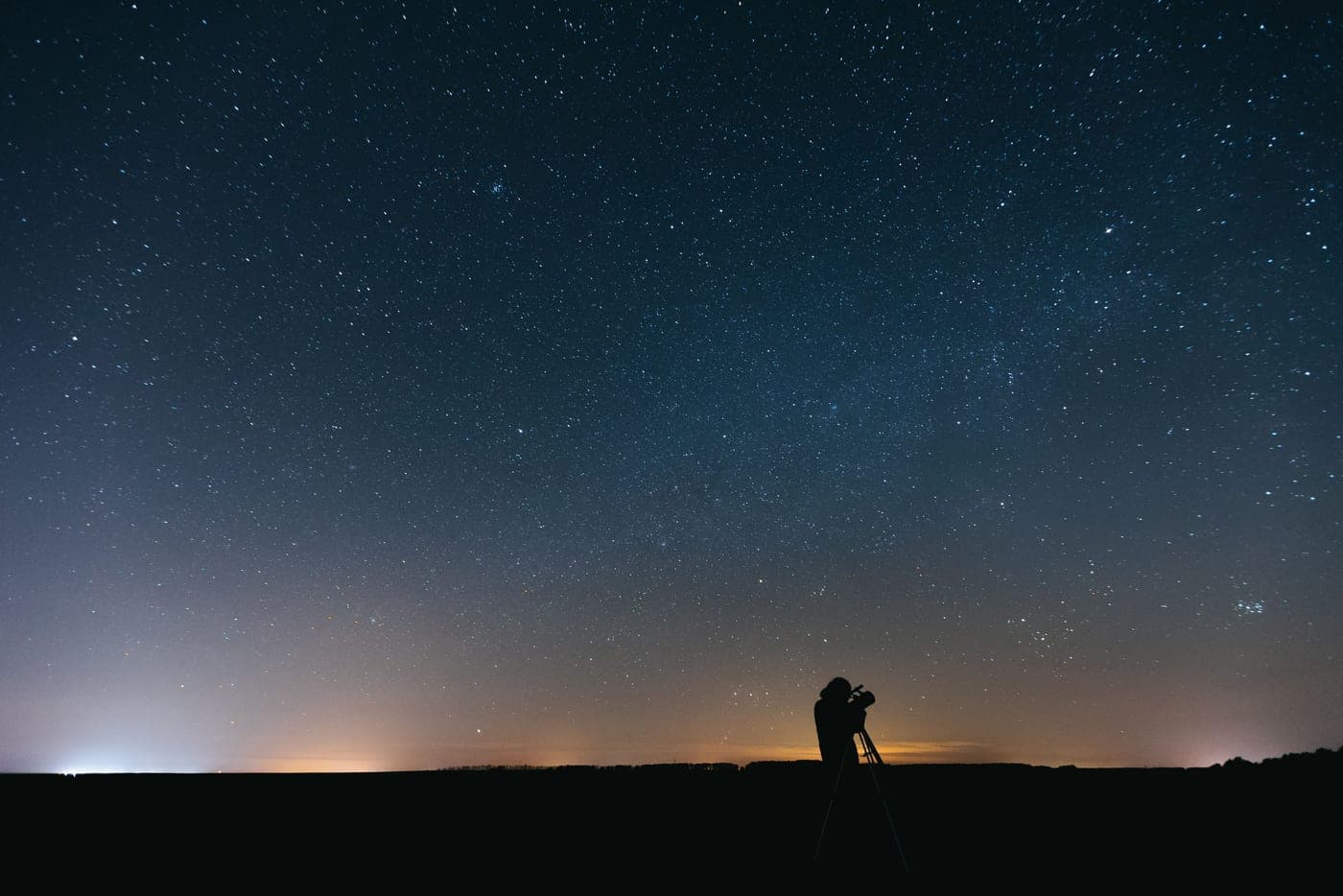
Binoculars vs a Telescope: Which Should You Buy First?
Where astronomy binoculars beat a first telescope, where they do not, and the one view only a telescope delivers.
Top pick: Celestron SkyMaster 15x70 Binoculars
#ad · how this is funded · price as of September 17, 2026
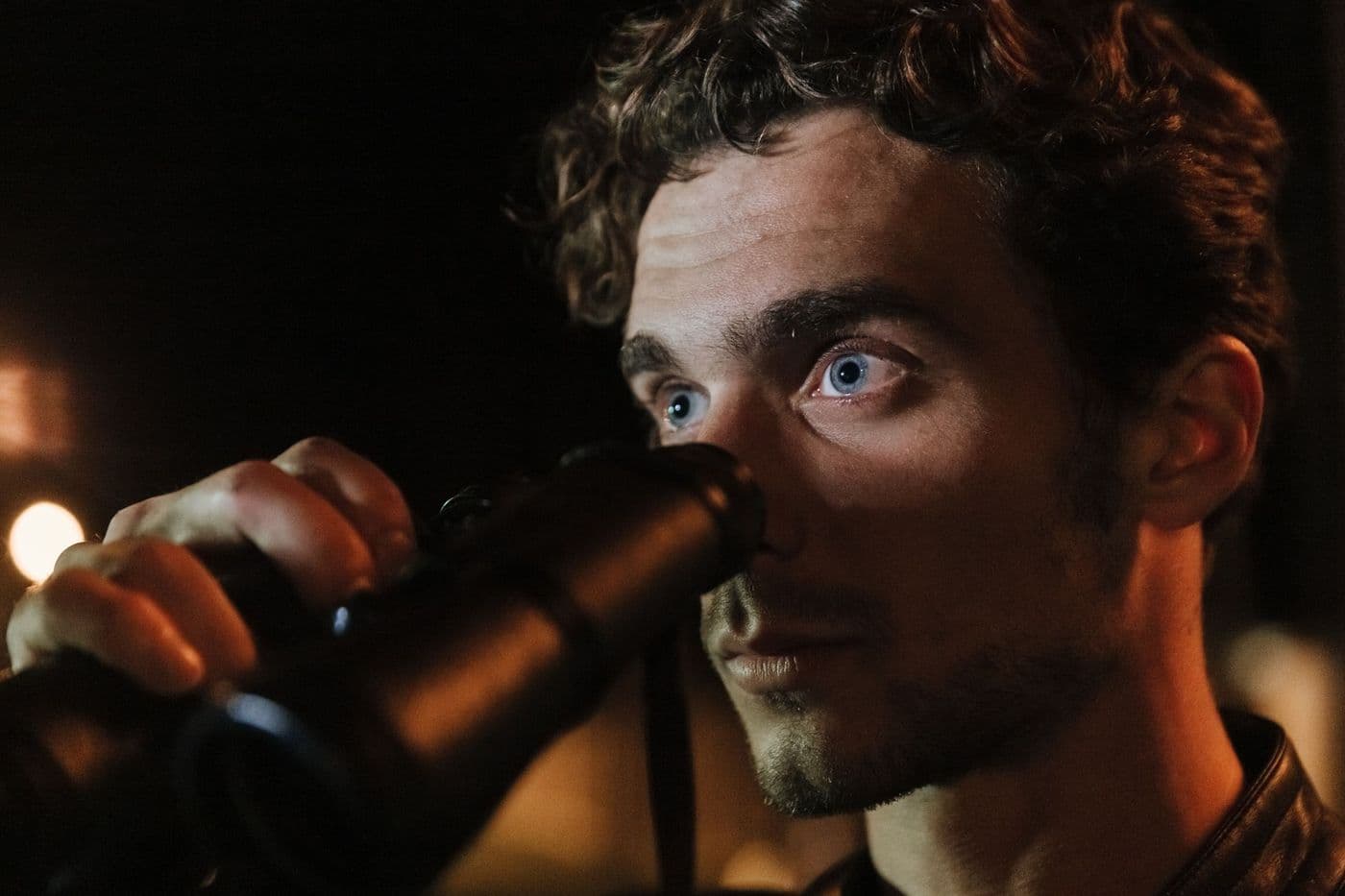
Celestron SkyMaster 15x70 Binoculars
70mm objectives at 15x, both eyes, with published limiting magnitudes for three sky qualities. The honest first instrument.
Top pick: Celestron SkyMaster 15x70 Binoculars
#ad · how this is funded · price as of September 17, 2026

Is a Cheap Telescope Worth It?
The threshold below which a cheap telescope stops being worth owning, and the honest alternative when a budget cannot clear it.
Top pick: Celestron FirstScope 76
#ad · how this is funded · price as of September 17, 2026
Found something wrong here? Tell us and we will correct it and date the correction, per our editorial policy.