Reviews
Celestron SkyMaster 25x70
The highest magnification of any binocular here, and not the one that sees the most. This is the clearest example on the site of why more power is not more.
By Scooter M. · Published · How we pick
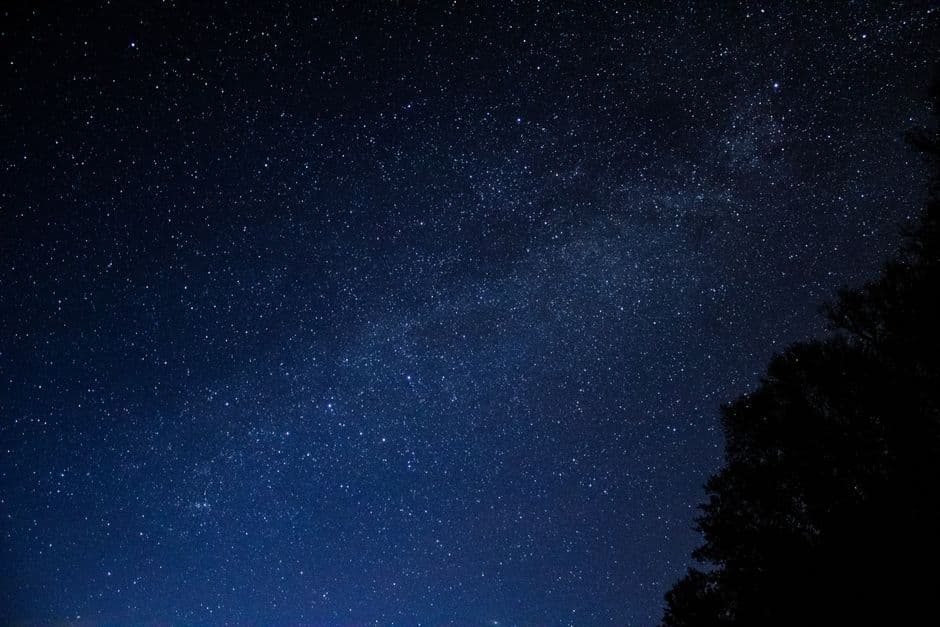
Between these and the 20x80 on this site there is a choice that looks obvious and is not. This pair has more magnification. It costs less. And it will show you fewer faint objects than the pair with the lower number on it. Working out why is the most useful thing this review can do, because the same reasoning applies to every optic you will ever compare.
The arithmetic that decides it
exit pupil = objective / magnification
70 / 25 = 2.8mm. 80 / 20 = 4mm.
Celestron publishes 2.8mm for this pair and 4mm for the 20x80. A dark-adapted eye opens to roughly 7mm, so neither fills it, but the 20x80 delivers a cone of light with (4 / 2.8) squared = 2.0 times the area. The view through the 20x80 is about twice as bright.
light vs the eye = (objective / 7)squared
(70 / 7)squared = 100. (80 / 7)squared = 131.
100 times the light of an eye pupil against 131. Celestron publishes limiting stellar magnitudes of 11.73 for this pair and 12.02 for the 20x80, a difference of 0.29. The computed light ratio, (80 / 70) squared = 1.31, works out to 0.29 magnitudes. The maker's figures and the arithmetic agree exactly.
What 70mm at 25x resolves
Dawes' limit for 70mm is 116 divided by 70, which is 1.66 arcseconds. That rules out the Cassini division in Saturn's rings at roughly 0.7 arcseconds, and it rules out any planetary surface detail. What it does allow is double stars wider than about 1.7 arcseconds, which is a genuinely rewarding target list at this magnification and one the wide-field pairs cannot touch.
Two times the aperture gives 140x as a useful ceiling, so at 25x these are using a fraction of what the glass could support. Resolution is never the constraint here; steadiness is.
Which brings us to the tripod
Celestron publishes 52 oz, which is 3.25 lb, and 25x is two and a half times the conventional handheld limit. These cannot be used in the hand. They are lighter than the 75 oz 20x80, which makes them slightly less demanding of a mount, but a mount is still not optional.
That 23 oz saving is the one practical advantage this pair has over the 20x80, and for somebody with a modest tripod it can be the deciding factor. Why mounts decide everything covers what to look for.
How this is funded: the buy buttons below are Amazon Associates links, and a qualifying purchase earns us a commission at no extra cost to you. It cannot move the ranking, because the order here is set by aperture per dollar, and no commission rate changes how much light a mirror collects. Full disclosure.
| # | Telescope | Best for | Aperture | Price |
|---|---|---|---|---|
| 1 | 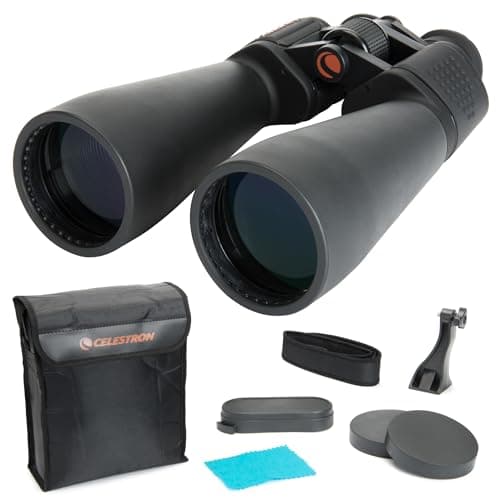 Celestron SkyMaster 25x70 BinocularsTop pickThe same 70mm objectives as the 15x70 pushed to 25x. More magnification, a dimmer view and a narrower field, with no gain in faint objects at all. | More magnification on a 70mm budget, mounted | 70mm objective lenses (2.75 in)140x useful |
Top pick · More magnification on a 70mm budget, mounted
Celestron SkyMaster 25x70 Binoculars
The same 70mm objectives as the 15x70 pushed to 25x. More magnification, a dimmer view and a narrower field, with no gain in faint objects at all.
What the aperture allows
- Maximum useful magnification
- 140x
- 2 × 70mm of aperture
- Resolving limit (Dawes)
- 1.66 arcseconds
- 116 ÷ 70mm
- Cassini division (0.7″)
- Out of reach
- this aperture cannot resolve it
This is the pair worth understanding before buying, because the number people search for is the wrong one to optimize. Celestron publishes the same limiting magnitudes for it as for the 15x70 — 11.73 under ideal skies — because it has the same 70mm objectives. The extra magnification collects no extra light.
What 25x does buy is a larger image of small targets: Jupiter's moons spread further from the planet, and tight double stars split more readily. What it costs is a 2.8mm exit pupil, noticeably dimmer than the 15x70's 4.7mm, and a field narrowed to 2.7 degrees.
And at 25x it is effectively impossible to hand-hold. Celestron marks it tripod adaptable, and it needs to be.
What it does well
- 25x brings small targets like Jupiter's moons and double stars within easy reach
- BaK-4 prisms
- Lighter than the 20x80 at a published 52 oz
- The same light grasp as the 15x70 in the same size body
What it costs you
- No more light than the 15x70: Celestron publishes identical limiting magnitudes for both
- A 2.8mm exit pupil makes a noticeably dimmer view
- A 2.7-degree field is too narrow for the large objects binoculars are best at
- Unusable handheld at 25x; the tripod is mandatory, not recommended
Skip this one if: Skip them unless you already know you want magnification over field. For most people the 15x70 shows the same faint objects, in a brighter and wider view, for less money.
$139.95 · 14% off
#ad · how this is funded · price as of September 27, 2026
The rest of the specification
- BaK-4 prisms, as on the 20x80 and better than the BK7 in the 50mm pairs, so the exit pupil stays round and evenly lit to the edge.
- A 2.7-degree field, quoted as 141 ft at 1,000 yards. That is the narrowest of the four pairs here, about five and a half full Moons across. Multiplied by 25x it is a 68-degree apparent field.
- 13mm of eye relief, workable but tight for spectacle wearers, where the 20x80's 18mm is markedly better.
- Water resistant, not nitrogen purged.
The honest drawbacks
- A 2.8mm exit pupil is dim under a dark sky. This is the central compromise and it cannot be tuned out. Under a light-polluted sky the darker background is actually a mild advantage; under a genuinely dark one you will wish for the 20x80.
- 2.7 degrees is a narrow field, so the wide-sweeping pleasure of a low-power pair is absent.
- Tripod mandatory, and not supplied.
- Collimation risk, as with any large budget binocular. Check a bright star on the first clear night and make sure both eyes see it in the same place.
- Higher power does not mean better. Buyers routinely choose this pair over the 20x80 on the strength of the first number, and Celestron's own published figures show that to be the wrong call for faint-object work.
Where the small exit pupil is an advantage
Everything above treats the 2.8mm exit pupil as a cost, which under a dark sky it is. Under a light-polluted one it partly turns into a benefit, and that is worth stating because most buyers of these observe from towns.
Skyglow is spread evenly across the field, so it behaves like a background wash of light. Magnification spreads that wash over a larger area, dimming it, while a star stays a point and keeps its brightness. The practical effect is that raising magnification darkens the background faster than it darkens the target, which improves contrast on small objects. That is why a 25x70 can show a globular cluster more clearly from a suburb than a 7x50 will, even though the 7x50 collects light from a larger objective relative to its power.
So the target list for these is specific, and it is different from the wide-field pairs on this site.
- Globular clusters. Compact, reasonably bright, and they reward magnification. At 25x the brighter ones start to look granular rather than smooth.
- Double stars. At 1.66 arcseconds of resolving limit and 25x of magnification, a long list of pairs is available that the low-power binoculars cannot separate at all.
- The Moon. 25x on 70mm is a genuinely good lunar view, and the narrow field does not matter on an object half a degree across.
- Planetary nebulae and small open clusters, which are the objects most punished by a bright background and most helped by magnification.
What stays out of reach is the wide sweeping that makes binoculars binoculars, and large faint objects like the Andromeda galaxy, which needs field and aperture rather than power. Light pollution sets out how much your sky is costing you.
Who should buy these, and who should not
Buy them if you want mounted binocular magnification on a 70mm budget and your targets are small and bright: the Moon, globular clusters, planetary nebulae, double stars. Buy them if you already own a light tripod that will handle 3.25 lb but not 4.7 lb. And buy them if you observe mostly from a light-polluted sky, where the small exit pupil costs you less and the darker background helps.
Do not buy them expecting to see more than the 20x80 because the number is bigger. The 20x80 review sets out what the extra aperture buys. Do not buy them as a first optic, since a tripod purchase stands between you and first light. And do not buy them for wide-field sweeping, which is what the 7x50 exists for.
Questions people actually ask
Are the Celestron SkyMaster 25x70 good for astronomy?
They are good for small bright targets on a tripod: the Moon, globular clusters, planetary nebulae and double stars wider than about 1.7 arcseconds. They are not the best choice for faint objects, because the 2.8mm exit pupil Celestron publishes makes the view dimmer than the 20x80's 4mm despite the higher magnification.
Is 25x70 better than 20x80?
Not for faint objects. Celestron publishes 11.73 limiting magnitude for the 25x70 and 12.02 for the 20x80, and exit pupils of 2.8mm against 4mm, so the 20x80 is both deeper and about twice as bright. The 25x70 is lighter at 52 oz against 75 oz and offers more magnification on small bright targets.
Do you need a tripod for 25x70 binoculars?
Yes. 25x is about two and a half times the conventional handheld limit and the pair weighs 3.25 lb, so handheld the image shakes too much to be useful. Celestron publishes them as tripod adaptable and supplies no tripod.
Why is a bigger magnification not always better in binoculars?
Because magnification does not collect light. Exit pupil is the objective divided by the magnification, so raising power on a fixed objective shrinks the cone of light entering your eye and dims the view. That is why the 25x70 sees fainter stars less well than the 20x80, which Celestron's own published limiting magnitudes confirm.
What is the field of view of the SkyMaster 25x70?
Celestron publishes 2.7 degrees, quoted as 141 ft at 1,000 yards. That is about five and a half full Moons across and the narrowest field of the four pairs this site covers, which is the trade you make for the highest magnification.
Read next
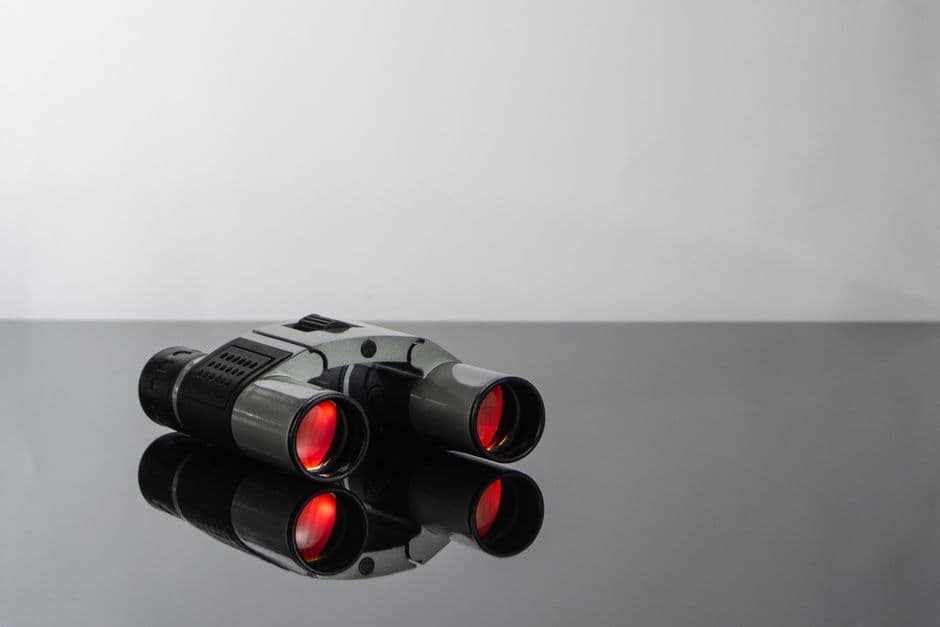
Celestron SkyMaster 20x80
20x80 Porro binoculars with a published 12.02 limiting magnitude and BaK-4 prisms. More light than any other pair here, at 75 oz.
Top pick: Celestron SkyMaster 20x80 Binoculars
#ad · how this is funded · price as of September 27, 2026
Best for astronomy
The Best Binoculars for Astronomy
Astronomy binoculars ranked on aperture, holdability and exit pupil, with the maker's limiting magnitudes for every pair.
Top pick: Celestron SkyMaster 15x70 Binoculars
$129.95 · 32% off
#ad · how this is funded · price as of September 27, 2026
Telescope Mounts, and Why They Decide Everything
The four mount types compared, why the mount matters as much as the optics, and whether they are interchangeable.
Top pick: Sky-Watcher Classic 200P Dobsonian (8-inch)
#ad · how this is funded · price as of September 27, 2026
Found something wrong here? Tell us and we will correct it and date the correction, per our editorial policy.