Reviews
Celestron SkyMaster 15x70 Binoculars
The instrument this site recommends to people about to spend a hundred dollars on a telescope. Two 70mm objectives see more than one small one, and the catch is in your arms.
By Scooter M. · Published · How we pick

This is the review that argues you might not want a telescope yet. Under about a hundred dollars the telescope shelf is mostly small apertures on unsteady tripods, and a pair of 70mm binoculars beats all of them on the two things that decide a first night: how much sky you can find, and how often the instrument comes out of the cupboard.
What 70mm resolves, and why 15x is the right number
max useful magnification = 2 x aperture. Dawes limit = 116 / aperture.
70 x 2 = 140x. 116 / 70 = 1.66 arcseconds.
These binoculars are fixed at 15x, which is nowhere near the 140x the aperture would support. That is deliberate: binoculars are built to deliver a wide, bright, handheld field, not the highest magnification the glass could carry.
exit pupil = aperture / magnification
70 / 15 = 4.67mm
A 4.67mm exit pupil comfortably fits a dark-adapted eye, so none of the collected light is wasted at the eyepiece. This is the number that makes a big binocular feel brighter than its aperture alone suggests.
Celestron publishes something for these that telescope listings almost never carry: three limiting stellar magnitudes rather than one — 11.73 under ideal skies, 10.73 under moderate, and 9.73 under poor. That is an unusually honest way to publish a figure, because it admits what every observer knows and most specification sheets hide, which is that your sky decides more than your instrument.
Two eyes is not a marketing line
Using both eyes raises perceived brightness and, more importantly, makes faint detail easier to hold. It is also simply more comfortable: there is no squinting, no closing one eye, and no learning to keep your head still against an eyepiece.
For a complete beginner that comfort is worth more than it sounds. The most common way a first instrument fails is that using it is a chore, and binoculars are the least chore-like optics there are. Binoculars against a telescope works the full comparison through.
How this is funded: the buy buttons below are Amazon Associates links, and a qualifying purchase earns us a commission at no extra cost to you. It cannot move the ranking, because the order here is set by aperture per dollar, and no commission rate changes how much light a mirror collects. Full disclosure.
| # | Telescope | Best for | Aperture | Price |
|---|---|---|---|---|
| 1 | 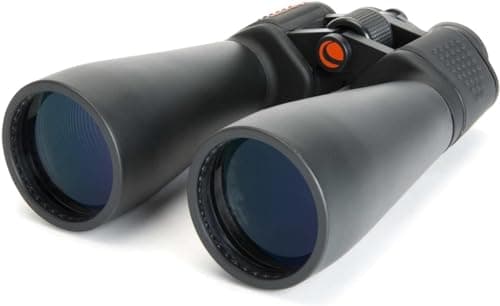 Celestron SkyMaster 15x70 BinocularsTop pick70mm of aperture in each barrel at a fixed 15x. For the money spent on a toy telescope, these show more and get used more. | The honest alternative to a cheap telescope | 70mm objective lenses (2.75 in)140x useful |
Top pick · The honest alternative to a cheap telescope
Celestron SkyMaster 15x70 Binoculars
70mm of aperture in each barrel at a fixed 15x. For the money spent on a toy telescope, these show more and get used more.
What the aperture allows
- Maximum useful magnification
- 140x
- 2 × 70mm of aperture
- Resolving limit (Dawes)
- 1.66 arcseconds
- 116 ÷ 70mm
- Cassini division (0.7″)
- Out of reach
- this aperture cannot resolve it
Worked example: a 25mm eyepiece in this telescope gives 279.63mm ÷ 25mm = 11x.
Each barrel has the same 70mm aperture as the entry-level refractors on this site, and because you use both eyes the perceived brightness is higher than a single 70mm tube.
The fixed 15x is well below the 140x that 70mm could support, and that is deliberate. Binoculars are a wide-field instrument: the Pleiades, the Andromeda galaxy, the Milky Way star clouds and the whole Moon at once.
Celestron publishing three limiting magnitudes, 11.73 for ideal skies down to 9.73 for poor ones, is the single most useful number on this page. It says out loud what most listings hide: your sky matters as much as your optics.
At 15x these are heavy to hold steady. The included tripod adapter is not an accessory, it is a requirement for any sustained looking.
What it does well
- 70mm per barrel is real aperture, not a novelty
- Instantly usable: no assembly, no alignment, no learning curve
- Wide field shows large objects a telescope cannot fit in view
- Doubles as daytime and wildlife optics, so it gets used year-round
What it costs you
- Too heavy to hold steady at 15x for long; a tripod is effectively required
- Fixed magnification, so the planets stay small
- No detail on Saturn: at 15x the rings are a suggestion, not a shape
Skip this one if: Skip them if the goal is specifically to see Saturn's rings as rings. 15x will not do it; a 70mm telescope at 70x will.
#ad · how this is funded · price as of September 13, 2026
The catch, stated plainly: you cannot hold these steady
Mounted, the difference is not subtle. The Pleiades resolve into a field of sharp points rather than a soft cluster, Jupiter's four bright moons become obvious rather than suspected, and the Andromeda Galaxy stops being a rumor and becomes a visible oval.
What these show, honestly
| Target | At 15x with 70mm | Note |
|---|---|---|
| The Moon | Excellent, whole disc at once | The wide field is the advantage here |
| Jupiter's moons | Four points, clearly | The disc stays a dot at this magnification |
| Saturn's rings | No | Needs roughly 30x before the rings separate |
| Open clusters | Outstanding | This is what big binoculars are best at |
| Andromeda Galaxy | Visible oval from a decent sky | Wide field frames it properly |
| Orion Nebula | Clear gray shape | Structure needs a telescope |
| Comets | The best instrument you can own | Wide field plus brightness |
The honest limitation is the planets. At 15x Saturn is a dot with an odd shape and the rings do not separate, which usually needs about 30x. If the planets are why you are buying, this is the wrong instrument and the planetary roundup is the right page.
Who should buy these, and who should not
Buy them if your budget is around a hundred dollars, if you want something that can also go to a match or a coastline in daylight, or if you are honest that a telescope might sit unused. They are also the best second instrument an owner of a big Dobsonian can have, for sweeping the Milky Way and finding what to point the telescope at.
Do not buy them if Saturn's rings are the whole ambition, or if you will not mount them. Held in the hands at 15x they are pleasant; on a tripod they are a different instrument. Is a cheap telescope worth it sets the same money against the telescope shelf.
Questions people actually ask
Are the Celestron SkyMaster 15x70 worth it?
For a first instrument under about a hundred dollars, yes — two 70mm objectives see more than one small telescope objective and are far easier to use. Celestron publishes limiting magnitudes of 11.73, 10.73 and 9.73 for ideal, moderate and poor skies. Budget for a tripod, because 15x is beyond what arms hold steady.
Can you see Saturn's rings with 15x70 binoculars?
No. Saturn appears as a slightly odd-shaped dot. Separating the rings from the disc needs roughly 30x, which is beyond what a fixed 15x binocular delivers, though 70mm of aperture is easily enough light.
Do you need a tripod for 15x70 binoculars?
Effectively yes. At 15x, arm tremor is magnified fifteen times and the view shakes within about half a minute. Celestron includes a tripod adapter, which tells you what the maker expects. Mounted, they show noticeably more.
SkyMaster 15x70 or a cheap telescope?
The binoculars, almost always, under about a hundred dollars. They collect more light than a small beginner telescope objective, they are far quicker to use, and they get taken outside more often. A telescope becomes the better buy once the budget reaches a 130mm tabletop Dobsonian.
What magnification are they?
A fixed 15x, with 70mm objectives. That is well below the 140x that 70mm of aperture could support, and deliberately so: binoculars trade magnification for a wide, bright field you can hold and scan.
Read next
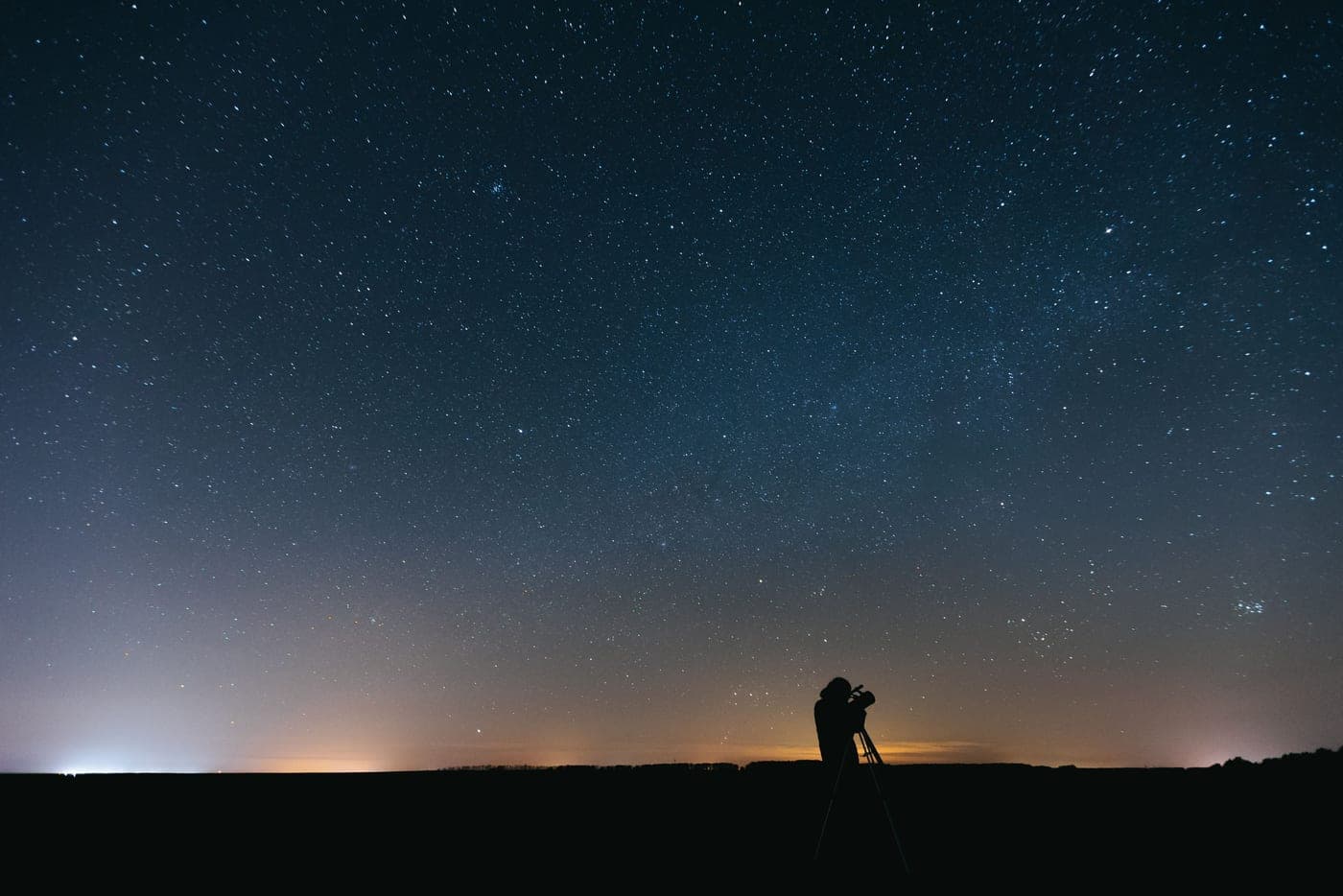
Binoculars vs a Telescope: Which Should You Buy First?
Where astronomy binoculars beat a first telescope, where they do not, and the one view only a telescope delivers.
Top pick: Celestron SkyMaster 15x70 Binoculars
#ad · how this is funded · price as of September 13, 2026

Is a Cheap Telescope Worth It?
The threshold below which a cheap telescope stops being worth owning, and the honest alternative when a budget cannot clear it.
Top pick: Celestron FirstScope 76
#ad · how this is funded · price as of September 13, 2026

What a City Sky Actually Allows
What survives a bright sky, what does not, and why light pollution changes what you should spend a telescope budget on.
Top pick: Sky-Watcher Classic 200P Dobsonian (8-inch)
#ad · how this is funded · price as of September 13, 2026
Found something wrong here? Tell us and we will correct it and date the correction, per our editorial policy.