Reviews
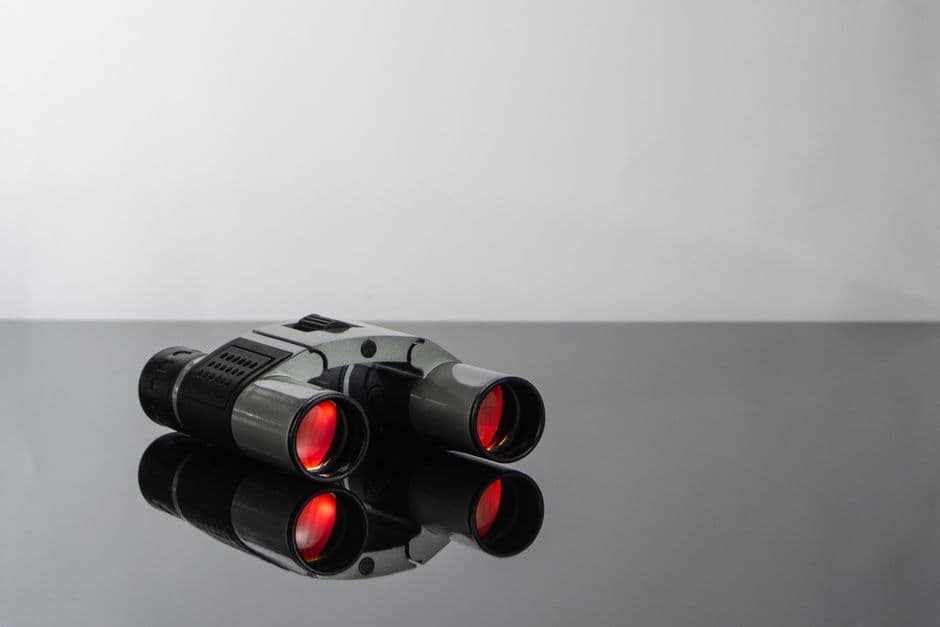
Celestron UpClose G2 10x50
The default answer when somebody wants one pair of binoculars for the sky and for daylight. It earns that by giving up less field than the specification usually costs.
By Scooter M. · Published · How we pick
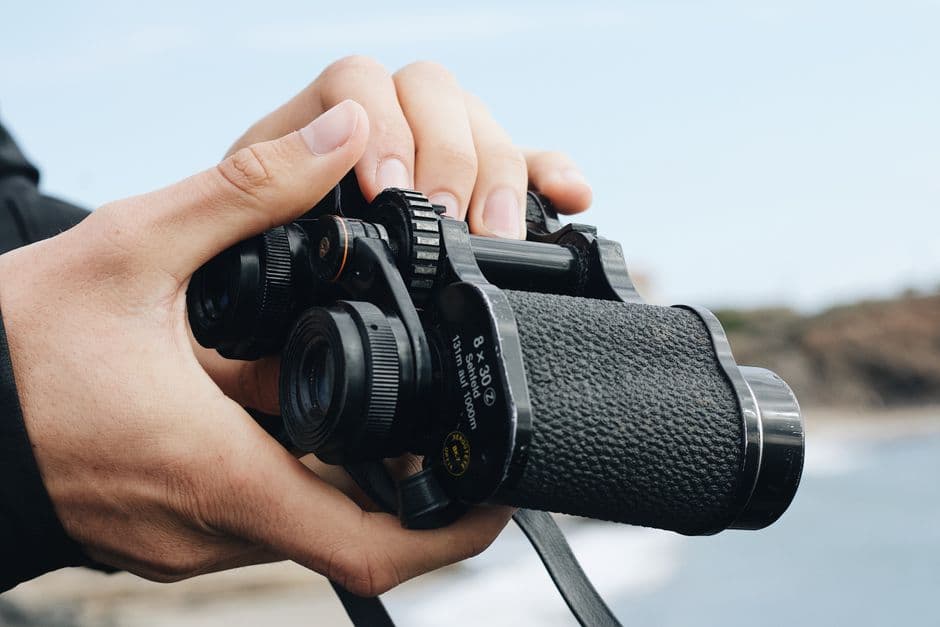
10x50 is the specification most people should own if they are only going to own one pair. It sits exactly at the limit of what a person can hold steady, it uses a 50mm objective that is still light enough to carry, and it works in daylight as well as at night. This particular pair does one thing that makes it more interesting than the category average, and it is hidden in the field-of-view line.
The specification that stands out
Celestron publishes a 6.8-degree field of view for this pair, quoted as 354 ft at 1,000 yards. That deserves a second look, because the 7x50 Cometron on this site publishes 6.6 degrees at a lower magnification.
apparent field = true field x magnification
6.8 x 10 = 68 degrees. 6.6 x 7 = 46 degrees.
The 10x50 has a 68-degree apparent field against the 7x50's 46. Normally a jump in magnification costs you sky; here the wider eyepiece design gives back more than the magnification takes, so this pair sees a slightly larger patch of the real sky than the lower-power pair does.
That is genuinely unusual and it is the practical argument for this model. You get 10x of detail and you do not pay for it in framing: clusters still fit, sweeping still works, and finding a target is no harder than with a 7x pair.
What 50mm at 10x gives you
exit pupil = objective / magnification. light vs the eye = (objective / 7)squared.
50 / 10 = 5mm. (50 / 7)squared = 51. 116 / 50 = 2.32 arcseconds.
Celestron publishes a 5mm exit pupil, which agrees, and a limiting stellar magnitude of 10.99 under ideal skies, 9.99 moderate and 8.99 poor — identical to the 7x50, because limiting magnitude follows the objective and both are 50mm.
That last point is worth stating plainly, because it is routinely misunderstood: these do not see fainter stars than the 7x50. Both have 50mm objectives, so both collect the same light and Celestron publishes the same limiting magnitudes for both. What the extra magnification buys is scale — the same faint smudge, larger — and a darker sky background, which can make a faint object easier to pick out even though no more light is arriving.
The 5mm exit pupil is the other half of the trade. It is dimmer than the 7x50's 7.1mm for a young eye that opens fully, and it is a better match for an older eye that does not. Exit pupil and the age question is covered in the roundup.
10x is the line, and this pair sits on it
Hand shake scales with magnification, and the usual limit for a comfortable handheld view is about 10x. This pair is at that limit, not beyond it, which means a standing observer will see a slightly livelier field than through a 7x pair and a seated observer with elbows on a table will see a steady one.
Celestron publishes 27 oz, which is very slightly lighter than the 7x50. Neither is heavy. If you find any handheld wobble tiring, both are tripod adaptable, and the difference between leaning against a wall and not is larger than most people expect.
How this is funded: the buy buttons below are Amazon Associates links, and a qualifying purchase earns us a commission at no extra cost to you. It cannot move the ranking, because the order here is set by aperture per dollar, and no commission rate changes how much light a mirror collects. Full disclosure.
| # | Telescope | Best for | Aperture | Price |
|---|---|---|---|---|
| 1 | 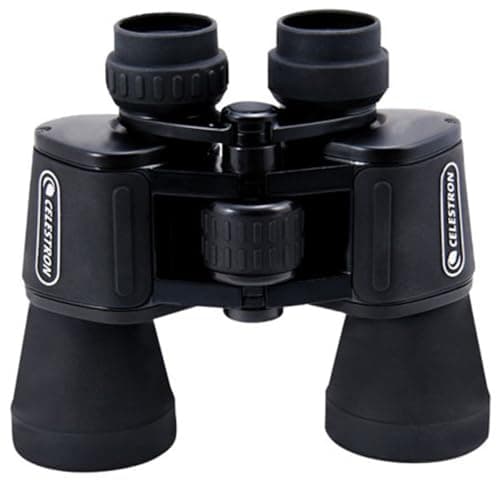 Celestron UpClose G2 10x50 BinocularsTop pickThe classic 10x50 format: about the most magnification most people can hand-hold, in a pair that is just as useful for birds as for stars. | One pair for the sky and for daylight | 50mm objective lenses (1.96 in)100x useful |
Top pick · One pair for the sky and for daylight
Celestron UpClose G2 10x50 Binoculars
The classic 10x50 format: about the most magnification most people can hand-hold, in a pair that is just as useful for birds as for stars.
What the aperture allows
- Maximum useful magnification
- 100x
- 2 × 50mm of aperture
- Resolving limit (Dawes)
- 2.32 arcseconds
- 116 ÷ 50mm
- Cassini division (0.7″)
- Out of reach
- this aperture cannot resolve it
10x50 is the format astronomy guides have recommended for decades, and the reason is arithmetic rather than tradition. 10x is close to the most magnification most people can hold steady for any length of time, and 50mm objectives give a 5mm exit pupil that suits most adult eyes without wasting light.
Celestron publishes the same limiting magnitudes for this pair as for the 7x50, 10.99 under ideal skies. The extra magnification does not collect more light; it spreads the same light over a larger image, which makes small clusters and double stars easier while making the widest targets harder to frame.
It is also the most genuinely dual-use instrument here. At 27 oz it is light enough to carry on a walk, which is the difference between binoculars that live by the back door and binoculars that live in a drawer.
What it does well
- 10x is close to the limit most people can hand-hold for sustained looking
- A 5mm exit pupil suits most adult eyes without wasting light
- Equally useful in daylight, so it gets used far more often
- A published 27 oz, among the lightest here
What it costs you
- The same 50mm light grasp as the cheaper 7x50, so no gain in faint objects
- BK7 prisms rather than BaK-4
- Celestron's own store listed this pair as out of stock when checked; the live price layer on this page tracks the retailer it links to
- A published 12mm eye relief is short for glasses wearers
Skip this one if: Skip them if you wear glasses while observing. A published 12mm of eye relief is short, and you will not see the whole field.
#ad · how this is funded · price as of September 27, 2026
Where the budget shows
- 12mm of eye relief, the tightest of the four pairs on this site. If you observe with glasses on, this is the specification that will bother you, since around 15mm is the comfortable threshold for seeing the full field through spectacles.
- BK7 prisms. Lower refractive index than BaK-4, so the exit pupil can look slightly squared-off with a little dimming at the outer field.
- Wide fields on budget glass soften at the edge. A 68-degree apparent field is ambitious at this price, and stars toward the edge will not be as tight as those in the middle.
- Water resistant only, not nitrogen purged against internal fogging.
- 10x still shows no planetary detail. Saturn stays a dot with no rings, and Jupiter shows its moons but not its belts.
Against the other pairs here
| Cometron 7x50 | UpClose G2 10x50 | SkyMaster 20x80 | SkyMaster 25x70 | |
|---|---|---|---|---|
| Objective | 50mm | 50mm | 80mm | 70mm |
| Magnification | 7x | 10x | 20x | 25x |
| Exit pupil | 7.1mm | 5mm | 4mm | 2.8mm |
| True field | 6.6 deg | 6.8 deg | 3.7 deg | 2.7 deg |
| Apparent field (computed) | 46 deg | 68 deg | 74 deg | 68 deg |
| Limiting magnitude, ideal | 10.99 | 10.99 | 12.02 | 11.73 |
| Eye relief | 13mm | 12mm | 18mm | 13mm |
| Prisms | BK7 | BK7 | BaK-4 | BaK-4 |
| Weight | 27.3 oz | 27 oz | 75 oz | 52 oz |
| Handheld | Yes, easily | Yes, at the limit | No | No |
Read the bottom row first. Two of these four can be picked up and used; two cannot be used at all without buying a tripod as well. That single distinction matters more than any optical figure in the table, because it decides how often the pair leaves the house.
What to check on the first clear night
Budget Porro binoculars are assembled to a price, and the one fault worth testing for is collimation: whether both barrels point at exactly the same place. It is common, it is easy to miss, and it causes eye strain and headaches rather than an obvious double image, because your eyes will work to merge two slightly offset views without telling you they are doing it.
The test takes a minute. Point them at a bright star, get it centered, then slowly move the binoculars away from your eyes while still looking through them. As the exit pupils separate from your pupils you will see two images of the star drift apart. If they drift apart along a line and stay level with each other, that is normal. If one sits noticeably higher than the other, the barrels are misaligned and the pair should go back.
The second check is simpler: look at a distant straight edge, a roofline or a window frame, and confirm it stays straight across the field rather than bowing. Some curvature at the very edge is normal in this price class and is not a fault. A pronounced bend through the middle is.
Neither check needs darkness or expertise, and doing both inside the return window is the difference between a pair you enjoy for a decade and a pair that quietly gives you a headache every time you use it.
Who should buy these, and who should not
Buy them if you want one pair that does both jobs. 10x50 is the specification that works for birds, landscapes and a football match as well as for the Moon and star clusters, and this particular pair gives up less field than most 10x50s in doing it.
Buy the 7x50 instead if the pair is mainly for the night sky, if a child will use it, or if your eyes dark-adapt well. The Cometron 7x50 review covers that case.
Do not buy these if you wear glasses at the eyepiece, because 12mm of eye relief is the weakest number here and the 20x80's 18mm is the one to look at instead. And do not buy them expecting to see planets, at any magnification these offer.
Questions people actually ask
Are 10x50 binoculars good for astronomy?
Yes, and 10x50 is the most common recommendation for a single all-purpose pair. A 50mm objective gives about 51 times the light of a 7mm eye pupil, and 10x is at the limit of what most people can hold steady. Celestron publishes a limiting stellar magnitude of 10.99 for this pair under ideal skies.
Do 10x50 binoculars show fainter stars than 7x50?
No. Limiting magnitude follows the objective, and both are 50mm, so Celestron publishes the same figures for both. The extra magnification makes objects larger and darkens the sky background, which can help you notice a faint object, but no additional light is being collected.
Can you hold 10x50 binoculars steady?
Most people can, with effort. 10x is the conventional limit for comfortable handheld viewing, so the field is livelier than through a 7x pair. Bracing your elbows on a table or leaning against a wall makes a larger difference than people expect, and the barrel is tripod adaptable.
Are the Celestron UpClose G2 good for glasses wearers?
Not especially. Celestron publishes 12mm of eye relief, which is the tightest of the four pairs this site covers, and roughly 15mm is where spectacle wearers can comfortably see the whole field. The SkyMaster 20x80 publishes 18mm and is the better choice on that specification alone.
What is the field of view of the UpClose G2 10x50?
Celestron publishes 6.8 degrees, quoted as 354 ft at 1,000 yards. Multiplied by the 10x magnification that is a 68-degree apparent field, which is unusually wide for the price and slightly wider in true sky coverage than the 7x50 pair in the same range.
Read next
Best for astronomy
The Best Binoculars for Astronomy
Astronomy binoculars ranked on aperture, holdability and exit pupil, with the maker's limiting magnitudes for every pair.
Top pick: Celestron SkyMaster 15x70 Binoculars
$129.95 · 32% off
#ad · how this is funded · price as of September 27, 2026
Celestron Cometron 7x50
7x50 Porro binoculars with a 7.1mm exit pupil and a 6.6-degree field. The steadiest handheld view here, and the least expensive.
Top pick: Celestron Cometron 7x50 Binoculars
$47.95 · 17% off
#ad · how this is funded · price as of September 27, 2026
Celestron SkyMaster 20x80
20x80 Porro binoculars with a published 12.02 limiting magnitude and BaK-4 prisms. More light than any other pair here, at 75 oz.
Top pick: Celestron SkyMaster 20x80 Binoculars
#ad · how this is funded · price as of September 27, 2026
Found something wrong here? Tell us and we will correct it and date the correction, per our editorial policy.