Beginner Telescopes
The Best Portable Telescopes
Every gram you save comes out of the mirror. This page is about what that exchange rate actually is, so you can decide how much sky you are willing to trade for a smaller bag.
By Scooter M. · Published · How we pick

There is no such thing as a portable telescope that is also a big telescope. Aperture is a physical diameter, and a physical diameter has to go in the bag. Everything on this page is an answer to the same question — how much sky are you willing to give up to carry it — and the answers differ by a factor of three.
How these are judged
- Published weight, complete. Not tube weight. The number that matters is what goes in the car or on your back including whatever holds it up, and where a maker publishes that figure it is quoted here.
- What it costs in light. Every entry is set against a 130mm tabletop, which is the aperture this site recommends when portability is not a constraint.
- Whether it sets up in under two minutes. A telescope that needs assembly gets left in the bag on the second night of a trip.
- What it honestly shows. A small aperture is not a small version of a big one. Some targets simply stop being available, and each entry says which.
The weight classes, and what each one buys
| Class | Aperture | Resolving limit | Light vs 130mm | What it gives up |
|---|---|---|---|---|
| Hand luggage refractor | 70mm | 1.66 arcsec | 0.29x | Deep sky, and the Cassini division |
| Large binoculars | 70mm x2 | 1.66 arcsec | 0.29x each | Planetary detail entirely |
| Spotting scope | 65mm | 1.78 arcsec | 0.25x | High magnification, capped by its zoom |
| Small tabletop | 76mm | 1.53 arcsec | 0.34x | Sharpness at high power |
| Collapsible tabletop | 130mm | 0.89 arcsec | 1.00x | Only pocket portability |
The bottom row is the interesting one. A collapsible 130mm tabletop is not hand luggage, but it does fit in a car boot and store in a cupboard, and it gives up nothing optically. If your definition of portable is *goes on holiday in the car* rather than *goes in a rucksack*, that is the honest answer and the rest of this page is a compromise you do not need to make.
How this is funded: the buy buttons below are Amazon Associates links, and a qualifying purchase earns us a commission at no extra cost to you. It cannot move the ranking, because the order here is set by aperture per dollar, and no commission rate changes how much light a mirror collects. Full disclosure.
| # | Telescope | Best for | Aperture | Price |
|---|---|---|---|---|
| 1 | 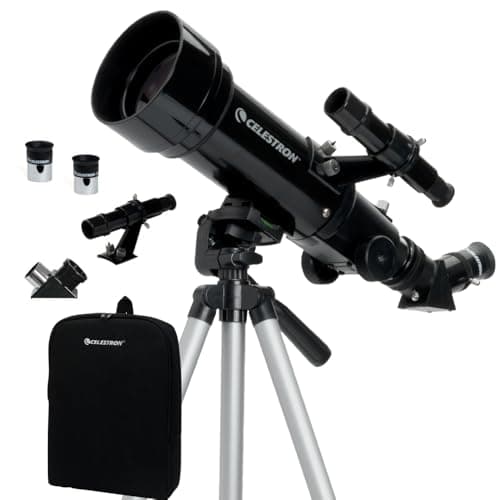 Celestron Travel Scope 70Top pick70mm at f/5.7 with a backpack. A daytime spotting scope that moonlights at night, rather than the other way round. | Packing light | 70mm (2.8 in)140x useful | |
| 2 | 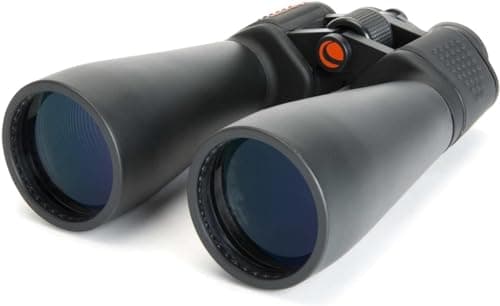 Celestron SkyMaster 15x70 Binoculars70mm of aperture in each barrel at a fixed 15x. For the money spent on a toy telescope, these show more and get used more. | The honest alternative to a cheap telescope | 70mm objective lenses (2.75 in)140x useful | |
| 3 | 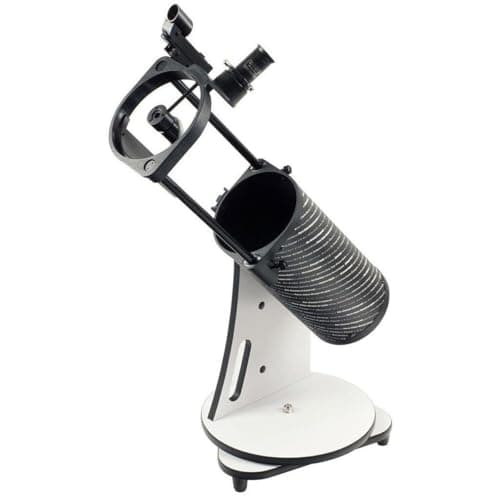 Sky-Watcher Heritage 130 Tabletop DobsonianThe same 130mm parabolic mirror as scopes costing far more, on a base with no tripod to wobble and nothing to set up. | Most aperture per dollar | 130mm260x useful | |
| 4 | 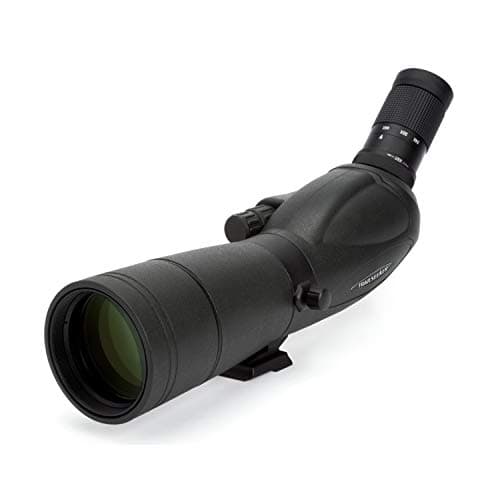 Celestron TrailSeeker 16-48x65 Spotting Scope65mm and 48 oz, with phase-coated prisms and Celestron's XLT coatings. The one you actually walk with, at a real cost in aperture. | Carrying it all day | 65mm objective (2.56 in)130x useful | |
| 5 | 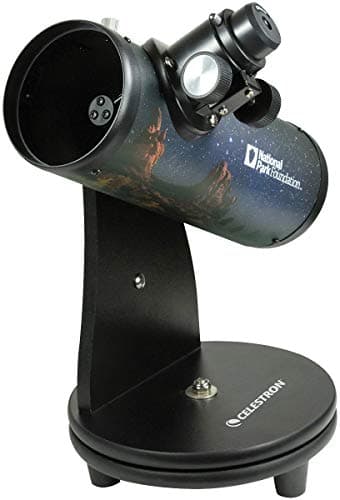 Celestron FirstScope 7676mm on a tiny Dobsonian base. The cheapest thing on this site that is a telescope rather than a toy shaped like one. | A real telescope under a hundred dollars | 76mm (2.99 in)152x useful |
Top pick · Packing light
Celestron Travel Scope 70
70mm at f/5.7 with a backpack. A daytime spotting scope that moonlights at night, rather than the other way round.
What the aperture allows
- Maximum useful magnification
- 140x
- 2 × 70mm of aperture
- Resolving limit (Dawes)
- 1.66 arcseconds
- 116 ÷ 70mm
- Cassini division (0.7″)
- Out of reach
- this aperture cannot resolve it
Celestron publishes 168x as this telescope’s highest useful magnification. Our figure is 140x, from two times the aperture in millimeters. The gap of 28x comes from the slightly more generous per-inch constant makers use. Neither number describes a typical night: the atmosphere usually settles the question well below both.
Worked example: a 25mm eyepiece in this telescope gives 400mm ÷ 25mm = 16x.
3.3 pounds for the whole kit including the tripod is the entire pitch. Nothing else here goes in hand luggage.
The optics are the same 70mm as the AstroMaster LT but at f/5.7 rather than f/10, so the tube is much shorter and the widest field is much wider. That is good for landscapes and star fields and less good for the planets, where the shorter focal length shows more false color.
Two times 70mm gives 140x of useful magnification and Celestron publishes 168x. The published Dawes limit of 1.66 arcseconds means no Cassini division and no tight doubles.
The tripod is the weak link and everybody who owns one says so. It is a photo tripod carrying a telescope, and above about 60x it shakes. If you already own a decent tripod, use that instead.
What it does well
- Genuinely packable: 3.3 lb with the tripod, in a supplied backpack
- Doubles as a daytime spotting scope, which is where a lot of its use will come from
- A wide field at f/5.7 makes finding things easy
What it costs you
- The included tripod is not steady enough above modest magnification
- A short-focus achromat shows visible color fringing on the Moon and Jupiter
- 70mm is the aperture floor, and this one is optimized for portability over performance
Skip this one if: Skip it if it never actually leaves the house. At home, the same money buys a tabletop Dobsonian with twice the aperture and a mount that does not shake.
$119.95 · 25% off
#ad · how this is funded · price as of September 13, 2026
Pick 2 · The honest alternative to a cheap telescope
Celestron SkyMaster 15x70 Binoculars
70mm of aperture in each barrel at a fixed 15x. For the money spent on a toy telescope, these show more and get used more.
What the aperture allows
- Maximum useful magnification
- 140x
- 2 × 70mm of aperture
- Resolving limit (Dawes)
- 1.66 arcseconds
- 116 ÷ 70mm
- Cassini division (0.7″)
- Out of reach
- this aperture cannot resolve it
Worked example: a 25mm eyepiece in this telescope gives 279.63mm ÷ 25mm = 11x.
Each barrel has the same 70mm aperture as the entry-level refractors on this site, and because you use both eyes the perceived brightness is higher than a single 70mm tube.
The fixed 15x is well below the 140x that 70mm could support, and that is deliberate. Binoculars are a wide-field instrument: the Pleiades, the Andromeda galaxy, the Milky Way star clouds and the whole Moon at once.
Celestron publishing three limiting magnitudes, 11.73 for ideal skies down to 9.73 for poor ones, is the single most useful number on this page. It says out loud what most listings hide: your sky matters as much as your optics.
At 15x these are heavy to hold steady. The included tripod adapter is not an accessory, it is a requirement for any sustained looking.
What it does well
- 70mm per barrel is real aperture, not a novelty
- Instantly usable: no assembly, no alignment, no learning curve
- Wide field shows large objects a telescope cannot fit in view
- Doubles as daytime and wildlife optics, so it gets used year-round
What it costs you
- Too heavy to hold steady at 15x for long; a tripod is effectively required
- Fixed magnification, so the planets stay small
- No detail on Saturn: at 15x the rings are a suggestion, not a shape
Skip this one if: Skip them if the goal is specifically to see Saturn's rings as rings. 15x will not do it; a 70mm telescope at 70x will.
#ad · how this is funded · price as of September 13, 2026
Pick 3 · Most aperture per dollar
Sky-Watcher Heritage 130 Tabletop Dobsonian
The same 130mm parabolic mirror as scopes costing far more, on a base with no tripod to wobble and nothing to set up.
What the aperture allows
- Maximum useful magnification
- 260x
- 2 × 130mm of aperture
- Resolving limit (Dawes)
- 0.89 arcseconds
- 116 ÷ 130mm
- Cassini division (0.7″)
- Out of reach
- this aperture cannot resolve it
Worked example: a 25mm eyepiece in this telescope gives 650mm ÷ 25mm = 26x.
This is the aperture-per-dollar champion of the beginner shelf and it is not close. You get the same 130mm parabolic mirror found in telescopes at twice the price, and you get it without paying for a tripod, a slow-motion assembly or a hand controller.
Two times 130mm is 260x of useful magnification. Dawes' limit at 130mm works out to 116 divided by 130, which is 0.89 arcseconds. The Cassini division in Saturn's rings spans roughly 0.7 arcseconds at its widest, so this telescope sits right at the edge of showing it on a still night and will show the rings themselves easily.
The catch is the word tabletop. It needs a surface at roughly chest height when you are seated. A garden table works, a plastic patio chair does not, and buying one without thinking about where it will stand is the single most common regret with this design.
The tube collapses, which is what makes it live in a cupboard rather than a garage. That matters more than it sounds: the telescope you can carry outside in one trip is the telescope you use.
What it does well
- The most aperture you can buy at this price, by a clear margin
- Nothing to assemble, no tripod to wobble, ready in the time it takes to carry it outside
- Collapsible tube stores in a cupboard and keeps its collimation
- The Dobsonian motion is intuitive: you push the tube where you want to look
What it costs you
- Needs a solid table or stool at the right height, which is a real constraint
- The helical focuser is coarser than a rack-and-pinion or a Crayford
- Open tube design collects dust and needs the odd mirror clean
Skip this one if: Skip it if you have nowhere to stand it. On the ground it points at treetops, and on a wobbly plastic table every view shakes.
#ad · how this is funded · price as of September 13, 2026
Pick 4 · Carrying it all day
Celestron TrailSeeker 16-48x65 Spotting Scope
65mm and 48 oz, with phase-coated prisms and Celestron's XLT coatings. The one you actually walk with, at a real cost in aperture.
What the aperture allows
- Maximum useful magnification
- 130x
- 2 × 65mm of aperture
- Resolving limit (Dawes)
- 1.78 arcseconds
- 116 ÷ 65mm
- Cassini division (0.7″)
- Out of reach
- this aperture cannot resolve it
Worked example: a 25mm eyepiece in this telescope gives 382mm ÷ 25mm = 15x.
65mm collects 34 percent less light than the 80mm Ultima, from the ratio 65 over 80 squared, and it saves 9 oz. Whether that is a good trade depends entirely on whether the instrument gets carried, which is the same argument this site makes about large Dobsonians.
Its 116-divided-by-65 resolving limit is 1.78 arcseconds, which is coarser than every telescope on this site except nothing at all. The Cassini division is far out of reach and so are tight double stars.
The 16x bottom end is the interesting number for the sky. A wide, bright, low-power view of the Pleiades or the Milky Way is the one astronomical thing a spotting scope does genuinely well, and 16x with a 4mm exit pupil is a good place to do it from.
Phase-coated prisms and XLT coatings are real optical upgrades over the budget end of this category, and they are why this one costs what it does. They improve contrast; they do not add aperture.
What it does well
- 48 oz, which is the difference between an instrument you carry and one you drive to a spot
- Phase-coated prisms and XLT coatings, a genuine step up from budget spotting scopes
- 16x low end gives a wide, bright field that suits star clusters and the Milky Way
- Weather-sealed and upright, so it works as a daytime instrument without compromise
What it costs you
- 65mm is below the 70mm floor this site sets for a worthwhile astronomical instrument
- 48x ceiling, against the 130x its aperture could support
- 1.78-arcsecond resolving limit rules out the Cassini division and tight doubles
- No tripod supplied, and a light tripod undoes the optics
Skip this one if: Skip it if you want one instrument to do both jobs properly. It is a good daytime scope that can look up, not a telescope that also works in daylight.
$299.95 · 15% off
#ad · how this is funded · price as of September 13, 2026
Pick 5 · A real telescope under a hundred dollars
Celestron FirstScope 76
76mm on a tiny Dobsonian base. The cheapest thing on this site that is a telescope rather than a toy shaped like one.
What the aperture allows
- Maximum useful magnification
- 152x
- 2 × 76mm of aperture
- Resolving limit (Dawes)
- 1.53 arcseconds
- 116 ÷ 76mm
- Cassini division (0.7″)
- Out of reach
- this aperture cannot resolve it
Celestron publishes 180x as this telescope’s highest useful magnification. Our figure is 152x, from two times the aperture in millimeters. The gap of 28x comes from the slightly more generous per-inch constant makers use. Neither number describes a typical night: the atmosphere usually settles the question well below both.
Worked example: a 25mm eyepiece in this telescope gives 300mm ÷ 25mm = 12x.
76mm is small, and this page is not going to pretend otherwise. What it is not is a toy: the mirror is real, the mount is a proper Dobsonian, and it will show the Moon's craters and Jupiter's moons.
Two times 76mm gives 152x of useful magnification. Celestron publishes 180x. Either figure demolishes the 525x printed on the box of the department-store scope sitting beside it at the same price.
The f/3.95 focal ratio is very fast, which is hard on a spherical mirror and hard on cheap eyepieces. Expect softness at the edge of the field and do not expect much above about 60x to 75x in practice.
The right way to think about it: this is a lot better than nothing, it is enormously better than a 60mm toy scope on a plastic tripod, and it is meaningfully worse than the 130mm tabletop Dobsonian that costs roughly three times as much.
What it does well
- A genuine telescope at a price where most of the shelf is not
- Nothing to assemble, nothing to align, nothing to charge
- Small enough that a child can carry and aim it without help
What it costs you
- A fast spherical mirror at f/3.95 is soft away from the field center
- The bundled eyepieces are the cheapest part of a cheap package
- Very small; it needs a table and it is easy to knock over
Skip this one if: Skip it if the budget can stretch to a 130mm tabletop. The aperture difference is 2.9 times the light, and it is obvious at the eyepiece.
#ad · how this is funded · price as of September 13, 2026
What actually decides it: where are you going?
Three genuinely different trips, three different answers.
- Hand luggage on a flight. A 3-pound refractor kit with its own backpack is the only thing here that qualifies without argument. Accept that its supplied tripod limits it well below what its optics could do, and use it at low power. The Travel Scope 70 review is honest about the tripod.
- A hike, or a pack you carry all day. Large binoculars. They are the best value per gram in astronomy, they need no setup, and they double as daytime optics. The cost is that the planets stay dots. The SkyMaster 15x70 review covers what they show.
- A car, a cottage, a dark-sky trip. A collapsible 130mm tabletop. It is the only option on this page that does not compromise the view, and the only constraint is that it needs a table when you arrive.
The tripod problem nobody mentions
Every light telescope ships with a light tripod, and the tripod is almost always the weakest part of the kit. A tripod stiff enough for 140x would weigh more than the telescope it carries, which would defeat the purpose, so makers ship one that does not.
The practical consequence: on most travel telescopes the real magnification ceiling is set by vibration rather than by optics, and it sits well below what the aperture supports. Touch the focuser and the image swings for several seconds. The mounts guide explains why, and the cheapest fix is to hang a bag from the tripod's center column.
An honest downside on every pick
- The 70mm travel refractor: the tripod limits it above about 60x, and a fast achromat shows false color on the Moon and Venus.
- Large binoculars: at 15x you cannot hold them steady for more than about half a minute, so plan on a tripod, and the planets never resolve.
- The 130mm collapsible: it is not hand luggage, it needs a stable table at the far end, and the open tube collects dust.
- The 65mm spotting scope: its zoom stops well below what 65mm could support, and an angled eyepiece takes some getting used to on the sky.
- The 76mm tabletop: a spherical mirror at a very fast focal ratio means it is soft above about 40x, whatever the box says.
And the general one: none of these is the telescope you keep. Portability is a constraint you buy around, not a feature that improves a view, and if the constraint ever goes away then the beginner ranking is the list to buy from instead.
Questions people actually ask
What is the best portable telescope?
It depends on how portable. For hand luggage, a 3-pound 70mm refractor kit is the only real option, and its tripod limits it. For a pack you carry all day, 70mm binoculars see more and weigh less than any telescope that fits. For a car, a collapsible 130mm tabletop Dobsonian gives up nothing optically.
Do portable telescopes work well?
Within their aperture, yes. A 70mm instrument shows lunar craters, Jupiter's moons, Saturn's rings as a separated ring and bright clusters. What it cannot do is faint deep sky or fine planetary detail, because it collects under a third of the light of a 130mm telescope.
Are binoculars better than a small travel telescope?
For most travel, yes. Two 70mm objectives collect comparable light to a small telescope, need no setup, and are far easier to use. The exception is the planets: binoculars at 15x will never separate Saturn's rings, and a 70mm telescope will.
Can you take a telescope on a plane?
A 3-pound 70mm travel kit with its own backpack is designed for exactly that. Anything larger is checked baggage, and optics in checked baggage is a risk worth thinking about. Binoculars travel best of all.
Why is my travel telescope shaky?
Because a tripod stiff enough for high magnification would weigh more than the telescope, which would defeat the point. On most travel telescopes vibration sets the real magnification ceiling, not the optics. Hanging a bag from the center column helps more than anything else free.
Read next
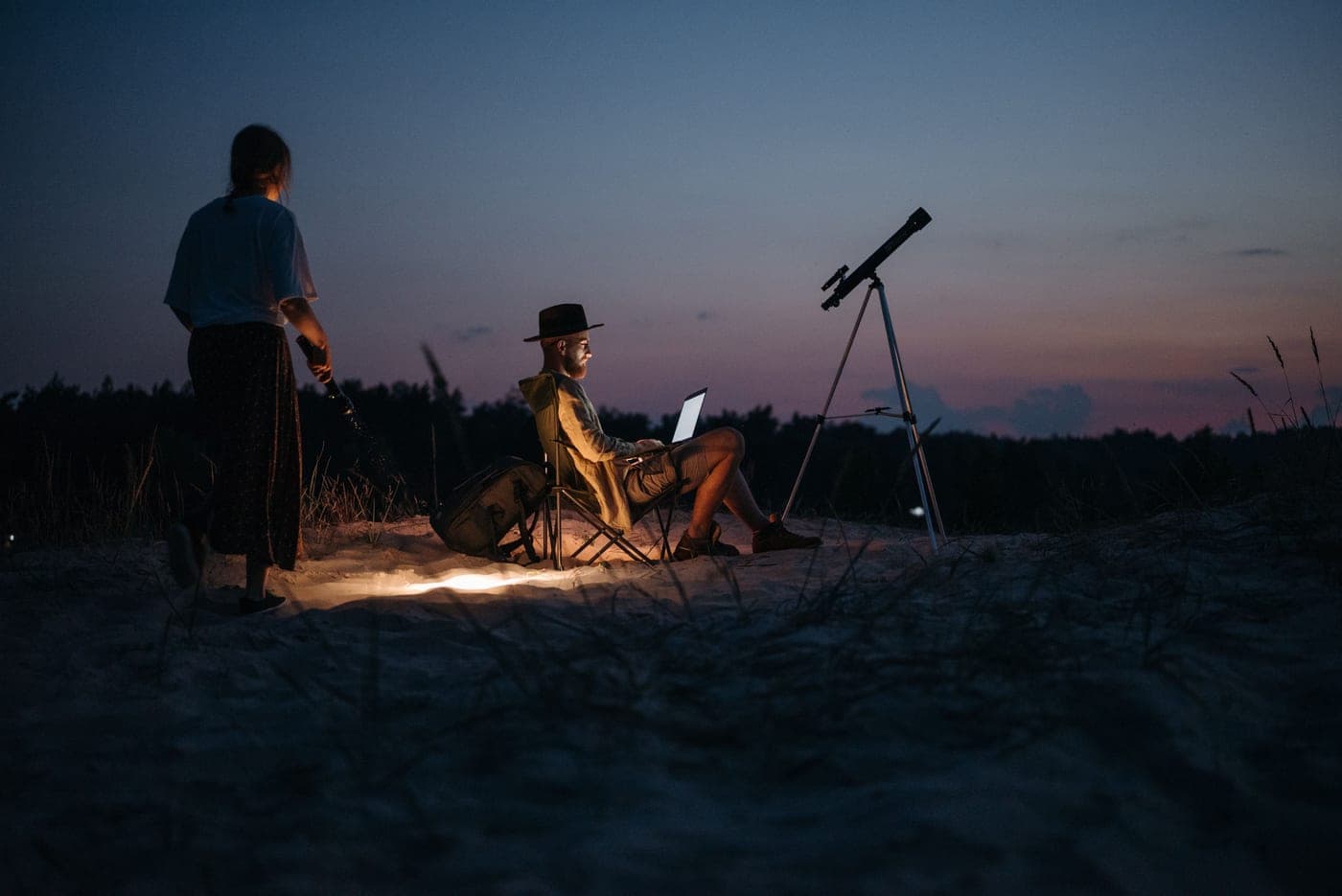
Celestron Travel Scope 70
3.3 lb complete, backpack included. A daytime spotting scope that moonlights at night, with a tripod that is the weak link.
Top pick: Celestron Travel Scope 70
$119.95 · 25% off
#ad · how this is funded · price as of September 13, 2026
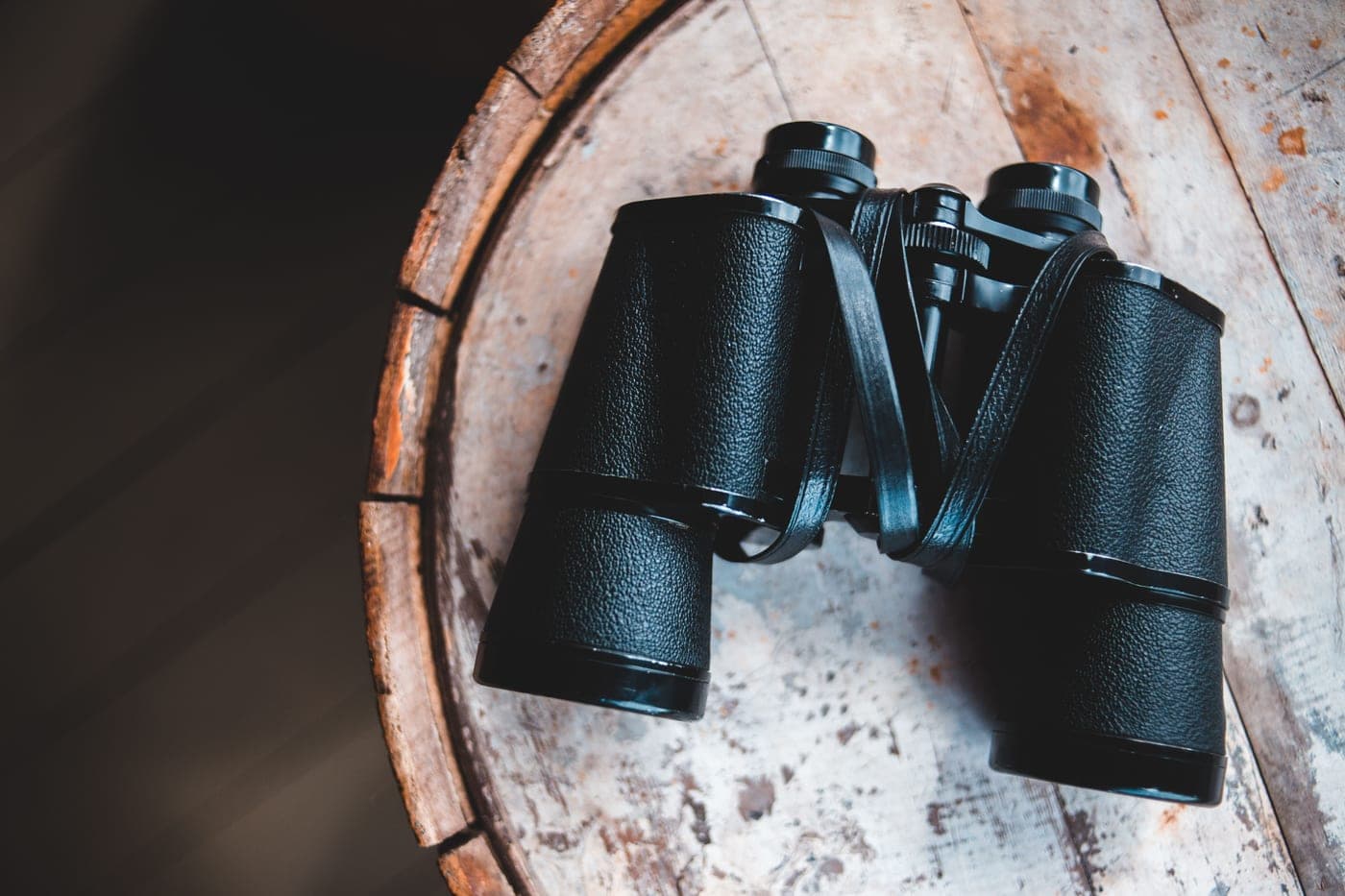
Best tabletop
Tabletop Telescopes, and the One Thing to Check First
The best value design in beginner astronomy, and the surface requirement that decides whether it works for you.
Top pick: Sky-Watcher Heritage 130 Tabletop Dobsonian
#ad · how this is funded · price as of September 13, 2026
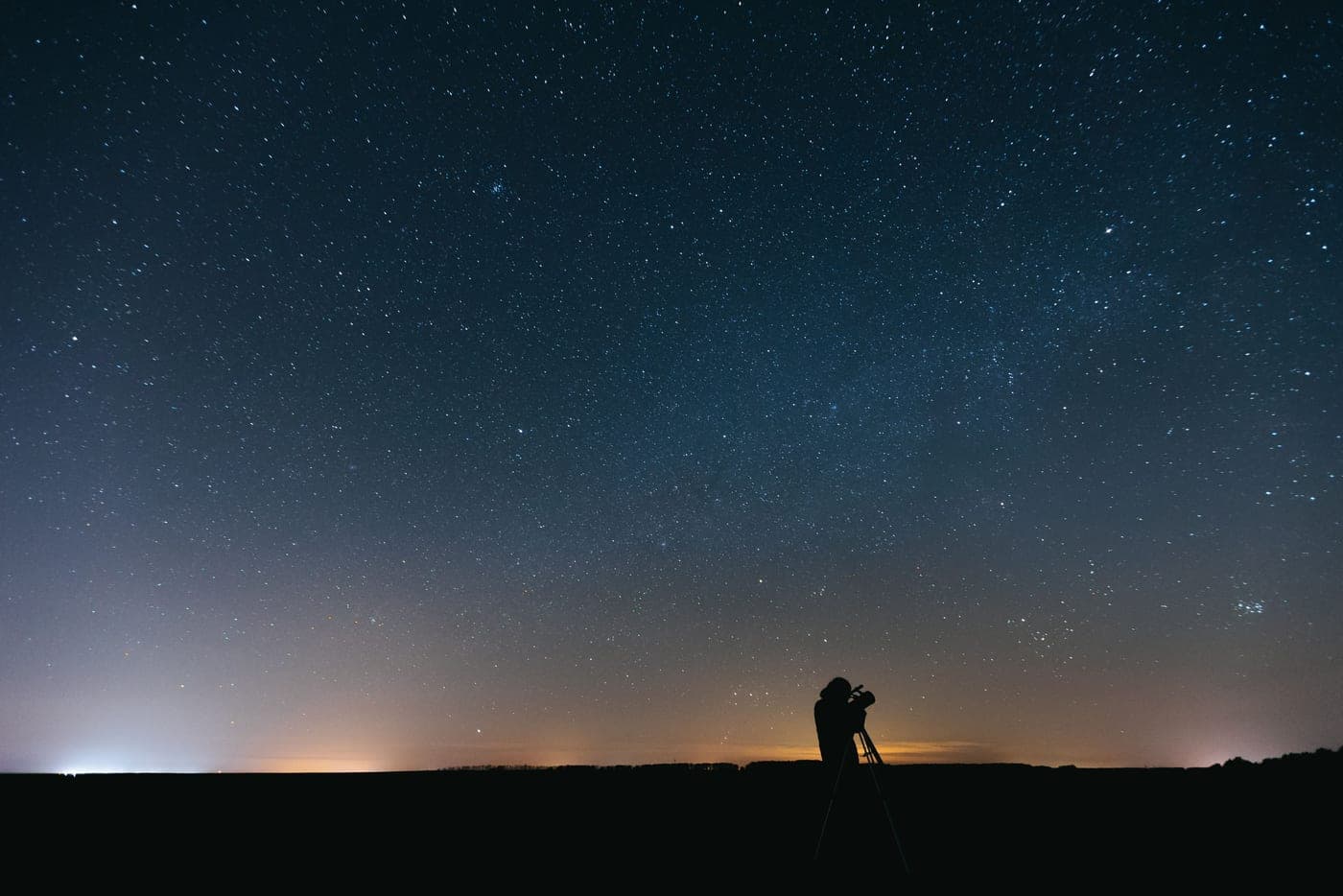
Binoculars vs a Telescope: Which Should You Buy First?
Where astronomy binoculars beat a first telescope, where they do not, and the one view only a telescope delivers.
Top pick: Celestron SkyMaster 15x70 Binoculars
#ad · how this is funded · price as of September 13, 2026
Found something wrong here? Tell us and we will correct it and date the correction, per our editorial policy.