What You Can Actually See
What the Orion Nebula Looks Like Through a Telescope
The Orion Nebula is the one deep-sky object that does not need a dark sky, a big telescope or a filter to be genuinely impressive, which makes it the right place for a beginner to start.
By Scooter M. · Published · How we pick
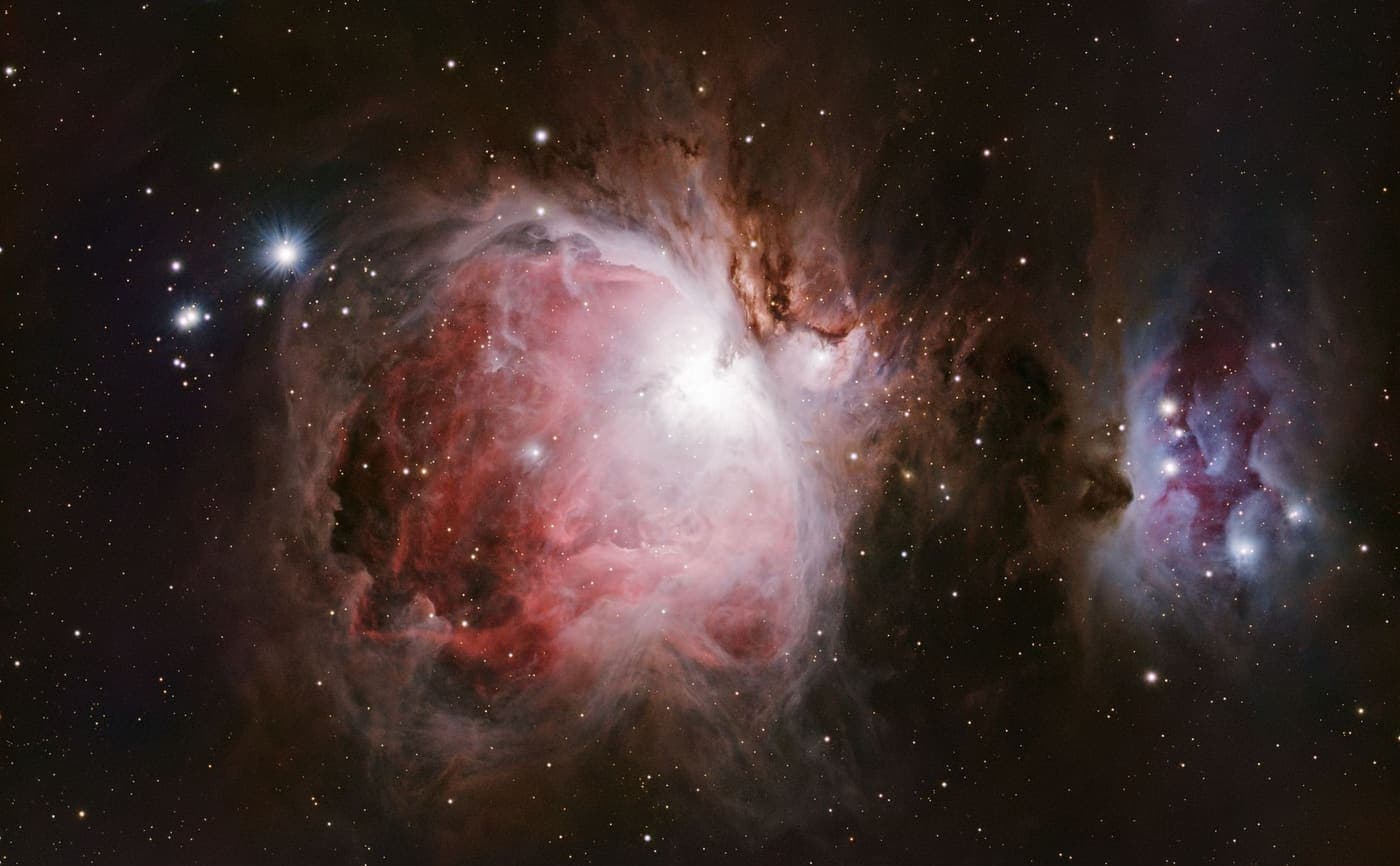
The Sky-Watcher Heritage 150P is the pick for the Orion Nebula: 150mm at f/5 shows the nebula's wings, the dark intrusion at its heart and the four Trapezium stars inside it, from an ordinary suburban yard. M42 is magnitude 4.0 and roughly one degree across, bright enough to be seen without optical aid even from light-polluted areas, which makes it the only deep-sky object on this site that does not require you to drive anywhere.
It is also the one deep-sky object that looks like something rather than like a smudge. Through a 150mm it is a structured gray cloud with wings, embedded stars and visible asymmetry, 1,267 light-years away and actively forming stars. That is the deep-sky experience worth having first.
Why it survives a bad sky when galaxies do not
Surface brightness. M42 is an emission nebula packing magnitude 4.0 into about a degree, which is a far higher brightness per unit area than a galaxy of similar total magnitude spread over several degrees. Light pollution destroys contrast against the sky background, and a high-surface-brightness target has contrast to spare.
This is why the standard advice to drive somewhere dark is softer here than anywhere else on the site. A dark sky still helps, and the faint outer nebulosity is a dark-sky target, but the core structure does not wait for one. Our city-sky page ranks telescopes for exactly this situation.
What you will actually see, by aperture
| Instrument | What appears |
|---|---|
| Naked eye | A fuzzy 'star' in Orion's sword; sharp eyes notice the fuzziness |
| 7x50 binoculars | Obvious nebulosity around a knot of stars |
| 15x70 binoculars | A clear gray cloud with shape, the Trapezium not resolved |
| 70mm telescope | A gray wedge of nebulosity, three or four stars within it |
| 130mm telescope | Wings either side of the core, the Trapezium split into four |
| 150mm telescope | Structure, the dark intrusion, the wings extended |
| 200mm telescope | Extended structure, brightness gradients, faint outer nebulosity |
The Trapezium, which is a resolution target inside a nebula
At the heart of M42 sits the Trapezium Cluster, a very young open cluster whose four primary stars lie within about 1.5 light-years of each other. Splitting those four is a sharpness test rather than a light test, which makes it an unusual thing to find inside a deep-sky object.
On nights of good seeing, two of the four resolve into binary pairs for six stars in total. That is a genuine high-magnification observation in the middle of a target that otherwise wants low power, and it is the reason to carry a short eyepiece out for M42 even though the nebula itself does not need one.
Where a filter does and does not help
M42 is an emission nebula, which means its light arrives in narrow bands rather than spread across the spectrum. A UHC or light-pollution-reduction filter passes those bands and blocks much of the rest, so the nebula loses little while the sky background loses a lot. The result is more contrast rather than more light.
It is worth being precise about what that buys. The filter makes a suburban view of M42 noticeably better and does nothing for galaxies, star clusters or planets, because those emit across the spectrum. The filters guide covers which types earn their place and in what order.
How these picks were judged
- Performance from a bad sky first. The point of this page is that M42 works from a suburb, so the ranking favors instruments that deliver there rather than ones that need a dark site.
- Then aperture for structure. The wings, the dark intrusion and the brightness gradients are light-gathering targets, and they scale cleanly with mirror size.
- Then magnification headroom for the Trapezium. A pick has to support 150x on a steady mount to split the central four, which rules out the smallest instruments.
- A fast focal ratio was preferred. One degree of nebula wants a wide true field, and f/5 reaches one more easily than f/10.
- One filter is ranked as a pick, because on an emission nebula specifically it contributes more than a step up in aperture, and saying so is more honest than listing it as an afterthought.
Which of these is for you
| Pick | Best for | The catch |
|---|---|---|
| Sky-Watcher Heritage 150P | Best overall for M42: enough aperture for the structure, fast enough for the full extent, portable enough to actually use | A tabletop Dobsonian needs a table, and 150mm of mirror wants time to cool |
| Sky-Watcher Heritage 130P | Best value: shows the wings and splits the Trapezium into four for the least money on this list | The dark intrusion and the outer nebulosity stay out of reach from a suburb |
| Sky-Watcher Classic 200P | Best for the faint outer nebulosity and brightness gradients, which are purely a light-gathering problem | The least portable pick here, and its narrower true field frames the nebula more tightly |
| Celestron SkyMaster 15x70 | Best for seeing M42 in the context of Orion's sword, which no telescope field can show | Will not resolve the Trapezium at 15x, so it cannot be the only instrument you use on it |
| Celestron UHC/LPR Filter | Best upgrade for a suburban observer who already owns a telescope: more contrast for less than an eyepiece costs | Helps on emission nebulae only, so it does nothing for galaxies, clusters or planets |
How this is funded: the buy buttons below are Amazon Associates links, and a qualifying purchase earns us a commission at no extra cost to you. It cannot move the ranking, because the order here is set by aperture per dollar, and no commission rate changes how much light a mirror collects. Full disclosure.
| # | Telescope | Best for | Aperture | Price |
|---|---|---|---|---|
| 1 | 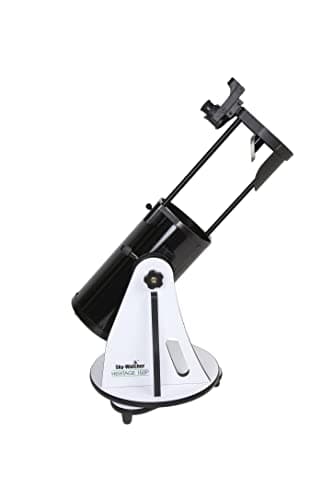 Sky-Watcher Heritage 150 Tabletop DobsonianTop pick150mm at f/5 in a collapsible tube on a tabletop base. Deep-sky aperture that still stores next to the vacuum cleaner. | Maximum aperture in a cupboard | 150mm300x useful | |
| 2 | 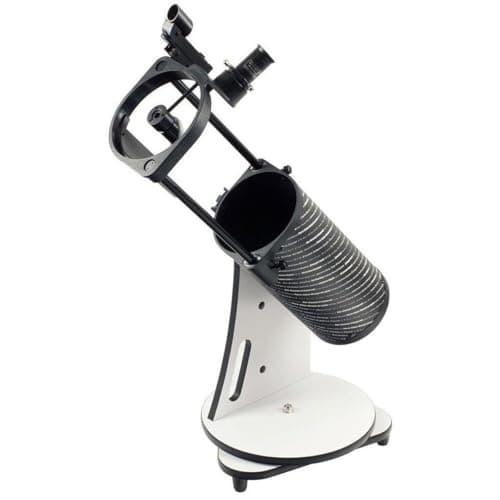 Sky-Watcher Heritage 130 Tabletop DobsonianThe same 130mm parabolic mirror as scopes costing far more, on a base with no tripod to wobble and nothing to set up. | Most aperture per dollar | 130mm260x useful | |
| 3 | 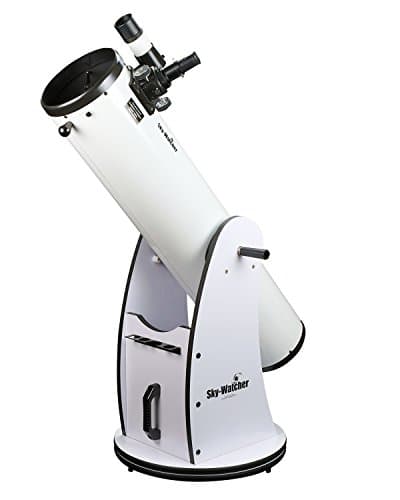 Sky-Watcher Classic 200P Dobsonian (8-inch)Eight inches of aperture on the simplest mount ever designed. This is the telescope experienced observers tell beginners to buy. | The one you will not outgrow | 200mm (8 in)400x useful | Unavailable |
| 4 | 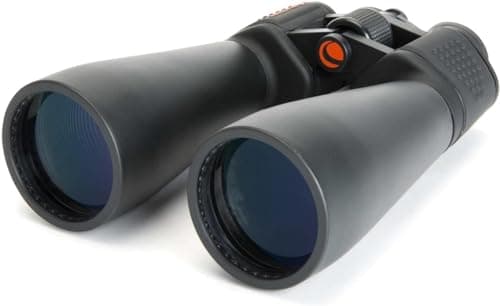 Celestron SkyMaster 15x70 Binoculars70mm of aperture in each barrel at a fixed 15x. For the money spent on a toy telescope, these show more and get used more. | The honest alternative to a cheap telescope | 70mm objective lenses (2.75 in)140x useful | |
| 5 | 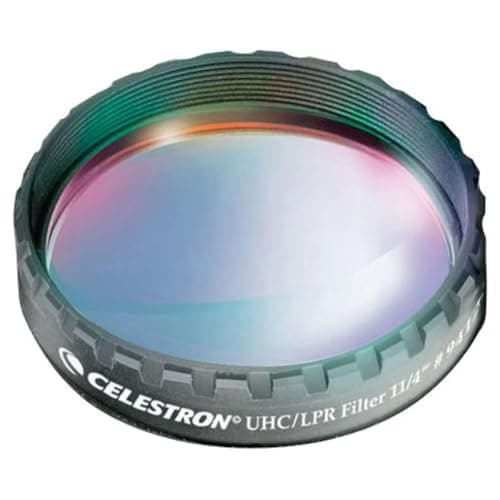 Celestron UHC/LPR Light Pollution Reduction Filter (1.25")A filter that selectively cuts the wavelengths streetlights emit. It helps on emission nebulae and does nothing for stars, galaxies or planets. | A suburban sky, on nebulae only | 1.25" thread64x useful |
Top pick · Maximum aperture in a cupboard
Sky-Watcher Heritage 150 Tabletop Dobsonian
150mm at f/5 in a collapsible tube on a tabletop base. Deep-sky aperture that still stores next to the vacuum cleaner.
What the aperture allows
- Maximum useful magnification
- 300x
- 2 × 150mm of aperture
- Resolving limit (Dawes)
- 0.77 arcseconds
- 116 ÷ 150mm
- Cassini division (0.7″)
- Out of reach
- this aperture cannot resolve it
Worked example: a 25mm eyepiece in this telescope gives 750mm ÷ 25mm = 30x.
This is the Heritage 130's argument with 33 percent more mirror. Light gathering scales as the square of the aperture ratio, so 150 over 130, squared, is 1.33 times the light of its smaller sibling.
Two times 150mm is 300x of useful magnification and Dawes' limit is 0.77 arcseconds, which puts the Cassini division inside its reach on a good night.
At f/5 the 750mm focal length keeps the tube short enough to collapse, which is the entire reason this design exists. A conventional 150mm Newtonian tube is over a meter long and lives in a garage.
The same tabletop caveat applies as with the 130: it needs a stable surface at seated chest height. Check you have one before you buy, not after.
What it does well
- Deep-sky aperture in a package that genuinely stores in a cupboard
- Collapsible tube holds collimation between setups
- No tripod means no tripod wobble, the most common cause of a shaky first view
What it costs you
- The tabletop requirement is a real constraint, not a footnote
- The helical focuser is the weakest component
- An open tube collects dust and needs the occasional clean
Skip this one if: Skip it if you have the floor space for the Classic 150P. The floor-standing version has a better focuser and needs no furniture.
$355.00 · 13% off
#ad · how this is funded · price as of October 19, 2026
Pick 2 · Most aperture per dollar
Sky-Watcher Heritage 130 Tabletop Dobsonian
The same 130mm parabolic mirror as scopes costing far more, on a base with no tripod to wobble and nothing to set up.
What the aperture allows
- Maximum useful magnification
- 260x
- 2 × 130mm of aperture
- Resolving limit (Dawes)
- 0.89 arcseconds
- 116 ÷ 130mm
- Cassini division (0.7″)
- Out of reach
- this aperture cannot resolve it
Worked example: a 25mm eyepiece in this telescope gives 650mm ÷ 25mm = 26x.
This is the aperture-per-dollar champion of the beginner shelf and it is not close. You get the same 130mm parabolic mirror found in telescopes at twice the price, and you get it without paying for a tripod, a slow-motion assembly or a hand controller.
Two times 130mm is 260x of useful magnification. Dawes' limit at 130mm works out to 116 divided by 130, which is 0.89 arcseconds. The Cassini division in Saturn's rings spans roughly 0.7 arcseconds at its widest, so this telescope sits right at the edge of showing it on a still night and will show the rings themselves easily.
The catch is the word tabletop. It needs a surface at roughly chest height when you are seated. A garden table works, a plastic patio chair does not, and buying one without thinking about where it will stand is the single most common regret with this design.
The tube collapses, which is what makes it live in a cupboard rather than a garage. That matters more than it sounds: the telescope you can carry outside in one trip is the telescope you use.
What it does well
- The most aperture you can buy at this price, by a clear margin
- Nothing to assemble, no tripod to wobble, ready in the time it takes to carry it outside
- Collapsible tube stores in a cupboard and keeps its collimation
- The Dobsonian motion is intuitive: you push the tube where you want to look
What it costs you
- Needs a solid table or stool at the right height, which is a real constraint
- The helical focuser is coarser than a rack-and-pinion or a Crayford
- Open tube design collects dust and needs the odd mirror clean
Skip this one if: Skip it if you have nowhere to stand it. On the ground it points at treetops, and on a wobbly plastic table every view shakes.
$305.00 · 12% off
#ad · how this is funded · price as of October 19, 2026
Pick 3 · The one you will not outgrow
Sky-Watcher Classic 200P Dobsonian (8-inch)
Eight inches of aperture on the simplest mount ever designed. This is the telescope experienced observers tell beginners to buy.
What the aperture allows
- Maximum useful magnification
- 400x
- 2 × 200mm of aperture
- Resolving limit (Dawes)
- 0.58 arcseconds
- 116 ÷ 200mm
- Cassini division (0.7″)
- Within reach
- on a steady night, at high magnification
200mm is a different category of instrument, not an incremental upgrade. Against the 70mm refractor at the other end of this list the light-gathering ratio is 200 divided by 70, squared: 8.2 times more light reaching your eye.
Two times 200mm gives 400x of useful magnification, which is more than the atmosphere delivers on all but a handful of nights a year. In practice this telescope is limited by the sky rather than by its optics, which is exactly the position you want to be in.
Dawes' limit at 200mm is 116 divided by 200, which is 0.58 arcseconds. The Cassini division, at roughly 0.7 arcseconds, is comfortably inside that. So is the Great Red Spot, and so are hundreds of Messier objects a 70mm scope simply cannot reach.
The honest cost is bulk. The tube is long and the base is wide, and this is a telescope you carry outside in two trips. Everyone who owns one tells the same story: they used it far more once they stopped storing it somewhere awkward.
What it does well
- The aperture-per-dollar figure that no other design at this price approaches
- A mount that cannot be wobbly, because there is almost nothing to it
- The 2-inch focuser takes wide-field eyepieces the cheaper models cannot
- Genuinely a lifetime telescope; nobody outgrows eight inches of aperture in a hurry
What it costs you
- Big and heavy: two trips outside, and it needs real storage space
- No tracking, so at 200x objects drift out of view in well under a minute
- Needs collimation checks, and the mirror takes 30 to 45 minutes to reach outside temperature
Skip this one if: Skip it if you live upstairs with no lift, or if the observing spot is a fire escape. The best telescope in this list is the wrong one if carrying it is a chore.
| Optical design | Newtonian reflector, borosilicate parabolic primary with 94 percent reflective coatingsSource: Classic 200P Dobsonian — manufacturer specifications (retrieved September 1, 2026) |
|---|---|
| Aperture | 200mm (8 in)Source: Classic 200P Dobsonian — manufacturer specifications (retrieved September 1, 2026) |
| Mount | Dobsonian rocker box with Teflon bearings and a patented tension control handleSource: Classic 200P Dobsonian — manufacturer specifications (retrieved September 1, 2026) |
| Light gathering vs the eye | 816xSky-Watcher's own published figure.Source: Classic 200P Dobsonian — manufacturer specifications (retrieved September 1, 2026) |
| Focuser | 2-inch Crayford with a 1.25-inch adapterSource: Classic 200P Dobsonian — manufacturer specifications (retrieved September 1, 2026) |
| Versus the 6-inch model | 78 percent brighter than the 150mm versionSky-Watcher's own published comparison.Source: Classic 200P Dobsonian — manufacturer specifications (retrieved September 1, 2026) |
Currently unavailable at Amazon
Checked October 19, 2026. We are not linking to it while there is nothing to buy.
Pick 4 · The honest alternative to a cheap telescope
Celestron SkyMaster 15x70 Binoculars
70mm of aperture in each barrel at a fixed 15x. For the money spent on a toy telescope, these show more and get used more.
What the aperture allows
- Maximum useful magnification
- 140x
- 2 × 70mm of aperture
- Resolving limit (Dawes)
- 1.66 arcseconds
- 116 ÷ 70mm
- Cassini division (0.7″)
- Out of reach
- this aperture cannot resolve it
Worked example: a 25mm eyepiece in this telescope gives 279.63mm ÷ 25mm = 11x.
Each barrel has the same 70mm aperture as the entry-level refractors on this site, and because you use both eyes the perceived brightness is higher than a single 70mm tube.
The fixed 15x is well below the 140x that 70mm could support, and that is deliberate. Binoculars are a wide-field instrument: the Pleiades, the Andromeda galaxy, the Milky Way star clouds and the whole Moon at once.
Celestron publishing three limiting magnitudes, 11.73 for ideal skies down to 9.73 for poor ones, is the single most useful number on this page. It says out loud what most listings hide: your sky matters as much as your optics.
At 15x these are heavy to hold steady. The included tripod adapter is not an accessory, it is a requirement for any sustained looking.
What it does well
- 70mm per barrel is real aperture, not a novelty
- Instantly usable: no assembly, no alignment, no learning curve
- Wide field shows large objects a telescope cannot fit in view
- Doubles as daytime and wildlife optics, so it gets used year-round
What it costs you
- Too heavy to hold steady at 15x for long; a tripod is effectively required
- Fixed magnification, so the planets stay small
- No detail on Saturn: at 15x the rings are a suggestion, not a shape
Skip this one if: Skip them if the goal is specifically to see Saturn's rings as rings. 15x will not do it; a 70mm telescope at 70x will.
$129.95 · 32% off
#ad · how this is funded · price as of October 19, 2026
Pick 5 · A suburban sky, on nebulae only
Celestron UHC/LPR Light Pollution Reduction Filter (1.25")
A filter that selectively cuts the wavelengths streetlights emit. It helps on emission nebulae and does nothing for stars, galaxies or planets.
What the aperture allows
- Maximum useful magnification
- 64x
- 2 × 31.75mm of aperture
- Resolving limit (Dawes)
- 3.65 arcseconds
- 116 ÷ 31.75mm
- Cassini division (0.7″)
- Out of reach
- this aperture cannot resolve it
A light-pollution filter is not a contrast knob for the whole sky. It works by blocking the narrow bands that streetlights emit while passing the narrow bands that glowing gas emits, so it only helps on targets that are themselves glowing gas.
That means emission nebulae, and essentially nothing else. Stars, galaxies and planets shine across the whole spectrum, so a filter that removes part of the spectrum removes part of them too and the view gets dimmer rather than better.
It also cannot give you back a dark sky. A filter improves contrast on a specific class of target under a specific kind of light pollution; it does not turn a city garden into a rural one, and any product that claims otherwise is overselling.
Worth buying second or third, after a decent eyepiece, and only if emission nebulae are something you actually want to chase from where you live.
What it does well
- Genuinely raises contrast on emission nebulae under artificial skylight
- Threads into any standard 1.25-inch eyepiece, so it moves between telescopes
- Celestron states plainly what it targets rather than promising a darker sky
What it costs you
- Does nothing useful on stars, galaxies or planets, which is most of what a beginner looks at
- Dims the view, so it wants aperture behind it — below about 130mm the trade is rarely worth it
- Celestron publishes no transmission curve on the listing, so you cannot check the passband before buying
- Costs several times what a moon filter costs and helps on far fewer targets
Skip this one if: Skip it if you are still on your first eyepiece, or if your sky is genuinely dark. A dark site beats any filter, and a better eyepiece changes more nights than this will.
| Optical design | Threaded filter for 1.25-inch eyepiecesSource: Celestron UHC/LPR Light Pollution Reduction Filter — the brand's own listing on Amazon.com (retrieved September 13, 2026) |
|---|---|
| Aperture | 1.25" threadThe fitting size. It threads into the eyepiece, not into the telescope.Source: Celestron UHC/LPR Light Pollution Reduction Filter — the brand's own listing on Amazon.com (retrieved September 13, 2026) |
| What Celestron says it does | Designed to selectively reduce the transmission of certain wavelengths of light, specifically those produced by artificial lightQuoted from the brand's own published description. Celestron does not publish a transmission curve or a named passband on that listing, so this page does not state one.Source: Celestron UHC/LPR Light Pollution Reduction Filter — the brand's own listing on Amazon.com (retrieved September 13, 2026) |
$94.95 · 25% off
#ad · how this is funded · price as of October 19, 2026
Finding it, and when
- Observe between November and March, when Orion is high in the evening sky. It is a winter object, and in summer it is simply not up at a usable hour.
- Find Orion's belt, then drop to the sword below it. M42 is the middle 'star' of the sword and it is visibly fuzzy to the naked eye.
- Start at the lowest magnification you have. At one degree across, the nebula wants the widest field you can give it.
- Look for the asymmetry. M42 is not a symmetrical blob; the wings extend further on one side, and noticing that is the moment it stops being a smudge.
- Then swap to a short eyepiece for the Trapezium and spend a few minutes on just those four stars, waiting for the steady moments that split them.
- Use averted vision for the outer parts. Looking slightly away from the faint extensions puts their light on the more sensitive part of your retina.
Use it to calibrate your sky and your eyes
Because M42 is bright, well placed and always the same, it makes an unusually good reference. How much of it you can see on a given night tells you something reliable about the conditions, which is information no specification on a box can give you.
- If the wings are invisible but the core is obvious, your sky is the limiting factor rather than your telescope. That is the night to observe the Moon or a planet instead.
- If the Trapezium will not split into four, the air is turbulent. Lower the magnification and switch to extended objects, where seeing matters less.
- If both work, you have a genuinely good night, and it is worth going after something fainter while it lasts.
- If neither works and the sky looks clear, check your dark adaptation before blaming anything else. Twenty minutes without looking at a screen changes M42 dramatically.
That habit is worth more than it sounds. Most reports of a telescope underperforming are reports of a bad night, and having one object you know well is the cheapest way to tell the two apart.
Once M42 is done, Andromeda is the natural next target and a completely different kind of object, and the deep-sky page ranks telescopes for the fainter end of the list.
Questions people actually ask
What does the Orion Nebula look like through a telescope?
A structured gray cloud with wings either side of a bright core, with four stars embedded in the middle. At 130mm the wings and the Trapezium are clear; at 150mm to 200mm the dark intrusion, the brightness gradients and the fainter outer nebulosity appear. It is gray rather than colored, because the eye cannot do long exposures.
Can you see the Orion Nebula with a telescope from a city?
Yes, and it is the main deep-sky object for which that is true. M42 is magnitude 4.0 packed into about a degree, so its surface brightness is high enough to hold contrast against a bright sky. It can be seen without optical aid even from light-polluted areas, and a telescope shows real structure from a suburb.
What size telescope do you need to see the Orion Nebula?
A 70mm shows a gray wedge of nebulosity with a few stars in it. A 130mm shows the wings and splits the Trapezium into four. The structure, the dark intrusion and the faint outer nebulosity scale with aperture from there, with 150mm the practical sweet spot.
What is the Trapezium and what do you need to see it?
A very young open cluster at the nebula's core whose four primary stars sit within about 1.5 light-years of each other. Splitting the four needs around 130mm and 150x. On nights of good seeing two of them resolve into binary pairs, making six stars in total.
Does a nebula filter help on the Orion Nebula?
Yes, more than on most targets. M42 is an emission nebula whose light arrives in narrow bands, so a UHC or light-pollution filter blocks sky glow while passing most of the nebula. It raises contrast rather than brightness, and it does nothing for galaxies, clusters or planets.
When is the best time to see the Orion Nebula?
November through March, when Orion rises high in the evening. Look for the three stars of the belt, then the sword hanging below it; M42 is the fuzzy middle 'star' of the sword, about 1,267 light-years away.
Read next
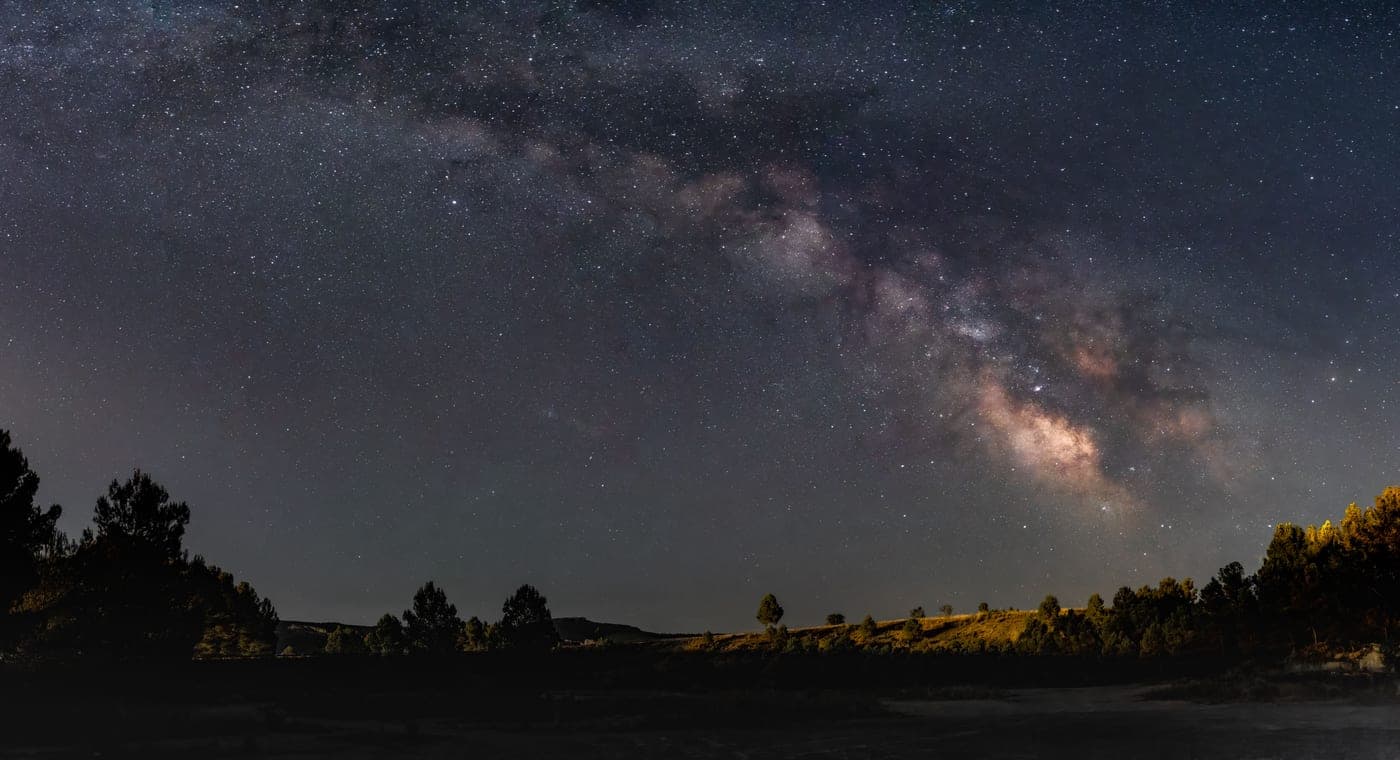
Best for deep sky
Telescopes for Deep Space, and What Deep Sky Really Looks Like
What galaxies and nebulae genuinely look like at each aperture, and why sky darkness matters as much as the telescope.
Top pick: Celestron StarSense Explorer 8-inch Dobsonian
#ad · how this is funded · price as of October 19, 2026
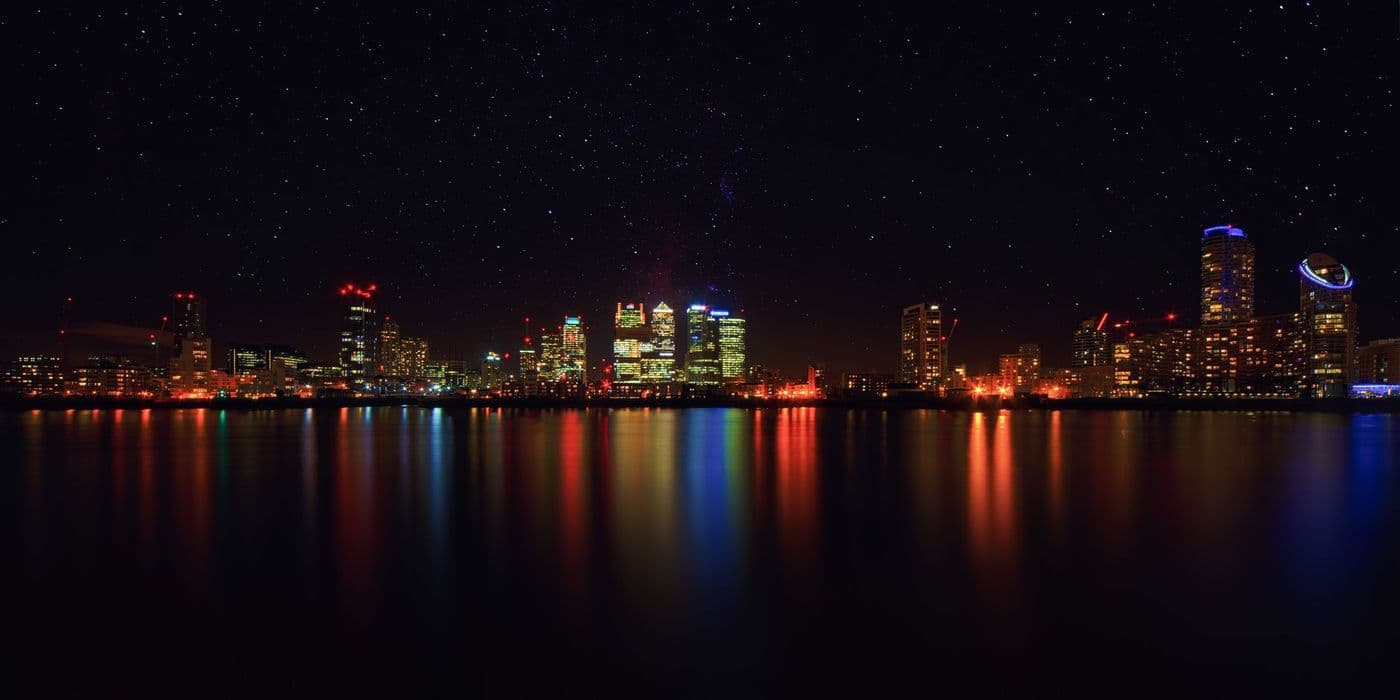
Best for city skies
The Best Telescopes for a City Sky
What light pollution actually removes, and the telescopes that suit a city garden, a balcony or a high-rise window.
Top pick: Celestron NexStar 6SE
#ad · how this is funded · price as of October 19, 2026
What the Andromeda Galaxy Looks Like Through a Telescope
M31 is 3.17 degrees wide and magnitude 3.44. Why a wide field matters more than aperture, and what the dust lane really needs.
Top pick: Celestron SkyMaster 15x70 Binoculars
$129.95 · 32% off
#ad · how this is funded · price as of October 19, 2026
Found something wrong here? Tell us and we will correct it and date the correction, per our editorial policy.