Telescope Gifts
Telescope Gifts Under $50
Under fifty dollars there is no telescope worth giving. There are several accessories that noticeably improve one somebody already owns, and that is the better gift.
By Scooter M. · Published · How we pick
Under fifty dollars there is almost no telescope worth buying. Nearly everything at that price is a small objective on a shaking tripod with a large number on the box, and it is the fastest route to somebody concluding that astronomy is disappointing. There is one exception this site will name: the National Geographic Sky View 70 carries 70mm of real aperture and advertises magnifications that check out against its own published focal length, which is not what the rest of this shelf does. It moves around the fifty-dollar line, so check the live price before counting on it.
What this budget does buy is a genuine improvement to a telescope somebody already owns, and it buys the specific improvements almost nobody makes for themselves in the first year.
The moon filter, which is the easy answer
The full Moon through a 130mm telescope is genuinely uncomfortable to look at, and the discomfort costs detail: a dazzled eye resolves less, and dark adaptation takes twenty minutes to rebuild.
A neutral-density moon filter threads into any standard eyepiece and cuts the light without shifting the color. It costs very little, it changes a session immediately, and it is the accessory that most owners buy second rather than first.
A red flashlight, which is the thoughtful one
Dark adaptation takes twenty to thirty minutes to build and one glance at a phone screen to destroy. Red light at low intensity leaves the eye's rod cells largely unbleached, so you keep the sensitivity you spent half an hour building.
Variable brightness matters as much as the color, because most cheap red lights are far too bright and defeat the purpose almost as thoroughly as a white one would.
An eyepiece kit, if the budget stretches
The two eyepieces bundled with a telescope are usually the least considered items in the box. A kit of Plossl eyepieces across the useful range changes what the telescope can do far more than most owners expect.
magnification = telescope focal length / eyepiece focal length
On a 650mm telescope: 32mm gives 20x, 13mm gives 50x, 6mm gives 108x.
One purchase covers the whole range from wide-field finding to high-power planetary. The eyepiece guide works out which focal lengths suit a specific telescope.
How this is funded: the buy buttons below are Amazon Associates links, and a qualifying purchase earns us a commission at no extra cost to you. It cannot move the ranking, because the order here is set by aperture per dollar, and no commission rate changes how much light a mirror collects. Full disclosure.
| # | Telescope | Best for | Aperture | Price |
|---|---|---|---|---|
| 1 | 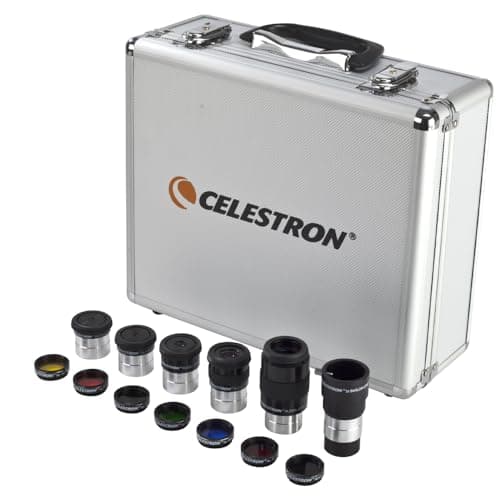 Celestron Eyepiece, Barlow and Filter Kit (1.25")Top pickFive Plossl eyepieces from 32mm down to 6mm plus a 2x Barlow. This is the accessory that actually changes what you see. | The upgrade that changes the most | 1.25" barrel64x useful | |
| 2 | 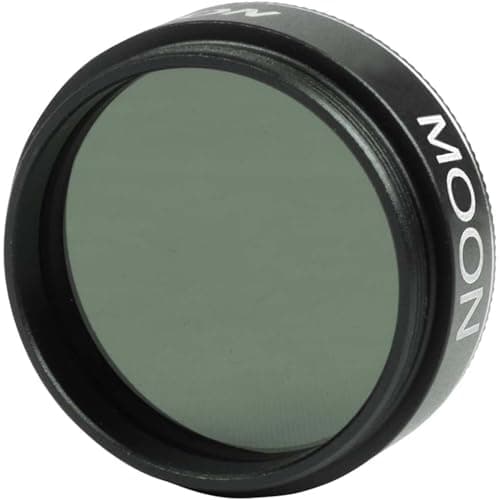 Celestron Moon Filter (1.25")A neutral-density filter that screws into an eyepiece and makes the full Moon comfortable to look at. | The cheapest real upgrade | 1.25" thread64x useful | |
| 3 | 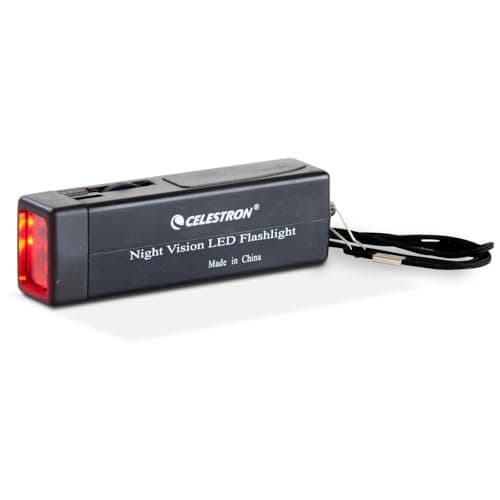 Celestron Night Vision Red LED FlashlightA variable-brightness red flashlight, which is the accessory that stops you undoing twenty minutes of dark adaptation every time you check a star chart. | Keeping your dark adaptation | Not applicable0x useful | |
| 4 | 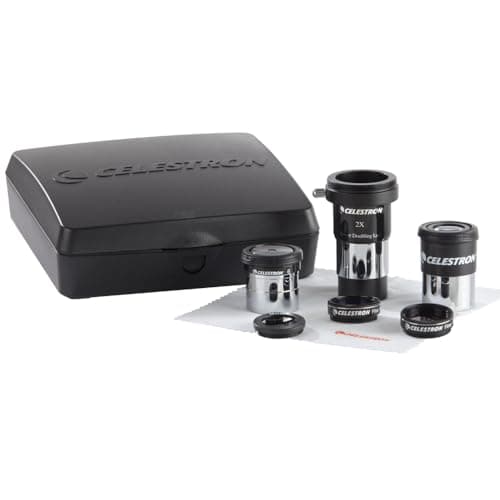 Celestron AstroMaster Accessory Kit (1.25")Two extra eyepieces, a 2x Barlow and filters. The cut-down version of the full kit, for a smaller telescope. | A smaller first upgrade | 1.25" barrel64x useful |
Top pick · The upgrade that changes the most
Celestron Eyepiece, Barlow and Filter Kit (1.25")
Five Plossl eyepieces from 32mm down to 6mm plus a 2x Barlow. This is the accessory that actually changes what you see.
What the aperture allows
- Maximum useful magnification
- 64x
- 2 × 31.75mm of aperture
- Resolving limit (Dawes)
- 3.65 arcseconds
- 116 ÷ 31.75mm
- Cassini division (0.7″)
- Out of reach
- this aperture cannot resolve it
Magnification is telescope focal length divided by eyepiece focal length, so this kit is the variable in that equation. On a 650mm f/5 telescope the 32mm gives 20x, the 13mm gives 50x and the 6mm gives 108x. On a 1200mm Dobsonian the same three give 38x, 92x and 200x.
The 2x Barlow halves every eyepiece's effective focal length, which is where the ten-eyepieces-in-one claim comes from. It is true arithmetic, but a Barlow on a 6mm eyepiece produces 3mm, and on most beginner telescopes 3mm is beyond the useful magnification the aperture supports.
The useful lesson is that the two eyepieces in the telescope's box are usually the two least considered items in it. A 32mm Plossl in a fast Dobsonian gives a genuinely wide, bright field that no bundled eyepiece will match.
A moon filter is not optional at full Moon in anything over about 100mm. The Moon at 130mm is uncomfortably bright, and that is not a figure of speech.
What it does well
- Covers the whole useful magnification range in one purchase rather than five
- Plossl is a well-corrected classic design at a price where the alternatives are not
- The moon filter alone earns its place in anything over 100mm
What it costs you
- The shortest eyepieces exceed the useful magnification of a small telescope
- Plossl eye relief at 6mm is tight, which is awkward for spectacle wearers
- Several of the colored planetary filters see very little use
Skip this one if: Skip it if your telescope has a 2-inch focuser and you would rather put the money toward one good wide-field 2-inch eyepiece.
| Optical design | Five 1.25-inch four-element Plossl eyepieces, a 2x Barlow and seven filtersSource: Celestron Eyepiece, Barlow and Filter Kit — the brand's own listing on Amazon.com (retrieved September 1, 2026) |
|---|---|
| Aperture | 1.25" barrelThe fitting size, not a light-collecting aperture. Check your focuser takes 1.25-inch eyepieces.Source: Celestron Eyepiece, Barlow and Filter Kit — the brand's own listing on Amazon.com (retrieved September 1, 2026) |
| Eyepieces supplied | 32mm, 17mm, 13mm, 8mm and 6mm Plossl, each with a 52-degree apparent fieldSource: Celestron Eyepiece, Barlow and Filter Kit — the brand's own listing on Amazon.com (retrieved September 1, 2026) |
| Barlow | 2x, which doubles the magnification of every eyepiece in the caseSource: Celestron Eyepiece, Barlow and Filter Kit — the brand's own listing on Amazon.com (retrieved September 1, 2026) |
| Filters | A moon filter plus the common colored planetary filtersSource: Celestron Eyepiece, Barlow and Filter Kit — the brand's own listing on Amazon.com (retrieved September 1, 2026) |
$239.95 · 8% off
#ad · how this is funded · price as of October 18, 2026
Pick 2 · The cheapest real upgrade
Celestron Moon Filter (1.25")
A neutral-density filter that screws into an eyepiece and makes the full Moon comfortable to look at.
What the aperture allows
- Maximum useful magnification
- 64x
- 2 × 31.75mm of aperture
- Resolving limit (Dawes)
- 3.65 arcseconds
- 116 ÷ 31.75mm
- Cassini division (0.7″)
- Out of reach
- this aperture cannot resolve it
The full Moon through a 130mm telescope is genuinely too bright to look at comfortably, and the discomfort costs you detail: a dazzled eye resolves less.
The filter is neutral density, meaning it cuts the light without shifting the color. Contrast goes up, the glare goes away, and the terminator, the line between lunar day and night where the shadows are longest, becomes the best thing in the sky.
It is the single cheapest item that changes an observing session, and it is the one accessory almost every beginner buys second rather than first.
What it does well
- Turns the full Moon from uncomfortable into detailed
- Threads into any standard 1.25-inch eyepiece
- Costs less than almost anything else that improves a view
What it costs you
- Only useful on the Moon and on Venus
- Redundant if you buy an accessory kit, which usually includes one
Skip this one if: Skip it if you are already buying an eyepiece and filter kit. There is one in the case.
| Optical design | Neutral-density filter that threads into a 1.25-inch eyepiece barrelSource: Celestron Moon Filter — the brand's own listing on Amazon.com (retrieved September 1, 2026) |
|---|---|
| Aperture | 1.25" threadThe fitting size. It threads into the eyepiece, not into the telescope.Source: Celestron Moon Filter — the brand's own listing on Amazon.com (retrieved September 1, 2026) |
| Effect | Reduces lunar glare, improves contrast and reveals surface detailCelestron's own description of what the filter does.Source: Celestron Moon Filter — the brand's own listing on Amazon.com (retrieved September 1, 2026) |
$12.95 · 12% off
#ad · how this is funded · price as of October 18, 2026
Pick 3 · Keeping your dark adaptation
Celestron Night Vision Red LED Flashlight
A variable-brightness red flashlight, which is the accessory that stops you undoing twenty minutes of dark adaptation every time you check a star chart.
What the aperture allows
- Maximum useful magnification
- 0x
- 2 × 0mm of aperture
- Resolving limit (Dawes)
- Infinity arcseconds
- 116 ÷ 0mm
- Cassini division (0.7″)
- Out of reach
- this aperture cannot resolve it
Dark adaptation takes twenty to thirty minutes and one glance at a phone screen destroys it. That is the whole reason this exists.
Red light at low intensity leaves the rod cells in your retina largely unbleached, so you keep the sensitivity you spent the first half hour building. A white phone torch does not.
Variable brightness matters more than the color. Most cheap red lights are far too bright, which defeats the point almost as thoroughly as white light would.
What it does well
- Keeps the dark adaptation that everything faint depends on
- Variable brightness, which most cheap red lights lack
- Cheap enough to buy alongside the telescope without thinking about it
What it costs you
- A phone in red-screen night mode does most of this for free
- One more thing to keep batteries in
Skip this one if: Skip it if you only ever observe the Moon and the bright planets. Dark adaptation barely matters for either.
| Optical design | Red LED flashlight with variable brightness, for astronomy and campingSource: Celestron Night Vision Red LED Flashlight — the brand's own listing on Amazon.com (retrieved September 1, 2026) |
|---|---|
| Aperture | Not applicableA flashlight has no aperture. This row exists because the spec model requires one.Source: Celestron Night Vision Red LED Flashlight — the brand's own listing on Amazon.com (retrieved September 1, 2026) |
| Why red | Preserves night visionCelestron's own stated purpose for the product.Source: Celestron Night Vision Red LED Flashlight — the brand's own listing on Amazon.com (retrieved September 1, 2026) |
$20.95 · 19% off
#ad · how this is funded · price as of October 18, 2026
Pick 4 · A smaller first upgrade
Celestron AstroMaster Accessory Kit (1.25")
Two extra eyepieces, a 2x Barlow and filters. The cut-down version of the full kit, for a smaller telescope.
What the aperture allows
- Maximum useful magnification
- 64x
- 2 × 31.75mm of aperture
- Resolving limit (Dawes)
- 3.65 arcseconds
- 116 ÷ 31.75mm
- Cassini division (0.7″)
- Out of reach
- this aperture cannot resolve it
This is the sensible kit for a 70mm to 114mm telescope, where the five-eyepiece set's shortest focal lengths would exceed the useful magnification the aperture supports anyway.
On a 700mm f/10 refractor, a 2x Barlow on a 10mm eyepiece gives 140x, which is exactly the 2x-aperture ceiling for a 70mm objective. There is nothing left to gain past that, and a kit that stops there is a kit sized to the telescope.
The filters are the same colored planetary set as the larger kit, and they see the same modest amount of use.
What it does well
- Sized sensibly for a small telescope rather than overshooting its aperture
- Cheaper than the five-eyepiece case
- Includes the moon filter, which is the piece that matters most
What it costs you
- Fewer eyepieces, so bigger jumps between magnifications
- Little point if the telescope is already 130mm or larger
Skip this one if: Skip it if your telescope is 130mm or bigger. Buy the five-eyepiece kit instead; you have the aperture to use it.
| Optical design | Two 1.25-inch eyepieces, a 2x Barlow lens and a set of filtersSource: Celestron AstroMaster Accessory Kit — the brand's own listing on Amazon.com (retrieved September 1, 2026) |
|---|---|
| Aperture | 1.25" barrelThe fitting size, not a light-collecting aperture.Source: Celestron AstroMaster Accessory Kit — the brand's own listing on Amazon.com (retrieved September 1, 2026) |
| Barlow | 2xSource: Celestron AstroMaster Accessory Kit — the brand's own listing on Amazon.com (retrieved September 1, 2026) |
$89.95 · 11% off
#ad · how this is funded · price as of October 18, 2026
What to avoid at this price
- Any telescope. There is nothing at this price that is not a toy, and a toy telescope is worse than no telescope because it teaches the recipient that astronomy is disappointing.
- Cheap zoom eyepieces. A zoom mechanism at this price costs sharpness and brightness across the whole range.
- 3x Barlow lenses. Even a 2x Barlow pushes most beginner telescopes past their useful magnification. A 3x is guaranteed to.
- Colored filter sets sold on their own. Most see two uses. The moon filter is the one that earns its place.
If the recipient does not own a telescope at all, the honest recommendation at this budget is a good star atlas or a planisphere, plus a promise to look through somebody else's. What to avoid covers the traps in the sub-$100 telescope market properly.
The most capable astronomical optic that fits this budget is a pair of binoculars rather than a telescope. The Cometron 7x50 review explains why a 7.1mm exit pupil matters more here than any telescope specification at this price.
Questions people actually ask
Can you buy a decent telescope for under $50?
No. Everything at that price is a small objective on a shaking tripod, usually advertising a magnification the optics cannot support. The money is far better spent on an accessory for a telescope somebody already owns.
What is the best telescope accessory under $50?
A moon filter if they have a telescope over about 100mm, because the full Moon is uncomfortably bright without one. Otherwise a variable-brightness red flashlight, which protects the dark adaptation everything faint depends on.
Is a Barlow lens a good gift?
Rarely on its own. A 2x Barlow doubles the magnification of every eyepiece, which pushes most beginner telescopes past what their aperture can usefully support. It is more useful inside a full eyepiece kit than by itself.
What if they do not own a telescope?
A planisphere or a good star atlas, plus an evening looking through somebody else's. Both cost very little and neither will teach them that astronomy is disappointing, which a sub-$50 telescope reliably would.
Read next
Best accessory upgrade
Telescope Eyepieces: Which Ones You Actually Need
Which eyepiece focal lengths suit your telescope, what exit pupil means, and the cheapest real upgrade available.
Top pick: Celestron Eyepiece, Barlow and Filter Kit (1.25")
$239.95 · 8% off
#ad · how this is funded · price as of October 18, 2026

Best under $100
The Best Telescopes Under $100
The under-$100 bracket, where a genuine 70mm refractor sits beside a shelf of toys advertising 525x.
Top pick: National Geographic Sky View 70mm Refractor
#ad · how this is funded · price as of October 18, 2026
What to Avoid When Buying a First Telescope
The six traps that produce a disappointing first telescope, each one checkable from the product listing before you buy.
Top pick: Sky-Watcher Heritage 130 Tabletop Dobsonian
$305.00 · 12% off
#ad · how this is funded · price as of October 18, 2026
Found something wrong here? Tell us and we will correct it and date the correction, per our editorial policy.