What You Can Actually See
Can You See Uranus and Neptune With a Telescope?
Both are within reach of a beginner telescope, and almost nobody looks at them. The obstacle is not aperture and not brightness: it is that they look exactly like stars until you magnify them.
By Scooter M. · Published · How we pick
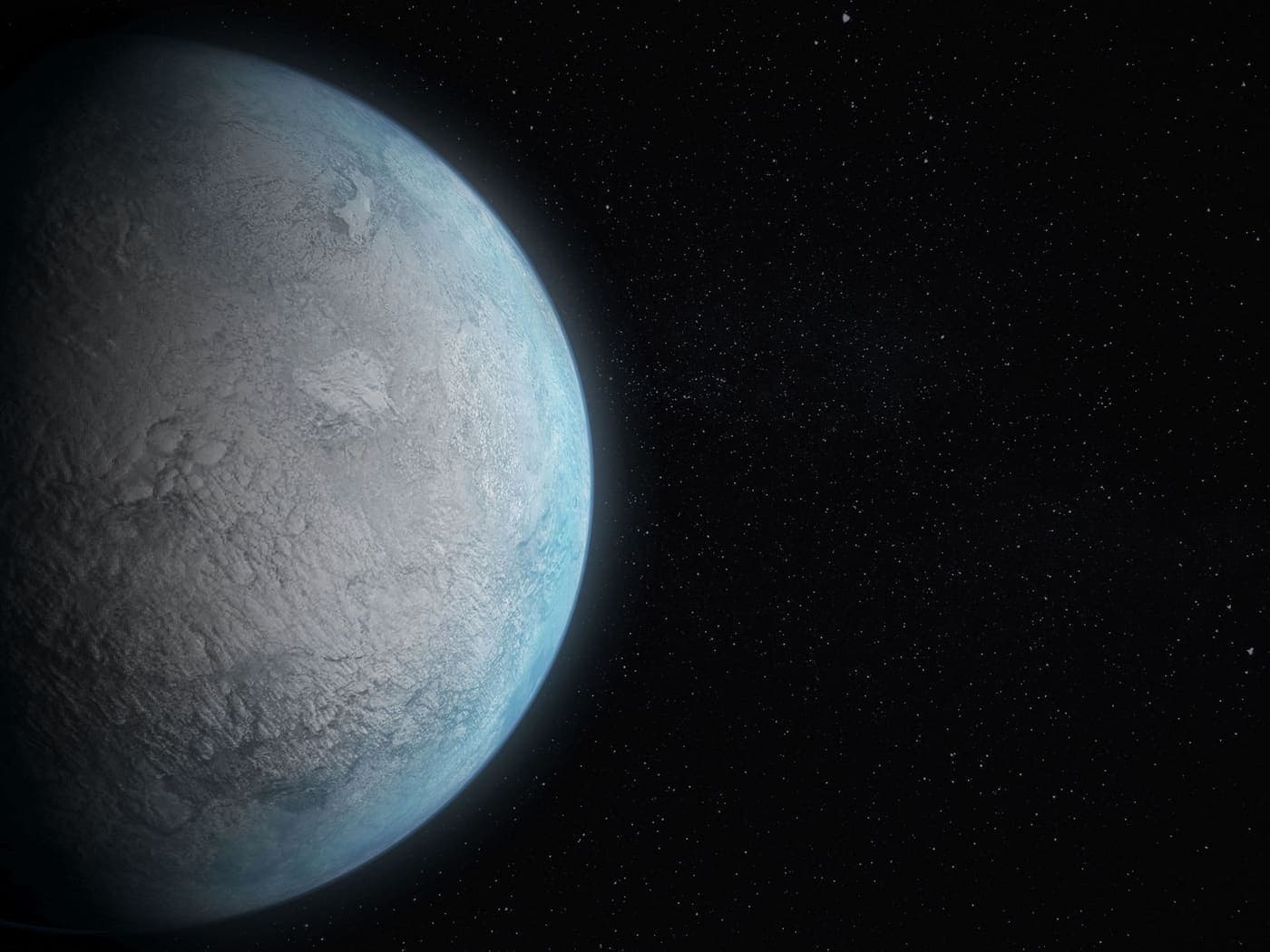
Yes to both, and the telescope that makes it happen is the one that can find them: the StarSense Explorer 8-inch Dobsonian, which pairs 203mm of aperture with phone plate-solving that puts the planet in the eyepiece without star-hopping. Uranus is magnitude 5.38 to 6.03 and Neptune 7.67 to 8.00, which is bright enough for a 70mm. Both are 2 to 4 arcseconds wide, which means they look like faint stars until you put real magnification on them, and that is why most people with a capable telescope have never consciously seen either.
This is the rare case where the finding mechanism, not the optics, is the thing worth paying for. A 203mm with no way to find Neptune shows you nothing; a 130mm that can point at it shows you a planet.
The two separate problems, in order
Problem one is brightness, and it is already solved. Uranus at opposition is visible to the naked eye in dark skies, and binoculars make it an easy target even in urban conditions. Neptune is not visible to the unaided eye, but at magnitude 8 it is well within the reach of every telescope on this site and most binoculars.
Problem two is identification, and it is the real one. At 3.3 to 4.1 arcseconds for Uranus and 2.2 to 2.4 for Neptune, both are indistinguishable from field stars at low power. You can have one centered in the eyepiece and not know it. Solving this is either a chart-and-patience exercise or a plate-solving phone app, and the second is why the picks below are ranked the way they are.
minimum useful magnification = 60 arcsec (what the eye resolves) / the target's angular size
Uranus at 3.7 arcsec: 60 / 3.7 = 16x just to reach the eye's threshold. Neptune at 2.3 arcsec: 60 / 2.3 = 26x to reach the threshold.
Reaching the threshold is not the same as seeing a shape. For a disc to read as a disc you want it several times above that, so 100x to 150x in practice. A 15x70 binocular therefore shows Uranus easily as a point and never as a planet, which is exactly what it is on this list to do.
What each one actually looks like
| Uranus | Neptune | |
|---|---|---|
| Apparent magnitude | 5.38 to 6.03 | 7.67 to 8.00 |
| Angular diameter | 3.3 to 4.1 arcsec | 2.2 to 2.4 arcsec |
| Naked eye | Yes, at opposition under a dark sky | No, never |
| Color in the eyepiece | Aquamarine or cyan | Faintly blue |
| Shows a disc at | 150mm and up, at high power | 130mm and up, at high power |
| Moons within reach | Titania and Oberon, at 250mm and up | Beyond a beginner telescope |
The color is the confirmation. Uranus' aquamarine or cyan tint comes from methane absorbing the red end of the spectrum, and Neptune is faintly blue for the same reason plus Rayleigh scattering. When you have the right object you will know, because nothing else in the field is that color.
Why high magnification is the technique, not the trap
Everywhere else on this site we warn against over-magnifying. The magnification myth exists because 525x on a 70mm box is a lie. This page is the exception, and the reason is in the arithmetic above: these are the two targets where the disc is so small that the usual advice inverts.
Start at low power to identify the field, confirm against a chart or the app, then step up to 150x or beyond on the suspect. A star stays a point no matter how hard you magnify it. A planet grows into a disc. That difference is the observation.
How these picks were judged
- The ability to find it ranks first. This is the one page on the site where that outranks aperture, because an unfound planet is worth nothing regardless of mirror size.
- Then magnification headroom. Both targets want 150x or more, which needs a steady mount and an aperture that supports the power without mush.
- Then aperture, for the disc and the color. The sourced threshold for a cyan disc with limb darkening is 150mm to 230mm, which is why the two 203mm instruments lead.
- Tracking is genuinely useful here. At 200x an untracked target drifts out of the field in under a minute, and these are objects you want to stare at.
- One pick is included to mark a limit. The 15x70 binoculars show Uranus but can never show a disc, and saying so is more useful than leaving them off.
Which of these is for you
| Telescope | Best for | The catch |
|---|---|---|
| Celestron StarSense Explorer 8-inch Dobsonian | Best overall: solves finding and aperture at once, which is exactly the pair of problems this page is about | A large, heavy Dobsonian that has to live somewhere, and it does not track once you are on target |
| Celestron NexStar 8SE | Best for staring: it finds them, tracks them, and its long focal length reaches 200x with a comfortable eyepiece | The most expensive answer here, and it needs an alignment before you can use the catalog |
| Celestron StarSense Explorer DX 130AZ | Best first telescope that can realistically do this: the phone finding is the same system as the 8-inch | 130mm shows Neptune as a very small disc and Uranus as a modest one; the color is easier than the shape |
| Sky-Watcher Virtuoso GTi 130P | Best budget route to tracked high power, driven from a phone over its own Wi-Fi | It needs a tabletop or a stand, and 130mm is the realistic floor for seeing Neptune as more than a point |
| Celestron SkyMaster 15x70 | Best for confirming Uranus exists, cheaply, and for the sweep that gets you to the right part of the sky | Cannot show a disc on either planet at 15x, by the arithmetic above. A finding aid, not a viewing one |
How this is funded: the buy buttons below are Amazon Associates links, and a qualifying purchase earns us a commission at no extra cost to you. It cannot move the ranking, because the order here is set by aperture per dollar, and no commission rate changes how much light a mirror collects. Full disclosure.
| # | Telescope | Best for | Aperture | Price |
|---|---|---|---|---|
| 1 | 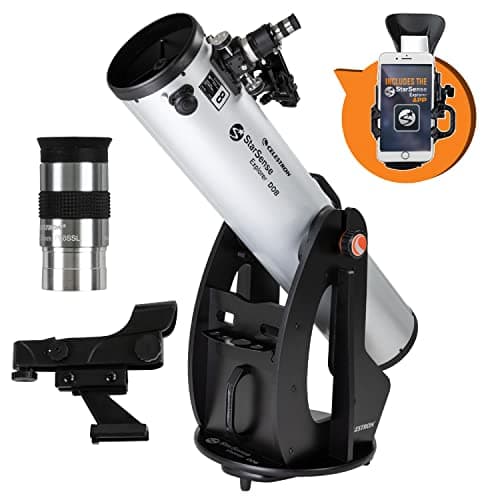 Celestron StarSense Explorer 8-inch DobsonianTop pick203mm of Dobsonian aperture with the phone finder bolted on. The largest telescope here that a beginner can genuinely operate on night one. | Big aperture, no star-hopping | 203mm (8 in)406x useful | |
| 2 | 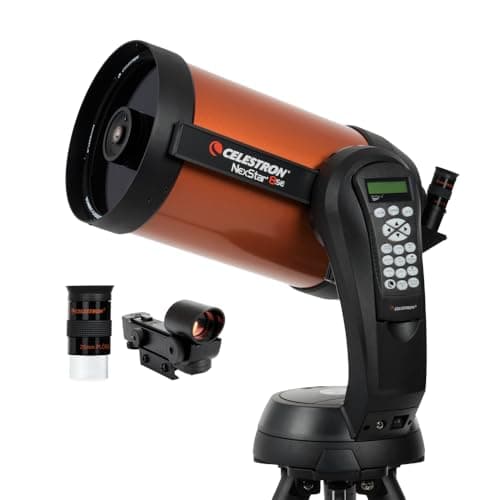 Celestron NexStar 8SE203mm of Schmidt-Cassegrain at f/10 on a computerized fork. The largest aperture on this site that still finds and follows objects by itself. | The most aperture that still tracks | 203.2mm (8")406x useful | |
| 3 | 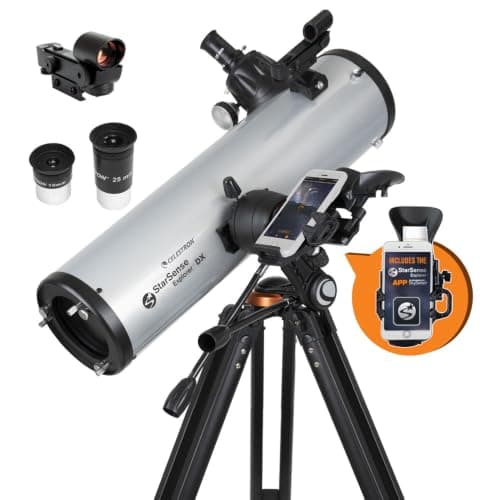 Celestron StarSense Explorer DX 130AZ130mm of parabolic aperture on a mount that stays still, plus the one piece of software that genuinely solves the find-it problem. | Most first buyers | 130mm (5.11 in)260x useful | |
| 4 | 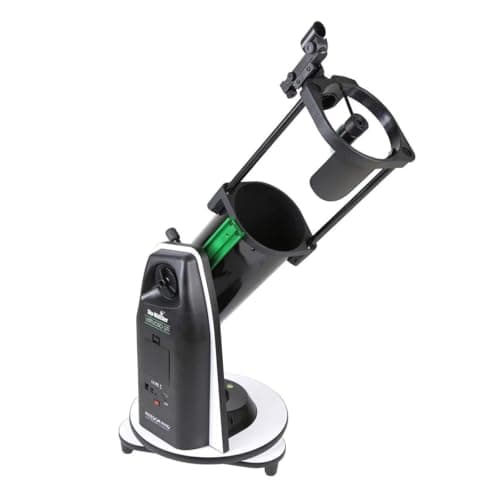 Sky-Watcher Virtuoso GTi 130PA 130mm collapsible Dobsonian with Wi-Fi GoTo built into the base, and it still lets you push the tube by hand. | GoTo without giving up aperture | 130mm260x useful | |
| 5 | 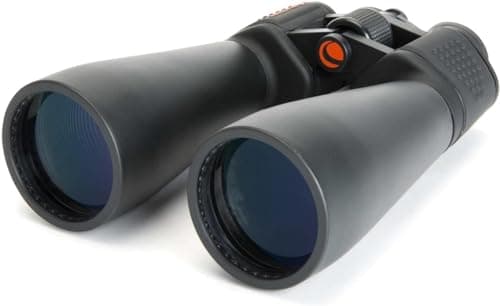 Celestron SkyMaster 15x70 Binoculars70mm of aperture in each barrel at a fixed 15x. For the money spent on a toy telescope, these show more and get used more. | The honest alternative to a cheap telescope | 70mm objective lenses (2.75 in)140x useful |
Top pick · Big aperture, no star-hopping
Celestron StarSense Explorer 8-inch Dobsonian
203mm of Dobsonian aperture with the phone finder bolted on. The largest telescope here that a beginner can genuinely operate on night one.
What the aperture allows
- Maximum useful magnification
- 406x
- 2 × 203mm of aperture
- Resolving limit (Dawes)
- 0.57 arcseconds
- 116 ÷ 203mm
- Cassini division (0.7″)
- Within reach
- on a steady night, at high magnification
Celestron publishes 480x as this telescope’s highest useful magnification. Our figure is 406x, from two times the aperture in millimeters. The gap of 74x comes from the slightly more generous per-inch constant makers use. Neither number describes a typical night: the atmosphere usually settles the question well below both.
Worked example: a 25mm eyepiece in this telescope gives 1200mm ÷ 25mm = 48x.
203mm gathers 841 times the light of the naked eye, which is Celestron's own published figure. Against the 130mm scopes further up this list it is 2.4 times the light, from the ratio 203 over 130, squared.
Two times 203mm gives 406x of useful magnification; Celestron publishes 480x. Dawes' limit is 0.57 arcseconds, so the Cassini division, the Great Red Spot and hundreds of Messier objects are all inside its reach.
The published limiting stellar magnitude of 14.2 is the number that explains what deep sky means. It is roughly 4,000 times fainter than the faintest star a good naked eye sees from a dark site.
The reason to choose this over a plain 8-inch Dobsonian is the phone finder. An 8-inch tube with a 0.57-arcsecond resolution limit is wasted on somebody who cannot locate anything to point it at.
What it does well
- The largest aperture here that a beginner can realistically use on the first night
- The phone finder removes the learning curve that stops most people using this much telescope
- A Dobsonian base is rock steady under a big tube
What it costs you
- Heavy and bulky; two trips outside and real storage space
- No tracking, so at 200x objects leave the field quickly
- Collimation and a long cool-down are part of owning it
Skip this one if: Skip it if storage or stairs are a problem. That is the single most common reason a large Dobsonian stops getting used.
#ad · how this is funded · price as of October 19, 2026
Pick 2 · The most aperture that still tracks
Celestron NexStar 8SE
203mm of Schmidt-Cassegrain at f/10 on a computerized fork. The largest aperture on this site that still finds and follows objects by itself.
What the aperture allows
- Maximum useful magnification
- 406x
- 2 × 203.2mm of aperture
- Resolving limit (Dawes)
- 0.57 arcseconds
- 116 ÷ 203.2mm
- Cassini division (0.7″)
- Within reach
- on a steady night, at high magnification
Celestron publishes 480x as this telescope’s highest useful magnification. Our figure is 406x, from two times the aperture in millimeters. The gap of 74x comes from the slightly more generous per-inch constant makers use. Neither number describes a typical night: the atmosphere usually settles the question well below both.
Worked example: a 25mm eyepiece in this telescope gives 2032mm ÷ 25mm = 81x.
Two times 203.2mm gives 406x of useful magnification, and Dawes' limit is 0.57 arcseconds. That is comfortably inside the 0.7 arcseconds the Cassini division needs, so the gap in Saturn's rings is genuinely available on a steady night rather than theoretically available.
Celestron publishes 843 times the light-gathering of the eye and a limiting stellar magnitude of 14. Against the 150mm NexStar 6SE the collecting area ratio is (203.2 / 150) squared = 1.83, so this telescope collects 83 percent more light than the 6SE.
At f/10 the focal length is 2032mm, so the supplied 25mm eyepiece gives 81x. That is a high lowest power: the widest true field this telescope offers is narrow, and large open clusters and the Andromeda galaxy will not fit in it.
The number that decides most purchases is not on the spec sheet. The optical tube and the fork are one 32 lb assembly with a separate tripod, and it is carried in two hands, not one. A telescope that lives in a closet because it is awkward to move sees less sky than a smaller one by the door.
What it does well
- 203mm of aperture that finds and tracks objects on its own
- Resolves the Cassini division at 0.57 arcseconds on a steady night
- The long 2032mm focal length suits planets and double stars exceptionally well
What it costs you
- 32 lb of kit weight, in two pieces, every session
- The narrowest widest-field of any telescope on this site: 81x with the supplied eyepiece
- Needs mains power or a battery pack, and a dew shield for the corrector plate
Skip this one if: Skip it if this is a first telescope. It is a lot of money and a lot of weight to gamble on a hobby that has not stuck yet, and an 8-inch Dobsonian shows the same sky without the motors, the batteries or the fork.
#ad · how this is funded · price as of October 19, 2026
Pick 3 · Most first buyers
Celestron StarSense Explorer DX 130AZ
130mm of parabolic aperture on a mount that stays still, plus the one piece of software that genuinely solves the find-it problem.
What the aperture allows
- Maximum useful magnification
- 260x
- 2 × 130mm of aperture
- Resolving limit (Dawes)
- 0.89 arcseconds
- 116 ÷ 130mm
- Cassini division (0.7″)
- Out of reach
- this aperture cannot resolve it
Celestron publishes 307x as this telescope’s highest useful magnification. Our figure is 260x, from two times the aperture in millimeters. The gap of 47x comes from the slightly more generous per-inch constant makers use. Neither number describes a typical night: the atmosphere usually settles the question well below both.
Worked example: a 25mm eyepiece in this telescope gives 650mm ÷ 25mm = 26x.
130mm is the aperture where the sky stops being a list of bright dots. Two times that aperture is 260x of useful magnification, which is more than the atmosphere will usually give you on any given night, so nothing in this telescope's optical budget is wasted on a number you cannot use.
Celestron's own published ceiling for it is 307x, which sits above the 2x-aperture rule of thumb. The gap is worth knowing about: manufacturers compute that figure per inch of aperture with a slightly more generous constant. Neither number describes a night you will actually have. Plan around 130x to 180x and treat anything higher as a rare-night bonus.
At f/5 the focal length is short, so the supplied 25mm eyepiece gives a wide, forgiving 26x that makes finding things possible in the first place. That is not a compromise; it is the eyepiece you will use most.
The StarSense part is the honest reason this sits at the top. It uses your phone's camera to plate-solve the actual sky and then walks you to a target with an on-screen arrow. It is not a motor and it does not track. It solves the problem that really kills first telescopes, which is not being able to find anything.
What it does well
- 130mm parabolic mirror rather than the cheaper spherical mirror used at this price by several competitors
- The phone-based finder works and needs no alignment stars, no power and no hand controller
- Full-height tripod, so an adult uses it standing up rather than kneeling on wet grass
- Manual mount means nothing to charge, nothing to fail and nothing to re-align next time
What it costs you
- The bundled 10mm eyepiece is the weakest part of the package
- A Newtonian needs collimation checks; not hard, but it is a task a refractor does not have
- No tracking, so at high magnification you are nudging the tube every 30 seconds
Skip this one if: Skip it if the person receiving it is under about ten and will be using it alone. The tripod is full height and the finding workflow assumes a phone.
#ad · how this is funded · price as of October 19, 2026
Pick 4 · GoTo without giving up aperture
Sky-Watcher Virtuoso GTi 130P
A 130mm collapsible Dobsonian with Wi-Fi GoTo built into the base, and it still lets you push the tube by hand.
What the aperture allows
- Maximum useful magnification
- 260x
- 2 × 130mm of aperture
- Resolving limit (Dawes)
- 0.89 arcseconds
- 116 ÷ 130mm
- Cassini division (0.7″)
- Out of reach
- this aperture cannot resolve it
Worked example: a 25mm eyepiece in this telescope gives 650mm ÷ 25mm = 26x.
The usual GoTo trade is that you pay for motors instead of glass and end up with a smaller mirror. This one avoids that: it is the same 130mm f/5 optic as the manual Heritage, with the electronics in the base rather than in a tripod.
Two times 130mm is 260x of useful magnification and the published Dawes limit for that aperture is 0.89 arcseconds. The motors change nothing about what the optics can resolve, which is the point worth holding onto: GoTo buys you finding and tracking, never detail.
Freedom Find is the feature that matters in practice. Most GoTo mounts lose their alignment the moment somebody shoves the tube. This one uses encoders on both axes, so a curious nine-year-old grabbing it does not end the session.
Budget for power. Eight AA cells run down faster than you expect in the cold, and a cheap 12V supply is the difference between an evening and forty minutes.
What it does well
- Full aperture and full GoTo in the same package, which is unusual at this size
- Tracking keeps a planet centered at high magnification, which is what makes it worth looking at
- Manual override via dual encoders survives being grabbed
- Collapsible tube on a tabletop base, so it still stores easily
What it costs you
- Eats AA batteries; an external 12V supply is effectively mandatory and is not included
- Alignment is a step every session, however quick
- Tabletop base, so it still needs a surface
Skip this one if: Skip it if you would rather learn the sky than be driven around it. The manual Heritage 130 has the same optics for less.
$495.00 · 13% off
#ad · how this is funded · price as of October 19, 2026
Pick 5 · The honest alternative to a cheap telescope
Celestron SkyMaster 15x70 Binoculars
70mm of aperture in each barrel at a fixed 15x. For the money spent on a toy telescope, these show more and get used more.
What the aperture allows
- Maximum useful magnification
- 140x
- 2 × 70mm of aperture
- Resolving limit (Dawes)
- 1.66 arcseconds
- 116 ÷ 70mm
- Cassini division (0.7″)
- Out of reach
- this aperture cannot resolve it
Worked example: a 25mm eyepiece in this telescope gives 279.63mm ÷ 25mm = 11x.
Each barrel has the same 70mm aperture as the entry-level refractors on this site, and because you use both eyes the perceived brightness is higher than a single 70mm tube.
The fixed 15x is well below the 140x that 70mm could support, and that is deliberate. Binoculars are a wide-field instrument: the Pleiades, the Andromeda galaxy, the Milky Way star clouds and the whole Moon at once.
Celestron publishing three limiting magnitudes, 11.73 for ideal skies down to 9.73 for poor ones, is the single most useful number on this page. It says out loud what most listings hide: your sky matters as much as your optics.
At 15x these are heavy to hold steady. The included tripod adapter is not an accessory, it is a requirement for any sustained looking.
What it does well
- 70mm per barrel is real aperture, not a novelty
- Instantly usable: no assembly, no alignment, no learning curve
- Wide field shows large objects a telescope cannot fit in view
- Doubles as daytime and wildlife optics, so it gets used year-round
What it costs you
- Too heavy to hold steady at 15x for long; a tripod is effectively required
- Fixed magnification, so the planets stay small
- No detail on Saturn: at 15x the rings are a suggestion, not a shape
Skip this one if: Skip them if the goal is specifically to see Saturn's rings as rings. 15x will not do it; a 70mm telescope at 70x will.
$129.95 · 32% off
#ad · how this is funded · price as of October 19, 2026
A working method for a first attempt
- Pick Uranus first. It is two magnitudes brighter and nearly twice the angular size, so it is the easier of the two by a wide margin.
- Go when it is near opposition, which puts it highest at local midnight and at its brightest for the year.
- Get the position from a planetarium app or a plate-solving mount. Both planets move against the stars, so last year's chart is wrong.
- Identify the field at low power first, then compare what you see with the app's star pattern before you magnify anything.
- Step up to 150x or more on the candidate. The star-stays-a-point, planet-becomes-a-disc test is the whole confirmation.
- Then do Neptune the same way. Having done Uranus once, the method is identical and the only change is that you are looking for something fainter and smaller.
What about the moons?
Uranus has two that come within reach of a large amateur telescope: Titania and Oberon may be visible at 25 cm or more, along with the cloud patterns that need the same aperture. That is above everything this site ranks, so treat it as the next step rather than as something to expect from a first telescope.
Neptune's large moon Triton is a harder case again, and the honest answer for a beginner telescope is no. Both planets are worth doing for the planets themselves; the moons are a reason to keep the charts after you upgrade, not a reason to be disappointed now.
If the finding problem is the part that sounds hardest, that is the right instinct, and it is worth reading phone finding against doing it yourself before deciding which route to buy into. For the bright planets, where none of this applies, the planetary page is the better starting point.
Questions people actually ask
Can you see Uranus with a telescope?
Yes, easily. Uranus is magnitude 5.38 to 6.03, which is naked-eye visible at opposition under a dark sky and an easy binocular target even in urban conditions. To see it as a cyan disc rather than a point you need roughly 150mm of aperture and 150x magnification.
Can you see Neptune with a telescope?
Yes. At magnitude 7.67 to 8.00 it is within reach of any telescope on this site, though it is never visible to the unaided eye. At 2.2 to 2.4 arcseconds it needs about 130mm and high magnification before it reads as a small blue disc rather than a faint star.
What do Uranus and Neptune look like through a telescope?
Small, flat, colored discs that do not twinkle: Uranus aquamarine or cyan, Neptune faintly blue. Both colors come from methane absorbing red light. No rings, bands or storms are visible from a backyard; 15 to 23 cm telescopes show Uranus with distinct limb darkening, and cloud patterns need 25 cm or more.
Why are Uranus and Neptune so hard to find?
Because they are bright enough but tiny. At 2 to 4 arcseconds both look identical to field stars at low power, so you can have one centered without knowing. Finding is a charting problem, which is why a plate-solving phone mount or a GoTo catalog helps far more than extra aperture.
What magnification do you need for Uranus and Neptune?
At least 16x for Uranus and 26x for Neptune just to reach the eye's resolution threshold, and realistically 150x or more for either to read as a disc. This is the one pair of targets where pushing magnification hard is the correct technique rather than a mistake.
Can you see Pluto with a telescope?
Not with a beginner telescope. Pluto is around magnitude 14, which is roughly 250 times fainter than Neptune, and it is a point of light rather than a disc at any amateur aperture. It takes a large telescope, a dark sky and a precise chart to confirm which point it is.
Read next
Best for the planets
The Best Telescopes for Seeing the Planets
Telescopes ranked for planetary detail, where resolving limit and mount steadiness matter more than raw light-gathering.
Top pick: Celestron NexStar 6SE
#ad · how this is funded · price as of October 19, 2026
StarSense Phone Finding vs Finding Things Yourself
Phone-guided finding against learning to star-hop: what each costs in aperture, and which suits which buyer.
Top pick: Celestron StarSense Explorer DX 130AZ
#ad · how this is funded · price as of October 19, 2026
Best GoTo
The Best GoTo Telescopes
Computerized telescopes ranked on what the motors cost in aperture, whether they track as well as find, and what they need to run.
Top pick: Sky-Watcher Virtuoso GTi 130P
$495.00 · 13% off
#ad · how this is funded · price as of October 19, 2026
Found something wrong here? Tell us and we will correct it and date the correction, per our editorial policy.