Telescope Gifts
Telescopes by Age: What a Child Can Actually Do
The specification that matters for a child is not aperture. It is whether they can reach the eyepiece, carry the telescope, and aim it at something without help.
By Scooter M. · Published · How we pick
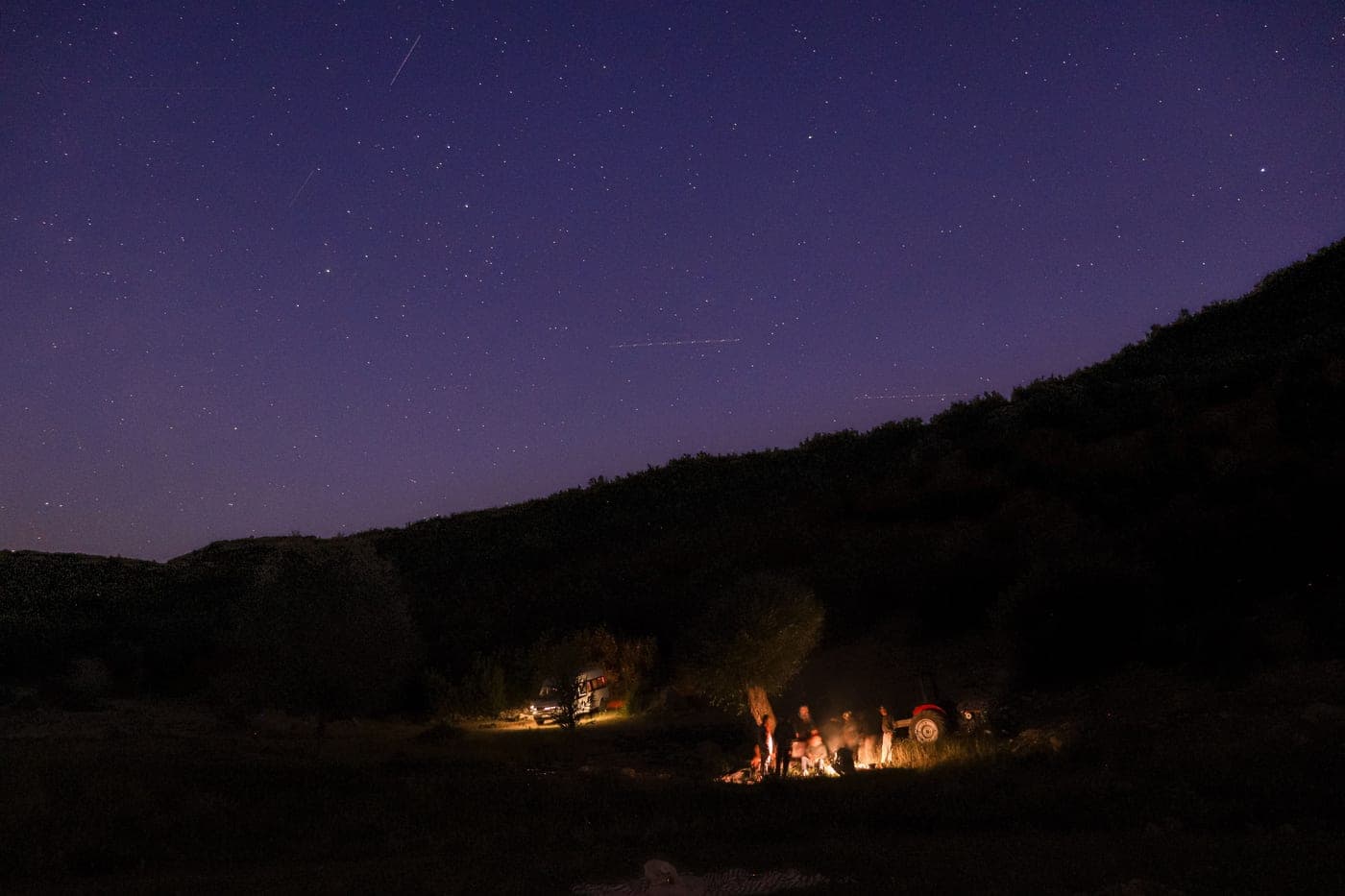
Age is a proxy for three things: reach, strength and the ability to aim an instrument at a point of light. Those three settle what a child can do with a telescope far more than any optical specification does.
Four to six: an adult's telescope, shared
At this age a child cannot reliably aim or focus a telescope. What they can do is look through one somebody else has aimed, and be genuinely amazed by the Moon.
The practical answer is either binoculars, held with help, or a telescope bought for the adult that the child looks through. Buying a small telescope as the child's own at four usually produces a toy that neither of you can use well.
Seven to nine: their first own telescope
This is where a tabletop Dobsonian starts to work. It is low, it is light enough to carry, and it is aimed by pushing the tube, which a seven-year-old grasps in about ten seconds.
Put it on a low table or a sturdy box rather than a dining table, so the eyepiece falls at their height rather than above their head. A 76mm or 100mm tabletop is the right size; anything bigger becomes an adult's telescope that the child is allowed to look through.
Ten to twelve: real aperture becomes possible
By ten a child can usually carry a 130mm tabletop Dobsonian, understands the aiming, and can be trusted with a focuser. This is the age at which the aperture argument starts applying to them the way it applies to everyone else.
| Age | Can aim it | Can carry it | Suggested aperture |
|---|---|---|---|
| 4 to 6 | With help | No | Binoculars, or an adult's telescope |
| 7 to 9 | Yes, tabletop | A small tabletop | 76mm to 100mm |
| 10 to 12 | Yes | A 130mm tabletop | 130mm |
| 13 and up | Yes | Most beginner telescopes | 130mm to 200mm |
Thirteen and up: buy from the main list
At this point height and strength stop being the constraint and the ordinary advice applies: buy the largest aperture that fits the storage and suits how they will use it. The main beginner ranking is the right page.
The one thing worth adding is that a teenager who has asked for a telescope should be bought a proper one. The step from a 76mm to a 130mm is 2.9 times the light, and at this age they will notice.
How this is funded: the buy buttons below are Amazon Associates links, and a qualifying purchase earns us a commission at no extra cost to you. It cannot move the ranking, because the order here is set by aperture per dollar, and no commission rate changes how much light a mirror collects. Full disclosure.
| # | Telescope | Best for | Aperture | Price |
|---|---|---|---|---|
| 1 | 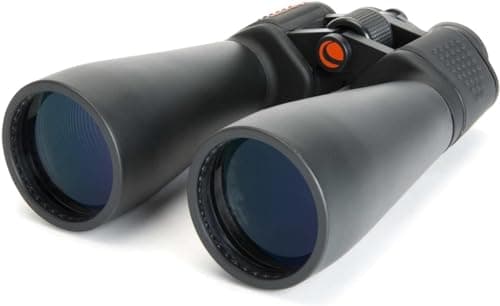 Celestron SkyMaster 15x70 BinocularsTop pick70mm of aperture in each barrel at a fixed 15x. For the money spent on a toy telescope, these show more and get used more. | The honest alternative to a cheap telescope | 70mm objective lenses (2.75 in)140x useful | |
| 2 | 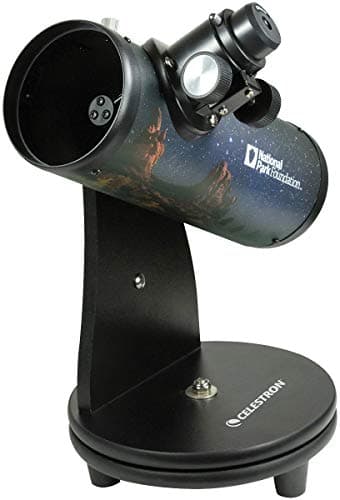 Celestron FirstScope 7676mm on a tiny Dobsonian base. The cheapest thing on this site that is a telescope rather than a toy shaped like one. | A real telescope under a hundred dollars | 76mm (2.99 in)152x useful | Unavailable |
| 3 | 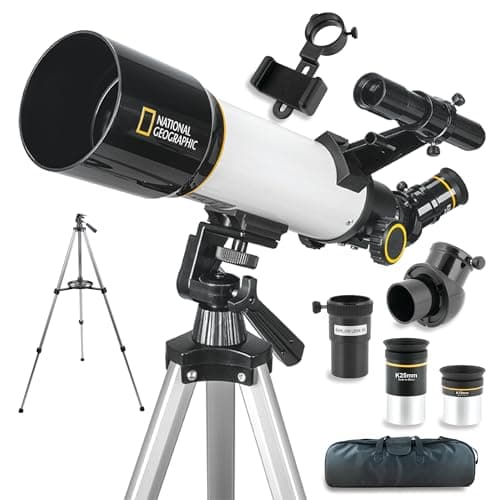 National Geographic Sky View 70mm RefractorA 70mm refractor on a panhandle mount, branded for the shelf it will be bought from. Honest optics inside a gift box. | A gift that looks like a gift | 70mm140x useful | |
| 4 | 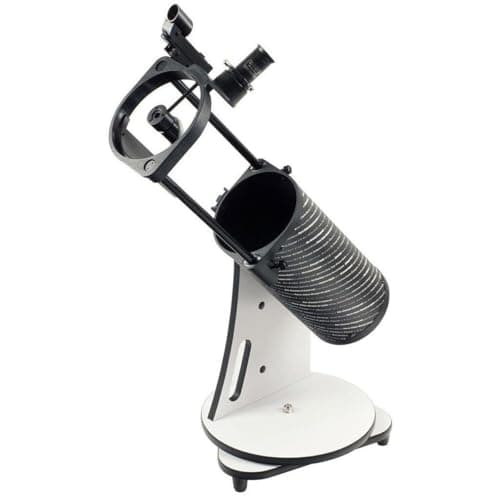 Sky-Watcher Heritage 130 Tabletop DobsonianThe same 130mm parabolic mirror as scopes costing far more, on a base with no tripod to wobble and nothing to set up. | Most aperture per dollar | 130mm260x useful |
Top pick · The honest alternative to a cheap telescope
Celestron SkyMaster 15x70 Binoculars
70mm of aperture in each barrel at a fixed 15x. For the money spent on a toy telescope, these show more and get used more.
What the aperture allows
- Maximum useful magnification
- 140x
- 2 × 70mm of aperture
- Resolving limit (Dawes)
- 1.66 arcseconds
- 116 ÷ 70mm
- Cassini division (0.7″)
- Out of reach
- this aperture cannot resolve it
Worked example: a 25mm eyepiece in this telescope gives 279.63mm ÷ 25mm = 11x.
Each barrel has the same 70mm aperture as the entry-level refractors on this site, and because you use both eyes the perceived brightness is higher than a single 70mm tube.
The fixed 15x is well below the 140x that 70mm could support, and that is deliberate. Binoculars are a wide-field instrument: the Pleiades, the Andromeda galaxy, the Milky Way star clouds and the whole Moon at once.
Celestron publishing three limiting magnitudes, 11.73 for ideal skies down to 9.73 for poor ones, is the single most useful number on this page. It says out loud what most listings hide: your sky matters as much as your optics.
At 15x these are heavy to hold steady. The included tripod adapter is not an accessory, it is a requirement for any sustained looking.
What it does well
- 70mm per barrel is real aperture, not a novelty
- Instantly usable: no assembly, no alignment, no learning curve
- Wide field shows large objects a telescope cannot fit in view
- Doubles as daytime and wildlife optics, so it gets used year-round
What it costs you
- Too heavy to hold steady at 15x for long; a tripod is effectively required
- Fixed magnification, so the planets stay small
- No detail on Saturn: at 15x the rings are a suggestion, not a shape
Skip this one if: Skip them if the goal is specifically to see Saturn's rings as rings. 15x will not do it; a 70mm telescope at 70x will.
$129.95 · 32% off
#ad · how this is funded · price as of October 18, 2026
Pick 2 · A real telescope under a hundred dollars
Celestron FirstScope 76
76mm on a tiny Dobsonian base. The cheapest thing on this site that is a telescope rather than a toy shaped like one.
What the aperture allows
- Maximum useful magnification
- 152x
- 2 × 76mm of aperture
- Resolving limit (Dawes)
- 1.53 arcseconds
- 116 ÷ 76mm
- Cassini division (0.7″)
- Out of reach
- this aperture cannot resolve it
Celestron publishes 180x as this telescope’s highest useful magnification. Our figure is 152x, from two times the aperture in millimeters. The gap of 28x comes from the slightly more generous per-inch constant makers use. Neither number describes a typical night: the atmosphere usually settles the question well below both.
Worked example: a 25mm eyepiece in this telescope gives 300mm ÷ 25mm = 12x.
76mm is small, and this page is not going to pretend otherwise. What it is not is a toy: the mirror is real, the mount is a proper Dobsonian, and it will show the Moon's craters and Jupiter's moons.
Two times 76mm gives 152x of useful magnification. Celestron publishes 180x. Either figure demolishes the 525x printed on the box of the department-store scope sitting beside it at the same price.
The f/3.95 focal ratio is very fast, which is hard on a spherical mirror and hard on cheap eyepieces. Expect softness at the edge of the field and do not expect much above about 60x to 75x in practice.
The right way to think about it: this is a lot better than nothing, it is enormously better than a 60mm toy scope on a plastic tripod, and it is meaningfully worse than the 130mm tabletop Dobsonian that costs roughly three times as much.
What it does well
- A genuine telescope at a price where most of the shelf is not
- Nothing to assemble, nothing to align, nothing to charge
- Small enough that a child can carry and aim it without help
What it costs you
- A fast spherical mirror at f/3.95 is soft away from the field center
- The bundled eyepieces are the cheapest part of a cheap package
- Very small; it needs a table and it is easy to knock over
Skip this one if: Skip it if the budget can stretch to a 130mm tabletop. The aperture difference is 2.9 times the light, and it is obvious at the eyepiece.
Currently unavailable at Amazon
Checked October 18, 2026. We are not linking to it while there is nothing to buy.
Pick 3 · A gift that looks like a gift
National Geographic Sky View 70mm Refractor
A 70mm refractor on a panhandle mount, branded for the shelf it will be bought from. Honest optics inside a gift box.
What the aperture allows
- Maximum useful magnification
- 140x
- 2 × 70mm of aperture
- Resolving limit (Dawes)
- 1.66 arcseconds
- 116 ÷ 70mm
- Cassini division (0.7″)
- Out of reach
- this aperture cannot resolve it
National Geographic publishes 120x as this telescope’s highest useful magnification. Our figure is 140x, from two times the aperture in millimeters. The two figures agree closely, which is the case whenever a maker states its ceiling honestly.
Worked example: a 25mm eyepiece in this telescope gives 400mm ÷ 25mm = 16x.
70mm of refractor aperture puts this at the floor of what is worth owning, and the same arithmetic applies as to every other 70mm on this site: 140x of useful magnification at the 2x rule, and a Dawes limit of 1.66 arcseconds.
The panhandle mount is the differentiator. A single handle that moves in both axes is far more intuitive for a child, or for an adult who has never used a telescope, than either a slow-motion alt-azimuth head or an equatorial one.
National Geographic publishes a 400mm focal length, which at 70mm gives f/5.7, and advertises 16x, 40x, 48x and 120x. Those four figures check out exactly against 25mm and 10mm eyepieces with the supplied 3x Barlow, and the top one sits under the 140x this aperture supports — which is not what the bottom of this market usually does.
As a gift this earns its place on presentation and on the mount. As an instrument it is a 70mm refractor, which means the Moon, the bright planets and not much else.
What it does well
- The panhandle mount is genuinely the easiest way for a beginner to aim a telescope
- 70mm of real refractor aperture rather than a 50mm toy
- Presents well as a gift, which matters more than enthusiasts like to admit
What it costs you
- A fast f/5.7 achromat shows false color on the Moon and the bright planets
- 70mm limits it to the Moon and the bright planets
- Branded packaging is part of what you are paying for
Skip this one if: Skip it if the recipient is already interested in astronomy rather than being introduced to it. They will want aperture, not a panhandle.
#ad · how this is funded · price as of October 18, 2026
Pick 4 · Most aperture per dollar
Sky-Watcher Heritage 130 Tabletop Dobsonian
The same 130mm parabolic mirror as scopes costing far more, on a base with no tripod to wobble and nothing to set up.
What the aperture allows
- Maximum useful magnification
- 260x
- 2 × 130mm of aperture
- Resolving limit (Dawes)
- 0.89 arcseconds
- 116 ÷ 130mm
- Cassini division (0.7″)
- Out of reach
- this aperture cannot resolve it
Worked example: a 25mm eyepiece in this telescope gives 650mm ÷ 25mm = 26x.
This is the aperture-per-dollar champion of the beginner shelf and it is not close. You get the same 130mm parabolic mirror found in telescopes at twice the price, and you get it without paying for a tripod, a slow-motion assembly or a hand controller.
Two times 130mm is 260x of useful magnification. Dawes' limit at 130mm works out to 116 divided by 130, which is 0.89 arcseconds. The Cassini division in Saturn's rings spans roughly 0.7 arcseconds at its widest, so this telescope sits right at the edge of showing it on a still night and will show the rings themselves easily.
The catch is the word tabletop. It needs a surface at roughly chest height when you are seated. A garden table works, a plastic patio chair does not, and buying one without thinking about where it will stand is the single most common regret with this design.
The tube collapses, which is what makes it live in a cupboard rather than a garage. That matters more than it sounds: the telescope you can carry outside in one trip is the telescope you use.
What it does well
- The most aperture you can buy at this price, by a clear margin
- Nothing to assemble, no tripod to wobble, ready in the time it takes to carry it outside
- Collapsible tube stores in a cupboard and keeps its collimation
- The Dobsonian motion is intuitive: you push the tube where you want to look
What it costs you
- Needs a solid table or stool at the right height, which is a real constraint
- The helical focuser is coarser than a rack-and-pinion or a Crayford
- Open tube design collects dust and needs the odd mirror clean
Skip this one if: Skip it if you have nowhere to stand it. On the ground it points at treetops, and on a wobbly plastic table every view shakes.
$305.00 · 12% off
#ad · how this is funded · price as of October 18, 2026
What holds attention at every age
- Start with the Moon, on a crescent night rather than a full one.
- Move to Jupiter and its moons, and look again two nights later so the change is obvious.
- Then Saturn, which is the one that gets described at school the next day.
- Let them find things. Being handed an eyepiece is passive; finding something yourself is the part that becomes a hobby.
- Keep sessions short. Twenty good minutes on a school night beats two cold hours that end badly.
Questions people actually ask
What age is a telescope good for?
A child can usually operate a simple tabletop telescope from about seven. Below that they can look through one an adult has aimed, but cannot reliably aim or focus it themselves, so binoculars or a shared telescope work better.
Is a telescope a good gift for a 5-year-old?
A shared one, yes; their own, usually not. At five a child cannot aim or focus a telescope, so buying a small one as theirs typically produces something neither of you enjoys using. Binoculars with help, and the Moon, work far better.
What telescope is best for a 10-year-old?
A 130mm tabletop Dobsonian. By ten most children can carry it, aim it and focus it themselves, and 130mm collects nearly three times the light of a 76mm, which is a difference they will see.
How long will a child stay interested in a telescope?
It depends far more on the first few sessions than on the telescope. Short sessions, bright targets, and letting them do the finding are what turn it into a habit. One frustrating cold evening is what usually ends it.
Read next

Best for kids
The Best Telescopes for Kids
Telescopes chosen for how easily a child can aim and carry them, which matters more at this age than aperture does.
Top pick: National Geographic Sky View 70mm Refractor
#ad · how this is funded · price as of October 18, 2026
How to Use a Telescope: Your First Night, Step by Step
The first evening with a telescope, in the order things actually happen, with the daylight steps that decide it.
Top pick: Celestron Night Vision Red LED Flashlight
$20.95 · 19% off
#ad · how this is funded · price as of October 18, 2026
Will They Actually Use It?
Why telescopes get abandoned, why it is almost always the first evening rather than the instrument, and what fixes it.
Top pick: Celestron StarSense Explorer DX 130AZ
#ad · how this is funded · price as of October 18, 2026
Found something wrong here? Tell us and we will correct it and date the correction, per our editorial policy.