Beginner Telescopes
The Best Telescopes for Home Use
A telescope used at home lives or dies on two things nobody puts in a spec sheet: how long it takes to set up, and where it lives when it is not being used.
By Scooter M. · Published · How we pick
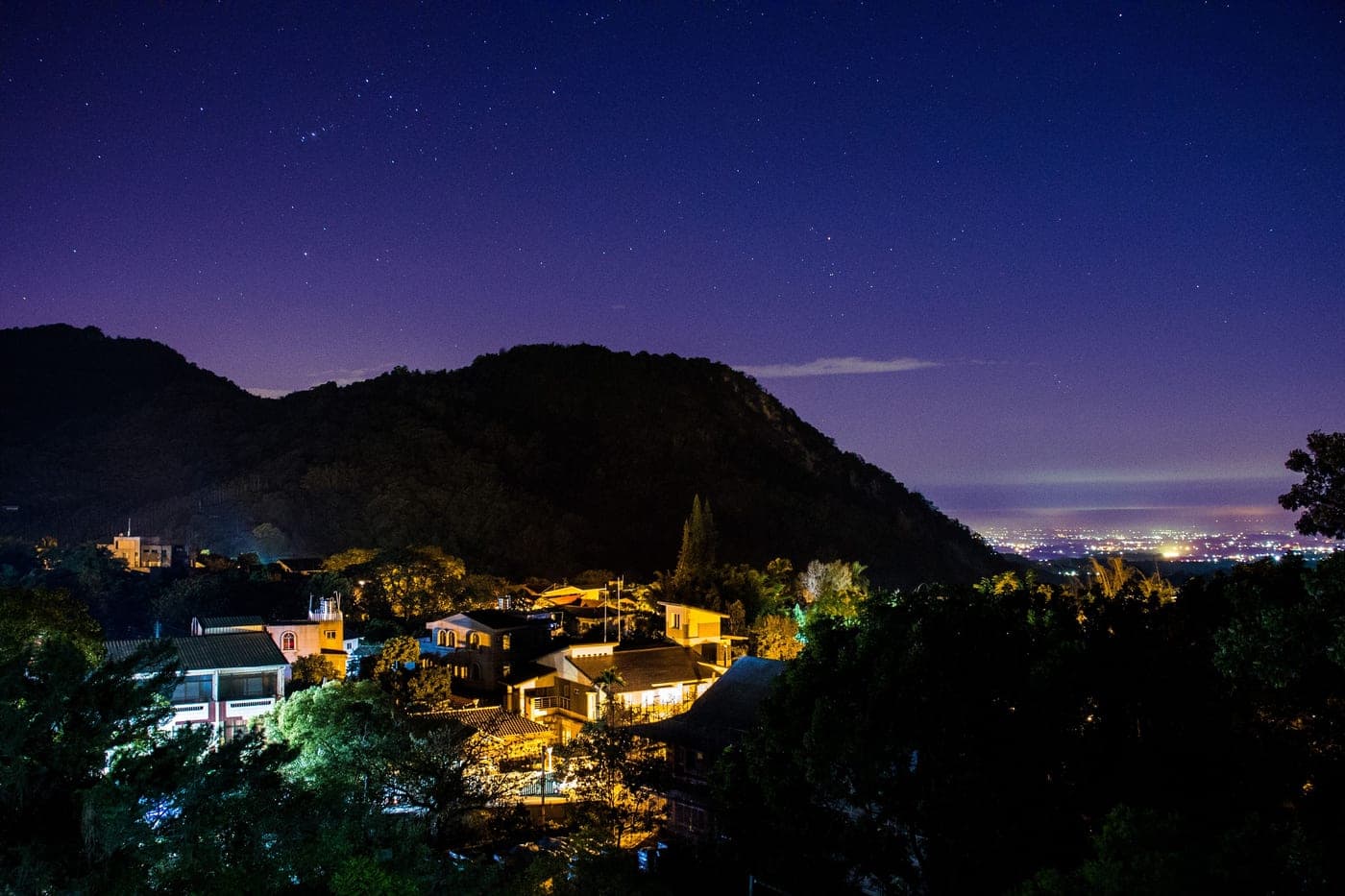
For home use the answer is the Sky-Watcher Heritage 130 tabletop Dobsonian: 130mm of parabolic aperture, no assembly, no tripod, and a collapsed tube that fits in a cupboard. It is the telescope most likely to be carried outside on a clear Tuesday, which is the only test that matters at home.
The failure mode for a home telescope is not optical. It is a fifteen-minute setup on a night that only had twenty clear minutes in it.
The setup-time test
Time yourself, honestly, from the cupboard to the first view. A tabletop Dobsonian is about two minutes: carry it out, put it down, look. A tripod-mounted reflector is five to ten: legs, head, tube, balance, finder. A GoTo mount adds an alignment routine on top.
None of that matters on a planned observing night. It decides everything on the unplanned ones, and the unplanned ones are where most of a home telescope's use actually comes from.
| Design | Setup | Cool-down | Stores in |
|---|---|---|---|
| Tabletop Dobsonian | About 2 minutes | 20 to 30 minutes | A cupboard |
| Floor Dobsonian | About 3 minutes, two trips | 30 to 45 minutes | A corner of a room |
| Tripod refractor | 5 to 10 minutes | Minimal | A cupboard, in two parts |
| Tripod GoTo | 10 minutes plus alignment | 20 to 30 minutes | A cupboard, in three parts |
The balcony problem, stated honestly
A balcony is a difficult observing site and it is worth knowing that before you spend. You see a narrow strip of sky, the building below you radiates heat all night, and that rising warm air degrades the image in exactly the way a bigger aperture is most sensitive to.
The practical consequence is that a balcony observer gets less from extra aperture than a garden observer does. A 102mm refractor on a balcony can genuinely outperform a 200mm Dobsonian in the same spot, which is the one place on this site where that sentence is true.
How this is funded: the buy buttons below are Amazon Associates links, and a qualifying purchase earns us a commission at no extra cost to you. It cannot move the ranking, because the order here is set by aperture per dollar, and no commission rate changes how much light a mirror collects. Full disclosure.
| # | Telescope | Best for | Aperture | Price |
|---|---|---|---|---|
| 1 | 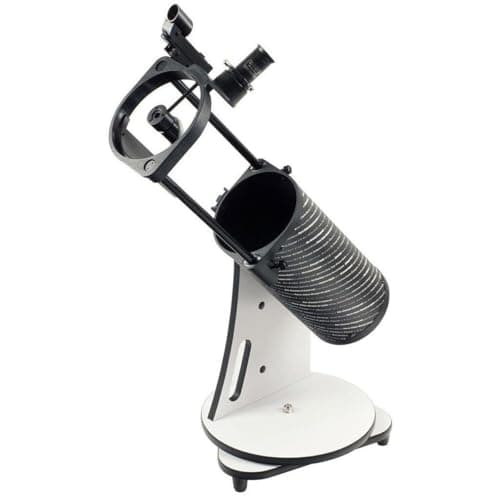 Sky-Watcher Heritage 130 Tabletop DobsonianTop pickThe same 130mm parabolic mirror as scopes costing far more, on a base with no tripod to wobble and nothing to set up. | Most aperture per dollar | 130mm260x useful | |
| 2 | 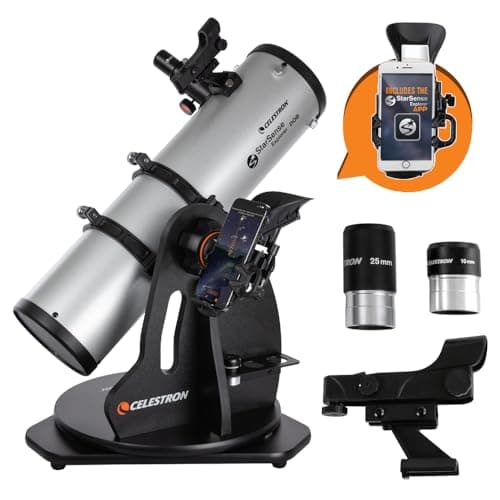 Celestron StarSense Explorer 130mm Tabletop Dobsonian130mm parabolic optics on a tabletop Dobsonian base with the StarSense phone dock. The two best beginner ideas in one box. | Phone finding plus tabletop simplicity | 130mm (5.12 in)260x useful | |
| 3 | 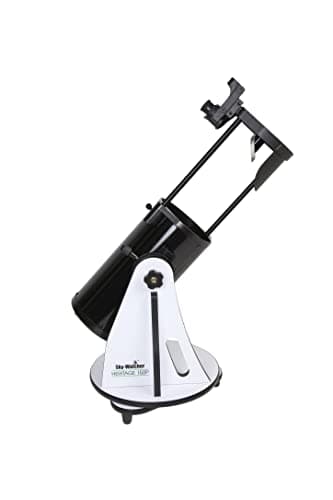 Sky-Watcher Heritage 150 Tabletop Dobsonian150mm at f/5 in a collapsible tube on a tabletop base. Deep-sky aperture that still stores next to the vacuum cleaner. | Maximum aperture in a cupboard | 150mm300x useful | |
| 4 | 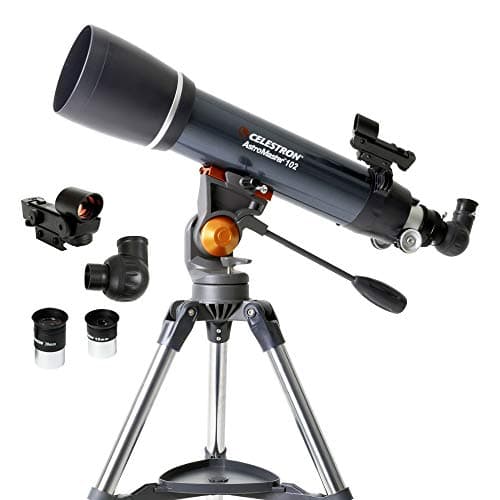 Celestron AstroMaster 102AZ102mm of refractor at f/6.5, which means a short tube and a wide field. A no-maintenance scope with real aperture behind it. | Wide-field refractor views | 102mm (4 in)204x useful | |
| 5 | 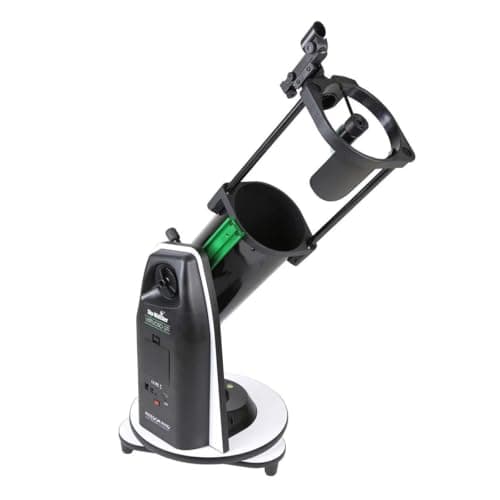 Sky-Watcher Virtuoso GTi 130PA 130mm collapsible Dobsonian with Wi-Fi GoTo built into the base, and it still lets you push the tube by hand. | GoTo without giving up aperture | 130mm260x useful | |
| 6 | 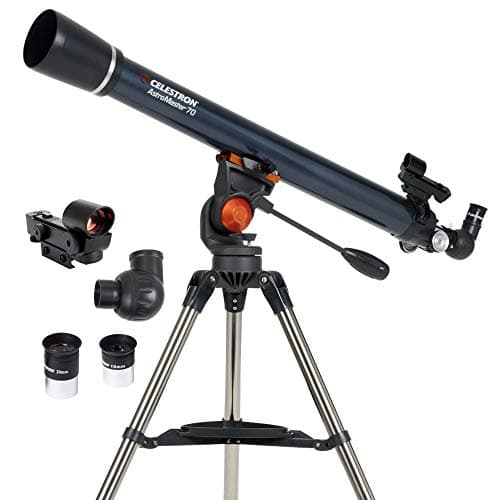 Celestron AstroMaster 70AZ70mm of refractor optics at f/13, on a steel tripod. A long, slow tube that trades field of view and weight for cleaner views of the Moon and planets. | The smallest scope worth owning | 70mm (2.76 in)140x useful |
Top pick · Most aperture per dollar
Sky-Watcher Heritage 130 Tabletop Dobsonian
The same 130mm parabolic mirror as scopes costing far more, on a base with no tripod to wobble and nothing to set up.
What the aperture allows
- Maximum useful magnification
- 260x
- 2 × 130mm of aperture
- Resolving limit (Dawes)
- 0.89 arcseconds
- 116 ÷ 130mm
- Cassini division (0.7″)
- Out of reach
- this aperture cannot resolve it
Worked example: a 25mm eyepiece in this telescope gives 650mm ÷ 25mm = 26x.
This is the aperture-per-dollar champion of the beginner shelf and it is not close. You get the same 130mm parabolic mirror found in telescopes at twice the price, and you get it without paying for a tripod, a slow-motion assembly or a hand controller.
Two times 130mm is 260x of useful magnification. Dawes' limit at 130mm works out to 116 divided by 130, which is 0.89 arcseconds. The Cassini division in Saturn's rings spans roughly 0.7 arcseconds at its widest, so this telescope sits right at the edge of showing it on a still night and will show the rings themselves easily.
The catch is the word tabletop. It needs a surface at roughly chest height when you are seated. A garden table works, a plastic patio chair does not, and buying one without thinking about where it will stand is the single most common regret with this design.
The tube collapses, which is what makes it live in a cupboard rather than a garage. That matters more than it sounds: the telescope you can carry outside in one trip is the telescope you use.
What it does well
- The most aperture you can buy at this price, by a clear margin
- Nothing to assemble, no tripod to wobble, ready in the time it takes to carry it outside
- Collapsible tube stores in a cupboard and keeps its collimation
- The Dobsonian motion is intuitive: you push the tube where you want to look
What it costs you
- Needs a solid table or stool at the right height, which is a real constraint
- The helical focuser is coarser than a rack-and-pinion or a Crayford
- Open tube design collects dust and needs the odd mirror clean
Skip this one if: Skip it if you have nowhere to stand it. On the ground it points at treetops, and on a wobbly plastic table every view shakes.
$305.00 · 12% off
#ad · how this is funded · price as of October 19, 2026
Pick 2 · Phone finding plus tabletop simplicity
Celestron StarSense Explorer 130mm Tabletop Dobsonian
130mm parabolic optics on a tabletop Dobsonian base with the StarSense phone dock. The two best beginner ideas in one box.
What the aperture allows
- Maximum useful magnification
- 260x
- 2 × 130mm of aperture
- Resolving limit (Dawes)
- 0.89 arcseconds
- 116 ÷ 130mm
- Cassini division (0.7″)
- Out of reach
- this aperture cannot resolve it
Celestron publishes 307x as this telescope’s highest useful magnification. Our figure is 260x, from two times the aperture in millimeters. The gap of 47x comes from the slightly more generous per-inch constant makers use. Neither number describes a typical night: the atmosphere usually settles the question well below both.
Worked example: a 25mm eyepiece in this telescope gives 650mm ÷ 25mm = 26x.
This combines the two things that actually keep a first telescope in use: a mount with nothing to wobble, and a finder that removes the where-is-it problem.
Optically it is the same 130mm f/5 parabolic mirror as the DX 130AZ, and Celestron publishes the same figures: 307x maximum useful magnification, 345 times the light of the eye. Two times the aperture gives 260x and Dawes' limit is 0.89 arcseconds.
Against the tripod-mounted DX version you trade standing height for stability and a smaller footprint. Against the Sky-Watcher Heritage 130 you pay more and get the phone dock.
The tabletop condition applies here as much as anywhere: a stable surface at seated chest height, checked before purchase.
What it does well
- Parabolic 130mm mirror, not a spherical compromise
- A Dobsonian base cannot wobble the way a light tripod does
- The StarSense app removes the biggest cause of first-telescope abandonment
What it costs you
- Needs a table, which not every buyer has thought about
- Costs more than the equivalent manual tabletop Dobsonian
- The app needs a phone the whole time it is in use
Skip this one if: Skip it if the recipient wants to learn the constellations. Being walked to a target teaches you less than finding it.
$479.95 · 10% off
#ad · how this is funded · price as of October 19, 2026
Pick 3 · Maximum aperture in a cupboard
Sky-Watcher Heritage 150 Tabletop Dobsonian
150mm at f/5 in a collapsible tube on a tabletop base. Deep-sky aperture that still stores next to the vacuum cleaner.
What the aperture allows
- Maximum useful magnification
- 300x
- 2 × 150mm of aperture
- Resolving limit (Dawes)
- 0.77 arcseconds
- 116 ÷ 150mm
- Cassini division (0.7″)
- Out of reach
- this aperture cannot resolve it
Worked example: a 25mm eyepiece in this telescope gives 750mm ÷ 25mm = 30x.
This is the Heritage 130's argument with 33 percent more mirror. Light gathering scales as the square of the aperture ratio, so 150 over 130, squared, is 1.33 times the light of its smaller sibling.
Two times 150mm is 300x of useful magnification and Dawes' limit is 0.77 arcseconds, which puts the Cassini division inside its reach on a good night.
At f/5 the 750mm focal length keeps the tube short enough to collapse, which is the entire reason this design exists. A conventional 150mm Newtonian tube is over a meter long and lives in a garage.
The same tabletop caveat applies as with the 130: it needs a stable surface at seated chest height. Check you have one before you buy, not after.
What it does well
- Deep-sky aperture in a package that genuinely stores in a cupboard
- Collapsible tube holds collimation between setups
- No tripod means no tripod wobble, the most common cause of a shaky first view
What it costs you
- The tabletop requirement is a real constraint, not a footnote
- The helical focuser is the weakest component
- An open tube collects dust and needs the occasional clean
Skip this one if: Skip it if you have the floor space for the Classic 150P. The floor-standing version has a better focuser and needs no furniture.
$355.00 · 13% off
#ad · how this is funded · price as of October 19, 2026
Pick 4 · Wide-field refractor views
Celestron AstroMaster 102AZ
102mm of refractor at f/6.5, which means a short tube and a wide field. A no-maintenance scope with real aperture behind it.
What the aperture allows
- Maximum useful magnification
- 204x
- 2 × 102mm of aperture
- Resolving limit (Dawes)
- 1.14 arcseconds
- 116 ÷ 102mm
- Cassini division (0.7″)
- Out of reach
- this aperture cannot resolve it
Celestron publishes 241x as this telescope’s highest useful magnification. Our figure is 204x, from two times the aperture in millimeters. The gap of 37x comes from the slightly more generous per-inch constant makers use. Neither number describes a typical night: the atmosphere usually settles the question well below both.
Worked example: a 25mm eyepiece in this telescope gives 660mm ÷ 25mm = 26x.
102mm collects 2.1 times the light of a 70mm refractor, which is the ratio 102 over 70, squared. That is the difference between the Orion Nebula as a smudge and the Orion Nebula as a shape.
Two times 102mm gives 204x of useful magnification; Celestron publishes 241x. Its published Dawes limit of 1.14 arcseconds is short of the Cassini division, so expect the rings as a clean separated ring rather than a ring with a gap in it.
The short f/6.5 tube is the interesting part. It gives a wide true field for a refractor, which makes large open clusters and Milky Way star fields genuinely rewarding, and it keeps the tube short enough to be easy to handle.
Refractor maintenance is the real selling point for a household that will not enjoy collimating anything. There is nothing to align and nothing to clean.
What it does well
- Real aperture with zero maintenance
- Wide field for a refractor: good on clusters as well as planets
- Short tube balances easily on a simple mount
What it costs you
- A fast achromat shows more color fringing on bright objects than an f/10 tube
- The AZ mount is basic; expect to nudge rather than glide
- Still 102mm, so faint galaxies remain out of reach
Skip this one if: Skip it if the planets are the whole point. A long f/10 refractor or a Dobsonian will show them with less false color.
$359.95 · 11% off
#ad · how this is funded · price as of October 19, 2026
Pick 5 · GoTo without giving up aperture
Sky-Watcher Virtuoso GTi 130P
A 130mm collapsible Dobsonian with Wi-Fi GoTo built into the base, and it still lets you push the tube by hand.
What the aperture allows
- Maximum useful magnification
- 260x
- 2 × 130mm of aperture
- Resolving limit (Dawes)
- 0.89 arcseconds
- 116 ÷ 130mm
- Cassini division (0.7″)
- Out of reach
- this aperture cannot resolve it
Worked example: a 25mm eyepiece in this telescope gives 650mm ÷ 25mm = 26x.
The usual GoTo trade is that you pay for motors instead of glass and end up with a smaller mirror. This one avoids that: it is the same 130mm f/5 optic as the manual Heritage, with the electronics in the base rather than in a tripod.
Two times 130mm is 260x of useful magnification and the published Dawes limit for that aperture is 0.89 arcseconds. The motors change nothing about what the optics can resolve, which is the point worth holding onto: GoTo buys you finding and tracking, never detail.
Freedom Find is the feature that matters in practice. Most GoTo mounts lose their alignment the moment somebody shoves the tube. This one uses encoders on both axes, so a curious nine-year-old grabbing it does not end the session.
Budget for power. Eight AA cells run down faster than you expect in the cold, and a cheap 12V supply is the difference between an evening and forty minutes.
What it does well
- Full aperture and full GoTo in the same package, which is unusual at this size
- Tracking keeps a planet centered at high magnification, which is what makes it worth looking at
- Manual override via dual encoders survives being grabbed
- Collapsible tube on a tabletop base, so it still stores easily
What it costs you
- Eats AA batteries; an external 12V supply is effectively mandatory and is not included
- Alignment is a step every session, however quick
- Tabletop base, so it still needs a surface
Skip this one if: Skip it if you would rather learn the sky than be driven around it. The manual Heritage 130 has the same optics for less.
$495.00 · 13% off
#ad · how this is funded · price as of October 19, 2026
Pick 6 · The smallest scope worth owning
Celestron AstroMaster 70AZ
70mm of refractor optics at f/13, on a steel tripod. A long, slow tube that trades field of view and weight for cleaner views of the Moon and planets.
What the aperture allows
- Maximum useful magnification
- 140x
- 2 × 70mm of aperture
- Resolving limit (Dawes)
- 1.66 arcseconds
- 116 ÷ 70mm
- Cassini division (0.7″)
- Out of reach
- this aperture cannot resolve it
Celestron publishes 165x as this telescope’s highest useful magnification. Our figure is 140x, from two times the aperture in millimeters. The gap of 25x comes from the slightly more generous per-inch constant makers use. Neither number describes a typical night: the atmosphere usually settles the question well below both.
Worked example: a 25mm eyepiece in this telescope gives 900mm ÷ 25mm = 36x.
70mm is the floor. Below it a telescope struggles to beat a decent pair of binoculars, and that is a real comparison rather than a rhetorical one. Two times 70mm gives 140x of useful magnification; Celestron publishes 165x.
The defining number is the focal length. Celestron publishes 900mm, which at 70mm is f/13, an unusually slow ratio for a beginner refractor. A slow achromat brings the colors closer to a common focus, so the violet fringe on the Moon and on Jupiter is smaller than on a faster tube of the same aperture.
The same slow ratio narrows the field. At 45x with the supplied 20mm eyepiece, large star clusters that fit comfortably in a short refractor will not fit here, and finding things takes a steadier hand on the red dot finder.
It is also a large, heavy package for 70mm of aperture: a 685mm tube and a published 10.8 lb kit. That buys a steadier steel tripod than the lightest travel telescopes carry, and it costs portability.
What it does well
- Sealed tube: no collimation, no mirror cleaning, essentially no maintenance
- At f/13, less false color on the Moon and bright planets than a faster 70mm tube
- A steel tripod that is steadier than the lightweight tripods on travel telescopes
- The supplied eyepieces give 45x and 90x, a useful planetary range with no extra purchase
What it costs you
- 70mm collects too little light for galaxies and most nebulae
- The f/13 focal ratio narrows the field, so large clusters and finding things are harder
- A published 10.8 lb and a 685mm tube is a lot to carry for 70mm of aperture
- Chromatic aberration is reduced at f/13, not eliminated
Skip this one if: Skip it if what you actually want is deep sky, or a telescope you can carry easily. No eyepiece will make 70mm show you a spiral arm, and a travel refractor does the carrying better.
$199.95 · 10% off
#ad · how this is funded · price as of October 19, 2026
Where to stand it, and why it matters more than you think
- Grass beats paving and decking. Paving stores the day's heat and releases it all evening straight up through your line of sight.
- Get a building between you and the nearest streetlight. Direct glare into the eye costs you more than the general sky glow does.
- Face away from the house. Warm air leaking from a doorway or an extractor is the same problem as a hot patio, at close range.
- Pick the spot before dark and leave the telescope out for half an hour. Cool-down is free if you start it early.
If your sky is bright, the light pollution page is the one to read next: it changes what is worth spending money on, and not in the direction most people assume.
Questions people actually ask
What is a good telescope for home use?
A tabletop Dobsonian of 130mm or 150mm. It gives the most aperture per dollar, sets up in about two minutes and stores in a cupboard, which together decide how often it actually gets used at home.
Can I use a telescope from a balcony?
Yes, with two caveats. You will only see the strip of sky your balcony faces, and rising warm air from the building degrades the image in a way that hits larger apertures hardest. A moderate aperture on a balcony often beats a large one.
Can I observe through an open window?
Not usefully. The air movement between a warm room and cold outside air sits directly in the light path and destroys the image. Through closed glass is worse. Take the telescope outside.
How long does a telescope need to cool down?
A 130mm mirror takes roughly 20 to 30 minutes and a 200mm mirror 30 to 45. Refractors are much less affected. Put the telescope outside when you start getting ready and the wait costs you nothing.
Read next
Best overall
The Best Beginner Telescopes, Ranked by Aperture
The flagship ranking. Nine beginner telescopes ordered by aperture per dollar, with the magnification arithmetic shown for each one.
Top pick: Celestron StarSense Explorer DX 130AZ
#ad · how this is funded · price as of October 19, 2026

What a City Sky Actually Allows
What survives a bright sky, what does not, and why light pollution changes what you should spend a telescope budget on.
Top pick: Celestron NexStar 6SE
#ad · how this is funded · price as of October 19, 2026
How to Use a Telescope: Your First Night, Step by Step
The first evening with a telescope, in the order things actually happen, with the daylight steps that decide it.
Top pick: Celestron Night Vision Red LED Flashlight
$20.95 · 19% off
#ad · how this is funded · price as of October 19, 2026
Found something wrong here? Tell us and we will correct it and date the correction, per our editorial policy.